
Philip Wylie (1) (1902–1971)
Author of When Worlds Collide
For other authors named Philip Wylie, see the disambiguation page.
About the Author
Philip Wylie was a popular author of pulp fiction, sci-fi, and mysteries, as well as social commentary and nonfiction titles on a variety of subjects. His works include When Worlds Collide, Gladiator, and Generation of Vipers.
Image credit: NYWT&S Collection, Library of Congress, Prints and Photographs Division, Reproduction Number LC-USZ62-118224
Series
Works by Philip Wylie
Three to Be Read, Containing The Smuggled Atom Bomb, Sporting Blood, and Experiment in Crime (1951) 6 copies
Stab in the Back / Bottom Deal 2 copies
Selected Short Stories 2 copies
Fish and Tin Fish 2 copies
"What, No Harem?" 1 copy
Danger Mansion 1 copy
Jungle Journey 1 copy
The Paradise Crater 1 copy
Associated Works
The Saturday Evening Post Reader of Fantasy and Science Fiction (1963) — Contributor — 104 copies, 1 review
Reader's Digest Condensed Books 1954 v03: The Desperate Hours / General Dean's Story / Mr Hobbs' Vacation / The Power & the Prize / The Duchess & the Smugs / Tomorrow! (1954) — Author — 29 copies
American Murders: 11 Rediscovered Short Novels from the American Magazine, 1934-1954 (1986) — Contributor — 5 copies
Best-in-Books: Treasure of Pleasant Valley / Best of H.T. Webster / Bridge of San Luis Rey / Think Fast Mr. Moto / Hawaii / H.R.H. / Story of Philip / Answer / Sea Fights and… (1956) — Contributor — 4 copies
Best-in-Books: The Believers / Sword and Scalpel / Take My Life / The Innocent Ambassadors / The Living Legend (1957) — Contributor — 1 copy
Tagged
Common Knowledge
- Legal name
- Wylie, Philip Gordon
- Birthdate
- 1902-05-12
- Date of death
- 1971-10-25
- Gender
- male
- Education
- Princeton University
- Occupations
- screenwriter
editor
short story writer
author - Organizations
- Farrar & Rinehart
- Relationships
- Pryor, Karen (daughter)
Wylie, Max (brother) - Nationality
- USA
- Birthplace
- Beverly, Massachusetts, USA
- Places of residence
- Beverly, Massachusetts, USA
Montclair, New Jersey, USA
Los Angeles, California, USA - Place of death
- Miami, Florida, USA
- Burial location
- First Burying Ground Cemetery, Rushford, New York, USA
- Associated Place (for map)
- USA
Members
Discussions
Science fiction - environmental disasters in Name that Book (May 2016)
Underground complex after a nuclear war in Name that Book (October 2013)
Reviews
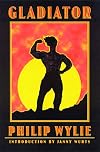
In The Young All-Stars, Roy and Dann Thomas created the character of Arn "Iron Munro" Munro, who was eventually revealed to be the son of Hugo Danner. Danner is the protagonist of Philip Wylie's 1930 sf novel Gladiator, seen by some as forerunner of Superman. We don't know that Jerry Siegel and Joe Shuster read Gladiator or anything, but there are some resonances between their novel and the earlier conceptions of Superman. The Thomases literalized this possible debt in-universe by making the show more character of Hugo Danner a forerunner and progenitor of the superheroes of the 1930s and '40s. Gladiator is in the public domain and thus on Project Gutenberg, so I figured I would read it upon finishing Young All-Stars.
I'll be honest, though, I was curious but did not have high expectations. The Hugo Danner stuff was some of my least favorite material in Young All-Stars, and the only thing I knew Philip Wylie from was that he co-wrote the novel When Worlds Collide, which I haven't read... but I have seen the absolutely awful 1951 film.
But it was really good! Wylie charts the life of Hugo Danner in exhaustive detail, from outsider childhood to college football star to war hero and beyond. Wylie gets how to write good science fiction, which is that he simultaneously shows you something new and cool and it's a metaphor for something old. This is a pretty grounded and realistic take on what it would be like to be a "superman," I think; it almost reads like a riff on superheroes except it came before them! It reminds me of some of those 1990s/2000s comics about what it "really" be like to have superpowers, except not needlessly brutal as those sometimes were.
Yet it's also something we can all empathize with: not fitting in. Hugo struggles to find his place in the world from boyhood on, and constantly realizes that the connections he does have turn out to be more superficial than he thought. The story of his time at college, especially his summer vacation, was one of my favorite parts, and the description of his involvement in the futility of World War I is probably the book's best part. There's a lot of quiet and thoughtful characterization here in what was a quick and energetic read.
Indeed, I ended the whole experience thinking that Roy Thomas had really done Hugo Danner dirty in The Young All-Stars. The adaptation of this story in Young All-Stars #10-11 communicates none of its power. Danner deserved better than becoming a mediocre villain in a mediocre storyline.
(Thomas had actually previously adapted Gladiator in a different comic back in 1976, which I'll circle back to read now that I've finally written up Gladiator. I am curious to see what I think of that take.) show less
I'll be honest, though, I was curious but did not have high expectations. The Hugo Danner stuff was some of my least favorite material in Young All-Stars, and the only thing I knew Philip Wylie from was that he co-wrote the novel When Worlds Collide, which I haven't read... but I have seen the absolutely awful 1951 film.
But it was really good! Wylie charts the life of Hugo Danner in exhaustive detail, from outsider childhood to college football star to war hero and beyond. Wylie gets how to write good science fiction, which is that he simultaneously shows you something new and cool and it's a metaphor for something old. This is a pretty grounded and realistic take on what it would be like to be a "superman," I think; it almost reads like a riff on superheroes except it came before them! It reminds me of some of those 1990s/2000s comics about what it "really" be like to have superpowers, except not needlessly brutal as those sometimes were.
Yet it's also something we can all empathize with: not fitting in. Hugo struggles to find his place in the world from boyhood on, and constantly realizes that the connections he does have turn out to be more superficial than he thought. The story of his time at college, especially his summer vacation, was one of my favorite parts, and the description of his involvement in the futility of World War I is probably the book's best part. There's a lot of quiet and thoughtful characterization here in what was a quick and energetic read.
Indeed, I ended the whole experience thinking that Roy Thomas had really done Hugo Danner dirty in The Young All-Stars. The adaptation of this story in Young All-Stars #10-11 communicates none of its power. Danner deserved better than becoming a mediocre villain in a mediocre storyline.
(Thomas had actually previously adapted Gladiator in a different comic back in 1976, which I'll circle back to read now that I've finally written up Gladiator. I am curious to see what I think of that take.) show less
Thus American imagination is directed—as if in the whole of life no other aims or satisfactions could be found than those of being a consumer, avid, constant and catholic.
In America, the child is schooled, if a boy, toward fiscal endeavor. It is taught to want to be a “good provider,” if not a millionaire. From babyhood it is pursued by advertisements and commercials which give it the aggregate impression that the aim of life is to acquire funds wherewith to obtain all it hears show more recommended. The American media of communication hypnotize it into a set of special desires. A girl, of course, takes up the same doctrine. Her aim becomes to find a mate with money to act on every radio commercial or, at the very least, to set herself up in a career which will enable her so to act, independently.
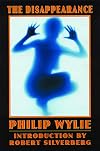
Science Fiction from 1951 and Wylie's fine but overstuffed novel flies in the face of much of what was being published at the time; It signals its intentions by having as its principal characters a philosopher (Doctor William Percival Gaunt) and his able and intelligent wife Paula. The scenario is the sudden disappearance of all the women from the world; in the blink of an eye the only human beings on the earth are male, however the women experience the same catastrophe as from their perspective all the males suddenly disappear. Alternate chapters then tell the story of a world without women and others a world without men. Both scenarios are looking towards extinction of the human race, because creating children is an impossibility.
It is 1950's America when the biggest threat to the survival of the human race was a nuclear war. The world of men soon lurch precipitously into a war with Russia. The world of women fare better, being able to negotiate and to a certain extent work together with the enemy in the hope of finding a solution to the problem of procreation. Doctor Gaunt is summoned to the White House to confer with a group of the ablest men of his generation to find a solution to the dilemma, but their convocation is soon overtaken by the need for military action. What is left of America degenerates into lawlessness and central government is again forced to take military action this time against the militias and criminal gangs that roam the country. The women in their world have different problems because there are a lack of qualified women to run the power plants, pilot the aircraft, drive the trains. There is an acute shortage of doctors, builders and engineers and so the material fabric of their world starts to break down. A major theme of the novel is not only that the two sexes need each other, but they also need each other on equal terms. The problems that the women face is because of their their lack of expertise and knowledge.
The paper that Doctor Gaunt prepares for the convocation of great minds is psychological in nature emphasising the fact that man and women of the 'West' have inhabited two utterly discrete worlds; he goes on to say that by the demeaning of women men have demeaned themselves. The answer to the problem is that men and women must come together equally to form a single unit. The Disappearance of the other sex has highlighted an opportunity that has been missed and which now psychologically has caused the permanent separation. Wylie has headed his chapter 13 as:
"AN ESSAY ON THE PHILOSOPHY OF SEX, OR THE LACK THEREOF, EXTRANEOUS TO THE NARRATIVE AND YET ITS THEME, WHICH THE IMPATIENT MAY SKIP AND THE REFLECTIVE MIGHT ENJOY."
This is the paper that Doctor Gaunt contributes to the convocation, which finds no favour with the politicians, but sets out for the readers of the book the central idea running through the novel. A little clumsy maybe but it serves to bring together the story to its conclusion. Wylie is also not frightened to raise issues around same sex love and the need for sexual fulfilment. This is a novel that castigates humanities need for always wanting more, for stripping the planet of its resources, for the dominance of one sex over the other: enlightened themes which sometimes sit uncomfortably with the story. Having created the mystery of the disappearance Wylie has the difficult task of explaining it away and readers who are looking for a satisfactory conclusion may be disappointed. I also found that some of the dialogue especially on a political level seemed a bit simplistic, but then again after listening to President Trump, Wylie might have got it just right.
This is an ambitious novel that tries to introduce philosophical/psychological ideas into a science fiction novel. It would not be a candidate for serialisation in magazines such as Weird Science or Astounding Science fiction that were popular at the time, nor would it be taken completely seriously by readers not accustomed to science fiction. However I would not condemn it as falling between two stools, but admire it for its thoughtful telling of a story that sets the imagination running and also resonates with some deeper ideas and themes. This one surprised me and so a four star read.
Let Doctor Gaunt have the last word:
Gaunt nodded. “No future in it. Strip the resources off the planet. Leave nothing for any posterity—” “That. The cockeyedness of mass production. A plenty of having things and a total dearth of living a life. You were born, educated, and then what? You tended a machine. You sat in an office. You traveled to and from it. You aged and died. Most of your active self was spent in a long, nasty, unrewarding day. Dumb or bright, poor or rich, that was the schedule for nearly all. Crazy!” “Yet most of the men who retired were miserable.” “And slaves love chains. There were too many people. They exploited their ability to stay alive. Took no responsibility for selecting the stock. For dying. For anything but breeding. And then what? The more there were the harder and harder they had to work!” show less
In America, the child is schooled, if a boy, toward fiscal endeavor. It is taught to want to be a “good provider,” if not a millionaire. From babyhood it is pursued by advertisements and commercials which give it the aggregate impression that the aim of life is to acquire funds wherewith to obtain all it hears show more recommended. The American media of communication hypnotize it into a set of special desires. A girl, of course, takes up the same doctrine. Her aim becomes to find a mate with money to act on every radio commercial or, at the very least, to set herself up in a career which will enable her so to act, independently.
Science Fiction from 1951 and Wylie's fine but overstuffed novel flies in the face of much of what was being published at the time; It signals its intentions by having as its principal characters a philosopher (Doctor William Percival Gaunt) and his able and intelligent wife Paula. The scenario is the sudden disappearance of all the women from the world; in the blink of an eye the only human beings on the earth are male, however the women experience the same catastrophe as from their perspective all the males suddenly disappear. Alternate chapters then tell the story of a world without women and others a world without men. Both scenarios are looking towards extinction of the human race, because creating children is an impossibility.
It is 1950's America when the biggest threat to the survival of the human race was a nuclear war. The world of men soon lurch precipitously into a war with Russia. The world of women fare better, being able to negotiate and to a certain extent work together with the enemy in the hope of finding a solution to the problem of procreation. Doctor Gaunt is summoned to the White House to confer with a group of the ablest men of his generation to find a solution to the dilemma, but their convocation is soon overtaken by the need for military action. What is left of America degenerates into lawlessness and central government is again forced to take military action this time against the militias and criminal gangs that roam the country. The women in their world have different problems because there are a lack of qualified women to run the power plants, pilot the aircraft, drive the trains. There is an acute shortage of doctors, builders and engineers and so the material fabric of their world starts to break down. A major theme of the novel is not only that the two sexes need each other, but they also need each other on equal terms. The problems that the women face is because of their their lack of expertise and knowledge.
The paper that Doctor Gaunt prepares for the convocation of great minds is psychological in nature emphasising the fact that man and women of the 'West' have inhabited two utterly discrete worlds; he goes on to say that by the demeaning of women men have demeaned themselves. The answer to the problem is that men and women must come together equally to form a single unit. The Disappearance of the other sex has highlighted an opportunity that has been missed and which now psychologically has caused the permanent separation. Wylie has headed his chapter 13 as:
"AN ESSAY ON THE PHILOSOPHY OF SEX, OR THE LACK THEREOF, EXTRANEOUS TO THE NARRATIVE AND YET ITS THEME, WHICH THE IMPATIENT MAY SKIP AND THE REFLECTIVE MIGHT ENJOY."
This is the paper that Doctor Gaunt contributes to the convocation, which finds no favour with the politicians, but sets out for the readers of the book the central idea running through the novel. A little clumsy maybe but it serves to bring together the story to its conclusion. Wylie is also not frightened to raise issues around same sex love and the need for sexual fulfilment. This is a novel that castigates humanities need for always wanting more, for stripping the planet of its resources, for the dominance of one sex over the other: enlightened themes which sometimes sit uncomfortably with the story. Having created the mystery of the disappearance Wylie has the difficult task of explaining it away and readers who are looking for a satisfactory conclusion may be disappointed. I also found that some of the dialogue especially on a political level seemed a bit simplistic, but then again after listening to President Trump, Wylie might have got it just right.
This is an ambitious novel that tries to introduce philosophical/psychological ideas into a science fiction novel. It would not be a candidate for serialisation in magazines such as Weird Science or Astounding Science fiction that were popular at the time, nor would it be taken completely seriously by readers not accustomed to science fiction. However I would not condemn it as falling between two stools, but admire it for its thoughtful telling of a story that sets the imagination running and also resonates with some deeper ideas and themes. This one surprised me and so a four star read.
Let Doctor Gaunt have the last word:
Gaunt nodded. “No future in it. Strip the resources off the planet. Leave nothing for any posterity—” “That. The cockeyedness of mass production. A plenty of having things and a total dearth of living a life. You were born, educated, and then what? You tended a machine. You sat in an office. You traveled to and from it. You aged and died. Most of your active self was spent in a long, nasty, unrewarding day. Dumb or bright, poor or rich, that was the schedule for nearly all. Crazy!” “Yet most of the men who retired were miserable.” “And slaves love chains. There were too many people. They exploited their ability to stay alive. Took no responsibility for selecting the stock. For dying. For anything but breeding. And then what? The more there were the harder and harder they had to work!” show less

Published in 1965 but it holds up really well. Idlewild airport gets renamed to Kennedy airport in the course of the novel's events, but that's almost as much as anything here is dated.
This is mostly a lot of ranting by Philip Wylie about the evils of modern society. Philip Wylie appears as himself in the novel, poking around in the lives of a bunch of biochemical scientists and industrialists. There are some scandals - fast cars and fast women. It's a bit like Bill Gates hanging out with show more Jeffrey Epstein. The titans of science and industry can have very clay feet!
The shortcomings of science and industry are not just personal though. The quests for status, fame, wealth, and power, have taken over the world. What is really human is to care for others, and not just those here and now, but those of future generations. Wylie mentions the greenhouse effect on p. 278, which "may bring about the flooding of every coastal city on earth".
It's the educational philosophy of Summerhill that Wylie proposes here. Down the Wilhelm Reich line. All this pathological lust comes from warped child rearing practices. If we didn't repress their natural behaviors, we wouldn't have such a sick society.
This book is remarkably relevant to the battles of our time. Maybe the social revolutions of the late 1960s - whose early rumblings Wylie is documenting here - the failures of those revolutions have led to the reaction of our time, the attempt to stuff the genie back into the bottle, the reimposition of social hierarchies based on gender, race, etc. show less
This is mostly a lot of ranting by Philip Wylie about the evils of modern society. Philip Wylie appears as himself in the novel, poking around in the lives of a bunch of biochemical scientists and industrialists. There are some scandals - fast cars and fast women. It's a bit like Bill Gates hanging out with show more Jeffrey Epstein. The titans of science and industry can have very clay feet!
The shortcomings of science and industry are not just personal though. The quests for status, fame, wealth, and power, have taken over the world. What is really human is to care for others, and not just those here and now, but those of future generations. Wylie mentions the greenhouse effect on p. 278, which "may bring about the flooding of every coastal city on earth".
It's the educational philosophy of Summerhill that Wylie proposes here. Down the Wilhelm Reich line. All this pathological lust comes from warped child rearing practices. If we didn't repress their natural behaviors, we wouldn't have such a sick society.
This book is remarkably relevant to the battles of our time. Maybe the social revolutions of the late 1960s - whose early rumblings Wylie is documenting here - the failures of those revolutions have led to the reaction of our time, the attempt to stuff the genie back into the bottle, the reimposition of social hierarchies based on gender, race, etc. show less
Read for Evolution of SF group. Lots of good discussion there. So much more than an adventure, and in fact the only SF element is the premise. Mostly it's about the dilemma of the superior man - how can he fit in, and/or be a hero, when ordinary people react in the primitive ways that they do? Very well written, almost literary with allusions, metaphors, the occasional poetic or alliterative turn of phrase.
I see how some say it's progenitor to Superman, though of course super-strength is a show more trope as old as time, and Wylie gave Hugo no kryptonite. I see it as reflecting the trope that Ayn Rand is known for, that super man is necessarily superior man. But really, it stands on its own merits, is very enjoyable, and it should be much more widely read.
Avl. free to borrow on openlibrary.org. show less
I see how some say it's progenitor to Superman, though of course super-strength is a show more trope as old as time, and Wylie gave Hugo no kryptonite. I see it as reflecting the trope that Ayn Rand is known for, that super man is necessarily superior man. But really, it stands on its own merits, is very enjoyable, and it should be much more widely read.
Avl. free to borrow on openlibrary.org. show less
Lists
Awards


You May Also Like


Associated Authors
Statistics
- Works
- 56
- Also by
- 11
- Members
- 3,155
- Popularity
- #8,097
- Rating
- 3.8
- Reviews
- 80
- ISBNs
- 151
- Languages
- 3
- Favorited
- 1