
Michael G. Kammen (1936–2013)
Author of The Origins of the American Constitution
About the Author
Michael Gedaliah Kammen was born in Rochester, New York on October 25, 1936. He received a bachelor's degree in history from George Washington University and master's and doctoral degrees in history from Harvard University. He was a professor of American history and culture at Cornell University show more since 1965. He wrote numerous books including A Season of Youth, A Machine That Would Go of Itself, Mystic Chords of Memory: The Transformation of Tradition in American Culture, Visual Shock, and Digging Up the Dead: A History of Notable American Reburials. He received the 1973 Pulitzer Prize for history for People of Paradox: An Inquiry Concerning the Origins of American Civilization. He died on November 29, 2013 at the age of 77. (Bowker Author Biography) show less
Works by Michael G. Kammen
Mystic Chords of Memory: The Transformation of Tradition in American Culture (1991) 196 copies, 1 review
The Transformation of Early American History: Society, Authority, and Ideology: How the Writings and Influence of Bernard Bailyn Have Changed Our Understanding of the American… (1991) — Editor; Contributor — 39 copies, 2 reviews
Spheres of Liberty: Changing Perceptions of Liberty in American Culture (The Curti lectures) (1986) 31 copies
The Glorious Revolution in America: Documents on the Colonial Crisis of 1689 (1972) — Editor — 30 copies
The Lively Arts: Gilbert Seldes and the Transformation of Cultural Criticism in the United States (1996) 14 copies
The contrapuntal civilization; essays toward a new understanding of the American experience (1971) 7 copies
Associated Works
Novel History: Historians and Novelists Confront America's Past and Each Other (2001) — Contributor — 139 copies, 1 review
Democracy in America: Abridged with an Introduction by Michael Kammen (The Bedford Series in History and Culture) (2009) — Introduction — 41 copies
Tagged
Common Knowledge
- Canonical name
- Kammen, Michael G.
- Legal name
- Kammen, Michael Gedaliah
- Birthdate
- 1936-10-25
- Date of death
- 2013-11-29
- Gender
- male
- Education
- George Washington University
Harvard University (Ph.D.|1964) - Occupations
- historian
- Organizations
- Organization of American Historians (President)
Cornell University - Awards and honors
- American Historical Association Award for Scholarly Distinction (2008)
Pulitzer Prize (History, 1973) - Relationships
- Kammen, Carol (wife)
- Nationality
- USA
- Birthplace
- Rochester, New York, USA
- Places of residence
- Washington, D.C., USA
- Place of death
- Ithaca, New York, USA
- Associated Place (for map)
- New York, USA
Members
Reviews
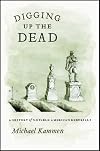
Michael Kammen's latest book is Digging Up the Dead: A History of Notable American Reburials (University of Chicago Press, 2010). Sort of a macabre subject, but Kammen offers up a wide selection of reburial case studies loosely organized around several major themes, all centering around some form or another of pride: national, sectional, regional, ethnic/racial, reputational, &c. As Kammen writes in the introduction, "Although I will touch upon different cultures, different eras, even show more different countries, most of the episodes that I explore clearly involve the desire to enhance respect for someone deceased, the variability of reputations, and the complexity of restitution or repatriation. Intensely felt sentiments of pride emerge on multiple levels. And they reveal that the symbolic significance of possessing 'sacred relics,' even in secular settings, has incalculable potency - yet often provides pleasure as well" (p. 10).
Kammen's first chapter touches on the history of reburial through history (but particularly in America), and lays out some points of comparison between American and European trends (which he revisits in the final chapter, noting that American moments of reburial tend to be less ideological than many in Europe have been).
The second chapter highlights reburials of important Revolutionary figures, which (I was somewhat surprised to learn) continued well into the 20th century. Kammen profiles the various scenarios that resulted in reinterments of such folks as Joseph Warren (moved three times by 1856), Charles Thomson (plucked secretly from his grave in 1838 and moved to Philadelphia's Laurel Hill), Richard Montgomery (returned from Canada in 1818), John Trumbull, Nathaniel Greene, Button Gwinnett, &c.
Kammen's third chapter focuses on sectional and national pride, with its case studies beginning with James Monroe's removal from New York to Virginia in 1858 but mostly centered around Civil War reburials (including the mass repatriation of Confederate dead from northern cemeteries, the many efforts to get and keep Lincoln in the ground, and Jefferson Davis' post-mortem journey from New Orleans to Richmond). Next he tackles non-political/military leaders in a chapter called "Problematic Graves, Tourism, and the Wishes of Survivors," recounting the posthumous peregrinations of Daniel Boone, Edgar Allan Poe, Jesse James, D.H. Lawrence, Frank Lloyd Wright and F. Scott Fitzgerald (these last were just plain strange, I found).
Before his final, comparative chapter, Kammen also touches on religious reburials, including the long trend of burials of American Indians remains from the collections of museums. Case studies here include George Whitefield, Roger Williams, Marcus and Narcissa Whitman, Matthew Henson, and Sitting Bull.
Exploring the various reasons for these historical reburials made for very interesting reading, and Kammen's comparison of American trends with those in Europe (which he notes have been colored by an "ongoing ideological edge and intensity") was well drawn. I enjoyed the book, and recommend it to anyone with an interest in death customs (and/or the slightly bizarre).
http://philobiblos.blogspot.com/2010/08/book-review-digging-up-dead.html show less
Kammen's first chapter touches on the history of reburial through history (but particularly in America), and lays out some points of comparison between American and European trends (which he revisits in the final chapter, noting that American moments of reburial tend to be less ideological than many in Europe have been).
The second chapter highlights reburials of important Revolutionary figures, which (I was somewhat surprised to learn) continued well into the 20th century. Kammen profiles the various scenarios that resulted in reinterments of such folks as Joseph Warren (moved three times by 1856), Charles Thomson (plucked secretly from his grave in 1838 and moved to Philadelphia's Laurel Hill), Richard Montgomery (returned from Canada in 1818), John Trumbull, Nathaniel Greene, Button Gwinnett, &c.
Kammen's third chapter focuses on sectional and national pride, with its case studies beginning with James Monroe's removal from New York to Virginia in 1858 but mostly centered around Civil War reburials (including the mass repatriation of Confederate dead from northern cemeteries, the many efforts to get and keep Lincoln in the ground, and Jefferson Davis' post-mortem journey from New Orleans to Richmond). Next he tackles non-political/military leaders in a chapter called "Problematic Graves, Tourism, and the Wishes of Survivors," recounting the posthumous peregrinations of Daniel Boone, Edgar Allan Poe, Jesse James, D.H. Lawrence, Frank Lloyd Wright and F. Scott Fitzgerald (these last were just plain strange, I found).
Before his final, comparative chapter, Kammen also touches on religious reburials, including the long trend of burials of American Indians remains from the collections of museums. Case studies here include George Whitefield, Roger Williams, Marcus and Narcissa Whitman, Matthew Henson, and Sitting Bull.
Exploring the various reasons for these historical reburials made for very interesting reading, and Kammen's comparison of American trends with those in Europe (which he notes have been colored by an "ongoing ideological edge and intensity") was well drawn. I enjoyed the book, and recommend it to anyone with an interest in death customs (and/or the slightly bizarre).
http://philobiblos.blogspot.com/2010/08/book-review-digging-up-dead.html show less
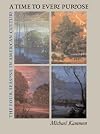
Being a critical survey of works, primarily literature and art, which treat of the four seasons. The author is erudite and insightful at times, but his poor choice of emphases limits the book's pleasures. After a perfunctory first chapter describing such works in the Old World which consists mostly of lists of dates of creation, he presents his best chapters, which deal with American nature writing of the nineteenth century. Later chapters, which obsess in excruciating detail on a group of show more nature writers from the mid-twentieth century who are mostly not well-remembered, and graphic artists from the turn of the century, again mostly pretty obscure, slow the book to a crawl. Music, realia, television, and movies are very briefly summarized. A coda on the science of seasonal change is unnecessary and the space would have been better spent on an examination of the changes in perception wrought by global heating, an odd omission. show less

Those of us who revere the Constitution and particularly the Bill of Rights realize how subversive a document it can be. We all pay it lip service but many really don't understand what it means, or perhaps understand only too well. Michael Kammen in A Machine That Would Go Of Itself describes how Louis D. Oaks, the Los Angeles Chief of Police, had Upton Sinclair arrested in 1923 for reading the first three amendments to the Constitution in public. He was "kidnapped" by the police, moved to show more different station houses to confuse his lawyers, and held incommunicado. Re was charged with "discussing, arguing, orating, and debating certain thoughts and theories, which thoughts and theories were contemptuous of the constitution of the state of California, calculated to cause hatred and contempt of the government of the United States of America." ! One suspects Chief Oakes was not fluent in the meaning of the Constitution when he took his oath.
Sinclair was released only because a subordinate of the Chief secretly phoned an associate of Sinclair's so his lawyers could prepare a writ to get him out. Sinclair continued his meetings and helped found the Southern California branch of the American Civil Liberties Union. Chief Oakes was fired about a month later after being discovered in his car at night with a woman and a jug of whiskey. show less
Sinclair was released only because a subordinate of the Chief secretly phoned an associate of Sinclair's so his lawyers could prepare a writ to get him out. Sinclair continued his meetings and helped found the Southern California branch of the American Civil Liberties Union. Chief Oakes was fired about a month later after being discovered in his car at night with a woman and a jug of whiskey. show less
An interesting array of trivia about famous people whose remains have been exhumed and reburied elsewhere. There is no great thesis underlying Digging up the Dead, just "here's someone famous, they died, were buried and then later, for a range of reasons, were dug up and planted somewhere else." That's not necessarily a bad thing, though.
Lists
Awards


You May Also Like


Associated Authors
Statistics
- Works
- 32
- Also by
- 3
- Members
- 1,585
- Popularity
- #16,274
- Rating
- 3.5
- Reviews
- 11
- ISBNs
- 73