

Marian Engel (1) (1933–1985)
Author of Bear
For other authors named Marian Engel, see the disambiguation page.
About the Author
Born May 24, 1933 in Toronto, Canada, Marian Engel is a respected Canadian writer whose works range from children's books to adult nonfiction. She is best known, however, as a novelist. Her writings frequently center on exceptional women who are often complex, wrestling with crucial problems and show more variant roles. Her novel Bear won the 1976 Governor General's Award. Many consider it her best work. Lunatic Villas was co-winner of the City of Toronto Book Awards in 1982. Engel continues her career living in Toronto. (Bowker Author Biography) show less
Image credit: mcgill.ca
Works by Marian Engel
My name is not Odessa Yarker 1 copy
Associated Works
Tagged
Common Knowledge
- Birthdate
- 1933-05-24
- Date of death
- 1985-02-16
- Gender
- female
- Organizations
- Writers' Union of Canada
- Nationality
- Canada
- Associated Place (for map)
- Canada
Members
Reviews
Bear by Marian Engel

It begins with a deeply wounded woman--a person who, because she's female, has felt apologetic about being alive, taking up space, existing without "justification". A person who let herself be used by men and then never forgave herself the rage she felt and expressed for that.
She is given a break--a summer cataloguing a legacy on a remote island in Northern Ontario, with her only steady company being a tame, chained male bear. I suppose the quickest way to describe what happens is that "the show more bear helps her find herself", but it's not something that happens swiftly or straightforwardly. The ghostly influences of dead people, conveyed on scraps of paper and in books, lead her along in her strange, transforming relationship.
At the end, she is better off than she was at the beginning, feeling "strong and pure". show less
She is given a break--a summer cataloguing a legacy on a remote island in Northern Ontario, with her only steady company being a tame, chained male bear. I suppose the quickest way to describe what happens is that "the show more bear helps her find herself", but it's not something that happens swiftly or straightforwardly. The ghostly influences of dead people, conveyed on scraps of paper and in books, lead her along in her strange, transforming relationship.
At the end, she is better off than she was at the beginning, feeling "strong and pure". show less

I’ve just started job-hunting. I’m looking for something similar to what I’ve always done, but also yearning to try something different, if only I knew what. Going alone to a quiet and quirky house, stocked with books, on an island on a lake, and surrounded by woods, might be conducive to concentration and re-evaluation.
Lou gets such an opportunity. It’s mid 1970s Ontario, she is in her late twenties, and single after a few failed relationships, one of them toxic. She’s somewhat show more depressed, lacking confidence, directionless, and ready for change.
“The image of the Good Life long ago stamped on her soul was quite different from this, and she suffered from the contrast.”
An octagon house, its contents, and its small island are bequeathed to the historical institute where she is an archivist. She goes to catalogue what’s there and the book segues from the grey winter of the opening pages in Toronto to the promise of spring.
“The land was hectic with new green” in the shadow of the “bald stone mountains of Algoma”.
Image: Fushimi Lake in Algoma County (Source)
She is in awe of the natural beauty, and is told:
“Nobody ever left this place that didn’t have to.”
(The) bear
Homer, who takes her to the island and shows her round, leaves with the words:
“Did anyone tell you… about the bear?”
No one had, but rather than be alarmed, Lou thinks it sounds “joyfully Elizabethan and exotic” to have a bear in an outhouse.
In the text, it’s always “the bear”, as people would naturally say, but the title is merely “Bear”, which is more like a name, and humanises him. That’s relevant. There is no magical realism here, even though the story is incredible.
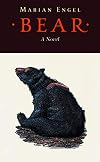
Image: A black bear, sitting - and the bear in the book is black, despite the cover of my copy showing mid brown fur (Source)
Immersion, not plot
Lou settles into a routine of working in the morning, eating outside, talking to the bear, walking in the woods, and swimming in the lake.
“She… entered the forest solemnly, as if she were trespassing in a foreign church.”
When she’s going through the books and documents about the house and family, occasionally a handwritten note falls out. It’s always something to do with bears (mythology, physiology, habitats, diet etc), and is invariably relevant to her thoughts and mood. She also ponders the difference between anthropomorphised fictional and teddy bears and the wild animal in the outhouse. Freud is mentioned.
“A bear is more an island than a man, she thought. To a human.”
As her confidence grows (in herself generally, and the bear), she starts unhooking his chain and taking him to the lake.
“In the water [he] sat like a near-sighted baby placidly enjoying the return to liquid existence.”
I enjoyed it more when she was immersed in nature than going through endless family, house, and Canadian history.
Shocked - and not
The blurb, and especially the covers of some editions, leave no doubt as to what happens: Lou lets (encourages?) the bear to satisfy her sexually, though it doesn’t happen till two thirds of the way through. It’s not a metaphor, or rather, it's not just a metaphor. Nor is it a man who’s been magically transformed into a bear. It’s a real bear: big, strong, and stinky; the sex is wet, messy, and sometimes bloody. It's a very small part of the narrative, but central to it.
“What she disliked about men was not their eroticism, but their assumption that women had none.”
An ursine lover has no such baggage, and the writing focuses on Lou’s feelings and pleasure. It’s very different from her previous relationships, and thus transformative, rejuvenating, and empowering - for her. (But still weird.) As for the bear...?
“She remembered the claw that had healed guilt. She felt strong and pure.”
Image: Black bear paw and claws (Source)
Bestiality should be shocking, but somehow, amazingly, it’s so delicately but plainly written (though not “nicely” so), that I was surprised that I recoiled more when Lou went outside and shat next to where the bear had done the same. Even a couple of human-to-human sexual encounters felt more taboo than sex with a bear.
That’s the puzzle and power of this book for me. I can’t fully process my own reactions. Perhaps the slight dislocation of time (recognisable, but not fully familiar, as I was a child back then), coupled with being set in a region I visited briefly, is part of it. But it does make me wary of escaping to a cabin in the woods if there might be an over-familiar bear there!
Quotes
• “The morning light was dappled, fallow, green, a moving presence at the windows. The kitchen swam in an underwater gloom.”
• “It was as if men knew that her soul was gangrenous.”
• “An unprepossessing creature… Not at all menacing. Not a creature of the world, but a middle-aged woman defeated to the point of being daft.”
• “Now she wanted to listen to the riverworld shaking rain off its wings.”
• “She justified herself by saying that she was of service, she ordered other people’s lives.”
• “It was as if the bear, like the books, knew generations of secrets; but he had no need to reveal them.”
See also
• I read this as a follow-up to Claire Oshetsky’s Chouette, which I enjoyed far more and reviewed HERE. Bear was somewhat in the author’s mind when she wrote Chouette (see comment 10 here).
• I didn't put this on my (tiny) erotica shelf, because it's really not. If fantastical bestiality is your thing, there are whole genres of alien and monster erotica that I never knew of till GR, and have not read. I believe many hail from, or nod to, Japan. Perhaps Hokusai's famous 1814 print, The Dream of the Fisherman's Wife, is an inspiration - or maybe the monster subgenre of shunga precedes Hukasai. show less
Lou gets such an opportunity. It’s mid 1970s Ontario, she is in her late twenties, and single after a few failed relationships, one of them toxic. She’s somewhat show more depressed, lacking confidence, directionless, and ready for change.
“The image of the Good Life long ago stamped on her soul was quite different from this, and she suffered from the contrast.”
An octagon house, its contents, and its small island are bequeathed to the historical institute where she is an archivist. She goes to catalogue what’s there and the book segues from the grey winter of the opening pages in Toronto to the promise of spring.
“The land was hectic with new green” in the shadow of the “bald stone mountains of Algoma”.
Image: Fushimi Lake in Algoma County (Source)
She is in awe of the natural beauty, and is told:
“Nobody ever left this place that didn’t have to.”
(The) bear
Homer, who takes her to the island and shows her round, leaves with the words:
“Did anyone tell you… about the bear?”
No one had, but rather than be alarmed, Lou thinks it sounds “joyfully Elizabethan and exotic” to have a bear in an outhouse.
In the text, it’s always “the bear”, as people would naturally say, but the title is merely “Bear”, which is more like a name, and humanises him. That’s relevant. There is no magical realism here, even though the story is incredible.
Image: A black bear, sitting - and the bear in the book is black, despite the cover of my copy showing mid brown fur (Source)
Immersion, not plot
Lou settles into a routine of working in the morning, eating outside, talking to the bear, walking in the woods, and swimming in the lake.
“She… entered the forest solemnly, as if she were trespassing in a foreign church.”
When she’s going through the books and documents about the house and family, occasionally a handwritten note falls out. It’s always something to do with bears (mythology, physiology, habitats, diet etc), and is invariably relevant to her thoughts and mood. She also ponders the difference between anthropomorphised fictional and teddy bears and the wild animal in the outhouse. Freud is mentioned.
“A bear is more an island than a man, she thought. To a human.”
As her confidence grows (in herself generally, and the bear), she starts unhooking his chain and taking him to the lake.
“In the water [he] sat like a near-sighted baby placidly enjoying the return to liquid existence.”
I enjoyed it more when she was immersed in nature than going through endless family, house, and Canadian history.
Shocked - and not
The blurb, and especially the covers of some editions, leave no doubt as to what happens: Lou lets (encourages?) the bear to satisfy her sexually, though it doesn’t happen till two thirds of the way through. It’s not a metaphor, or rather, it's not just a metaphor. Nor is it a man who’s been magically transformed into a bear. It’s a real bear: big, strong, and stinky; the sex is wet, messy, and sometimes bloody. It's a very small part of the narrative, but central to it.
“What she disliked about men was not their eroticism, but their assumption that women had none.”
An ursine lover has no such baggage, and the writing focuses on Lou’s feelings and pleasure. It’s very different from her previous relationships, and thus transformative, rejuvenating, and empowering - for her. (But still weird.) As for the bear...?
“She remembered the claw that had healed guilt. She felt strong and pure.”
Image: Black bear paw and claws (Source)
Bestiality should be shocking, but somehow, amazingly, it’s so delicately but plainly written (though not “nicely” so), that I was surprised that I recoiled more when Lou went outside and shat next to where the bear had done the same. Even a couple of human-to-human sexual encounters felt more taboo than sex with a bear.
That’s the puzzle and power of this book for me. I can’t fully process my own reactions. Perhaps the slight dislocation of time (recognisable, but not fully familiar, as I was a child back then), coupled with being set in a region I visited briefly, is part of it. But it does make me wary of escaping to a cabin in the woods if there might be an over-familiar bear there!
Quotes
• “The morning light was dappled, fallow, green, a moving presence at the windows. The kitchen swam in an underwater gloom.”
• “It was as if men knew that her soul was gangrenous.”
• “An unprepossessing creature… Not at all menacing. Not a creature of the world, but a middle-aged woman defeated to the point of being daft.”
• “Now she wanted to listen to the riverworld shaking rain off its wings.”
• “She justified herself by saying that she was of service, she ordered other people’s lives.”
• “It was as if the bear, like the books, knew generations of secrets; but he had no need to reveal them.”
See also
• I read this as a follow-up to Claire Oshetsky’s Chouette, which I enjoyed far more and reviewed HERE. Bear was somewhat in the author’s mind when she wrote Chouette (see comment 10 here).
• I didn't put this on my (tiny) erotica shelf, because it's really not. If fantastical bestiality is your thing, there are whole genres of alien and monster erotica that I never knew of till GR, and have not read. I believe many hail from, or nod to, Japan. Perhaps Hokusai's famous 1814 print, The Dream of the Fisherman's Wife, is an inspiration - or maybe the monster subgenre of shunga precedes Hukasai. show less
Bear by Marian Engel
Controversial, taboo, uncomfortable: Bear is all of these things, but that does not overshadow its refined writing and subtle message about a woman coming to terms with herself without a “man.”
Bear by Marian Engel
My challenge is how to describe Bear in one paragraph without sounding silly or missing the important bits. Not sure it can be done, but here goes:
In the opening paragraph of Bear, archivist Lou is described as mole-like. The historical institute she works for has recently been bequeathed a small island, with a house and a substantial 19th century library. Lou’s job is to spend the summer there, cataloguing its contents and determining the potential value to the institute. Just by the act show more of leaving the cold, grey city, Lou begins her transformation (check off CanLit trope). Arriving on the island, Lou learns that the house comes with a bear, who she finds chained up behind the house. Over the summer, Lou forms a sort of friendship with the bear, and yada yada yada, bear porn. Yes, you read that right.
Bear is one of those chewy literary books that you can read straight up, or pull apart and explore the layers and symbolism. The author started this when the Writer’s Union of Canada put out a call to established authors to write a piece of pornography (a project that was abandoned when the submissions that came in were dreadfully unpublishable). But Engels ran with the idea. As Margaret Atwood says in her blurb for the book (and I note that something about this reminds me of Atwood’s own book Surfacing), the bear sex is “as plausible as kitchens,” and the short novel is indeed written in a realistic style. But there are a thousand other things going on too. The main one is how Engels plays with and subverts the CanLit canon with its ubiquitous themes of the transformative powers of wilderness, the savage, nature, man against the wilderness, etc and so on. Then there’s the whole second wave feminist sexual awakening trope. But the one that I keep coming back to is—despite the realism—a fabulist feel. Is Bear a play on “Beauty and the Beast”? Or “Snow White and Rose Red”? Or with the lonely octagonal house as one of the characters, is it Gothic? It’s all of these.
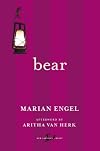
My edition had a nice afterword written by university professor Aretha Van Herk that goes over some of the deeper meanings for those readers who got stuck on the sexy bear stuff.
Bear was awarded the Governor General’s Award for Literature, in a year when the jury included Mordecai Richler, Margaret Laurence, and Alice Munro. In places, the writing is absolutely gorgeous, and I can’t stop thinking about this book (and it’s not the bear porn that’s sticking in my mind).
Recommended for: It’s only 115 pages, so if you think it sounds interesting, give it a try. It’s definitely a not-to-be-missed book for anyone who is serious about reading CanLit. I wish I could have studied this at university—it would have been so much fun.
Why I Read This Now: Bear has been in my TBR pile for a while, but I thought to suggest it to my book club after discussion of it went viral on the internet this summer. In my book club, we vote on the books we will read, and every single member voted to read Bear. I look forward to the upcoming discussion.
Rating: Great writing + interesting story + librarian hero + humour + bravery of writing erotica + CanLit playfulness + literary influences = 4.5 stars. show less
In the opening paragraph of Bear, archivist Lou is described as mole-like. The historical institute she works for has recently been bequeathed a small island, with a house and a substantial 19th century library. Lou’s job is to spend the summer there, cataloguing its contents and determining the potential value to the institute. Just by the act show more of leaving the cold, grey city, Lou begins her transformation (check off CanLit trope). Arriving on the island, Lou learns that the house comes with a bear, who she finds chained up behind the house. Over the summer, Lou forms a sort of friendship with the bear, and yada yada yada, bear porn. Yes, you read that right.
Bear is one of those chewy literary books that you can read straight up, or pull apart and explore the layers and symbolism. The author started this when the Writer’s Union of Canada put out a call to established authors to write a piece of pornography (a project that was abandoned when the submissions that came in were dreadfully unpublishable). But Engels ran with the idea. As Margaret Atwood says in her blurb for the book (and I note that something about this reminds me of Atwood’s own book Surfacing), the bear sex is “as plausible as kitchens,” and the short novel is indeed written in a realistic style. But there are a thousand other things going on too. The main one is how Engels plays with and subverts the CanLit canon with its ubiquitous themes of the transformative powers of wilderness, the savage, nature, man against the wilderness, etc and so on. Then there’s the whole second wave feminist sexual awakening trope. But the one that I keep coming back to is—despite the realism—a fabulist feel. Is Bear a play on “Beauty and the Beast”? Or “Snow White and Rose Red”? Or with the lonely octagonal house as one of the characters, is it Gothic? It’s all of these.
My edition had a nice afterword written by university professor Aretha Van Herk that goes over some of the deeper meanings for those readers who got stuck on the sexy bear stuff.
Bear was awarded the Governor General’s Award for Literature, in a year when the jury included Mordecai Richler, Margaret Laurence, and Alice Munro. In places, the writing is absolutely gorgeous, and I can’t stop thinking about this book (and it’s not the bear porn that’s sticking in my mind).
Recommended for: It’s only 115 pages, so if you think it sounds interesting, give it a try. It’s definitely a not-to-be-missed book for anyone who is serious about reading CanLit. I wish I could have studied this at university—it would have been so much fun.
Why I Read This Now: Bear has been in my TBR pile for a while, but I thought to suggest it to my book club after discussion of it went viral on the internet this summer. In my book club, we vote on the books we will read, and every single member voted to read Bear. I look forward to the upcoming discussion.
Rating: Great writing + interesting story + librarian hero + humour + bravery of writing erotica + CanLit playfulness + literary influences = 4.5 stars. show less
Lists
Awards


You May Also Like


Associated Authors
Statistics
- Works
- 17
- Also by
- 5
- Members
- 962
- Popularity
- #26,759
- Rating
- 3.5
- Reviews
- 50
- ISBNs
- 71
- Languages
- 8