
Robbie Arnott
Author of The Rain Heron
Works by Robbie Arnott
Ned e la balena 1 copy
Associated Works
Breathing Space Essays poems and stories about Tasmanians changing relationship with nature (2021) — Contributor — 2 copies
Tagged
Common Knowledge
- Birthdate
- 1989
- Gender
- male
- Occupations
- advertising copywriter
novelist
short story writer - Nationality
- Australia
- Birthplace
- Launceston, Tasmania, Australia
- Places of residence
- Hobart, Tasmania, Australia
- Associated Place (for map)
- Tasmania, Australia
Members
Reviews
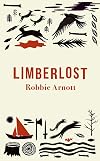
I haven’t read Robbie Arnott’s previous two books, Flames and The Rain Heron, magical fables that have won multiple awards. This novel, Limberlost, is very grounded and realist but no less magical for that.
Ned is a teenager living in a northern Tasmanian orchard during World War II. His older brothers are away at war and his sister has come home to help their father run the farm. Ned’s mother died when he was very young.
Ned dreams of owning a boat, and shoots rabbits to sell their show more pelts and save money toward that goal. This partly comes from an experience Ned had when he was five, when his father took the boys out to the mouth of the nearby river to see up close a whale that was reputedly deliberately dangerous to local watercraft.
We follow some key events that shape teenaged Ned’s life: his encounters and relationships with an accidentally trapped quoll, a damaged mare, his best friend, a girl who shows interest in him and, especially, his family. We cut forwards and back in time to find out some key events that inform our understanding of Ned’s life.
Limberlost is essentially about awareness, consciousness and, especially, relationships. For teenaged Ned, his human relationships are less clear and more complicated than his relationships with animals, land, wind and water. His awareness of his place in the world and his family become clearer but no less complicated as he, and we, learn more of his personal history.
The mastery of this novel lies in how Arnott uses language to not just describe these events and relationships but to embody them. It’s both visceral and poetic, or maybe it’s that Arnott finds the poetry in the visceral. Morality, ethics and personal values are imbued in the characters’ natures and their actions. The shape and flavour of the natural and built world and the behaviour of people and animals come alive in Arnott’s words, as they appear to Ned. We’re often granted a deeper understanding than Ned of what’s happening in his world, even as we see it through his eyes.
I found it a very emotional book, even though most of the male characters are of their time and place: stoic, stolid and uncommunicative. We know there’s love between the father and the brothers but they have a hard time showing it directly. The other men in the book are the least perceptive, the most self-interested and the most manipulative characters in the book.
Ned’s relationships with the female characters are a kind of balance to this, keeping his natural openness alive. From the vet who tends to the mare, his visits to his mother’s sailing locale in England, his sister, his wife and right through to his daughters’ attempts to put local history in perspective, it’s the women who keep Ned in balance.
Limberlost touched me deeply, perhaps partly because it is so very Tasmanian. The river didn’t need to be named for me to know exactly which river it is. And yes, I brought to the book my memory of the unmistakably distinctive smell of Huon Pine, and the difference in appearance and behaviour of a sick native cat behind bars compared to a healthy one in the wild. But these are bonuses for me. Arnott’s words will carry anyone into the physical and emotional world of Ned without those references.
It’s hard for me to describe how any book can be so simultaneously grounded in the real, perceptible world and yet so lyrical and poetic. Still young, Robbie Arnott is already a writer of great skill and power. As I said, I haven’t read his previous two books, but I think I’ll be looking them up.
I can’t recommend Limberlost highly enough. show less
Ned is a teenager living in a northern Tasmanian orchard during World War II. His older brothers are away at war and his sister has come home to help their father run the farm. Ned’s mother died when he was very young.
Ned dreams of owning a boat, and shoots rabbits to sell their show more pelts and save money toward that goal. This partly comes from an experience Ned had when he was five, when his father took the boys out to the mouth of the nearby river to see up close a whale that was reputedly deliberately dangerous to local watercraft.
We follow some key events that shape teenaged Ned’s life: his encounters and relationships with an accidentally trapped quoll, a damaged mare, his best friend, a girl who shows interest in him and, especially, his family. We cut forwards and back in time to find out some key events that inform our understanding of Ned’s life.
Limberlost is essentially about awareness, consciousness and, especially, relationships. For teenaged Ned, his human relationships are less clear and more complicated than his relationships with animals, land, wind and water. His awareness of his place in the world and his family become clearer but no less complicated as he, and we, learn more of his personal history.
The mastery of this novel lies in how Arnott uses language to not just describe these events and relationships but to embody them. It’s both visceral and poetic, or maybe it’s that Arnott finds the poetry in the visceral. Morality, ethics and personal values are imbued in the characters’ natures and their actions. The shape and flavour of the natural and built world and the behaviour of people and animals come alive in Arnott’s words, as they appear to Ned. We’re often granted a deeper understanding than Ned of what’s happening in his world, even as we see it through his eyes.
I found it a very emotional book, even though most of the male characters are of their time and place: stoic, stolid and uncommunicative. We know there’s love between the father and the brothers but they have a hard time showing it directly. The other men in the book are the least perceptive, the most self-interested and the most manipulative characters in the book.
Ned’s relationships with the female characters are a kind of balance to this, keeping his natural openness alive. From the vet who tends to the mare, his visits to his mother’s sailing locale in England, his sister, his wife and right through to his daughters’ attempts to put local history in perspective, it’s the women who keep Ned in balance.
Limberlost touched me deeply, perhaps partly because it is so very Tasmanian. The river didn’t need to be named for me to know exactly which river it is. And yes, I brought to the book my memory of the unmistakably distinctive smell of Huon Pine, and the difference in appearance and behaviour of a sick native cat behind bars compared to a healthy one in the wild. But these are bonuses for me. Arnott’s words will carry anyone into the physical and emotional world of Ned without those references.
It’s hard for me to describe how any book can be so simultaneously grounded in the real, perceptible world and yet so lyrical and poetic. Still young, Robbie Arnott is already a writer of great skill and power. As I said, I haven’t read his previous two books, but I think I’ll be looking them up.
I can’t recommend Limberlost highly enough. show less

The opening few chapters of The Rain Heron by Australian author Robbie Arnott are absolutely sublime. A seamless blend of fable and fairytale, the reader is introduced to the existence of the mythical rain heron. This story forms Part 0 of this slim novel, and we meet our main character Ren, at the beginning of Part 1.
Ren is an older woman living the life of a recluse on a mountain. She manages to eke out a meagre living and seems happy until she learns soldiers are coming. The location of show more the mountain or the road trip that follows is never specified, but the descriptions of the changing landscape are so vivid I could almost smell the pine trees.
Part 2 begins on the coast and another extraordinary story emerges. A reverence for living in harmony with the ocean is threatened when an outsider approaches and tries to learn the secrets of the ink fishermen.
The characters in both stories are brought together in a clever way and we resume our interest in the rain heron.
The Rain Heron contains elements of magical realism in an easily digestible format that caught this reader by surprise. It's hard to define, sometimes reading like dystopian, at other times feeling like horror and at all times exquisitely written. It is also mythical, literary and confronting with plenty of tension and some terrific character growth. My only criticism would be the lack of punctuation for dialogue. Fortunately this didn't hamper my enjoyment of the first part of the novel and I was able to follow the dialogue during the rest of the story without too much trouble, but it was a minor distraction.
I've heard The Rain Heron described as an eco-fable and parable and I wholeheartedly agree. I felt a real love of nature in both the mountainous and coastal settings and a clear concern about our environment bubbling along in the background of the story, also falling into the genre of climate-fiction.
The Rain Heron is hard to categorise, difficult to define but easy to love. It is literary fiction at its very best and I found it moving and highly original. And Australian! Robbie Arnott is an author to watch.
* Copy Courtesy of Text Publishing * show less
Ren is an older woman living the life of a recluse on a mountain. She manages to eke out a meagre living and seems happy until she learns soldiers are coming. The location of show more the mountain or the road trip that follows is never specified, but the descriptions of the changing landscape are so vivid I could almost smell the pine trees.
Part 2 begins on the coast and another extraordinary story emerges. A reverence for living in harmony with the ocean is threatened when an outsider approaches and tries to learn the secrets of the ink fishermen.
The characters in both stories are brought together in a clever way and we resume our interest in the rain heron.
The Rain Heron contains elements of magical realism in an easily digestible format that caught this reader by surprise. It's hard to define, sometimes reading like dystopian, at other times feeling like horror and at all times exquisitely written. It is also mythical, literary and confronting with plenty of tension and some terrific character growth. My only criticism would be the lack of punctuation for dialogue. Fortunately this didn't hamper my enjoyment of the first part of the novel and I was able to follow the dialogue during the rest of the story without too much trouble, but it was a minor distraction.
I've heard The Rain Heron described as an eco-fable and parable and I wholeheartedly agree. I felt a real love of nature in both the mountainous and coastal settings and a clear concern about our environment bubbling along in the background of the story, also falling into the genre of climate-fiction.
The Rain Heron is hard to categorise, difficult to define but easy to love. It is literary fiction at its very best and I found it moving and highly original. And Australian! Robbie Arnott is an author to watch.
* Copy Courtesy of Text Publishing * show less

Rating: 5* of five
The Publisher Says: Ren lives alone on the remote frontier of a country devastated by a coup. High on the forested slopes, she survives by hunting and trading—and forgetting.
But when a young soldier comes to the mountains in search of a local myth, Ren is inexorably drawn into her impossible mission. As their lives entwine, unravel and erupt—as myths merge with reality—both Ren and the soldier are forced to confront what they regret, what they love, and what they show more fear.
The Rain Heron is the dizzying, dazzling new novel from the author of Flames.
I RECEIVED A DRC FROM THE PUBLISHER VIA EDELWEISS+. THANK YOU.
My Review: "So much was ruined, either slowly or in red instants, and nothing was getting better and nobody was doing enough about it. And through the quiet carnage of the world I kept moving." A fascinating story made up of absences, of clothing not worn, of things not happening, of eyes unseeing. A novel centering absences sounds...unsatisfying. I can only advise you to trust Author Arnott, read the story, and see if my rating holds true for you, as well.
When an author creates a mythos for a place that has one well-known to most readers of English-language prose, we call it a retelling. What, then, is the word for Author Arnott's mythmaking for this exceedingly ancient land that Europeans don't know the mythos of, whose history is older than ours by many millennia, and yet it settles onto the mindspace of the people now there seamlessly? "When I first saw the bird burst into its high grotto, when I watched its dance of wet light, I was mesmerised by it. Then it took my eye, and that feeling was replaced by terror, and with the terror came extraordinary pain, as I felt the icicle of its beak pierce the jellied rim of my eyeball."
I don't really know but that's where we are.
Absences and spaces and takings-away and lacks...all make this near-future dystopian in an unflashy, unbombastic unnervingly real way. It could be that, as the 2025 US regime unleashes its evil agenda on the world, this feels too on-the-nose in the way that validates its rightness and essential truth-telling.
Nowhere in the text are there quotation marks or suchlike civilizing indicators. It's an effective technique for a post-apocalyptic story made of takings-away and spaces where things once were or might have been. Its message is "do more with less, things are not what they were, get used to providing things you're used to getting."
The Rain Heron does not come on demand. show less
The Publisher Says: Ren lives alone on the remote frontier of a country devastated by a coup. High on the forested slopes, she survives by hunting and trading—and forgetting.
But when a young soldier comes to the mountains in search of a local myth, Ren is inexorably drawn into her impossible mission. As their lives entwine, unravel and erupt—as myths merge with reality—both Ren and the soldier are forced to confront what they regret, what they love, and what they show more fear.
The Rain Heron is the dizzying, dazzling new novel from the author of Flames.
I RECEIVED A DRC FROM THE PUBLISHER VIA EDELWEISS+. THANK YOU.
My Review: "So much was ruined, either slowly or in red instants, and nothing was getting better and nobody was doing enough about it. And through the quiet carnage of the world I kept moving." A fascinating story made up of absences, of clothing not worn, of things not happening, of eyes unseeing. A novel centering absences sounds...unsatisfying. I can only advise you to trust Author Arnott, read the story, and see if my rating holds true for you, as well.
“A farmer lived, but not well. If she planted grain, it would not sprout If she grew rice, it would rot. If she tried to raise livestock, they would gasp and choke and die before they’d seen a second dawn (or they were stillborn, often taking their mothers, which the farmer had usually bought with the last of her coins and hope, with them). Success and happiness were foreign to her, and she had forgotten what it was like to go to bed unhungry. All she had was her hunger and her farm—and her farm, as far as she could tell, wanted her to starve.”
When an author creates a mythos for a place that has one well-known to most readers of English-language prose, we call it a retelling. What, then, is the word for Author Arnott's mythmaking for this exceedingly ancient land that Europeans don't know the mythos of, whose history is older than ours by many millennia, and yet it settles onto the mindspace of the people now there seamlessly? "When I first saw the bird burst into its high grotto, when I watched its dance of wet light, I was mesmerised by it. Then it took my eye, and that feeling was replaced by terror, and with the terror came extraordinary pain, as I felt the icicle of its beak pierce the jellied rim of my eyeball."
I don't really know but that's where we are.
“Paddling nearer, they saw that it was the unlucky farmer, dead or unconscious, her body draped over the branches like a nightgown hung out to dry. But more curious than this was what they saw next: a huge heron, the colour of rain, suddenly emerging from the flood in a fast, steep flight, leaving not even a ripple on the water beneath it. With a languid flap of its wings it came to rest in the crown of the oak, standing over the unlucky farmer, as if on guard.
The teenagers brought their boat to a stop. This water-risen heron was unlike any other they’d seen before—any other heron, any other living creature. Its blue-grey feathers were so pale, they claimed later, that they could see straight through the bird. Its body was pierced by strands of dusky light, and the tree was clearly visible directly behind its sharp, moist beak.
A ghost, one claimed. A mirage, said another. But before they could get closer the heron hunched its neck, flapped its wings and leapt into the sky. A thick spray of water fell from its wings, far more water than could have been resting on its feathers. Then it disappeared into the remnants of the storm.
Absences and spaces and takings-away and lacks...all make this near-future dystopian in an unflashy, unbombastic unnervingly real way. It could be that, as the 2025 US regime unleashes its evil agenda on the world, this feels too on-the-nose in the way that validates its rightness and essential truth-telling.
Why do they want it?
Who?
The generals or whoever’s in charge.
Men want things. They hear about something and pretty soon they’re convinced it belongs to them.
Nowhere in the text are there quotation marks or suchlike civilizing indicators. It's an effective technique for a post-apocalyptic story made of takings-away and spaces where things once were or might have been. Its message is "do more with less, things are not what they were, get used to providing things you're used to getting."
The Rain Heron does not come on demand. show less
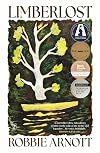
Let me start by saying that I am a huge fan of Robbie Arnott. I picked up Limberlost with specific expectations based on his previous work and while they were not fully met, I was enchanted with this nonetheless.
Limberlost is a simple coming-of-age story. We follow a teenaged Ned through a transformative summer on the family orchard. While his older brothers are away in the war, Ned is left home with his hard-working, stoic father and his equally staid older sister. He spends his days show more working on the orchard and trapping and hunting rabbits. He sells their pelts in town ostensibly to help the soldiers but secretly to raise money to buy himself a small boat which will give him a certain freedom and independence.
Ned is a quiet, serious young man who has a deep sense of connection to his environment. Limberlost, the name of the family orchard, is located in a river valley in Tasmania and Ned is well acquainted with the flora and fauna of his home. This relationship between man and nature is at the core of all of Arnott's writing and while it is certainly more subtle in this novel, it is still present.
Throughout the novel, Arnott flashes back and forwards in time giving us a sense of what inspires Ned and how this summer has shaped him into a man. While we witness Ned mature and evolve, we are also given insight into the changing landscape of Tasmania through the use and abuse of man.
This is the third novel I've read by Robbie Arnott and Limberlost is, by far, the most straightforward. The reasons that my expectations weren't met had nothing to do with being let down by the story or the characters, it was that I fell in love with his previous two books (The Rain Heron and Flames) due to the elements of magical realism that were stitched throughout. They felt at once sumptuous and ethereal. Limberlost has the same moments of stunning beauty but feels far more grounded a story.
Although I was far more smitten with Arnott's previous two books, I wouldn't hesitate to recommend this novel to anyone. It's a very sweet, heartfelt, and simple story. show less
Limberlost is a simple coming-of-age story. We follow a teenaged Ned through a transformative summer on the family orchard. While his older brothers are away in the war, Ned is left home with his hard-working, stoic father and his equally staid older sister. He spends his days show more working on the orchard and trapping and hunting rabbits. He sells their pelts in town ostensibly to help the soldiers but secretly to raise money to buy himself a small boat which will give him a certain freedom and independence.
Ned is a quiet, serious young man who has a deep sense of connection to his environment. Limberlost, the name of the family orchard, is located in a river valley in Tasmania and Ned is well acquainted with the flora and fauna of his home. This relationship between man and nature is at the core of all of Arnott's writing and while it is certainly more subtle in this novel, it is still present.
Throughout the novel, Arnott flashes back and forwards in time giving us a sense of what inspires Ned and how this summer has shaped him into a man. While we witness Ned mature and evolve, we are also given insight into the changing landscape of Tasmania through the use and abuse of man.
This is the third novel I've read by Robbie Arnott and Limberlost is, by far, the most straightforward. The reasons that my expectations weren't met had nothing to do with being let down by the story or the characters, it was that I fell in love with his previous two books (The Rain Heron and Flames) due to the elements of magical realism that were stitched throughout. They felt at once sumptuous and ethereal. Limberlost has the same moments of stunning beauty but feels far more grounded a story.
Although I was far more smitten with Arnott's previous two books, I wouldn't hesitate to recommend this novel to anyone. It's a very sweet, heartfelt, and simple story. show less
Lists
Awards


You May Also Like


Associated Authors
Statistics
- Works
- 5
- Also by
- 1
- Members
- 838
- Popularity
- #30,495
- Rating
- 4.0
- Reviews
- 54
- ISBNs
- 51
- Languages
- 3