
Douglas Murray (1) (1979–)
Author of The Madness of Crowds: Gender, Race and Identity
For other authors named Douglas Murray, see the disambiguation page.
Works by Douglas Murray
Tagged
Common Knowledge
- Other names
- Murray, Douglas Kear
- Birthdate
- 1979-07
- Gender
- male
- Education
- Eton
Magdalen College, Oxford
St Benedict's, Ealing, London, UK - Occupations
- neoconservative
journalist - Organizations
- Henry Jackson Society
- Nationality
- UK
- Associated Place (for map)
- UK
Members
Reviews

Much as with The Strange Death of Europe this book is primarily descriptive, not instructive. A lot of it takes the form of "look at X event from the recent years, isn't this crazy". If you're even slightly tuned into this topic you will have already heard of the majority of things Murray brings up, making the book work great as an overview for uninformed people who would never read the book in the first place.
But the principal problem of the book is that after all the descriptions of show more cancerous ideas infesting the west, it has no solutions but "grin and bear it". The majority of his own pushback comes in the tepid form of the conservative gravestone; "what if the roles were reversed".
You can trace the infection back in time much better than Murray bothers to here (only scant remarks about the intellectual heritage from Focault and others), and see a stronger reaction from people like Harold Bloom (and his "culture of resentment") or Victor Davis Hanson tracing out one of the first casualties in academia, the classics departments, in Who Killed Homer in the tail end of the 90s. This is not a new problem, it's just a malignant cancer that's finally spread to most areas of society. We're decades beyond the need to point to the cancer and well into the need for a treatment.
Unfortunately this book has no such answers. You get a nice back pat for the west being the only place that would tolerate the cancer having a platform and that's it. show less
But the principal problem of the book is that after all the descriptions of show more cancerous ideas infesting the west, it has no solutions but "grin and bear it". The majority of his own pushback comes in the tepid form of the conservative gravestone; "what if the roles were reversed".
You can trace the infection back in time much better than Murray bothers to here (only scant remarks about the intellectual heritage from Focault and others), and see a stronger reaction from people like Harold Bloom (and his "culture of resentment") or Victor Davis Hanson tracing out one of the first casualties in academia, the classics departments, in Who Killed Homer in the tail end of the 90s. This is not a new problem, it's just a malignant cancer that's finally spread to most areas of society. We're decades beyond the need to point to the cancer and well into the need for a treatment.
Unfortunately this book has no such answers. You get a nice back pat for the west being the only place that would tolerate the cancer having a platform and that's it. show less

A sobering and pessimistic chronicle of the socio-political changes in Europe in recent years, centred around the migrant crisis. The fatal flaw, Douglas Murray argues, is that "the world is coming to Europe at precisely the moment that Europe has lost sight of what it is" meant to stand for (pg. 7). Mass immigration from the Third World and from Muslim-majority countries, alongside a corresponding decline in European identity, prestige, vitality and self-confidence, has been immensely show more damaging for the Western continent.
Murray unpacks this argument eloquently and calmly; this is no fiery polemic, though Murray doesn't pull his punches when it comes to some of the mistakes, ignorance and wilful misdirection on the part of political and media elites. As Murray notes, the European publics have been against these sort of developments from the start, but a large combination of factors conspired to silence or misdirect or even just exhaust them, and sometimes just to ignore them. Indeed, it is remarkable just how much has been done without any sort of democratic mandate. Taking a step back from the rolling daily news and absorbing the events of the last few years through the more sober structure of The Strange Death of Europe – against a backdrop of decades of mass immigration and failed assimilation – you begin to appreciate just how alarming the prevailing attitudes to this crisis are. One particular example, from page 187, stood out for me. After the Paris attacks of 2015, European countries finally began – albeit temporarily – to try to stem the tide:
"… even Sweden announced that it would henceforth be introducing checks at its borders. From now on people entering the country would need to show some form of identification. This was announced as though nobody had ever heard of such a thing before."
So much absurdity and negligence and cowardice – moral, intellectual and political – is contained in examples such as this, which is far from unique. From Sweden's reverse eugenics to Merkel's decision to let in one million migrants in a single year (and German politicians' outright statements that Europeans 'deserve' to be replaced and 'ought to leave' if they don't like it) to the repeated refrains that terrorist attacks have 'nothing' – nothing – to do with Islam, you can't help but despair at how crazy things have gotten. The entire bottom has fallen out and, what is most heart-breaking of all, the people know it. The majority of the public have been against this all along, and yet the political and media classes deny and obfuscate and suppress, even prosecute, before lecturing the great unwashed – the gang-raped and the blown-apart and the disenfranchised classes – on their 'bigotry'.
The Strange Death of Europe is, for these reasons and many more, exhausting and depressing. It is hard to review for this reason and even harder to read. But this is not to say that the book is a bad read: quite the opposite, it is lucid, well-argued and comprehensive. Even though it doesn't provide any solutions – as Murray has reluctantly suggested in interviews and debates, things have gotten so bad that solutions might not even be possible – it is perhaps one of the most important books of our time. Absurd as it may sound, this is because so many people refuse or are discouraged from even acknowledging plain facts, let alone being able to think about solutions.
Murray is measured and refined, and if he is pessimistic it is at least a fully-warranted pessimism. Trials are coming that will be unprecedented, and perhaps insurmountable. And unknown, without historical precedent: a perfect storm of humanitarian crisis, political decline, excessively liberal mindsets, generous welfare states, static birthrates, economic depression and religious decay – and a corresponding introduction – nay, welcoming – of a predatory foreign ideology which is perfectly suited and suitably shameless to exploit all of these failings in the very people who have taken them in. The Strange Death of Europe reminded me a lot of the history books I read at university: the books on pre-war appeasement in the 1920s and 1930s, with the floundering and exhausted European elites and peoples who struggled to contain and repel the forces that assailed them, and the academics dispassionately argue for the various importance of certain factors. And you read them with the bitter knowledge of hindsight, knowing that what resulted from that period was something much, much worse than anyone could have conceived.
You can't avoid a similar sense of history and foreboding when reading The Strange Death of Europe: we might not know the details of what the future will hold, but the book seems an uncannily Cassandra-like prophecy that our grandchildren will weep to read. 'How could they not know?', they will say. 'It was so obvious. How could they not do something?', just as we can read history books about the 1930s and say the same. And those grandchildren will curse our names, with good reason. show less
Murray unpacks this argument eloquently and calmly; this is no fiery polemic, though Murray doesn't pull his punches when it comes to some of the mistakes, ignorance and wilful misdirection on the part of political and media elites. As Murray notes, the European publics have been against these sort of developments from the start, but a large combination of factors conspired to silence or misdirect or even just exhaust them, and sometimes just to ignore them. Indeed, it is remarkable just how much has been done without any sort of democratic mandate. Taking a step back from the rolling daily news and absorbing the events of the last few years through the more sober structure of The Strange Death of Europe – against a backdrop of decades of mass immigration and failed assimilation – you begin to appreciate just how alarming the prevailing attitudes to this crisis are. One particular example, from page 187, stood out for me. After the Paris attacks of 2015, European countries finally began – albeit temporarily – to try to stem the tide:
"… even Sweden announced that it would henceforth be introducing checks at its borders. From now on people entering the country would need to show some form of identification. This was announced as though nobody had ever heard of such a thing before."
So much absurdity and negligence and cowardice – moral, intellectual and political – is contained in examples such as this, which is far from unique. From Sweden's reverse eugenics to Merkel's decision to let in one million migrants in a single year (and German politicians' outright statements that Europeans 'deserve' to be replaced and 'ought to leave' if they don't like it) to the repeated refrains that terrorist attacks have 'nothing' – nothing – to do with Islam, you can't help but despair at how crazy things have gotten. The entire bottom has fallen out and, what is most heart-breaking of all, the people know it. The majority of the public have been against this all along, and yet the political and media classes deny and obfuscate and suppress, even prosecute, before lecturing the great unwashed – the gang-raped and the blown-apart and the disenfranchised classes – on their 'bigotry'.
The Strange Death of Europe is, for these reasons and many more, exhausting and depressing. It is hard to review for this reason and even harder to read. But this is not to say that the book is a bad read: quite the opposite, it is lucid, well-argued and comprehensive. Even though it doesn't provide any solutions – as Murray has reluctantly suggested in interviews and debates, things have gotten so bad that solutions might not even be possible – it is perhaps one of the most important books of our time. Absurd as it may sound, this is because so many people refuse or are discouraged from even acknowledging plain facts, let alone being able to think about solutions.
Murray is measured and refined, and if he is pessimistic it is at least a fully-warranted pessimism. Trials are coming that will be unprecedented, and perhaps insurmountable. And unknown, without historical precedent: a perfect storm of humanitarian crisis, political decline, excessively liberal mindsets, generous welfare states, static birthrates, economic depression and religious decay – and a corresponding introduction – nay, welcoming – of a predatory foreign ideology which is perfectly suited and suitably shameless to exploit all of these failings in the very people who have taken them in. The Strange Death of Europe reminded me a lot of the history books I read at university: the books on pre-war appeasement in the 1920s and 1930s, with the floundering and exhausted European elites and peoples who struggled to contain and repel the forces that assailed them, and the academics dispassionately argue for the various importance of certain factors. And you read them with the bitter knowledge of hindsight, knowing that what resulted from that period was something much, much worse than anyone could have conceived.
You can't avoid a similar sense of history and foreboding when reading The Strange Death of Europe: we might not know the details of what the future will hold, but the book seems an uncannily Cassandra-like prophecy that our grandchildren will weep to read. 'How could they not know?', they will say. 'It was so obvious. How could they not do something?', just as we can read history books about the 1930s and say the same. And those grandchildren will curse our names, with good reason. show less
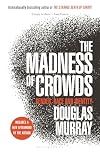
Douglas Murray has written one of those "books for our times". It is brilliantly argued, moderate in tone, amply documented and given the times in which we live it is also courageous.
Murray's subject matter is the plague of identity politics that has consumed our institutional existences, political and putatively non-political. This phenomenon aided and abetted by social media that serves as the transmission belt for social justice warrior mobs is squeezing all of the air of the public show more square. Support for free speech and debate is under assault from those institutions that are most dependent on it to perform their functions: universities, newspapers, television and radio networks, and online communications media.
His book is organized around four subjects simply described in the chapter headings: Gay, Women, Race and Trans. Interspersed among these topics are relevant reflections on The Marxist foundations behind the theory and practice that have taken root and spread through the humanities, social sciences, law schools, government bureaucracies, boards of directors and human resource departments.
Murray also discusses the impact of Tech specifically on the ability to leverage technology to retrieve any statement ever made by any person in a public or private capacity without any context and gin up a Twitter mob that can never be appeased no matter how abjectly the victim apologizes. Of course the victim is understood by right thinking people to really be an aggressor, a hater, a categorical criminal against perhaps women, or gays, or trans persons, or people of color.
Murray discusses the problem of forgiveness in the world we occupy. It is related to the problem of forgetting. It is hard, though not impossible to forgive when there is no forgetting and in the world created by the pervasiveness of the internet and social media it is nearly impossible to forget. Related to this is the problem of understanding. It is axiomatic within the religion of identity politics that unless you are a member in good standing of one these oppressed groups you cannot understand their situation. Murray quotes Mark Lilla who sums up the problem as follows: "You cannot tell people simultaneously 'You must understand me' and 'You cannot understand me'." This is an observations that rings true and does not inspire optimism about our future.
I won't get into the details of his theses about the main categories reviewed here. He treats each group's claims seriously but does not accept all claims at face value and delineates tensions and contradictions where called for. I have to acknowledge a certain degree of personal schadenfreude when he relates the stories of radicals who stepped on one of the multitude of "tripwires" that set off the multitude of landmines buried in our cultural landscape (some of which they may have helped to lay).
If Murray depended on an academic position for his livelihood the best response he could hope for would be that the book was completely ignored, which is the usual response to an argument that can't be met by the predominantly left, progressive academy. His thesis would be suffocated by lack of oxygen. If his academic post was at Evergreen State College in Oregon or Yale or anyplace in between it is possible that he would be confronted by an angry mob, shouting vulgar invectives in his face, inciting him to a word or action that might be caught by a cell phone camera and destroying his career and life in the aftermath. For that matter if he was employed by the New York Times, or The Atlantic, or the Daily Telegraph or even a lousy online web based magazine he could be excommunicated in an instant.
For his intellectual honesty and courage we are in his debt. show less
Murray's subject matter is the plague of identity politics that has consumed our institutional existences, political and putatively non-political. This phenomenon aided and abetted by social media that serves as the transmission belt for social justice warrior mobs is squeezing all of the air of the public show more square. Support for free speech and debate is under assault from those institutions that are most dependent on it to perform their functions: universities, newspapers, television and radio networks, and online communications media.
His book is organized around four subjects simply described in the chapter headings: Gay, Women, Race and Trans. Interspersed among these topics are relevant reflections on The Marxist foundations behind the theory and practice that have taken root and spread through the humanities, social sciences, law schools, government bureaucracies, boards of directors and human resource departments.
Murray also discusses the impact of Tech specifically on the ability to leverage technology to retrieve any statement ever made by any person in a public or private capacity without any context and gin up a Twitter mob that can never be appeased no matter how abjectly the victim apologizes. Of course the victim is understood by right thinking people to really be an aggressor, a hater, a categorical criminal against perhaps women, or gays, or trans persons, or people of color.
Murray discusses the problem of forgiveness in the world we occupy. It is related to the problem of forgetting. It is hard, though not impossible to forgive when there is no forgetting and in the world created by the pervasiveness of the internet and social media it is nearly impossible to forget. Related to this is the problem of understanding. It is axiomatic within the religion of identity politics that unless you are a member in good standing of one these oppressed groups you cannot understand their situation. Murray quotes Mark Lilla who sums up the problem as follows: "You cannot tell people simultaneously 'You must understand me' and 'You cannot understand me'." This is an observations that rings true and does not inspire optimism about our future.
I won't get into the details of his theses about the main categories reviewed here. He treats each group's claims seriously but does not accept all claims at face value and delineates tensions and contradictions where called for. I have to acknowledge a certain degree of personal schadenfreude when he relates the stories of radicals who stepped on one of the multitude of "tripwires" that set off the multitude of landmines buried in our cultural landscape (some of which they may have helped to lay).
If Murray depended on an academic position for his livelihood the best response he could hope for would be that the book was completely ignored, which is the usual response to an argument that can't be met by the predominantly left, progressive academy. His thesis would be suffocated by lack of oxygen. If his academic post was at Evergreen State College in Oregon or Yale or anyplace in between it is possible that he would be confronted by an angry mob, shouting vulgar invectives in his face, inciting him to a word or action that might be caught by a cell phone camera and destroying his career and life in the aftermath. For that matter if he was employed by the New York Times, or The Atlantic, or the Daily Telegraph or even a lousy online web based magazine he could be excommunicated in an instant.
For his intellectual honesty and courage we are in his debt. show less
"All the rage – including the wild, destructive misandry, the double-think and the self-delusion – stem from this fact: that we are being not just asked, but expected, to radically alter our lives and societies on the basis of claims that our instincts all tell us cannot possibly be true." (pg. 106)
Another lucid and compassionate diagnosis of some of the derangements in our society, from the author of The Strange Death of Europe. Douglas Murray examines the "set of tripwires [that] have show more been laid across the culture" (pg. 5) in the realm of identity politics, focusing in four sizeable chapters on 'Gay', 'Women', 'Race' and 'Trans', with interludes on neo-Marxism, Big Tech and the possibility of forgiveness.
From this summary above, it will immediately be clear whether The Madness of Crowds is your cup of tea, and that the people who truly need to read it are those who would never even approach it. I am already firmly in Murray's corner, but this also means that I have heard much of what is discussed here before. Because of this familiarity, and because the book lacks the central narrative argument that The Strange Death of Europe possessed, it didn't leave as much of an impression on me as I had expected.
However, Murray is always engaging, and no one can do the un-egotistical, arched-eyebrow dismantling of the nonsensical extremes of 'woke' as well as he can. Insofar as I had a new response to this book – as distinct from my general support of his principles, wherever articulated – it was in a slight recalibration of some of my views that I had allowed to drift. Murray is more thoughtful in this 'culture war' than many of his peers, and particularly on trans issues he compassionately explains the differences between intersex (a hardware issue) and the more fashionable identities on the trans spectrum. His view is that these tripwires – not only in trans – are "far uglier than [they need] to be" (pg. 203), and whilst it is difficult for both Murray and the reader to determine what all this might mean in the grand scheme of things, it was helpful for me to sit down and listen to a bridge-builder, even as outside "the world stampeded on" (pg. 175). show less
Another lucid and compassionate diagnosis of some of the derangements in our society, from the author of The Strange Death of Europe. Douglas Murray examines the "set of tripwires [that] have show more been laid across the culture" (pg. 5) in the realm of identity politics, focusing in four sizeable chapters on 'Gay', 'Women', 'Race' and 'Trans', with interludes on neo-Marxism, Big Tech and the possibility of forgiveness.
From this summary above, it will immediately be clear whether The Madness of Crowds is your cup of tea, and that the people who truly need to read it are those who would never even approach it. I am already firmly in Murray's corner, but this also means that I have heard much of what is discussed here before. Because of this familiarity, and because the book lacks the central narrative argument that The Strange Death of Europe possessed, it didn't leave as much of an impression on me as I had expected.
However, Murray is always engaging, and no one can do the un-egotistical, arched-eyebrow dismantling of the nonsensical extremes of 'woke' as well as he can. Insofar as I had a new response to this book – as distinct from my general support of his principles, wherever articulated – it was in a slight recalibration of some of my views that I had allowed to drift. Murray is more thoughtful in this 'culture war' than many of his peers, and particularly on trans issues he compassionately explains the differences between intersex (a hardware issue) and the more fashionable identities on the trans spectrum. His view is that these tripwires – not only in trans – are "far uglier than [they need] to be" (pg. 203), and whilst it is difficult for both Murray and the reader to determine what all this might mean in the grand scheme of things, it was helpful for me to sit down and listen to a bridge-builder, even as outside "the world stampeded on" (pg. 175). show less
Lists
Awards


You May Also Like


Associated Authors
Statistics
- Works
- 10
- Members
- 2,949
- Popularity
- #8,664
- Rating
- 4.2
- Reviews
- 75
- ISBNs
- 103
- Languages
- 12
- Favorited
- 2


