
Christopher Caldwell (1) (1962–)
Author of Reflections on the Revolution In Europe: Immigration, Islam, and the West
For other authors named Christopher Caldwell, see the disambiguation page.
Works by Christopher Caldwell
Reflections on the Revolution In Europe: Immigration, Islam, and the West (2009) — Author — 342 copies, 7 reviews
Associated Works
American Affairs Journal, Volume VI, Number 1 (Spring 2022) — Contributor — 1 copy
Tagged
Common Knowledge
- Birthdate
- 1962
- Gender
- male
- Education
- Harvard College
- Organizations
- The Weekly Standard
Claremont Institute - Nationality
- USA
- Birthplace
- Lynn, Massachusetts, U.S.
Members
Reviews
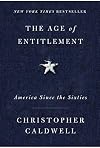
Christopher Caldwell’s “The Age of Entitlement” is a somber reflection of how America 2020 arrived at its current polarized, factionalized state. Caldwell delves into the schism that developed in the mid-1960’s as legislative and cultural changes created two opposing visions of the United States: a Constitutional view, reflecting the country’s historical restraint on the power of Government vs. the post-Civil Rights Era view, where social and political interest groups became intent show more on leveraging legislation aimed at righting historical wrongs for self-centered gains. The result was a raid on the values and beliefs that most Americans hold dear.
For those who had benefitted or had no special ambition to game the system, the Constitutional view was the foundation that enabled this country to progress on the many fronts that awes the rest of the world. For those wishing to leverage their perceived inferior status to a higher, more influential level, the post-60's view enabled these special interest groups to 'divide and conquer' by the use of government force and intimidation.
In the Constitutional view, Government was emphatically limited; (“Congress shall make no law…”, “…shall not…”, etc), while the opposite occurred post-Civil Rights legislation (Government mandating quotas, proactively creating protections for new classes, enabling the bureaucracy to determine acceptable social mores and punish non-adherents, Judicial activism, etc). One could argue the post-1960s is a case study of unintended consequences and the lack of comprehensive, reasoned policymaking resulting in outcomes diametrically opposite those originally envisioned.
Caldwell’s narrative arrives at the same destination as other recent books examining the increasing decay and stratification of our society, albeit through the lens of the social upheavals of the 1960’s. Depressingly, the author has no solution for the situation America now finds itself in; indeed, the book’s analysis leads the reader to project America on a trajectory that will inevitably destroy this great nation. show less
For those who had benefitted or had no special ambition to game the system, the Constitutional view was the foundation that enabled this country to progress on the many fronts that awes the rest of the world. For those wishing to leverage their perceived inferior status to a higher, more influential level, the post-60's view enabled these special interest groups to 'divide and conquer' by the use of government force and intimidation.
In the Constitutional view, Government was emphatically limited; (“Congress shall make no law…”, “…shall not…”, etc), while the opposite occurred post-Civil Rights legislation (Government mandating quotas, proactively creating protections for new classes, enabling the bureaucracy to determine acceptable social mores and punish non-adherents, Judicial activism, etc). One could argue the post-1960s is a case study of unintended consequences and the lack of comprehensive, reasoned policymaking resulting in outcomes diametrically opposite those originally envisioned.
Caldwell’s narrative arrives at the same destination as other recent books examining the increasing decay and stratification of our society, albeit through the lens of the social upheavals of the 1960’s. Depressingly, the author has no solution for the situation America now finds itself in; indeed, the book’s analysis leads the reader to project America on a trajectory that will inevitably destroy this great nation. show less

A penetrating, erudite, and well-written look at the present-day situation in Europe as it relates to Islamic immigration from North Africa and the Middle East. Europe's civilizational exhaustion and confusion, characterized by its secularization and low birthrates, is in stark contrast to the hearty religious identity of its new arrivals, who are forming a distinct, often segregated, culture within its borders. And one that is antithetical to many traditional European values.
Caldwell show more delves into this situation by examining the historical background, and many of the more recent incidents that expose it for what it is, such as the Danish cartoon fiasco. What is most interesting in the account is Europe's own cognitive dissonance -- if not schizophrenia -- in how it responds to and understands mass Muslim immigration.
What Europe -- particularly its elite -- cloaks as broadness, openness, and tolerance is often a festering fear that they are losing their distinctive cultures and ways of life. Which non-elites worry about more openly, but whose fears and opposition never really manifest as policy, despite often representing majorities of their democratic populations. Diversity is touted, and 'integration' (rather than assimilation) is the program, and despite the glosses used to prop them up, they are manifest failures which undermine European national identities and traditions.
Post-colonial guilt gives way to anti-colonial, culturally suicidal tendencies. Caldwell, while not putting it in those terms exactly, perceptively grasps this. show less
Caldwell show more delves into this situation by examining the historical background, and many of the more recent incidents that expose it for what it is, such as the Danish cartoon fiasco. What is most interesting in the account is Europe's own cognitive dissonance -- if not schizophrenia -- in how it responds to and understands mass Muslim immigration.
What Europe -- particularly its elite -- cloaks as broadness, openness, and tolerance is often a festering fear that they are losing their distinctive cultures and ways of life. Which non-elites worry about more openly, but whose fears and opposition never really manifest as policy, despite often representing majorities of their democratic populations. Diversity is touted, and 'integration' (rather than assimilation) is the program, and despite the glosses used to prop them up, they are manifest failures which undermine European national identities and traditions.
Post-colonial guilt gives way to anti-colonial, culturally suicidal tendencies. Caldwell, while not putting it in those terms exactly, perceptively grasps this. show less
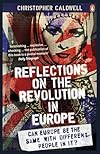
Trauma from past fascist regimes or colonial culpability, Europeans have serious issues dealing with immigration without being prey to the most vicious passions, when the topic is not plain and simply taboo. Christopher Caldwell demonstrates here that they are wrong. Facing migratory movements more and more important, and concerning populations those cultural heritage is often alien to ours, it's the essence of Europe itself, its identity and values, that are in question. Far from fleeing show more debates, Europeans should therefore embrace it and face facts which, from demography to multiculturalism, are certain to change the continent in decades to come. Well...
For sure, such a book is remarkable for dealing rigorously and without heated prejudices with various tendencies when it comes to Islam in Europe. For here's the core topic of it all: the powerful rise of a religion which, rightly or wrongly, never fails to stir controversies. Considered as the second religion after Christianity, it's a remarkable fact indeed that Islam has made its impact, because of the 'intensity of its disciples' convictions, its importance in pubic debates, the privileges it benefits under various legislations of many European countries, or its ability to intimidate its detractors'. Islam, it's true, had to be accommodated; either through just minor adjusting (e.g. swimming pools open for women only at certain times, prayers rooms made available in shops and working businesses...) or, at times, through whole new laws made necessary to deal with some sensitive issues (e.g. the question of the scarf in French schools, forced marriages and imported spouses in Germany and else...).
And... So what?
Follow a well rounded and vast overview of various topics that deserve to be addressed. Demographics and natality rates compared to native populations and other migrants, problems of assimilation and integration, debunking multiculturalism and immigrationism's many flaws (e.g. how the UK and Scandinavia went from welcoming workers for economical reasons to welcoming refugees and asylum seekers for humanitarian ones, and the impact this all had upon the relevance and future of welfare-states as we know them)… The author is everything but scared, and he delves right into topics that will make more than one uncomfortable. His stance is actually pretty strong: it's not only the fact that Europe welcomed so many Muslims that will impact on its future, but also the way such populations are treated and dealt with. Multiculturalism, by encouraging communautarism, is a case in point. Another one is how, in country where immigrants have been concentrated and excluded in ghettos for decades (e.g. the issue of French suburbs, already plagued by unemployment and criminality) a certain view of Islam became a counter-culture. The picture is therefore alarming: populations who have been excluded by, let's be honest, racist if not xenophobic politics, are now voluntarily excluding themselves.
Is all that a concern? You bet! Like parallel societies within our societies, the author sees Islam as a real challenge to Western values -from antisemitism ad women's rights to the identification with all sorts of extremists from abroad... Fair enough. But is that so?
Now, I cannot but agree completely with one of his strongest point that is, Europe became such a sick continent, crippled by guilt and burdened by political correctness and liberal censorship to such an extent that, it is now doubting its own values. Worst, such a weak state of affair and fear in political debates cannot but serve only extremists of all sides, from racists politicians using immigration as a scarecrow to a string of growing and virulent extremists, belonging them to very self-assured religious ideals and knowing perfectly well how to play the victim card (how on earth did criticising Islam became being islamophobic?). Here's a very dangerous cocktail.
However, the problem I had with this book is that it draws a vast panorama of a broad set of issues, based only on specific problems - specific not only to certain countries only, but also pertaining to a very specific part of a demographic within a demographic (it's cliches to say so, but not all Muslims are like he seem to depict them that is, bigots sympathisers of hate and violence). From then on, Christopher Caldwell just seems indeed to fall right into that well-known silly trap of calling out a supposed 'green peril'. That's too bad: relying on serious data is good; interpreting them correctly to give a true picture of the state of Islam in Europe would be even better. Sadly, then, I felt the author failed on this last point.
Multiculturalism might be a serious problem in the UK, but it's not in France (still a strong Republic). Forced marriages and spouses imported from abroad surely are issues in Denmark and Germany (and serious ones - legislations had to be passed to counter them!) but not elsewhere. As for the question of the scarf in schools, it's a very peculiar French problem that has to do with 'laicity', a cultural peculiarity barely relevant elsewhere. Plus, all these problems (and there is no denying that they exist and seriously need to be addressed) concern only a minority of individuals within strong populations. For instance, how many Muslims are there in the UK? Yet how many are known to be involved with terrorist organisations and/or the most radical forms of Islam? Here's another failure from the author: if there is one tendency common to all these countries, it's falling birth rates that doesn't seem to affect Muslims; and so, Muslim population seem to take over ('seem'!). Does that imply, though, an 'islamisation' of Europe? The author conflagrates demography with values, and to me it's a massive blunder. In fact, to me the question of the future of Europe given an increase of its Muslim population cannot be answered without comparing Islamic values and Western ones. Are they compatible? The author, focusing on extremists and extremists cases, fails to address this properly, simply because he assumes the majority of Muslims on our soils adhere more or less to anti-Western sentiments. Such reasoning is flawed, because his perspective is distorted.
In a word, Christopher Caldwell may be misguided in his conclusions, but I still very much enjoyed his book. At long last, someone offering serious data and statistics concerning issues that truly matters and, let's be honest, truly put Europe heads on against some of it most challenging ennemies (regardless of numbers, radical Islam or whatever you want to call it remains a serious problem). His dealing with immigrationism and bashing against the utter failure of multiculturalism is also more than welcome. I loved that he was not burying his head in the sand nor being politically correct, but, on the contrary, tried and put figures on topics that are alarming. You might not agree with his conclusions, but give him credit for not being xenophobic nor crassly ignorant of how immigration has worked and morphed during the past decades. Hence, here's a necessary read. show less
For sure, such a book is remarkable for dealing rigorously and without heated prejudices with various tendencies when it comes to Islam in Europe. For here's the core topic of it all: the powerful rise of a religion which, rightly or wrongly, never fails to stir controversies. Considered as the second religion after Christianity, it's a remarkable fact indeed that Islam has made its impact, because of the 'intensity of its disciples' convictions, its importance in pubic debates, the privileges it benefits under various legislations of many European countries, or its ability to intimidate its detractors'. Islam, it's true, had to be accommodated; either through just minor adjusting (e.g. swimming pools open for women only at certain times, prayers rooms made available in shops and working businesses...) or, at times, through whole new laws made necessary to deal with some sensitive issues (e.g. the question of the scarf in French schools, forced marriages and imported spouses in Germany and else...).
And... So what?
Follow a well rounded and vast overview of various topics that deserve to be addressed. Demographics and natality rates compared to native populations and other migrants, problems of assimilation and integration, debunking multiculturalism and immigrationism's many flaws (e.g. how the UK and Scandinavia went from welcoming workers for economical reasons to welcoming refugees and asylum seekers for humanitarian ones, and the impact this all had upon the relevance and future of welfare-states as we know them)… The author is everything but scared, and he delves right into topics that will make more than one uncomfortable. His stance is actually pretty strong: it's not only the fact that Europe welcomed so many Muslims that will impact on its future, but also the way such populations are treated and dealt with. Multiculturalism, by encouraging communautarism, is a case in point. Another one is how, in country where immigrants have been concentrated and excluded in ghettos for decades (e.g. the issue of French suburbs, already plagued by unemployment and criminality) a certain view of Islam became a counter-culture. The picture is therefore alarming: populations who have been excluded by, let's be honest, racist if not xenophobic politics, are now voluntarily excluding themselves.
Is all that a concern? You bet! Like parallel societies within our societies, the author sees Islam as a real challenge to Western values -from antisemitism ad women's rights to the identification with all sorts of extremists from abroad... Fair enough. But is that so?
Now, I cannot but agree completely with one of his strongest point that is, Europe became such a sick continent, crippled by guilt and burdened by political correctness and liberal censorship to such an extent that, it is now doubting its own values. Worst, such a weak state of affair and fear in political debates cannot but serve only extremists of all sides, from racists politicians using immigration as a scarecrow to a string of growing and virulent extremists, belonging them to very self-assured religious ideals and knowing perfectly well how to play the victim card (how on earth did criticising Islam became being islamophobic?). Here's a very dangerous cocktail.
However, the problem I had with this book is that it draws a vast panorama of a broad set of issues, based only on specific problems - specific not only to certain countries only, but also pertaining to a very specific part of a demographic within a demographic (it's cliches to say so, but not all Muslims are like he seem to depict them that is, bigots sympathisers of hate and violence). From then on, Christopher Caldwell just seems indeed to fall right into that well-known silly trap of calling out a supposed 'green peril'. That's too bad: relying on serious data is good; interpreting them correctly to give a true picture of the state of Islam in Europe would be even better. Sadly, then, I felt the author failed on this last point.
Multiculturalism might be a serious problem in the UK, but it's not in France (still a strong Republic). Forced marriages and spouses imported from abroad surely are issues in Denmark and Germany (and serious ones - legislations had to be passed to counter them!) but not elsewhere. As for the question of the scarf in schools, it's a very peculiar French problem that has to do with 'laicity', a cultural peculiarity barely relevant elsewhere. Plus, all these problems (and there is no denying that they exist and seriously need to be addressed) concern only a minority of individuals within strong populations. For instance, how many Muslims are there in the UK? Yet how many are known to be involved with terrorist organisations and/or the most radical forms of Islam? Here's another failure from the author: if there is one tendency common to all these countries, it's falling birth rates that doesn't seem to affect Muslims; and so, Muslim population seem to take over ('seem'!). Does that imply, though, an 'islamisation' of Europe? The author conflagrates demography with values, and to me it's a massive blunder. In fact, to me the question of the future of Europe given an increase of its Muslim population cannot be answered without comparing Islamic values and Western ones. Are they compatible? The author, focusing on extremists and extremists cases, fails to address this properly, simply because he assumes the majority of Muslims on our soils adhere more or less to anti-Western sentiments. Such reasoning is flawed, because his perspective is distorted.
In a word, Christopher Caldwell may be misguided in his conclusions, but I still very much enjoyed his book. At long last, someone offering serious data and statistics concerning issues that truly matters and, let's be honest, truly put Europe heads on against some of it most challenging ennemies (regardless of numbers, radical Islam or whatever you want to call it remains a serious problem). His dealing with immigrationism and bashing against the utter failure of multiculturalism is also more than welcome. I loved that he was not burying his head in the sand nor being politically correct, but, on the contrary, tried and put figures on topics that are alarming. You might not agree with his conclusions, but give him credit for not being xenophobic nor crassly ignorant of how immigration has worked and morphed during the past decades. Hence, here's a necessary read. show less

(44) I thought this was a very interesting book - an actual exploration of the recent history and politics of the US from something other than the typical leftist academic viewpoint. Not vitriol filled alt right crap, but not yet another offering to the altar of multiculturalism, diversity, and civil rights. Caldwell's thesis if I understand it correctly is that we got more than we bargained for when Civil Rights legislation was enacted. Instead of just a way to dismantle the Jim Crow South show more which was much needed -- Civil Rights Law became almost a constitution in and of itself. Whole bureaucracy's were set up to support it - Office of Civil Rights, HUD, EEOC, Department of Education, with carefully selected landmark cases that would come before the Supreme Court and activist judges. Expanded entitlements, government-sponsored lending of mortgages to people who were traditionally considered unqualified, coupled with the rise of globalization has left the country with a huge debt and lack of meaningful employment for the working class. Those who have benefited - the college educated elite, the tech sector, and historically marginalized groups - gays, people of color, women. And those who are losers - white men - named, shamed, and blamed. The last line of the book is purposefully unwritten but understood - enter Trump. This book makes crystal clear how someone like him could have come to power.
You might think this book is just white fragility backlash but I don't think entirely so - (though I admit to eye-rolling when polls of white Americans were taken as evidence of whether a problem was real or not.) Caldwell does not present himself as someone who would actually support Trump. What he says is when shame is a political strategy it works only on people capable of feeling it - so all the high-minded individuals have abandoned ship re: daring to disagree and instead the resistance (righteous and understandable resistance) is left to the crass and hurtful...
Anyway, I digress. I am taking a class right now called 'Teaching for Equity,' which takes as its assumptions we all agree with critical race theory, which assumes that for every example of inequality between people of color and the raceless white monolith - discrimination is the reason. That there is no other reason than racism and white oppression for the actual facts - unlike other marginalized communities which seem to come to parity after a generation or two; African American are on the bottom. The bottom of everything - income, incarceration, health, home-ownership, upward mobility - despite decades of enforcement of civil rights, anti-discrimination, and affirmative action. I don't know. I just don't know. But I do know that it is important to explore both sides of an issue unabashedly. The writing was a bit plodding and plebeian, but the subject matter was important to me and the intellectual crossroads I find myself at now. show less
You might think this book is just white fragility backlash but I don't think entirely so - (though I admit to eye-rolling when polls of white Americans were taken as evidence of whether a problem was real or not.) Caldwell does not present himself as someone who would actually support Trump. What he says is when shame is a political strategy it works only on people capable of feeling it - so all the high-minded individuals have abandoned ship re: daring to disagree and instead the resistance (righteous and understandable resistance) is left to the crass and hurtful...
Anyway, I digress. I am taking a class right now called 'Teaching for Equity,' which takes as its assumptions we all agree with critical race theory, which assumes that for every example of inequality between people of color and the raceless white monolith - discrimination is the reason. That there is no other reason than racism and white oppression for the actual facts - unlike other marginalized communities which seem to come to parity after a generation or two; African American are on the bottom. The bottom of everything - income, incarceration, health, home-ownership, upward mobility - despite decades of enforcement of civil rights, anti-discrimination, and affirmative action. I don't know. I just don't know. But I do know that it is important to explore both sides of an issue unabashedly. The writing was a bit plodding and plebeian, but the subject matter was important to me and the intellectual crossroads I find myself at now. show less
Lists
Awards


You May Also Like


Associated Authors
Statistics
- Works
- 3
- Also by
- 3
- Members
- 680
- Popularity
- #37,180
- Rating
- 3.9
- Reviews
- 11
- ISBNs
- 27
- Languages
- 5
- Favorited
- 1