
Melanie Phillips (1) (1951–)
Author of Londonistan
For other authors named Melanie Phillips, see the disambiguation page.
About the Author
Image credit: Phillips in 2014
Works by Melanie Phillips
The World Turned Upside Down: The Global Battle over God, Truth, and Power (2010) 121 copies, 2 reviews
The Ascent of Woman: A History of the Suffragette Movement and the Ideas Behind It (2003) 80 copies, 1 review
The Builder’s Stone: How Jews and Christians Built the West—and Why Only They Can Save It (2025) 23 copies
Melanie Phillips 1 copy
Associated Works
Judicial activism : power without responsibility? — Contributor — 1 copy
Tagged
Common Knowledge
- Birthdate
- 1951-06-04
- Gender
- female
- Nationality
- England
- Associated Place (for map)
- England
Members
Reviews

The English journalist Melanie Phillips denounces here a baffling paradox: while Great Britain vowed to fight radical Islam (to the point of, at the time, allying itself morally and militarily with the USA in their war against terrorism) it nevertheless was a welcoming haven for radical Islamists and terrorists themselves.
Among a population averaging 2 millions Muslims (in a country which counted about 60 millions people) 16,000 were suspected to belong to terrorist groups; 3,000 had been show more through Al-Qaeda paramilitary training camps; a few organisations among the most diverse and hateful had their siege in Britain where they were legal (even though some, like the Hib ut-Tahir, were forbidden in Arabic countries); and, from Abu Qatada to Omar Bakri Mohammed, or Mohammed al-Massari to Abu Hamza (of whom the Mosque in Finsbury Park was the infamous symbol of the whole problem back then) preachers of hate against the Western world in the name of a religious fanaticism had been welcomed on British soil for more than a decade, having thus a considerable impact upon some of the most vulnerable members of the Muslim demographic (e.g. youth, prisoners...). Why? How come?
Melanie Phillips delves here at the heart of the problem by showing that, if radical Islam managed to spread itself, it was mostly because British society, sick, had made disastrous cultural and societal choices; choices which led to a weakening of its dearest values, to the point of making them vulnerable when pitted against some of its worst enemies. In a meticulous analysis, detailed, she exposes the various factors which, combined, had transformed a country which had been a cradle to freedom into a 'Londonistan'.
First, she tackles the rise of cultural relativism, rooted in postmodern philosophies having invaded Leftist mentalities (this book was published during the decade that saw New Labour triumphing) and which had encouraged multiculturalism. Multiculturalism, a threat to social cohesion by locking whole populations into communitarianism (which many had tried to escape!) had indeed reinforced feelings of alienation and exclusion which were growing among many, in particular the younger generation descendants of immigrants. Radical Islamists, in fact, would play upon such feelings to their best, they who benefited from a Human Rights culture which had been so twisted it had become absolutely and dangerously absurd.
This is her second point: bonkers legislations. Tony Blair's was well known indeed for having flooded the country with questionable laws (especially when it comes to civil liberties). One of the most counter-productive among them turned out to be the 1998 Human Right Act itself, which not only transformed Britain into a welcoming land for fanatical asylum seekers (many condemned in their home countries for terrorism) but, also, fed a whole victimisation culture, where everything and its contrary became suddenly protected by the law in the name of liberty... even liberticide ideologies and behaviours! Worse than a completely betrayal of a whole historical and cultural heritage when it comes to a certain vision of the law, in a country where cultural relativism had encouraged guilt about colonialism and Imperialism such situation in fact reached a point where the simple fact to denounce alien beliefs, even if such beliefs were cruel and barbaric, came to be labelled as 'racist', or, as was the case here, 'Islamophobic' (fanatics had a field day with that one!). In other word, a whole morale had been hijacked by whose purporting to defend liberties.
Such an attitude, coupled with a striking ignorance of the true nature of radical Islam (it's a twisted theological version of Islam, certainly not a political or economical tool for the 'oppressed' to fight against the capitalistic system perceived as being embodied by the Western world) contributed nothing but to pour more oil on the fire. This gross misunderstanding of what is a religious trend had led, indeed, to some excusing, ort at least legitimating, what fanatics were preaching -a denunciation of the Western world (read: capitalism) whereas what is at stake are in fact humanist values (which are not the sole prerogative of the West, contrary to what fanatics would have us believe).
'Londonistan', then, was a typical case in point: here was the product of a dangerous cocktail where cultural relativism, multiculturalism, a perverse view of Human Rights and a victimisation culture, added to irresponsible immigration policies (again: asylum granted to hate preachers and terrorists) and an ignorance of what constitutes a complex religious phenomenon all contributed to build the picture of a society which, ironically, became weak in front of very assertive enemies. It was ironic indeed, because the obsessions of such fanatics interestingly became ours, from an anti-Americanism to the Palestinian question, reflecting thus how some, by their mindset, became the useful idiots of a dangerous trend (e.g. a certain Left having the same interest as radical Islamists, which it victimised, even though for radically differing reasons).
Now, this book, of course, is not without flaws. For instance, Melanie Phillips sees in postmodernism the logical end product of the Dechristianization of the West, and, so, she encourages a re-affirmation of Judeo-Christian values as unifying factor (I personally disagree; to me postmodernism is just a philosophical trend born within the far-Left, and, you don't need to be a Christian to reject such absurdities -some Leftists themselves had been, in fact, condemning such trend, not least for having hijacked what was then New Labour!). But, having said that, here's a brilliant book because it shows how relativism is nothing but defeatism, and defeatism is the worse enemy a civilization can face. Civilizations indeed rarely collapse because of outside enemies; they collapse from decay within. Britain vs radical Islam was a lesson to take. Beyond the UK indeed, here was a wake up call reminding us that, if the West fail to be proud of the values which had shaped it, and which it had exported to the point of them backfiring against it (contributing, for example, to the collapse from the slave trade to colonial Imperialism) then the West will be up for grab.
A punchy yet very relevant read. show less
Among a population averaging 2 millions Muslims (in a country which counted about 60 millions people) 16,000 were suspected to belong to terrorist groups; 3,000 had been show more through Al-Qaeda paramilitary training camps; a few organisations among the most diverse and hateful had their siege in Britain where they were legal (even though some, like the Hib ut-Tahir, were forbidden in Arabic countries); and, from Abu Qatada to Omar Bakri Mohammed, or Mohammed al-Massari to Abu Hamza (of whom the Mosque in Finsbury Park was the infamous symbol of the whole problem back then) preachers of hate against the Western world in the name of a religious fanaticism had been welcomed on British soil for more than a decade, having thus a considerable impact upon some of the most vulnerable members of the Muslim demographic (e.g. youth, prisoners...). Why? How come?
Melanie Phillips delves here at the heart of the problem by showing that, if radical Islam managed to spread itself, it was mostly because British society, sick, had made disastrous cultural and societal choices; choices which led to a weakening of its dearest values, to the point of making them vulnerable when pitted against some of its worst enemies. In a meticulous analysis, detailed, she exposes the various factors which, combined, had transformed a country which had been a cradle to freedom into a 'Londonistan'.
First, she tackles the rise of cultural relativism, rooted in postmodern philosophies having invaded Leftist mentalities (this book was published during the decade that saw New Labour triumphing) and which had encouraged multiculturalism. Multiculturalism, a threat to social cohesion by locking whole populations into communitarianism (which many had tried to escape!) had indeed reinforced feelings of alienation and exclusion which were growing among many, in particular the younger generation descendants of immigrants. Radical Islamists, in fact, would play upon such feelings to their best, they who benefited from a Human Rights culture which had been so twisted it had become absolutely and dangerously absurd.
This is her second point: bonkers legislations. Tony Blair's was well known indeed for having flooded the country with questionable laws (especially when it comes to civil liberties). One of the most counter-productive among them turned out to be the 1998 Human Right Act itself, which not only transformed Britain into a welcoming land for fanatical asylum seekers (many condemned in their home countries for terrorism) but, also, fed a whole victimisation culture, where everything and its contrary became suddenly protected by the law in the name of liberty... even liberticide ideologies and behaviours! Worse than a completely betrayal of a whole historical and cultural heritage when it comes to a certain vision of the law, in a country where cultural relativism had encouraged guilt about colonialism and Imperialism such situation in fact reached a point where the simple fact to denounce alien beliefs, even if such beliefs were cruel and barbaric, came to be labelled as 'racist', or, as was the case here, 'Islamophobic' (fanatics had a field day with that one!). In other word, a whole morale had been hijacked by whose purporting to defend liberties.
Such an attitude, coupled with a striking ignorance of the true nature of radical Islam (it's a twisted theological version of Islam, certainly not a political or economical tool for the 'oppressed' to fight against the capitalistic system perceived as being embodied by the Western world) contributed nothing but to pour more oil on the fire. This gross misunderstanding of what is a religious trend had led, indeed, to some excusing, ort at least legitimating, what fanatics were preaching -a denunciation of the Western world (read: capitalism) whereas what is at stake are in fact humanist values (which are not the sole prerogative of the West, contrary to what fanatics would have us believe).
'Londonistan', then, was a typical case in point: here was the product of a dangerous cocktail where cultural relativism, multiculturalism, a perverse view of Human Rights and a victimisation culture, added to irresponsible immigration policies (again: asylum granted to hate preachers and terrorists) and an ignorance of what constitutes a complex religious phenomenon all contributed to build the picture of a society which, ironically, became weak in front of very assertive enemies. It was ironic indeed, because the obsessions of such fanatics interestingly became ours, from an anti-Americanism to the Palestinian question, reflecting thus how some, by their mindset, became the useful idiots of a dangerous trend (e.g. a certain Left having the same interest as radical Islamists, which it victimised, even though for radically differing reasons).
Now, this book, of course, is not without flaws. For instance, Melanie Phillips sees in postmodernism the logical end product of the Dechristianization of the West, and, so, she encourages a re-affirmation of Judeo-Christian values as unifying factor (I personally disagree; to me postmodernism is just a philosophical trend born within the far-Left, and, you don't need to be a Christian to reject such absurdities -some Leftists themselves had been, in fact, condemning such trend, not least for having hijacked what was then New Labour!). But, having said that, here's a brilliant book because it shows how relativism is nothing but defeatism, and defeatism is the worse enemy a civilization can face. Civilizations indeed rarely collapse because of outside enemies; they collapse from decay within. Britain vs radical Islam was a lesson to take. Beyond the UK indeed, here was a wake up call reminding us that, if the West fail to be proud of the values which had shaped it, and which it had exported to the point of them backfiring against it (contributing, for example, to the collapse from the slave trade to colonial Imperialism) then the West will be up for grab.
A punchy yet very relevant read. show less
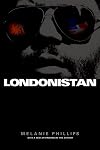
As a follow-up to my belated reading of Lawrence Wright's "The Looming Tower" I chose "Londonistan" by Melanie Phillips. Her book, as the title suggests, is focused on the history and progress of Islamism in the United Kingdom. Phillips's recitation of the facts and her analysis are brilliant albeit familiarly sobering and depressing. On the face of it it is hard to understand how an alien, minority culture with no roots in a nation's past can within a matter of a couple of generations come show more to, if not dominate, then certainly to intimidate the majority, native culture. In this clash of civilizations we see the results of what happens when a top down "trahison des clercs" that rejects a nation's history, religion, social traditions and institutions eventuates in a complete hollowing out of that country's esprit, it's ability to resist attacks from within.
Written in the aftermath of the 2005 suicide bombing attacks on the London train system, Phillips relates the now familiar response of most of what used to pass for liberal, democratic, historical Western civilizations which can be summed up as what can we Westerners do to make you hate us less, or at least not hate us so much that we can resume our day to day lives without fear that a chance encounter with you will end in my bodily parts strewn about the public square. The failure of Britain's elites, the Labor, Tory and Liberal Democrat parties, the media, the academy (bien sur!), and the Church of England at the top of the hierarchy to defend the institutions and traditions and freedoms that made Britain great is chronicled in detail.
There might always be an England, but I wouldn't bet that it will be in any recognizable way English. The big picture lesson for the West at large can be summed up as follows. In any clash of civilizations the one whose members maintain the essential truth of their religion and the superiority of their way of life will overcome the one whose members believe in the essential truth of nothing and regard their culture as one that is no better than and in some ways considerably worse than that of their adversaries, always assuming of course that they are capable of recognizing their adversaries. show less
Written in the aftermath of the 2005 suicide bombing attacks on the London train system, Phillips relates the now familiar response of most of what used to pass for liberal, democratic, historical Western civilizations which can be summed up as what can we Westerners do to make you hate us less, or at least not hate us so much that we can resume our day to day lives without fear that a chance encounter with you will end in my bodily parts strewn about the public square. The failure of Britain's elites, the Labor, Tory and Liberal Democrat parties, the media, the academy (bien sur!), and the Church of England at the top of the hierarchy to defend the institutions and traditions and freedoms that made Britain great is chronicled in detail.
There might always be an England, but I wouldn't bet that it will be in any recognizable way English. The big picture lesson for the West at large can be summed up as follows. In any clash of civilizations the one whose members maintain the essential truth of their religion and the superiority of their way of life will overcome the one whose members believe in the essential truth of nothing and regard their culture as one that is no better than and in some ways considerably worse than that of their adversaries, always assuming of course that they are capable of recognizing their adversaries. show less
This is not a relaxing read. This is not a book to take lightly. From the cover (let alone the first page!) Phillips has you in an armlock and tries her best to wrestle you to the floor. I came out bruised, battered and I think she might have edged the bout on a referee’s decision.
If you live in the UK, particularly if you live in an area with a sizeable Muslim population as I have done, many of the points Phillips makes in this book will not be new to you. In fact, they might well affirm show more how you’ve been feeling. They might even give voice to opinions you’ve felt too intimidated to share with anyone.
It’s obvious to anyone who is a reader of the signs of the times that Britain has become a victim of its own political correctness. This book gives you example after example of how the legislature has tied itself in knots as it worships the god Diversity and celebrates the beliefs of anyone who happens to be in a minority. Thus, it has spent the last 20 years appeasing the Muslim community in particular.
Why in particular? Well world events and those within its own boundaries have meant that the UK has had to face people living out the teachings of the Koran in a more direct way than at any other time in history. And, Phillips argues, they are having the wool pulled over their eyes by the Islamic architects of a plan that, ultimately, has the Islamicisation of the world as its end goal. I agree with this. In fact, I would challenge any Muslim who did not agree that they were not taking their faith and the Koran seriously. I’ve read the Koran and that is the clear agenda.
It would take a lot of work to refute the argument Phillips presents. I’m not saying that this is because its watertight. Rather, her argument is long, detailed and, for the most part, well-researched. I can’t imagine anyone from the Muslim community, for example, writing as scholarly a document in rebuttal. I’m not saying they’re incapable. I’m saying that, from my experience, I can’t imagine it.
There are however, areas of weakness. For example, late in the book, while presenting evidence of a scholar’s views which argue for nothing less than the eradication of Israel as a nation state, she says
"despite saying he supported Israel’s existence, he appeared to be suggesting that the Jewish state should be singled out for a fate imposed on no other democracy properly constituted under international law."
Nothing wrong with this. Except that earlier in the book, she says that the British judiciary has lost its spine and given itself over to the rule of international law which, she argues, is undemocratic and therefore a fantasy. You can’t have it both ways. Either international law is binding or it isn’t. If it is, Israel has a lawful right to exist as a nation. But if it is, the British judiciary would do well to work under its influence.
Phillips spends a lot of time also haranguing the Church of England for sticking its head in the sand. I agreed with much of what she said. But, in criticising Archbishop Carey for apologising “for bringing Christianity to the world” in a culturally insensitive way during the reign of Empire, she attacks him with
"The fact that Christianity had brought civilisation to these remote parts, for the very good reason that it was superior to traditional practices there was not acknowledged."
Right there, I could tell that she has no experience of living overseas with those who make up the church in those “remote parts.” I have a great deal of experience of this and I can tell you right now that “civilisation” was well and truly in place before the message of Christ ever arrived. Of course what Christ taught is superior to any worldly culture if you believe that he is God. But those who actually work, live and love in those overseas communities can tell you that there has always been much in them that reflects Christ’s teachings, as with all cultures, because they are made up of people made in the image of God. It’s a shame to hear such moralising twaddle from someone who is considered to be so scholarly.
I think Phillips has an important message to proclaim. But her style can be described only as rabid and this will put a lot of readers off. More off putting, and a major stumbling block to me, is that after finishing the book, a book which challenges the predominant view that Israel is the baddie in the Palestinian situation, I discovered that she is Jewish.
Now, as someone who has a lot of experience writing social research, not declaring a vested interest is tantamount to rendering your entire paper invalid. It is a major omission that nowhere in this book (as far as I remember) did she tell me where she was coming from. It may be, as my dad argued, that everyone knows she’s Jewish. But I’d never heard of her and I didn’t know. At least now I understand one of the major driving factors behind her writing the book in the first place and why she seemed pretty angry all the way through it. show less
If you live in the UK, particularly if you live in an area with a sizeable Muslim population as I have done, many of the points Phillips makes in this book will not be new to you. In fact, they might well affirm show more how you’ve been feeling. They might even give voice to opinions you’ve felt too intimidated to share with anyone.
It’s obvious to anyone who is a reader of the signs of the times that Britain has become a victim of its own political correctness. This book gives you example after example of how the legislature has tied itself in knots as it worships the god Diversity and celebrates the beliefs of anyone who happens to be in a minority. Thus, it has spent the last 20 years appeasing the Muslim community in particular.
Why in particular? Well world events and those within its own boundaries have meant that the UK has had to face people living out the teachings of the Koran in a more direct way than at any other time in history. And, Phillips argues, they are having the wool pulled over their eyes by the Islamic architects of a plan that, ultimately, has the Islamicisation of the world as its end goal. I agree with this. In fact, I would challenge any Muslim who did not agree that they were not taking their faith and the Koran seriously. I’ve read the Koran and that is the clear agenda.
It would take a lot of work to refute the argument Phillips presents. I’m not saying that this is because its watertight. Rather, her argument is long, detailed and, for the most part, well-researched. I can’t imagine anyone from the Muslim community, for example, writing as scholarly a document in rebuttal. I’m not saying they’re incapable. I’m saying that, from my experience, I can’t imagine it.
There are however, areas of weakness. For example, late in the book, while presenting evidence of a scholar’s views which argue for nothing less than the eradication of Israel as a nation state, she says
"despite saying he supported Israel’s existence, he appeared to be suggesting that the Jewish state should be singled out for a fate imposed on no other democracy properly constituted under international law."
Nothing wrong with this. Except that earlier in the book, she says that the British judiciary has lost its spine and given itself over to the rule of international law which, she argues, is undemocratic and therefore a fantasy. You can’t have it both ways. Either international law is binding or it isn’t. If it is, Israel has a lawful right to exist as a nation. But if it is, the British judiciary would do well to work under its influence.
Phillips spends a lot of time also haranguing the Church of England for sticking its head in the sand. I agreed with much of what she said. But, in criticising Archbishop Carey for apologising “for bringing Christianity to the world” in a culturally insensitive way during the reign of Empire, she attacks him with
"The fact that Christianity had brought civilisation to these remote parts, for the very good reason that it was superior to traditional practices there was not acknowledged."
Right there, I could tell that she has no experience of living overseas with those who make up the church in those “remote parts.” I have a great deal of experience of this and I can tell you right now that “civilisation” was well and truly in place before the message of Christ ever arrived. Of course what Christ taught is superior to any worldly culture if you believe that he is God. But those who actually work, live and love in those overseas communities can tell you that there has always been much in them that reflects Christ’s teachings, as with all cultures, because they are made up of people made in the image of God. It’s a shame to hear such moralising twaddle from someone who is considered to be so scholarly.
I think Phillips has an important message to proclaim. But her style can be described only as rabid and this will put a lot of readers off. More off putting, and a major stumbling block to me, is that after finishing the book, a book which challenges the predominant view that Israel is the baddie in the Palestinian situation, I discovered that she is Jewish.
Now, as someone who has a lot of experience writing social research, not declaring a vested interest is tantamount to rendering your entire paper invalid. It is a major omission that nowhere in this book (as far as I remember) did she tell me where she was coming from. It may be, as my dad argued, that everyone knows she’s Jewish. But I’d never heard of her and I didn’t know. At least now I understand one of the major driving factors behind her writing the book in the first place and why she seemed pretty angry all the way through it. show less
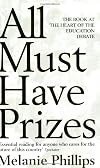
I did not need to read this book to know that standards across the UK education system have slipped dramatically. What this book does to devastating effect is to explain how this state affairs has arisen and why. Most interestingly, the author apportions equal blame to Thatcher et al as to the 'social-liberal left', which gives the lie to the slurs made against her of being a right-wing ideologue.
The text is well written and the arguments are consistent and logical. Where I disagree with show more Philips, is her assertion that children require to be taught Shakespeare and other 'cultured' literature. I was forced to endure this at high school and did not pick up a book for pleasure for a full ten years as a result.
In summary, if you want to know why our education system is in tatters then read this great book. show less
The text is well written and the arguments are consistent and logical. Where I disagree with show more Philips, is her assertion that children require to be taught Shakespeare and other 'cultured' literature. I was forced to endure this at high school and did not pick up a book for pleasure for a full ten years as a result.
In summary, if you want to know why our education system is in tatters then read this great book. show less
Lists
Awards

You May Also Like


Associated Authors
Statistics
- Works
- 12
- Also by
- 2
- Members
- 690
- Popularity
- #36,665
- Rating
- 3.8
- Reviews
- 17
- ISBNs
- 34
- Languages
- 1
- Favorited
- 1