
Patrick J. Deneen
Author of Why Liberalism Failed
About the Author
Patrick J. Deneen is Associate Professor of Government and the inaugural Markos and Eleni Tsakopoulos-Kounalakis Chair of Hellenic Studies at Georgetown University
Works by Patrick J. Deneen
Associated Works
How Should We Talk about Religion?: Perspectives, Contexts, Particularities (ND Erasmus Institute Books) (2006) — Contributor — 4 copies
Tagged
Common Knowledge
- Birthdate
- 1964
- Gender
- male
- Education
- Rutgers University (BA|English Literature|1986)
Rutgers University (PhD|Political Science|1995) - Nationality
- USA
- Associated Place (for map)
- USA
Members
Reviews
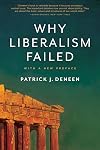
Patrick Deneen, who teaches in the Political Science department at Notre Dame, has written a powerful critique of the political philosophy of Liberalism that was rooted in the thought of Thomas Hobbes but reached full flower in the Second Treatise on Government by John Locke which was the inspiration for the American Declaration of Independence.
Before engaging with the text one of the things that jumped out at me was the identity of the people who provided an enthusiastic blurb for the book. show more It's not often that you will see Barack Obama and Cornel West praising a book along with reviewers from National Review, Chronicles, The American Conservative and the Wall St. Journal. One favorable reviewer that I would have expected to see was Ross Douthat whose book The Decadent Society considers some of the same themes treated by Deneen.
One reason why so many writers across the political spectrum were able to wax so enthusiastic is likely due to two factors. First, the criticism of Liberalism is aimed at both the classical liberal position, the liberalism of the American founding, that is generally associated with what we call conservatism in this country. However, it is also equally directed at the progressivism that is the predominant strain of what we think of when we talk about liberalism from Woodrow Wilson's time down to the present moment.
The second reason for the breadth of the positive reviews has to do with the relatively modest proposals for a way forward. Deneen argues that there is no going back but when he talks about beginnings of a way out of our dilemma, he talks about the need to recover ways of thinking and doing that occur is small communities either outside of politics or at the lowest level of political organization possible. He doesn't characterize this as "going back" but it does recall the sociology of Tocqueville's Democracy in America wherein he praised the American manners and mores for the prevalence of voluntary associations, those intermediating institutions that people leverage to solve problems that are beyond the competence of individuals and families, but don't require recourse to a powerful central government to provide for every citizen's needs and desires. So both conservatives and progressives can agree with large parts of Deneen's diagnosis, but neither wing of liberalism is turned off by a comprehensive solution.
Liberalism is characterized by two fundamental attitudes - voluntarism in politics as exemplified in the doctrine of the state of nature as propounded in Hobbes and Locke and the resulting versions of the contract theory of government. The second characteristic is the attitude toward nature. In the context of the natural world this results in a denigration of the idea that nature is a given whose constraints man needs to accommodate himself to and work within. In the modern (liberal) view nature is an environment that needs to be conquered and exploited to provide for mankind's comfortable self-preservation. In the words of Hobbes' employer Francis Bacon the aim is to provide for the "relief of man's estate." In a way Liberalism is the philosophical basis for the collective STEM projects that have produced modernity with all of its attendant blessings however mixed.
Whether prompted by the rejection of the Biblical account of the origin of man in the Book of Genesis, or to provide a corrective to the origins of politics in wars of conquest, the Liberal project's anthropology is based on a state of nature in which the natural condition of human beings is one of radical aloneness, Deneen quotes Bertrand de Jouvenel's criticism of this account of man's original condition as invented by "childless men who must have forgotten their own childhood." In order to escape the dangerous situation which life in the state of nature presents ("solitary, poore, nasty brutish and short") men contract with each other and enter a political society for the purpose of the mutual defense of the their fundamental rights to life, liberty and property. The defense of these natural rights is is the only legitimate basis for a political regime. Echoes of this in the American founding are of course located in the Declaration of Independence and Federalist 10 in which Madison argues that the protection of the unequal faculties for the acquisition of property is the "first object of government".
Deneen's thesis is that this contract theory of government, based on a mythical state of nature and its coeval theory of natural rights and the related project to conquer an adversarial nature, meant that Liberalism got it wrong from the start. The success of liberal politics has to a large extent been dependent on the character of its citizens which had been formed by institutions, cultures and traditions that preceded liberalism. But over time liberalism acts as a solvent upon these supports for character formation that a successful republican politics is dependent on. Liberalism consumes but does not and cannot replenish this social capital. As the role of religion declines in private and public life, as the definition of the family and its unique role in the raising of citizens gets eroded and as the retreat of citizens into themselves causes the eclipse of those intermediating associations that provided "support and sustenance" apart from the actions of the state, so there emerges the Leviathan so feared by conservatives to address all of the never ending wants and needs of free, authentic but weak, atomized individuals especially those who come up on the short end of the competition among unequal faculties for the acquisition of property. Thus the individualism that derives from the natural rights theory that emerges from the logic of the contract theory of government espoused by conservatives leads to the statism favored by progressives. Deneen cites Tocqueville,
"He is full of confidence and pride in his independence among his equals, but from time to time his weakness makes him feel the need for some outside help. which he cannot expect from any of his fellows, for they are both impotent and cold. In this extremity he naturally turns his eyes towards that huge entity (the tutelary state) which alone stands out among the universal level of abasement. His needs, and even more his longings, continually put him in mind of that entity, and he ends by regarding it as the sole and necessary support of his individual weakness."
To coin a phrase, when evaluating the end results of the 400 hundred year old liberal project, "nothing fails like success". That is, the complete triumph of Liberalism, as suggested by Frank Fukuyama's "The End of History" is per Deneen the why and how of its failure. Current wisdom believes in nothing if not "multiculturalism" and "diversity", but there is no actual "multi-culture". There are only existing cultures that define what separates broad swathes of humanity and are rooted as the word culture suggests in particular places, times and peoples. As for diversity there has never been a time of more suffocating conformity in all areas of life. The universalizing tendencies of liberalism are not just corrosive of culture according to Deneen but constitute an "anti-culture".
The explosion (or invasion) of technology into all facets of our existence has resulted in everyone's increased isolation as a result of our being completely connected. Technology has allowed us to become more consumed with trivial pursuits in our private lives, substituting real human relationships with Facebook friends and looking for love and every other of our expanding desires on line. In the meantime, more and more we are liberated from unpleasant physical work, but we are increasingly "liberated" from ways of earning a living by technology and its accomplice globalization.
Deneen also accuses Liberalism of devaluing and destroying the liberal arts not only through the emphasis on STEM disciplines but because of an incompatibility of Liberalism with the classical and Christian antecedents that gave birth to the humanities and the creation of universities. Of course it should be pointed out that the price tag associated with the modern undergraduate degree has certainly pushed more students in the direction of disciplines that promise a return on investment. It is also the case that the post-modern, post-liberal university is in the process of committing suicide via critical theory that fundamentally calls into question why anyone should waste time pretending that there are any permanent questions, let alone answers if there is only the "text" that functions as an instrument of will to power.
Finally, in the full flush of liberalism, we have evolved into a society that, echoing Federalist 10, has divided us via the meritocracy into life's winners and losers and threatens to create a permanent class based on the recognition of unequal talents belonging to a self-perpetuating elite.
There is much to agree with in Deneen's jeremiad. But if there is no going back it might be the case that the way forward can be discerned by looking back at the alternatives suggested by classical and Christian philosophy as well as a thoughtful study of the American founding and sympathetic critiques by thinkers like Tocqueville. show less
Before engaging with the text one of the things that jumped out at me was the identity of the people who provided an enthusiastic blurb for the book. show more It's not often that you will see Barack Obama and Cornel West praising a book along with reviewers from National Review, Chronicles, The American Conservative and the Wall St. Journal. One favorable reviewer that I would have expected to see was Ross Douthat whose book The Decadent Society considers some of the same themes treated by Deneen.
One reason why so many writers across the political spectrum were able to wax so enthusiastic is likely due to two factors. First, the criticism of Liberalism is aimed at both the classical liberal position, the liberalism of the American founding, that is generally associated with what we call conservatism in this country. However, it is also equally directed at the progressivism that is the predominant strain of what we think of when we talk about liberalism from Woodrow Wilson's time down to the present moment.
The second reason for the breadth of the positive reviews has to do with the relatively modest proposals for a way forward. Deneen argues that there is no going back but when he talks about beginnings of a way out of our dilemma, he talks about the need to recover ways of thinking and doing that occur is small communities either outside of politics or at the lowest level of political organization possible. He doesn't characterize this as "going back" but it does recall the sociology of Tocqueville's Democracy in America wherein he praised the American manners and mores for the prevalence of voluntary associations, those intermediating institutions that people leverage to solve problems that are beyond the competence of individuals and families, but don't require recourse to a powerful central government to provide for every citizen's needs and desires. So both conservatives and progressives can agree with large parts of Deneen's diagnosis, but neither wing of liberalism is turned off by a comprehensive solution.
Liberalism is characterized by two fundamental attitudes - voluntarism in politics as exemplified in the doctrine of the state of nature as propounded in Hobbes and Locke and the resulting versions of the contract theory of government. The second characteristic is the attitude toward nature. In the context of the natural world this results in a denigration of the idea that nature is a given whose constraints man needs to accommodate himself to and work within. In the modern (liberal) view nature is an environment that needs to be conquered and exploited to provide for mankind's comfortable self-preservation. In the words of Hobbes' employer Francis Bacon the aim is to provide for the "relief of man's estate." In a way Liberalism is the philosophical basis for the collective STEM projects that have produced modernity with all of its attendant blessings however mixed.
Whether prompted by the rejection of the Biblical account of the origin of man in the Book of Genesis, or to provide a corrective to the origins of politics in wars of conquest, the Liberal project's anthropology is based on a state of nature in which the natural condition of human beings is one of radical aloneness, Deneen quotes Bertrand de Jouvenel's criticism of this account of man's original condition as invented by "childless men who must have forgotten their own childhood." In order to escape the dangerous situation which life in the state of nature presents ("solitary, poore, nasty brutish and short") men contract with each other and enter a political society for the purpose of the mutual defense of the their fundamental rights to life, liberty and property. The defense of these natural rights is is the only legitimate basis for a political regime. Echoes of this in the American founding are of course located in the Declaration of Independence and Federalist 10 in which Madison argues that the protection of the unequal faculties for the acquisition of property is the "first object of government".
Deneen's thesis is that this contract theory of government, based on a mythical state of nature and its coeval theory of natural rights and the related project to conquer an adversarial nature, meant that Liberalism got it wrong from the start. The success of liberal politics has to a large extent been dependent on the character of its citizens which had been formed by institutions, cultures and traditions that preceded liberalism. But over time liberalism acts as a solvent upon these supports for character formation that a successful republican politics is dependent on. Liberalism consumes but does not and cannot replenish this social capital. As the role of religion declines in private and public life, as the definition of the family and its unique role in the raising of citizens gets eroded and as the retreat of citizens into themselves causes the eclipse of those intermediating associations that provided "support and sustenance" apart from the actions of the state, so there emerges the Leviathan so feared by conservatives to address all of the never ending wants and needs of free, authentic but weak, atomized individuals especially those who come up on the short end of the competition among unequal faculties for the acquisition of property. Thus the individualism that derives from the natural rights theory that emerges from the logic of the contract theory of government espoused by conservatives leads to the statism favored by progressives. Deneen cites Tocqueville,
"He is full of confidence and pride in his independence among his equals, but from time to time his weakness makes him feel the need for some outside help. which he cannot expect from any of his fellows, for they are both impotent and cold. In this extremity he naturally turns his eyes towards that huge entity (the tutelary state) which alone stands out among the universal level of abasement. His needs, and even more his longings, continually put him in mind of that entity, and he ends by regarding it as the sole and necessary support of his individual weakness."
To coin a phrase, when evaluating the end results of the 400 hundred year old liberal project, "nothing fails like success". That is, the complete triumph of Liberalism, as suggested by Frank Fukuyama's "The End of History" is per Deneen the why and how of its failure. Current wisdom believes in nothing if not "multiculturalism" and "diversity", but there is no actual "multi-culture". There are only existing cultures that define what separates broad swathes of humanity and are rooted as the word culture suggests in particular places, times and peoples. As for diversity there has never been a time of more suffocating conformity in all areas of life. The universalizing tendencies of liberalism are not just corrosive of culture according to Deneen but constitute an "anti-culture".
The explosion (or invasion) of technology into all facets of our existence has resulted in everyone's increased isolation as a result of our being completely connected. Technology has allowed us to become more consumed with trivial pursuits in our private lives, substituting real human relationships with Facebook friends and looking for love and every other of our expanding desires on line. In the meantime, more and more we are liberated from unpleasant physical work, but we are increasingly "liberated" from ways of earning a living by technology and its accomplice globalization.
Deneen also accuses Liberalism of devaluing and destroying the liberal arts not only through the emphasis on STEM disciplines but because of an incompatibility of Liberalism with the classical and Christian antecedents that gave birth to the humanities and the creation of universities. Of course it should be pointed out that the price tag associated with the modern undergraduate degree has certainly pushed more students in the direction of disciplines that promise a return on investment. It is also the case that the post-modern, post-liberal university is in the process of committing suicide via critical theory that fundamentally calls into question why anyone should waste time pretending that there are any permanent questions, let alone answers if there is only the "text" that functions as an instrument of will to power.
Finally, in the full flush of liberalism, we have evolved into a society that, echoing Federalist 10, has divided us via the meritocracy into life's winners and losers and threatens to create a permanent class based on the recognition of unequal talents belonging to a self-perpetuating elite.
There is much to agree with in Deneen's jeremiad. But if there is no going back it might be the case that the way forward can be discerned by looking back at the alternatives suggested by classical and Christian philosophy as well as a thoughtful study of the American founding and sympathetic critiques by thinkers like Tocqueville. show less
"Liberalism failed because it won" is the central thesis of this book, which follows a few different lines of ideas. It's both cataloguing how liberal society has fallen in on itself, the self-contradictory positions under a guise of tolerance, the apathy or outright disdain for the voters (who need to be 'guided' to better decisions, something you can get an overdose of reading WEF publications). Then it veers off into "what we lost", which is similar to Ferguson's The Great Degeneration - show more lamenting the death of civil society and community based organization (something surprisingly similar in tone if not execution to the view from the left), exemplified in here by comparisons to Amish society. Finally then it offers, like many other books in this genre, a much less defined way forward - back to community, roots, liberalism is a dead end.
There's a lot of meat here for a relatively short book and some good examples of how liberalism seems to have painted itself into a corner with no real ability to get out of it, all thanks to its own successes. There are some very trenchant points about the consumerist society that can't abide any criticism of the values it imparts, whereas any resistance is painted out to be an attack on society itself, rather than disagreement in principle. I think that cuts across the political spectrum, even though the audience of this book is probably more right wing than not. show less
There's a lot of meat here for a relatively short book and some good examples of how liberalism seems to have painted itself into a corner with no real ability to get out of it, all thanks to its own successes. There are some very trenchant points about the consumerist society that can't abide any criticism of the values it imparts, whereas any resistance is painted out to be an attack on society itself, rather than disagreement in principle. I think that cuts across the political spectrum, even though the audience of this book is probably more right wing than not. show less
(17) This was quite interesting, though quite a dense read for 200 pages. I could only read in short bursts as it required me to really read and think, and at times re-read passages. This was not "entertainment." This is a critique of the modern day liberal philosophy of government - elevation of individualism above all else. But if/when we are freed from most obligations - what replaces it is consumerism and technology - and so one must work to have the currency to participate in this show more quest. Essentially we become slaves to capitalism under the guise of freedom. It sure does track with the way life seems these days. Deneen rejects other ideologies such as authoritarianism or Marxism, and he does not propose we ditch all progress and return to a traditional Christian medieval revival (or does he?) - How else could we live?
And it is in this -'how else could we live?' piece where one sees perhaps what conservative politics and government at its best could be. Reigning in of the juggernaught of a central government and a return to local culture and tradition with respect for the land and its resources - living within its limits. Sure, I get that and think that would be lovely. I think what it ignores is the rest of the world. Eschewing globalism will likely cause us to withdraw from the world stage - Do we want that? In order to be a 'superpower' one must intervene and compete economically, technologically, and militarily. So perhaps that is the only job of the central government - world and military affairs. In thinking about these things you see the underpinnings of our two-party system in a new way. It almost makes one think about third way. I don't think "liberalism" needs to be destroyed as Deneen does. Could we build in a compassionate, sustainable way conservative policies - without the culture wars?
I dunno - my head hurts from all this thinking. I am glad I read this. Also glad to be done. But I think it is important given the rise of our current "illiberal" democracy. How else can we live, indeed? show less
And it is in this -'how else could we live?' piece where one sees perhaps what conservative politics and government at its best could be. Reigning in of the juggernaught of a central government and a return to local culture and tradition with respect for the land and its resources - living within its limits. Sure, I get that and think that would be lovely. I think what it ignores is the rest of the world. Eschewing globalism will likely cause us to withdraw from the world stage - Do we want that? In order to be a 'superpower' one must intervene and compete economically, technologically, and militarily. So perhaps that is the only job of the central government - world and military affairs. In thinking about these things you see the underpinnings of our two-party system in a new way. It almost makes one think about third way. I don't think "liberalism" needs to be destroyed as Deneen does. Could we build in a compassionate, sustainable way conservative policies - without the culture wars?
I dunno - my head hurts from all this thinking. I am glad I read this. Also glad to be done. But I think it is important given the rise of our current "illiberal" democracy. How else can we live, indeed? show less
Liberalism failed because it is against nature and community
Deneen is a political scientist at Notre Dame. He argues that liberalism has failed because it is at odds with the older traditions of local communities and seeks to deny nature. Its principle argument is that humans are free to choose their nature, and the state should exist only to further human liberty. These ideas led men away from existence in systems that demanded self-control and the submission to culture and community. This show more led to the strengthening of centralized state power dedicated to emphasizing the rule of laws that validated individual choices, including choices of sexual orientation, and freedom from any obligation except ones encoded.
I picked up this book after reading an article about the conservative scholars who supported the rational aspects of the Trump phenomenon. It was initially published in 2018. I understand the arguments but I am not quite ready to discard respect for human autonomy. show less
Deneen is a political scientist at Notre Dame. He argues that liberalism has failed because it is at odds with the older traditions of local communities and seeks to deny nature. Its principle argument is that humans are free to choose their nature, and the state should exist only to further human liberty. These ideas led men away from existence in systems that demanded self-control and the submission to culture and community. This show more led to the strengthening of centralized state power dedicated to emphasizing the rule of laws that validated individual choices, including choices of sexual orientation, and freedom from any obligation except ones encoded.
I picked up this book after reading an article about the conservative scholars who supported the rational aspects of the Trump phenomenon. It was initially published in 2018. I understand the arguments but I am not quite ready to discard respect for human autonomy. show less
Lists
You May Also Like


Associated Authors
Statistics
- Works
- 14
- Also by
- 3
- Members
- 698
- Popularity
- #36,253
- Rating
- 3.8
- Reviews
- 14
- ISBNs
- 33
- Languages
- 8