
Jokha Alharthi
Author of Celestial Bodies
About the Author
Image credit: http://jokha.com/
Works by Jokha Alharthi
نارنجة (Arabic Edition) 2 copies
The Body in Arabic Love Poetry: The ‘Udhri Tradition (Edinburgh Studies in Classical Islamic History and Culture) (2021) 1 copy
The Body in Arabic Love Poetry: The ‘Udhri Tradition (Edinburgh Studies in Classical Islamic History and Culture) (2023) 1 copy
Οι κόρες της Σελήνης 1 copy
Tagged
Common Knowledge
- Other names
- al-Harthi, Jokha
- Birthdate
- 1978-07-16
- Gender
- female
- Nationality
- Oman
- Birthplace
- Oman
- Associated Place (for map)
- Oman
Members
Reviews

Shortly after Zuhour left her home in Oman to study at a British university her grandmother, Bint Aamir, died. Zuhour feels guilty for putting her own interests ahead of her grandmother’s health and missing the opportunity to be with her during her last days. In Britain she keeps company with other Middle Eastern students, in particular a young couple who are romantically involved despite objections arising from class differences.
The novel moves gently back and forth between Zuhour’s show more struggles with assimilation and loneliness in Britain, and the story of Bint Aamir’s life and that of Zuhour’s father in Oman. The contrast between the opportunities afforded these two women is stark. Zuhour was close to her older sister during childhood, but events have forced them apart. Bint Aamir had far less agency over her life choices, and yet in many ways appears to have been more content than Zuhour.
Jokha Alharthi tells the stories of these women with poetic prose, in a non-linear fashion that leaves much unsaid. This general feeling of vagueness is unsettling, but perhaps that’s the point, echoing feelings that Bint Aamir and Zuhour undoubtedly also experienced. show less
The novel moves gently back and forth between Zuhour’s show more struggles with assimilation and loneliness in Britain, and the story of Bint Aamir’s life and that of Zuhour’s father in Oman. The contrast between the opportunities afforded these two women is stark. Zuhour was close to her older sister during childhood, but events have forced them apart. Bint Aamir had far less agency over her life choices, and yet in many ways appears to have been more content than Zuhour.
Jokha Alharthi tells the stories of these women with poetic prose, in a non-linear fashion that leaves much unsaid. This general feeling of vagueness is unsettling, but perhaps that’s the point, echoing feelings that Bint Aamir and Zuhour undoubtedly also experienced. show less
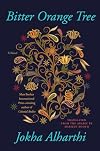
Read the Electric Literature mutual interview between Author Alharthi and Translator Booth!
Rating: 4* of five
The Publisher Says: From Man Booker International Prize–winning author Jokha Alharthi, Bitter Orange Tree is a profound exploration of social status, wealth, desire, and female agency. It presents a mosaic portrait of one young woman’s attempt to understand the roots she has grown from, and to envisage an adulthood in which her own power and happiness might find the freedom show more necessary to bear fruit and flourish.
Zuhour, an Omani student at a British university, is caught between the past and the present. As she attempts to form friendships and assimilate in Britain, she can’t help but ruminate on the relationships that have been central to her life. Most prominent is her strong emotional bond with Bint Amir, a woman she always thought of as her grandmother, who passed away just after Zuhour left the Arabian Peninsula.
As the historical narrative of Bint Amir’s challenged circumstances unfurls in captivating fragments, so too does Zuhour’s isolated and unfulfilled present, one narrative segueing into another as time slips and dreams mingle with memories.
I RECEIVED A DRC FROM THE PUBLISHER VIA EDELWEISS+. THANK YOU.
My Review: Celestial Bodies, Author Alharthi and Translator Booth's previous literary collaboration, revolved around three women and their men...present, absent, loved, loathed, and longed for. It received the 2019 Man Booker International Prize, as it was called then. I myownself checked it out of the library and would've given it a three-star review had I bothered to review it at all...stories centering women organizing themselves and their worlds around men don't appeal to me. The prose was lyrical and pungent.
That last is what I love about this read:
It's all there. Author Alharthi's style, the sentences not too terribly complex but the interrelationship of the words and images is dense, is active, is trellising the reader's vines of awareness into specific patterns that cast wildly distorting shadows on the life in the text.
It is exhilarating to read a simple story that reaches into shadows and under storage shelves and behind armoires in the reader. It means the writer and the translator have offered us everything they found when they rummaged through those spaces in themselves. If you, as I strongly suggest that you do, read the Electric Lit piece I've linked above, you'll come at this read with a vastly bigger experience of the intentionality of the writing. I think the best thing about that awareness, acquired before (in your case) or after (as in mine) finishing the novel, is its honing, its sharpening, of the decoding tools you have at your disposal to be in the read. I've chosen those two passages from the same early section of the story to illustrate that enriching quality.
What reading Bitter Orange Tree offered me was a stroll in a garden planted with almost-familiar-scented plants in service of a geometry slightly not what I am accustomed to (read: not centered so heavily on the women's men). The way the choices I've selected above interrelate and build on the character of Zuhour's perceptual world, the sensory and the eidetic, are the principal pleasure of this read. Like my stream-of-consciousness idol Virginia Woolf, the words build images and the images are shaped by the words as well as by the things the words evoke from us in their saying. Everything Zuhour senses is an image from her startlingly acute inner world...no fogs of forgetfulness (even when summoned, as above) cloud her quietly desperate longing for one more, once again, please just this single time.
Of course she gets none. No one does, and no depths of longing can break the iron arrow...crossbow quarrel, more like...of time. No matter how many times one says ignore, actually performing the act of ignoring is entirely different and often opposed by the metaphysical gravity of love. (I think it was this strange, off-kilter perceptual frame that reduced my rating from five to four stars, though....)
Because yes, this is a love story. Aren't they all. Yes, they all are but this love, Zuhour's love, is so tragically lacking self-love that it's the desperately sad kind of love-ungiven story that can reshape a life. Yours, o reader, if you will allow it; better or worse, as you use it. show less
Rating: 4* of five
The Publisher Says: From Man Booker International Prize–winning author Jokha Alharthi, Bitter Orange Tree is a profound exploration of social status, wealth, desire, and female agency. It presents a mosaic portrait of one young woman’s attempt to understand the roots she has grown from, and to envisage an adulthood in which her own power and happiness might find the freedom show more necessary to bear fruit and flourish.
Zuhour, an Omani student at a British university, is caught between the past and the present. As she attempts to form friendships and assimilate in Britain, she can’t help but ruminate on the relationships that have been central to her life. Most prominent is her strong emotional bond with Bint Amir, a woman she always thought of as her grandmother, who passed away just after Zuhour left the Arabian Peninsula.
As the historical narrative of Bint Amir’s challenged circumstances unfurls in captivating fragments, so too does Zuhour’s isolated and unfulfilled present, one narrative segueing into another as time slips and dreams mingle with memories.
I RECEIVED A DRC FROM THE PUBLISHER VIA EDELWEISS+. THANK YOU.
My Review: Celestial Bodies, Author Alharthi and Translator Booth's previous literary collaboration, revolved around three women and their men...present, absent, loved, loathed, and longed for. It received the 2019 Man Booker International Prize, as it was called then. I myownself checked it out of the library and would've given it a three-star review had I bothered to review it at all...stories centering women organizing themselves and their worlds around men don't appeal to me. The prose was lyrical and pungent.
That last is what I love about this read:
I had gone. And then she had gone. And it wasn't possible to change anything. What the hand of fate had written could not be unwritten. That ancient line of poetry: All your tears, all your pleas, will erase not a line of that which is written. For I had gone, and I went away without smiling. I just went, in my cocky presumption that I could look the other way. That I didn't know; that I didn't need to know. And then remorse. Harsh, grating regret, making me more fragile than the brittle autumn leaves crumbling under the janitor's broom beneath my window.
–and–
"My grandmother would've given anything to be a peasant farmer," I said. And then immediately I regretted my abrupt reaction. Suroor raised her head. "Your grandmother?" Right. The words had come out and they couldn't be put back. I had said it: my grandmother. Why don't words come automatically with threads that we can yank to pull them back inside ourselves? But there are no threads attached. Those words had been said. What's done is done.
It's all there. Author Alharthi's style, the sentences not too terribly complex but the interrelationship of the words and images is dense, is active, is trellising the reader's vines of awareness into specific patterns that cast wildly distorting shadows on the life in the text.
It is exhilarating to read a simple story that reaches into shadows and under storage shelves and behind armoires in the reader. It means the writer and the translator have offered us everything they found when they rummaged through those spaces in themselves. If you, as I strongly suggest that you do, read the Electric Lit piece I've linked above, you'll come at this read with a vastly bigger experience of the intentionality of the writing. I think the best thing about that awareness, acquired before (in your case) or after (as in mine) finishing the novel, is its honing, its sharpening, of the decoding tools you have at your disposal to be in the read. I've chosen those two passages from the same early section of the story to illustrate that enriching quality.
What reading Bitter Orange Tree offered me was a stroll in a garden planted with almost-familiar-scented plants in service of a geometry slightly not what I am accustomed to (read: not centered so heavily on the women's men). The way the choices I've selected above interrelate and build on the character of Zuhour's perceptual world, the sensory and the eidetic, are the principal pleasure of this read. Like my stream-of-consciousness idol Virginia Woolf, the words build images and the images are shaped by the words as well as by the things the words evoke from us in their saying. Everything Zuhour senses is an image from her startlingly acute inner world...no fogs of forgetfulness (even when summoned, as above) cloud her quietly desperate longing for one more, once again, please just this single time.
Of course she gets none. No one does, and no depths of longing can break the iron arrow...crossbow quarrel, more like...of time. No matter how many times one says ignore, actually performing the act of ignoring is entirely different and often opposed by the metaphysical gravity of love. (I think it was this strange, off-kilter perceptual frame that reduced my rating from five to four stars, though....)
Because yes, this is a love story. Aren't they all. Yes, they all are but this love, Zuhour's love, is so tragically lacking self-love that it's the desperately sad kind of love-ungiven story that can reshape a life. Yours, o reader, if you will allow it; better or worse, as you use it. show less
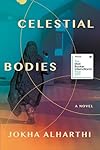
As it seems to be the case for most readers, I came to this book because of the Man Booker International Prize, and for its depiction of Oman, a country I hadn't previously read a book from.
I was under the spell of this book from the beginning. Alharthi starts with three sisters as her focal point, but we get their POVs and SO many others -- suitors, husbands, neighbors, until it manages to take in so many different social classes, positions, ideologies. People embracing the social changes show more happening in Oman and those resisting it. Promotors of traditional values who treat women well, espousers of "modern" values who are misogynists and abusers behind closed doors.
I couldn't possibly sum up the plot or even the cast of characters. This unfolds non-linearly with flashbacks, broken memories, and dreams. Not for everyone, but I was entranced. show less
I was under the spell of this book from the beginning. Alharthi starts with three sisters as her focal point, but we get their POVs and SO many others -- suitors, husbands, neighbors, until it manages to take in so many different social classes, positions, ideologies. People embracing the social changes show more happening in Oman and those resisting it. Promotors of traditional values who treat women well, espousers of "modern" values who are misogynists and abusers behind closed doors.
I couldn't possibly sum up the plot or even the cast of characters. This unfolds non-linearly with flashbacks, broken memories, and dreams. Not for everyone, but I was entranced. show less
I loved Jokha Alharthi's Celestial Bodies, which won the Man Booker International Prize, so I was delighted to see she had a new title coming out. Again, we spend time in the worlds of Omani women. In this case one of those women, Zuhur, is in London on a scholarship; the other woman, Bint Amir, is Zuhur's grandmother (though not biologically) who is recently deceased.
Bitter Orange Tree explores the lack of options Omani women face, whether in Oman or abroad—and Zahar struggles to change show more that status quo. Divides of gender and class create barriers as real as any physical barrier.
Bint Amir's story is that of an unwanted woman, cast out along with her brother when financial hardship hits the family and her father sides with her stepmother. Zahar spends her time with a pair of sisters, also in London, one of whom embraces her family's class values and knows she will be married by arrangement in order to benefit the family. The other is involved with a lower caste medical student, someone she would never even com into contact with were she living with her family. Zahar becomes a sort of third partner in this relationship, an observer with strong feelings for both of the lovers.
This novel is bleak, but in that bleakness lies a seed of rebellion that may, over a lifetime—or over generations—expand opportunities for women. Read this novel when you're feeling strong, ready to be confronted with hardship, but also ready to glimpse possibility.
I received a free electronic review copy of this title from the publisher via EdelweissPlus; the opinions are my own. show less
Bitter Orange Tree explores the lack of options Omani women face, whether in Oman or abroad—and Zahar struggles to change show more that status quo. Divides of gender and class create barriers as real as any physical barrier.
Bint Amir's story is that of an unwanted woman, cast out along with her brother when financial hardship hits the family and her father sides with her stepmother. Zahar spends her time with a pair of sisters, also in London, one of whom embraces her family's class values and knows she will be married by arrangement in order to benefit the family. The other is involved with a lower caste medical student, someone she would never even com into contact with were she living with her family. Zahar becomes a sort of third partner in this relationship, an observer with strong feelings for both of the lovers.
This novel is bleak, but in that bleakness lies a seed of rebellion that may, over a lifetime—or over generations—expand opportunities for women. Read this novel when you're feeling strong, ready to be confronted with hardship, but also ready to glimpse possibility.
I received a free electronic review copy of this title from the publisher via EdelweissPlus; the opinions are my own. show less
Lists
Awards


You May Also Like


Associated Authors
Statistics
- Works
- 9
- Members
- 858
- Popularity
- #29,813
- Rating
- 3.3
- Reviews
- 39
- ISBNs
- 63
- Languages
- 8