
Catherine Dunne (1) (1954–)
Author of In the Beginning
For other authors named Catherine Dunne, see the disambiguation page.
Works by Catherine Dunne
Dunne Catherine 1 copy
Tagged
Common Knowledge
- Birthdate
- 1954
- Gender
- female
- Birthplace
- Dublin, Ireland
- Associated Place (for map)
- Dublin, Ireland
Members
Reviews
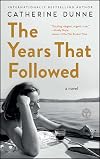
Nuanced fiction set in the 1960s through 1980s in Ireland, Spain, and Cyprus, about two women, Calista and Pilar. They are not related, except peripherally through ties to the wealthy Demitriades family. It is a story of questionable choices driven by youthful impulse and a feeling of being in love. Unfortunately, these choices have painful ramifications.
Calista, an Irish 17-year-old, is swept off her feet by an older man, marries, and moves to the family home in Cyprus. She finds out about show more his jealousy and violent tendencies too late. Pilar escapes poverty in her home town and moves to Madrid. With the guidance of a family friend, she eventually owns property and supports herself. She impetuously gets involved with a married man, leading to consequences that shape her life.
This book starts with death. It then unfolds gradually, as we get to know the back-story of what happened. The author has a way of bringing the characters to life through her well-crafted language. It felt a bit choppy at times, jumping between the two primary protagonists’ stories. Themes include: struggles of women in a patriarchal culture, the influences of family, and the ramifications of choices. Recommended to readers of tragedies, stories of revenge, or slow-burning, character-driven novels about family relationships. Contains descriptions of domestic violence. show less
Calista, an Irish 17-year-old, is swept off her feet by an older man, marries, and moves to the family home in Cyprus. She finds out about show more his jealousy and violent tendencies too late. Pilar escapes poverty in her home town and moves to Madrid. With the guidance of a family friend, she eventually owns property and supports herself. She impetuously gets involved with a married man, leading to consequences that shape her life.
This book starts with death. It then unfolds gradually, as we get to know the back-story of what happened. The author has a way of bringing the characters to life through her well-crafted language. It felt a bit choppy at times, jumping between the two primary protagonists’ stories. Themes include: struggles of women in a patriarchal culture, the influences of family, and the ramifications of choices. Recommended to readers of tragedies, stories of revenge, or slow-burning, character-driven novels about family relationships. Contains descriptions of domestic violence. show less
I read this book through a book club in Dundalk. Accordingly the fact that the book was located there for much of the plot interested me greatly. However, having met the author she dispelled those ideas and rather had opted to set the novel in a large urban town also with a Border setting to address the multi-generational issues within the plot of the book and The Troubles, reflective in the experience of Irish emigrants in Britain, as expressed in the character narrative. This was all the show more more depressing to hear given the fact that many sought out the UK through economic migration in search of a better life but also through forced social migration to in fact rid certain families of their problems as discussed in the narrative of the book. This is the tragedy of many of the victims of the Mother and Baby Home Generation. In my view the story is well written in 60 bite sized chapters that can be easy digested at several settings or on travel for example. It is also a book one could pass onto others to read. Personally I felt the handling of the rape is the most through-provoking of the whole book and partly central to the wider narrative of the plot of possibly all of the female protaganists or perhaps I'm reading too much into things. show less
Nuanced fiction set in the 1960s through 1980s in Ireland, Spain, and Cyprus, about two women, Calista and Pilar. They are not related, except peripherally through ties to the wealthy Demitriades family. It is a story of questionable choices driven by youthful impulse and a feeling of being in love. Unfortunately, these choices have painful ramifications.
Calista, an Irish 17-year-old, is swept off her feet by an older man, marries, and moves to the family home in Cyprus. She finds out about show more his jealousy and violent tendencies too late. Pilar escapes poverty in her home town and moves to Madrid. With the guidance of a family friend, she eventually owns property and supports herself. She impetuously gets involved with a married man, leading to consequences that shape her life.
This book starts with death. It then unfolds gradually, as we get to know the back-story of what happened. The author has a way of bringing the characters to life through her well-crafted language. It felt a bit choppy at times, jumping between the two primary protagonists’ stories. Themes include: struggles of women in a patriarchal culture, the influences of family, and the ramifications of choices. Recommended to readers of tragedies, stories of revenge, or slow-burning, character-driven novels about family relationships. Contains descriptions of domestic violence. show less
Calista, an Irish 17-year-old, is swept off her feet by an older man, marries, and moves to the family home in Cyprus. She finds out about show more his jealousy and violent tendencies too late. Pilar escapes poverty in her home town and moves to Madrid. With the guidance of a family friend, she eventually owns property and supports herself. She impetuously gets involved with a married man, leading to consequences that shape her life.
This book starts with death. It then unfolds gradually, as we get to know the back-story of what happened. The author has a way of bringing the characters to life through her well-crafted language. It felt a bit choppy at times, jumping between the two primary protagonists’ stories. Themes include: struggles of women in a patriarchal culture, the influences of family, and the ramifications of choices. Recommended to readers of tragedies, stories of revenge, or slow-burning, character-driven novels about family relationships. Contains descriptions of domestic violence. show less
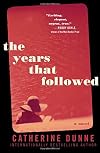
The Years That Followed, Irish writer Catherine Dunne's tenth novel, is a tale of two women who do not know each other but who have one thing in common that comes very close to ruining both their lives: the Petros Demitriades family. Petros Demitriades, as it turns out, is a wealthy Cypriot who made his fortune from the hugely profitable shipping company whose management he hopes one day to turn over to his four sons.
Calista, daughter of an affluent Irishman and his Spanish wife, falls in show more love with Alexandros, the youngest of the four Demitriades sons, when the young man comes to Dublin to represent his father in a new business arrangement between the two families. Pilar, whose parents are impoverished farmers from the Extremadura region of southwest Spain, is so determined to escape the life she seems destined to live that she flees to Madrid in search of a better future. There, with help and guidance from an old friend of her mother's, Pilar is justifiably proud of the new life she creates for herself. But it is her misfortune that the first time in her life that she falls in love it is with a married man: Petros Demitriades, the father of Calista's lover and eventual husband.
Neither of the two women's lives will ever be the same.
The Years That Followed is a novel of revenge, one in which one of its two main characters is so callously mistreated that eventually she can think of little else other than getting even with the man responsible for causing her a lifetime of grief. By then, the other main character has sworn off of men except for the occasional one-night stand she treats herself to - and so much regrets the next morning. Dunne's plot is a well choreographed one in which Calista and Pilar deal with the same people while managing to remain completely unaware of each other's existence. The author alternates the present day action of 1989 with flashbacks to the previous decades as she tells her story, a story that relies largely on coincidence to reach its ultimate climax - and it should be noted that readers willing to suspend their sense of disbelief are going to enjoy the novel a good bit more than those unable to do so.
For the most part, I managed to suspend my own sense of disbelief (although there were moments I really had to work hard to get there) right up until the point that the novel's final big "reveal" is made. That revelation, necessary as it may be to tie up all of the novel's loose ends, did, I have to admit, leave me groaning at the sheer implausibility of what I had just read. The book’s climax is so held together by coincidence and luck, in fact, that its lack of believability overwhelms everything that precedes it. show less
Calista, daughter of an affluent Irishman and his Spanish wife, falls in show more love with Alexandros, the youngest of the four Demitriades sons, when the young man comes to Dublin to represent his father in a new business arrangement between the two families. Pilar, whose parents are impoverished farmers from the Extremadura region of southwest Spain, is so determined to escape the life she seems destined to live that she flees to Madrid in search of a better future. There, with help and guidance from an old friend of her mother's, Pilar is justifiably proud of the new life she creates for herself. But it is her misfortune that the first time in her life that she falls in love it is with a married man: Petros Demitriades, the father of Calista's lover and eventual husband.
Neither of the two women's lives will ever be the same.
The Years That Followed is a novel of revenge, one in which one of its two main characters is so callously mistreated that eventually she can think of little else other than getting even with the man responsible for causing her a lifetime of grief. By then, the other main character has sworn off of men except for the occasional one-night stand she treats herself to - and so much regrets the next morning. Dunne's plot is a well choreographed one in which Calista and Pilar deal with the same people while managing to remain completely unaware of each other's existence. The author alternates the present day action of 1989 with flashbacks to the previous decades as she tells her story, a story that relies largely on coincidence to reach its ultimate climax - and it should be noted that readers willing to suspend their sense of disbelief are going to enjoy the novel a good bit more than those unable to do so.
For the most part, I managed to suspend my own sense of disbelief (although there were moments I really had to work hard to get there) right up until the point that the novel's final big "reveal" is made. That revelation, necessary as it may be to tie up all of the novel's loose ends, did, I have to admit, leave me groaning at the sheer implausibility of what I had just read. The book’s climax is so held together by coincidence and luck, in fact, that its lack of believability overwhelms everything that precedes it. show less
Awards


You May Also Like


Statistics
- Works
- 14
- Members
- 659
- Popularity
- #38,282
- Rating
- 3.5
- Reviews
- 23
- ISBNs
- 136
- Languages
- 6