
Odell Shepard (1884–1967)
Author of The Lore of the Unicorn
About the Author
Works by Odell Shepard
Associated Works
Tagged
Common Knowledge
- Canonical name
- Shepard, Odell
- Birthdate
- 1884-07-22
- Date of death
- 1967-07-19
- Gender
- male
- Education
- University of Chicago
Harvard University - Occupations
- professor
politician
poet - Organizations
- Trinity College
Yale University - Nationality
- USA
- Birthplace
- Sterling, Illinois, USA
- Places of residence
- Sterling, Illinois, USA (birth)
- Place of death
- New London, Connecticut, USA
- Associated Place (for map)
- Illinois, USA
Members
Reviews

This selection of entries from Thoreau’s voluminous journals, edited by Odell Shepard, first appeared in 1927 and was revised by him in 1961. I haven’t compared the result to the complete edition of the journals. On Shepard’s telling, he passed over material Thoreau recycled in his published books and the memoranda jotted down after 1852 for a projected history of Concord. Nor have I compared this selection to the more recent one, edited by Damian Searls and published by New York show more Review Books in 2009. At 700 pages—more than three times as long—even this is only one-tenth of the entire journal.
This is not the kind of book I can read as quickly as a biography or novel. Instead, I read a few entries at a time and chewed on them for a while before dipping in again. For instance, take this early entry that begins: “Let us wander where we will, the universe is built round us, and we are central still.” Is this bald anthropocentrism, or does it contain an insight about consciousness and its objects? Or is it only transcendental solipsism, after all? I like it that I can’t decide. Bookending this entry is one close to the end: “These sparrows, too, are thoughts that I have.”
Although there are gems throughout, in the entries written after he turned forty, Thoreau seems pithier and more mature. When younger, he seemed unable to show his independence in any way other than a reflexive contrariness, now replaced by a calm assurance. Was he aware of how close to death he was? If so, there is no trace of self-pity. In its place, we find closer attention to his observations of nature.
Nearly twenty years earlier, after being chided for his “loitering” and challenged to say what errand he had to mankind, he wrote: “I would secrete pearls with the shellfish and lay up honey with the bees for them. I will sift the sunbeams for the public good.” I’d say he succeeded. show less
This is not the kind of book I can read as quickly as a biography or novel. Instead, I read a few entries at a time and chewed on them for a while before dipping in again. For instance, take this early entry that begins: “Let us wander where we will, the universe is built round us, and we are central still.” Is this bald anthropocentrism, or does it contain an insight about consciousness and its objects? Or is it only transcendental solipsism, after all? I like it that I can’t decide. Bookending this entry is one close to the end: “These sparrows, too, are thoughts that I have.”
Although there are gems throughout, in the entries written after he turned forty, Thoreau seems pithier and more mature. When younger, he seemed unable to show his independence in any way other than a reflexive contrariness, now replaced by a calm assurance. Was he aware of how close to death he was? If so, there is no trace of self-pity. In its place, we find closer attention to his observations of nature.
Nearly twenty years earlier, after being chided for his “loitering” and challenged to say what errand he had to mankind, he wrote: “I would secrete pearls with the shellfish and lay up honey with the bees for them. I will sift the sunbeams for the public good.” I’d say he succeeded. show less
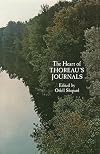
Not what I hoped for. Blurb misleads, title is what to pay attention to when choosing. Better, I think, for readers who have already read the writings Thoreau intended for publication and still want more.
Pretty good index (in this old Dover edition I read, at least). I used that to see what the man had to say (according to Shepard's distillation) about various subjects. I think, were I ever to work out a course of study for myself I would read annotated editions of the published works, then show more a concordance along with the complete journals... and if no concordance exists, write one as I read.
I did learn, somehow never knowing before, that the man died awfully young (44). Tuberculosis was a bad thing, cutting down a lot of good people before they had a chance to complete their life's works. Otoh, since it did take awhile to progress, maybe it spurred them to a sense of urgency and focus....
April 2021 show less
Pretty good index (in this old Dover edition I read, at least). I used that to see what the man had to say (according to Shepard's distillation) about various subjects. I think, were I ever to work out a course of study for myself I would read annotated editions of the published works, then show more a concordance along with the complete journals... and if no concordance exists, write one as I read.
I did learn, somehow never knowing before, that the man died awfully young (44). Tuberculosis was a bad thing, cutting down a lot of good people before they had a chance to complete their life's works. Otoh, since it did take awhile to progress, maybe it spurred them to a sense of urgency and focus....
April 2021 show less

Lists
Awards


You May Also Like


Associated Authors
Statistics
- Works
- 20
- Also by
- 2
- Members
- 894
- Popularity
- #28,652
- Rating
- 3.8
- Reviews
- 3
- ISBNs
- 31
- Languages
- 1
- Favorited
- 2