
William L. Andrews
Author of Slave Narratives
About the Author
William L. Andrews was born in 1946. He earned his B.A. from Davidson College in 1968. He received his M.A. in 1970 and Ph.D. in 1973, respectively, from the University of North Carolina-Chapel Hill, where he is currently the E. Maynard Adams Professor of English. His first book, The Literary show more Career of Charles W. Chesnutt, published in 1980, deals with a seminal figure in the development of African American and Southern American prose fiction. While researching To Tell a Free Story, a history of African American autobiography up to 1865, Andrews became greatly interested in autobiography studies. Since 1988 he has been the general editor of a book series, titled Wisconsin Studies in Autobiography, which is published by the University of Wisconsin Press. Since the mid-1980's he has done a considerable amount of editing of African American and southern literature and criticism. The fruition of this work has been The Norton Anthology of African American Literature, published in 1997, The Oxford Companion to African American Literature, also published in 1997, and The Literature of the American South: A Norton Anthology, three big collaborative projects that Andrews has co-edited. He went on to be the series editor of North American Slave Narratives, Beginnings to 1920, a complete digitized library of autobiographies and biographies of North American slaves and ex-slaves, funded by the National Endowment for the Humanities, Ameritech, and the University of North Carolina at Chapel Hill. (Bowker Author Biography) show less
Works by William L. Andrews
Sisters of the Spirit: Three Black Women's Autobiographies of the Nineteenth Century (1986) — Editor — 126 copies
Three Classic African-American Novels: The Heroic Slave; Clotel; Our Nig (1990) — Editor; Introduction — 93 copies
Narrative of the life of Frederick Douglass : authoritative text, contexts, criticism (1997) — Editor — 51 copies, 1 review
Journeys in New Worlds: Early American Women's Narratives (Wisconsin Studies in Autobiography) (1990) 42 copies, 1 review
The African-American Novel in the Age of Reaction: 3 Classics Iola Leroy or Shadows Uplifted The Marrow Tradition The Sp (1992) — Editor — 39 copies
North Carolina Slave Narratives: The Lives of Moses Roper, Lunsford Lane, Moses Grandy & Thomas H. Jones (2003) 32 copies
From Fugitive Slave to Free Man: The Autobiographies of William Wells Brown (1993) — Editor — 25 copies
Slavery and Class in the American South: A Generation of Slave Narrative Testimony, 1840-1865 (2019) 10 copies, 1 review
Associated Works
Narrative of the Life of Frederick Douglass, an American Slave (1845) — Editor, some editions — 11,147 copies, 133 reviews
My Bondage and My Freedom (1855) — Editor, some editions; Introduction, some editions — 1,232 copies, 4 reviews
Behind the Scenes: or, Thirty Years a Slave and Four Years in the White House (1868) — Introduction, some editions — 654 copies, 21 reviews
Wonderful Adventures of Mrs. Seacole in Many Lands (1857) — Introduction, some editions — 386 copies, 3 reviews
The Norton Anthology of African American Literature {2nd edition} (2003) — Editor, some editions — 283 copies, 2 reviews
Conjure Tales and Stories of the Color Line (Penguin Classics) (2000) — Editor, some editions — 130 copies, 2 reviews
In Search of Hannah Crafts: Critical Essays on the Bondwoman's Narrative (2003) — Contributor — 59 copies
Tagged
Common Knowledge
- Birthdate
- 1946
- Gender
- male
- Education
- Davidson College, Davidson, North Carolina (BA, 1968)
University of North Carolina Chapel Hill (MA)
University of North Carolina Chapel Hill (PhD) - Occupations
- E. Maynard Adams Professor of English, University of North Carolina Chapel Hill
- Nationality
- USA
- Associated Place (for map)
- USA
Members
Reviews
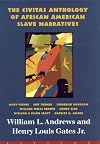
A difficult and harrowing but important sample of American literature, not only in terms of its significance to our nation's history, but also in inspiring compassion and humanity as this very long, shameful chapter in our nation's past continues to have reverberations today. When compared with the political climate over 150 years later, one can't help but note that the hypocrisy of professing piety and being a "good Christian," while simultaneously ignoring -- and worse, contributing to -- show more the suffering of fellow humans is apparently eternal. This sentence, when Mary Prince is first introduced to Christianity, broke my heart: "When I found out that I was a great sinner, I was very sorely grieved, and very much frightened." Any number of these narratives would make a riveting feature film or documentary. I was especially awed by Harriet Jacobs' incredible story. show less
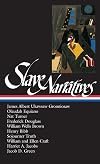
I've already read three of the ten slave narratives from this volume. Harriet Jacobs's story stands out: to escape from the advances of her slave master, who wanted to have a sexual relationship with her, she went into hiding in the space between her grandmother's roof and ceiling, the highest part of which is only three feet. She ends up hiding there for over seven years. An awesome first-hand account. I want to read Nat Turner's and Sojourner Truth's narratives next.
Ten separate narratives spanning 1770-1860 in which the enslaved argue for their humanity to an eventually sympathetic nation. Wm and Ellen Craft's 'Running a Thousand Miles for Freedom' with them disguised as a sickly master (Ellen) and his slave across steam boats and trains from Georgia to Philadelphia stands out. Harriet Jacob's 'Incidents in the Life of a Slave Girl' is remarkably well written. The set ends with Jacob Green telling his disturbing story, letting us know these were show more complicated humans making the best of their situations as they could. show less
Narrative of the Life of Frederick Douglass, An American Slave, Written By Himself by Frederick Douglass
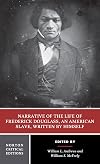
One's first reaction is how could someone brought up under slave conditions have grown up to be one of the most eloquent speakers and influential political leaders in American history. The more one looks into his background the more one is aware of the "opportunities" Douglass had that helped him grow out of his initial disadvantages, e.g. help learning how to read. But perhaps the most compelling factor is simply that he was an extremely talented individual. While the Narrative is the show more highlight, the secondary pieces including Douglass's other writings, reviews and analyses, and modern literary criticism also provide important insights, making the Norton edition an important addition to the library. show less
Lists
Awards


You May Also Like


Associated Authors
Statistics
- Works
- 33
- Also by
- 13
- Members
- 1,697
- Popularity
- #15,122
- Rating
- 4.0
- Reviews
- 8
- ISBNs
- 88
- Languages
- 1