
Morton N. Cohen (1921–2017)
Author of Lewis Carroll: A Biography
About the Author
Morton Norton Cohen was born on a farm in Calgary, Alberta, Canada on February 27, 1921. He graduated from what is now Tufts University before receiving a doctorate in English at Columbia University. He taught at West Virginia University, Syracuse University, Rutgers University, City College of New show more York, and the Graduate Center of the City University of New York. He was a scholar of Victorian literature who spent much of his career editing the letters and writing the definitive biography of Charles Lutwidge Dodgson as known as Lewis Carroll. His books included Rider Haggard: His Life and Works, The Search for Rudyard Kipling, Lewis Carroll: A Biography, and Lewis Carroll and Alice, 1832-1982. He was elected to the Royal Society of Literature in England in 1996. He died on June 12, 2017 at the age of 96. (Bowker Author Biography) show less
Image credit: Photo by Alan Tannenbaum, found at New York Times website.
Works by Morton N. Cohen
Reflections in a Looking Glass: A Centennial Celebration of Lewis Carroll, Photographer (1998) 51 copies
Lewis Carroll and His Illustrators: Collaborations and Correspondence, 1865-1898 (2003) — Editor — 28 copies
Lewis Carroll and the House of Macmillan (Cambridge Studies in Publishing and Printing History) (1987) — Editor — 4 copies, 1 review
Lewis Carrol 1 copy
Lewis Carroll's Alice 1 copy
Associated Works
Tagged
Common Knowledge
- Birthdate
- 1921-02-27
- Date of death
- 2017-06-12
- Gender
- male
- Occupations
- scholar of English language and literature
university professor - Organizations
- City University of New York
Syracuse University
Rutgers University - Awards and honors
- Royal Society of Literature (Fellow)
Modern Language Association established Morton N. Cohen Award in his name in 1989 - Nationality
- USA (naturalized)
- Birthplace
- Calgary, Alberta, Canada
- Places of residence
- Boston, Massachusetts, USA
New York, New York, USA - Associated Place (for map)
- USA
Members
Reviews
Lewis Carroll and the House of Macmillan (Cambridge Studies in Publishing and Printing History) by Morton N. Cohen
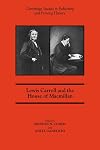
This book is almost as hard to classify as a Lewis Carroll story.
If you are a Lewis Carroll scholar, you need this book. It includes most of his surviving letters to MacMillan, his publisher, as well as detailed documents explaining what the letters mean (e.g. when Dodgson refers to a book by someone else, it documents what that book is). As a work of scholarship, it's excellent.
But, ouch, it's hard to read. The letters show Dodgson at his irascible, bigoted, hyper-perfectionist, show more hair-trigger worst. No fault is too small to draw a demand for satisfaction; no minor lack of clarity too trivial to draw a censure; no forgotten point too unimportant to be left unrepeated. I'm amazed MacMillan put up with these constant harangues, no matter how many thousands of books Dodgson sold. I would certainly have told him to go hang.
And that wasn't even the limit of Dodgson's requests. He asked MacMillan to handle parts of his correspondence, to do his research, even -- on many occasions -- to get his theatre tickets.
Those of you looking for evidence of his obsessions with little girls won't find it here (except that he buys some of those theatre tickets for them). Those looking for his whimsy will find even less -- I'm not sure I recall a humorous line in the entire book. All there is here is crankiness. If you want a crank, by all means, read this book. As for me, I plowed through it only for the sake of research into Dodgson's life. It took me months. It's that vicious. It's hard even to rate the book, because the contents and the annotations are so different. Give the editors five stars for their research and all they've done to enlighten the readers. As for Dodgson, I'd be tempted to give him a boot in the pants. show less
If you are a Lewis Carroll scholar, you need this book. It includes most of his surviving letters to MacMillan, his publisher, as well as detailed documents explaining what the letters mean (e.g. when Dodgson refers to a book by someone else, it documents what that book is). As a work of scholarship, it's excellent.
But, ouch, it's hard to read. The letters show Dodgson at his irascible, bigoted, hyper-perfectionist, show more hair-trigger worst. No fault is too small to draw a demand for satisfaction; no minor lack of clarity too trivial to draw a censure; no forgotten point too unimportant to be left unrepeated. I'm amazed MacMillan put up with these constant harangues, no matter how many thousands of books Dodgson sold. I would certainly have told him to go hang.
And that wasn't even the limit of Dodgson's requests. He asked MacMillan to handle parts of his correspondence, to do his research, even -- on many occasions -- to get his theatre tickets.
Those of you looking for evidence of his obsessions with little girls won't find it here (except that he buys some of those theatre tickets for them). Those looking for his whimsy will find even less -- I'm not sure I recall a humorous line in the entire book. All there is here is crankiness. If you want a crank, by all means, read this book. As for me, I plowed through it only for the sake of research into Dodgson's life. It took me months. It's that vicious. It's hard even to rate the book, because the contents and the annotations are so different. Give the editors five stars for their research and all they've done to enlighten the readers. As for Dodgson, I'd be tempted to give him a boot in the pants. show less
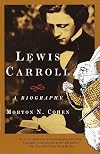
Does anyone know how many biographies of Charles Dodgson have been published? I don't. But I can count seven on my own shelves (by Clark, Cohen, Collingwood, Hudson, Leach, Stoffel, and Wolff), plus some shorter essays and books by people who knew him (Bowman, etc.).
If they didn't say they were all about the author of "Alice," you would never know they were about the same man.
Some of this is simply the result of an unfortunate decision by Charles Dodgson's family: They suppressed his show more diaries. Several volumes are lost, and several pages have been cut out of the volumes which survive. Many of the biographies were written before the surviving portions were made available, and even the recent biographies suffer from the defects in the surviving record. Even today, we are left guessing about what went on in Dodgson's head.
This produces significant conflicts in interpretation -- as anyone who reads the record of conflict between Morton N. Cohen and Karoline Leach will know. There is a second problem: A history of absurd psychological interpretation of Dodgson that has badly muddied the waters. People have to go to a lot of effort to deal with the "paedophile theory" -- and, having put in all that effort, they don't really want to tackle the psychology any more.
This leads to defects. For instance, Dodgson shows a great many traits of Asperger's syndrome, from a peculiar style of walking to a literal mind to skill in mathematics to a tendency toward meltdowns. If he did suffer from Asperger's, it would explain a tremendous number of things. But little scholarly attention has been devoted to this problem.
So what does this have to do with Cohen's biography? Only this: That a full biography of Lewis Carroll has never been written. It probably cannot be written. Each student of Dodgson has to fill in some holes for himself. But, to do that, the student needs as much information as possible. And, of all the biographies, this is the fullest. It is also the most sympathetic. It will not answer every question for you, because no biography can do that. But it will give you the best data available. It isn't the last word. But it's a good place to start. show less
If they didn't say they were all about the author of "Alice," you would never know they were about the same man.
Some of this is simply the result of an unfortunate decision by Charles Dodgson's family: They suppressed his show more diaries. Several volumes are lost, and several pages have been cut out of the volumes which survive. Many of the biographies were written before the surviving portions were made available, and even the recent biographies suffer from the defects in the surviving record. Even today, we are left guessing about what went on in Dodgson's head.
This produces significant conflicts in interpretation -- as anyone who reads the record of conflict between Morton N. Cohen and Karoline Leach will know. There is a second problem: A history of absurd psychological interpretation of Dodgson that has badly muddied the waters. People have to go to a lot of effort to deal with the "paedophile theory" -- and, having put in all that effort, they don't really want to tackle the psychology any more.
This leads to defects. For instance, Dodgson shows a great many traits of Asperger's syndrome, from a peculiar style of walking to a literal mind to skill in mathematics to a tendency toward meltdowns. If he did suffer from Asperger's, it would explain a tremendous number of things. But little scholarly attention has been devoted to this problem.
So what does this have to do with Cohen's biography? Only this: That a full biography of Lewis Carroll has never been written. It probably cannot be written. Each student of Dodgson has to fill in some holes for himself. But, to do that, the student needs as much information as possible. And, of all the biographies, this is the fullest. It is also the most sympathetic. It will not answer every question for you, because no biography can do that. But it will give you the best data available. It isn't the last word. But it's a good place to start. show less
An excellent, fascinating biography of Lewis Caroll, aka Charles Dodgeson. He was the eldest son of a large family, spent a lot of time entertaining his young siblings, and grew up to write Alice in Wonderland based on stories he told to Alice Liddell and her sisters, daughters of the Dean of the Oxford college where he was a don. He preferred the company of children, especially girls, his whole life.
Let's cut to the question you're wondering about: yes, he was probably a pedophile; at show more least the author of this book thinks so. But he was a highly moral and proper person and there is no record of him doing anything even remotely improper with any of the many girls and young women he spent time with over the years. He simply delighted in children. His diaries record struggles with unspecified temptations, and the author shows that the greatest time of this was during the years he was involved with the Liddells, so he may be referring to sexual fantasies. But we shall never know.
He was keen on photography during its early days and photographed girls nude, but only with the parents' permission and only if the girls seemed totally comfortable with it. He kept copies only for a while, and wrote the parents about how they should destroy theirs so as not to embarrass the girls. Although there are letters that show he took a fair number of them, only something like six of his nudes survive.
It was a different time. People thought nude children were just a symbol of innocence and it wasn't a big deal for them to be represented in ads and so forth. Certainly a few people got turned on by ads for Pear's Soap, but most people had no idea.
He was a serious mathematician and inventor (when he learned that Babbage was working on a computing machine, he wrote to him, and the two met to discuss it - I got a huge kick out of this since I saw the Difference Engine when it visited us here in Silicon Valley.) He had an off-kilter way of looking at things, as is clear from Alice, and he sounds like someone I would like to have known. show less
Let's cut to the question you're wondering about: yes, he was probably a pedophile; at show more least the author of this book thinks so. But he was a highly moral and proper person and there is no record of him doing anything even remotely improper with any of the many girls and young women he spent time with over the years. He simply delighted in children. His diaries record struggles with unspecified temptations, and the author shows that the greatest time of this was during the years he was involved with the Liddells, so he may be referring to sexual fantasies. But we shall never know.
He was keen on photography during its early days and photographed girls nude, but only with the parents' permission and only if the girls seemed totally comfortable with it. He kept copies only for a while, and wrote the parents about how they should destroy theirs so as not to embarrass the girls. Although there are letters that show he took a fair number of them, only something like six of his nudes survive.
It was a different time. People thought nude children were just a symbol of innocence and it wasn't a big deal for them to be represented in ads and so forth. Certainly a few people got turned on by ads for Pear's Soap, but most people had no idea.
He was a serious mathematician and inventor (when he learned that Babbage was working on a computing machine, he wrote to him, and the two met to discuss it - I got a huge kick out of this since I saw the Difference Engine when it visited us here in Silicon Valley.) He had an off-kilter way of looking at things, as is clear from Alice, and he sounds like someone I would like to have known. show less

Who needs the Internet when this book is available?
I'm almost serious. If you want testimony about Charles Dodgson (Lewis Caroll) from his friends and colleagues, it's all here. Every significant source I can remember seeing quoted in any other text, other than of course his diaries and letters.
To be sure, not every page of every important life is included; there are only small sections of Isa Bowman's life of her friend, and Ethel Hatch's book of Letters has biographical material that isn't show more found here, and there are a few other odds and ends. But they are few, and generally less revealing. This is a relatively thin book, but then, Charles Dodgson never really opened himself up to others. We have very little knowledge of how he thought; we only know how he acted. And that is all in here.
The only reasons I didn't give this book five stars are that, first, Morton Cohen usually lists the authors of the various excerpts under the names they used when they published, or in later life (so, e.g., Enid Stevens, the very last of Dodgson's important child-friends, is listed as "Enid Shawyer" -- her married name but not one that will be familiar from the Dodgson biographies; Gertrude Chataway, his most significant friend after Alice Liddell, is "Gertrude Atkinson"; the only exception, and it partial, is that Alice herself is "Alice (Liddell) Hargreaves"). Second, I don't think the selections are given quite enough context; you need to consult a good biography before you can fully appreciate this book. But it is a collection that every student of Dodgson requires.
It won't replace a biography, or the collection of letters that Cohen himself edited, or Dodgson's diaries. But, along with the diaries and the letters and perhaps a volume on Dodgson's photography, this is one of the small shelf of necessary books that truly give insight into the strange, insecure, shy, badly misunderstood man who gave us Alice in Wonderland. show less
I'm almost serious. If you want testimony about Charles Dodgson (Lewis Caroll) from his friends and colleagues, it's all here. Every significant source I can remember seeing quoted in any other text, other than of course his diaries and letters.
To be sure, not every page of every important life is included; there are only small sections of Isa Bowman's life of her friend, and Ethel Hatch's book of Letters has biographical material that isn't show more found here, and there are a few other odds and ends. But they are few, and generally less revealing. This is a relatively thin book, but then, Charles Dodgson never really opened himself up to others. We have very little knowledge of how he thought; we only know how he acted. And that is all in here.
The only reasons I didn't give this book five stars are that, first, Morton Cohen usually lists the authors of the various excerpts under the names they used when they published, or in later life (so, e.g., Enid Stevens, the very last of Dodgson's important child-friends, is listed as "Enid Shawyer" -- her married name but not one that will be familiar from the Dodgson biographies; Gertrude Chataway, his most significant friend after Alice Liddell, is "Gertrude Atkinson"; the only exception, and it partial, is that Alice herself is "Alice (Liddell) Hargreaves"). Second, I don't think the selections are given quite enough context; you need to consult a good biography before you can fully appreciate this book. But it is a collection that every student of Dodgson requires.
It won't replace a biography, or the collection of letters that Cohen himself edited, or Dodgson's diaries. But, along with the diaries and the letters and perhaps a volume on Dodgson's photography, this is one of the small shelf of necessary books that truly give insight into the strange, insecure, shy, badly misunderstood man who gave us Alice in Wonderland. show less
Awards

You May Also Like


Associated Authors
Statistics
- Works
- 14
- Also by
- 9
- Members
- 523
- Popularity
- #47,533
- Rating
- 3.7
- Reviews
- 9
- ISBNs
- 20
- Languages
- 3