
Stephen F. Cohen (1938–2020)
Author of Bukharin and the Bolshevik Revolution: A Political Biography, 1888-1938
About the Author
He is professor Russian studies & history at New York University & a consultant to CBS News. His books include Bukharin & the Bolshevik Revolution & Sovieticus. (Bowker Author Biography)
Works by Stephen F. Cohen
Bukharin and the Bolshevik Revolution: A Political Biography, 1888-1938 (1973) — Author — 247 copies, 3 reviews
Rethinking the Soviet Experience: Politics and History since 1917 (Galaxy Books) (1985) — Author — 86 copies
Sovieticus: American Perceptions and Soviet Realities : Expanded to Cover the Gorbachev Period (1985) 23 copies
Associated Works
The Commissar Vanishes. The Falsification of Photographs and Art in the Soviet Union (1997) — Preface, some editions — 285 copies, 3 reviews
How It All Began: The Prison Novel (1998) — Translator, some editions; Foreword, some editions — 63 copies
American priorities in a new world era — Contributor — 1 copy
Tagged
Common Knowledge
- Other names
- Cohen, Stephen
Cohen, Stephen Frand - Birthdate
- 1938-11-25
- Date of death
- 2020-09-18
- Gender
- male
- Education
- Columbia University (PhD - Russian Studies)
Indiana University (BA - Economics and Public Policy, MA - Russian Studies)
Pine Crest School - Occupations
- historian
university professor
editor
commentator - Organizations
- Princeton University
New York University
The Nation
The New York Times - Cause of death
- cancer (lung)
- Nationality
- USA
- Birthplace
- Indianapolis, Indiana, USA
- Places of residence
- Owensboro, Kentucky, USA
Fort Lauderdale, Florida, USA - Place of death
- Manhattan, New York, USA
- Associated Place (for map)
- USA
Members
Reviews
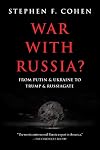
While I had some hopes that current war will end without further effects on the rest of the world, after reading this book I am no longer so sure.
Book reads as a journal - collection of author's monthly based politic commentaries on events from 2014 'til late 2018 with focus set to relations between US and Russia. As pages go by and as events roll on, it is visible [from the retrospective] that what culminated in 2022 was not unexpected but was craved, unfortunately by those that are the show more most liberal and progressive, in a ways that are so horrifying and chilling that I just do not see how this can end up in diplomatic way.
I wont go into details of either side but it is unfortunate that West made the choice to go to war no matter what. I have to admit that if it weren't same propaganda machine aggressively attacking and [lets be honest] destroying anyone disagreeing with official line during the epidemic I would definitely experience this book differently. But with that knowledge of total discrediting of mainstream media and governments (where every mayor became a mini dictator) during epidemic, it is visible that same methods were used years before to heat the relations between US and Russia. To what goal, I do not know. Holland and Merkel's confessions that Minsk agreements weren't worth the ink used - although they might be confessions of weak people (as almost all of the post 1980's politicians in the West seem to be, not state-creators but simple bureaucrats and managers) to gain political points - prove that something truly essential, at the core, went wrong and only solution found was war.
Just notion of media demonization of first one person, then moving to the entire nation is something that should put cold fear into everyone's heart. With such dehumanization current status of affairs is not surprising. But unfortunately while it is very easy to roll on hate of this scope, stopping it is something completely different. I just dont think Western politicians are capable of it (even if they want it), because it would mean jumping into their own mouths.
With that being said I am no longer sure that high intensity war can be stopped. Because of idiots who do not risk anything but their own political proclamations (that they will change as easily tomorrow) we all risk something terrible. After 14 years from war in Georgia, 11 years from escalation in Syria and 8 years since events in Ukraine [do note ever shortening period between crisis] West aims towards something that only 40 years ago would be worked full force to be prevented. I do not blame high ranking military personnel that support this craziness, because they are also not people with anything to risk- they are military bureaucrats same as their civilian counterparts, living their lives in theory and dreaming some idiotic grandeur and they need the enemy. So, hey, Russia, right? It wont be them dying on battlefields or ending mauled and without limbs. And actors and media persons ...... I can only say....... person can look smart and act smart but lest be honest, court jesters of old had a purpose which was picked up by media, news and entertainment in our days. And for current media personas, these court jesters were PhD's in diplomatic affairs and public relations, serious people with serious tasks at hand. Current one's? Utter disgrace and idiots.
Lets be straight - every nation mentioned in the book fights for its interests. This is as natural as it gets. But to allow years to pass just to press and press and year after year demonize everything and everyone on the other side, dehumanize them as constant tricksters, liars and to constantly break agreements with them and then to bring it to the [initial] break-point [of 2022] and keep on with the ugliest possible narrative that turns even Western institutions to risk of dehumanization if they ask any questions or try anything? Only one word - disgusting.
We live in the world of adult-children led by some very serious people with, for me, unfathomable goals, using nothing but emotions and intellectual illiteracy. People have forgotten what actual war is, not chasing terrorists in some far away country, but actual war, tanks and artillery rolling and leveling everything. And let me not start on nuclear weapons because I think politicians truly think they can use them and live........
Terrifying book. Lets just hope there will be something left to start anew.
Highly recommended read. show less
Book reads as a journal - collection of author's monthly based politic commentaries on events from 2014 'til late 2018 with focus set to relations between US and Russia. As pages go by and as events roll on, it is visible [from the retrospective] that what culminated in 2022 was not unexpected but was craved, unfortunately by those that are the show more most liberal and progressive, in a ways that are so horrifying and chilling that I just do not see how this can end up in diplomatic way.
I wont go into details of either side but it is unfortunate that West made the choice to go to war no matter what. I have to admit that if it weren't same propaganda machine aggressively attacking and [lets be honest] destroying anyone disagreeing with official line during the epidemic I would definitely experience this book differently. But with that knowledge of total discrediting of mainstream media and governments (where every mayor became a mini dictator) during epidemic, it is visible that same methods were used years before to heat the relations between US and Russia. To what goal, I do not know. Holland and Merkel's confessions that Minsk agreements weren't worth the ink used - although they might be confessions of weak people (as almost all of the post 1980's politicians in the West seem to be, not state-creators but simple bureaucrats and managers) to gain political points - prove that something truly essential, at the core, went wrong and only solution found was war.
Just notion of media demonization of first one person, then moving to the entire nation is something that should put cold fear into everyone's heart. With such dehumanization current status of affairs is not surprising. But unfortunately while it is very easy to roll on hate of this scope, stopping it is something completely different. I just dont think Western politicians are capable of it (even if they want it), because it would mean jumping into their own mouths.
With that being said I am no longer sure that high intensity war can be stopped. Because of idiots who do not risk anything but their own political proclamations (that they will change as easily tomorrow) we all risk something terrible. After 14 years from war in Georgia, 11 years from escalation in Syria and 8 years since events in Ukraine [do note ever shortening period between crisis] West aims towards something that only 40 years ago would be worked full force to be prevented. I do not blame high ranking military personnel that support this craziness, because they are also not people with anything to risk- they are military bureaucrats same as their civilian counterparts, living their lives in theory and dreaming some idiotic grandeur and they need the enemy. So, hey, Russia, right? It wont be them dying on battlefields or ending mauled and without limbs. And actors and media persons ...... I can only say....... person can look smart and act smart but lest be honest, court jesters of old had a purpose which was picked up by media, news and entertainment in our days. And for current media personas, these court jesters were PhD's in diplomatic affairs and public relations, serious people with serious tasks at hand. Current one's? Utter disgrace and idiots.
Lets be straight - every nation mentioned in the book fights for its interests. This is as natural as it gets. But to allow years to pass just to press and press and year after year demonize everything and everyone on the other side, dehumanize them as constant tricksters, liars and to constantly break agreements with them and then to bring it to the [initial] break-point [of 2022] and keep on with the ugliest possible narrative that turns even Western institutions to risk of dehumanization if they ask any questions or try anything? Only one word - disgusting.
We live in the world of adult-children led by some very serious people with, for me, unfathomable goals, using nothing but emotions and intellectual illiteracy. People have forgotten what actual war is, not chasing terrorists in some far away country, but actual war, tanks and artillery rolling and leveling everything. And let me not start on nuclear weapons because I think politicians truly think they can use them and live........
Terrifying book. Lets just hope there will be something left to start anew.
Highly recommended read. show less
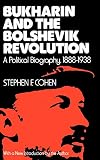
This is a stunning book - remarkable research went into its preparation. The writing is excellent. The subject matter - and subject-of-the-biography - are fascinating and meaningful about how Stalinism developed in opposition to Bukharin's entirely different intentions and theory about how to build communism. I never encountered the name or story of Nikolai Bukharin in my history studies in high school or college. I am glad I have now, and I will read more of this man and the story of the show more development of the USSR that terrified and murdered its people and ravaged its culture & economy. show less
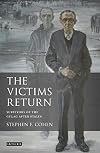
This informative account of life after the Gulag is enhanced by a number of first-person accounts – the author had a close relationship with Anna Larina, widow of Vladimir Bukharin (one of the most prominent victims of the 1930’s show trials), and through her met a number of other survivors. The book is short but provides a nuanced look at how people reacted after coming home and their problems. I also appreciated the inclusion of many pictures of the people that Cohen talked to. He did show more give them much of the credit and also highlighted the important work of some of the lower level officials, former prisoners themselves, who spearheaded the efforts to release and rehabilitate the victims: Olga Shatunovskaya and Aleksei Snegov. Besides a history of the Gulag survivors, Cohen traces the changing attitudes to them and how it was often correlated with a positive or negative view of Stalin. There was a lot about the author and his research and problems, but most of the time it was related to his efforts to collect material and his run-ins with higher ups. It was only in the last couple of chapters where I found it a bit distracting and annoying.
The first chapter is very author-centric, but I thought it was interesting to read about how he came into contact with his sources and there was a quick history of other Gulag accounts that had been published during the post-Stalin years. The rest is a history up to the present. In the second chapter, on liberation, Cohen describes the release of prisoners after the death of Stalin in 1953. Unsurprisingly, those who had connections and knew highly-placed officials were the first to have their cases heard. In an absurdly extreme example, Vyacheslav Molotov, Stalin’s right-hand man, freed his wife Polina the day after Stalin’s funeral and brought her home, where they continued their marriage as if she had never been imprisoned. Cohen notes that he could find no evidence that Molotov helped any other detainees and in fact actively opposed the efforts of Khrushchev and Mikoyan to free them. The release process was slow, but sped up after Khrushchev’s 1956 “Secret Speech” denouncing Stalin and the formation of commissions to go to each camp and determine who could be released, a project started by Shatunovskaya and Snegov. Even after release, some chose to stay in the far east, others were not allowed to go back to the major cities, and of course many died there waiting for freedom.
The next chapter is quite good, weaving the personal stories with an emphasis on the varied reactions of the returnees. Some were forever fearful, others openly displayed their status as zeks. Some slipped back into their former lives and were forgotten, others wrote and spoke about their experiences, and others rejoined the Communist party and achieved fame and success. While some families had happy reunions, others found they were estranged from their spouses and children. Cohen looks at the basics – jobs, apartments, “rehabilitations” or exonerations. Few ever recovered possessions that had been seized by the NKVD when they were arrested (the author notes that Anna Larina got a few of Bukharin’s things back when they were mailed anonymously). The fight for apartments and dachas could be contentious. The returns raised a problem – as described by Akhmatova “Now those who were arrested will return, and two Russias will be eyeball to eyeball: the one that put people in the camps and the one put there.” While it would be easy to imagine anger and dreams of revenge, Cohen has several stories of forgiveness or a belief that everyone was a victim.
Shatunovskaya and Snegov’s actions as advisers of Khrushchev are given a closer look. Former midlevel officials who were sent off to the Gulag, they were released and due to personal ties to Khrushchev and Mikoyan, joined their inner circle. The pair informed them of the situation, urged Khrushchev to give his 1956 speech, formed the commissions that led to releases, and collected an archive of material related to the imprisonments – some of which disappeared later and would not be released for years. Cohen also looks at the actions of Nikita Khrushchev and Anastas Mikoyan, both formerly close associates of Stalin. In contrast to Stalin’s other cronies Molotov, Kaganovich, Voroshilov and Malenkov, Khrushchev and Mikoyan approved the releases and actively tried to help returnees. The author speculates why and in general has very positive views about the two (although the suggestions of a need for atonement suggests there’s something to atone for). I do wish he had gone into some of their actions under Stalin a bit more, but it is a short book. While the releases continued, rehabilitation of the prisoners and guilt of their oppressors was a thornier issue. Khrushchev’s anti-Stalinism led to the cultural “thaw”, but there was fear in the ranks of a Soviet Nuremberg. Khrushchev’s ousting would be the end of the thaw until Gorbachev.
Cohen has a sharp, succinct analysis of Brezhnev’s rule. His supporters did not want a “re-Stalinization” as had been suggested. They wanted security and stability, which was not Stalin’s reign of terror or Khrushchev’s hunt for guilt. There would not be mass arrests and an extensive Gulag population – those who were arrested would know what they did (obviously defying the state). But while Brezhnev did not want another terror, dissent was quelled - writers were expelled, voluntarily emigrated, or simply could not publish their works. Brezhnev welcomed back Molotov et al., rehabilitated Stalin’s image, and ignored the Gulag survivors. Works were still produced but through the underground samizdat press. The Gorbachev years would see another reversal – the Soviet Union officially ended, Bukharin was portrayed as a victim of Stalin, further works about the Gulag could be published, and in 1991 Gorbachev issued a blanked rehabilitation for all the remaining victims. (This is the chapter where there is maybe too much Cohen.) The author concludes in an epilogue near the present (although Putin is still in power and has certainly done much more in the years since) where he examines the rise of Stalin’s popularity again in the wake of the economically unstable Yeltsin years. He has evidence of both anti- and pro-Stalin sentiment, but suggests that the victims long return is not over – while there are fewer Gulag survivors still alive, their descendants as well as the glasnost generation will be determining the future. show less
The first chapter is very author-centric, but I thought it was interesting to read about how he came into contact with his sources and there was a quick history of other Gulag accounts that had been published during the post-Stalin years. The rest is a history up to the present. In the second chapter, on liberation, Cohen describes the release of prisoners after the death of Stalin in 1953. Unsurprisingly, those who had connections and knew highly-placed officials were the first to have their cases heard. In an absurdly extreme example, Vyacheslav Molotov, Stalin’s right-hand man, freed his wife Polina the day after Stalin’s funeral and brought her home, where they continued their marriage as if she had never been imprisoned. Cohen notes that he could find no evidence that Molotov helped any other detainees and in fact actively opposed the efforts of Khrushchev and Mikoyan to free them. The release process was slow, but sped up after Khrushchev’s 1956 “Secret Speech” denouncing Stalin and the formation of commissions to go to each camp and determine who could be released, a project started by Shatunovskaya and Snegov. Even after release, some chose to stay in the far east, others were not allowed to go back to the major cities, and of course many died there waiting for freedom.
The next chapter is quite good, weaving the personal stories with an emphasis on the varied reactions of the returnees. Some were forever fearful, others openly displayed their status as zeks. Some slipped back into their former lives and were forgotten, others wrote and spoke about their experiences, and others rejoined the Communist party and achieved fame and success. While some families had happy reunions, others found they were estranged from their spouses and children. Cohen looks at the basics – jobs, apartments, “rehabilitations” or exonerations. Few ever recovered possessions that had been seized by the NKVD when they were arrested (the author notes that Anna Larina got a few of Bukharin’s things back when they were mailed anonymously). The fight for apartments and dachas could be contentious. The returns raised a problem – as described by Akhmatova “Now those who were arrested will return, and two Russias will be eyeball to eyeball: the one that put people in the camps and the one put there.” While it would be easy to imagine anger and dreams of revenge, Cohen has several stories of forgiveness or a belief that everyone was a victim.
Shatunovskaya and Snegov’s actions as advisers of Khrushchev are given a closer look. Former midlevel officials who were sent off to the Gulag, they were released and due to personal ties to Khrushchev and Mikoyan, joined their inner circle. The pair informed them of the situation, urged Khrushchev to give his 1956 speech, formed the commissions that led to releases, and collected an archive of material related to the imprisonments – some of which disappeared later and would not be released for years. Cohen also looks at the actions of Nikita Khrushchev and Anastas Mikoyan, both formerly close associates of Stalin. In contrast to Stalin’s other cronies Molotov, Kaganovich, Voroshilov and Malenkov, Khrushchev and Mikoyan approved the releases and actively tried to help returnees. The author speculates why and in general has very positive views about the two (although the suggestions of a need for atonement suggests there’s something to atone for). I do wish he had gone into some of their actions under Stalin a bit more, but it is a short book. While the releases continued, rehabilitation of the prisoners and guilt of their oppressors was a thornier issue. Khrushchev’s anti-Stalinism led to the cultural “thaw”, but there was fear in the ranks of a Soviet Nuremberg. Khrushchev’s ousting would be the end of the thaw until Gorbachev.
Cohen has a sharp, succinct analysis of Brezhnev’s rule. His supporters did not want a “re-Stalinization” as had been suggested. They wanted security and stability, which was not Stalin’s reign of terror or Khrushchev’s hunt for guilt. There would not be mass arrests and an extensive Gulag population – those who were arrested would know what they did (obviously defying the state). But while Brezhnev did not want another terror, dissent was quelled - writers were expelled, voluntarily emigrated, or simply could not publish their works. Brezhnev welcomed back Molotov et al., rehabilitated Stalin’s image, and ignored the Gulag survivors. Works were still produced but through the underground samizdat press. The Gorbachev years would see another reversal – the Soviet Union officially ended, Bukharin was portrayed as a victim of Stalin, further works about the Gulag could be published, and in 1991 Gorbachev issued a blanked rehabilitation for all the remaining victims. (This is the chapter where there is maybe too much Cohen.) The author concludes in an epilogue near the present (although Putin is still in power and has certainly done much more in the years since) where he examines the rise of Stalin’s popularity again in the wake of the economically unstable Yeltsin years. He has evidence of both anti- and pro-Stalin sentiment, but suggests that the victims long return is not over – while there are fewer Gulag survivors still alive, their descendants as well as the glasnost generation will be determining the future. show less
Stephen Cohen's initial interest in Gulag survivors started when he was writing a PhD dissertation on Bukharin, one of the most famous victims of Stalin's terror. The dissertation became a book, [Bukharin and the Bolshevik Revolution]. The book was smuggled into the Soviet Union, where Anna Larina, Bukharin's widow, read it. When Cohen started visiting Moscow on academic exchange programmes in 1976, the two met. Cohen was introduced to a world of Gulag survivors and a career was born. This show more would be my one reservation about the book; there is too much of Cohen.
At the time of Stalin's death in 1953, the Gulag held at least 5.5 million inhabitants. Millions more family members of these inhabitants had had their lives destroyed by association. Still other "enemies of the people" were surviving relatives of people who had been executed or died in the camps during the long terror. Cohen estimates the total number of people still living in 1953 who were directly affected by the Terror as at least fifteen million. Dismantling of the camps began shortly after Stalin's death.
Initially, about one million criminal class prisoners were released, with select politicals following over the next three years. These last had had their cases reviewed on an individual basis. After Khrushchev's famous speech at the 1956 Party Congress, however, the process was speeded up with travelling commissions sent out across the country. By 1959, the job was done.
Rehabilitating and reintegrating such huge numbers of people back into Soviet society was a massive undertaking, creating a divide between those who were in the camps and those who put them there, in the expectation they would never be seen again. Although this was to have been the primary focus of the book, Cohen himself says it did not turn out to be the broad study of returnees he had originally intended, but instead became the story of high profile returnees seen through the lens of political events in the Soviet Union after their return.
Khrushchev granted the politically rehabilitated returnees some modicum of financial compensation, although their belongings and real estate were long gone. They were also granted access to basic needs such as medical care and housing, although the officials actually in charge of administering these did not always follow through. The privations and scarcities of Soviet society in general in that era, made life difficult for the majority of citizens, let alone the newly returned. Khrushchev himself was in a difficult position. As part of Stalin's machine, he was trying to atone for part of his role, yet he was functioning in a political environment where he had many opponents who would happily have overthrown him if he went too far.
Americans may associate Khrushchev with the Red scares of the Cold War, or think of him as a crude peasant, but Cohen portrays him in a more sympathetic light. He links the fortunes of the returnees to the political fortunes of Khrushchev and his successors. They fall on hard times during the Brezhnev era, when many of Khrushchev's reforms were overturned. Cohen cites three cases where Khrushchev's positions were reversed by Brezhnev:
Searches, demotions, expulsions and worse started all over again for the victims and their relatives. Eugenia Ginzberg and others burned their works. Samizdat, underground writings, flourished again.
Gorbachev reversed the tide once again by rehabilitating Bukharin and Khruschev in a nationwide speech in 1987, making Bukharin "Stalin's Victim Number One". A deluge of art and writing about the Terror was unleashed, including [The Gulag Archipelago], published in the Soviet Union in 1990. In 1991, all victims of Stalin who had not yet been officially rehabilitated were exonerated in a blanket decree. Yeltsin went further, giving access to NKVD case files to victims and their families.
The Soviet Union did not hold Nuremberg style trials for those who carried out the Terror, other than for very high ranking official like Beria, head of Stalin's secret police. Partly this was for political reasons, as far too many Party members would have been implicated. Partly it was from a desire to avoid setting up yet another group of innocent victims: relatives of the accused. Partly it was related to a sense of fatigue in a nation that had survived the devastation of the Great Terror and WWII. As Russia collapses economically, Stalin's profile is rising again, with over 50% of people in 2005 having a positive view of his era. Most victims are dead by now, and although their descendants are still campaigning for more awareness of the Terror, many young Russians have no knowledge of it.
Cohen concludes the political struggle over the crimes of the Stalin era is again under way in Russia at the highest levels. It will almost certainly intensify. If so, the long return of the victims is not over.
__________________________________
I want to name them all by name,
But the list was taken and is nowhere to be found.
Anna Akhmatova, Requiem fragment quoted in The Victims Return show less
At the time of Stalin's death in 1953, the Gulag held at least 5.5 million inhabitants. Millions more family members of these inhabitants had had their lives destroyed by association. Still other "enemies of the people" were surviving relatives of people who had been executed or died in the camps during the long terror. Cohen estimates the total number of people still living in 1953 who were directly affected by the Terror as at least fifteen million. Dismantling of the camps began shortly after Stalin's death.
Initially, about one million criminal class prisoners were released, with select politicals following over the next three years. These last had had their cases reviewed on an individual basis. After Khrushchev's famous speech at the 1956 Party Congress, however, the process was speeded up with travelling commissions sent out across the country. By 1959, the job was done.
Rehabilitating and reintegrating such huge numbers of people back into Soviet society was a massive undertaking, creating a divide between those who were in the camps and those who put them there, in the expectation they would never be seen again. Although this was to have been the primary focus of the book, Cohen himself says it did not turn out to be the broad study of returnees he had originally intended, but instead became the story of high profile returnees seen through the lens of political events in the Soviet Union after their return.
Khrushchev granted the politically rehabilitated returnees some modicum of financial compensation, although their belongings and real estate were long gone. They were also granted access to basic needs such as medical care and housing, although the officials actually in charge of administering these did not always follow through. The privations and scarcities of Soviet society in general in that era, made life difficult for the majority of citizens, let alone the newly returned. Khrushchev himself was in a difficult position. As part of Stalin's machine, he was trying to atone for part of his role, yet he was functioning in a political environment where he had many opponents who would happily have overthrown him if he went too far.
Americans may associate Khrushchev with the Red scares of the Cold War, or think of him as a crude peasant, but Cohen portrays him in a more sympathetic light. He links the fortunes of the returnees to the political fortunes of Khrushchev and his successors. They fall on hard times during the Brezhnev era, when many of Khrushchev's reforms were overturned. Cohen cites three cases where Khrushchev's positions were reversed by Brezhnev:
In 1964, the most celebrated Gulag writer, Solzhenitsyn, was a nominee for the Lenin prize. In 1974, he was arrested and deported from the Soviet Union. In 1962, a Khrushchev aide indicated that Bukharin, Stalin's most important political victim, might be exonerated, telling a conference of historians, "Neither Bukharin nor Rykov was, of course, a spy or a terrorist". In 1977, a Central Committee official informed Bukharin's family that "the criminal charges on ...which he was convicted have not been removed." The announcement in effect rehabilitated the notorious Moscow Trials of the 1930s and thus the Stalinist era.
The fate of Molotov, the senior living Stalinist most harshly indicted by Khrushchev, was equally indicative. In 1962, Molotov was expelled from the Communist Party, creating the impression that he would be put on trial for crimes of the Stalin era. He then disappeared from public view. In 1984, the Politburo readmitted Molotov to the Party....Brezhnev's heir, Konstantin Chernenko...personally received the ninety-three year old.
Searches, demotions, expulsions and worse started all over again for the victims and their relatives. Eugenia Ginzberg and others burned their works. Samizdat, underground writings, flourished again.
Gorbachev reversed the tide once again by rehabilitating Bukharin and Khruschev in a nationwide speech in 1987, making Bukharin "Stalin's Victim Number One". A deluge of art and writing about the Terror was unleashed, including [The Gulag Archipelago], published in the Soviet Union in 1990. In 1991, all victims of Stalin who had not yet been officially rehabilitated were exonerated in a blanket decree. Yeltsin went further, giving access to NKVD case files to victims and their families.
The Soviet Union did not hold Nuremberg style trials for those who carried out the Terror, other than for very high ranking official like Beria, head of Stalin's secret police. Partly this was for political reasons, as far too many Party members would have been implicated. Partly it was from a desire to avoid setting up yet another group of innocent victims: relatives of the accused. Partly it was related to a sense of fatigue in a nation that had survived the devastation of the Great Terror and WWII. As Russia collapses economically, Stalin's profile is rising again, with over 50% of people in 2005 having a positive view of his era. Most victims are dead by now, and although their descendants are still campaigning for more awareness of the Terror, many young Russians have no knowledge of it.
Cohen concludes the political struggle over the crimes of the Stalin era is again under way in Russia at the highest levels. It will almost certainly intensify. If so, the long return of the victims is not over.
__________________________________
I want to name them all by name,
But the list was taken and is nowhere to be found.
Anna Akhmatova, Requiem fragment quoted in The Victims Return show less
Lists
Awards

You May Also Like


Associated Authors
Statistics
- Works
- 14
- Also by
- 5
- Members
- 652
- Popularity
- #38,720
- Rating
- 4.1
- Reviews
- 10
- ISBNs
- 44
- Languages
- 5
- Favorited
- 2