

F. Bordewijk (1884–1965)
Author of Character
About the Author
Image credit: Ferdinand Bordewijk
Series
Works by F. Bordewijk
Fantastische vertellingen ; De laatste eer ; De wingedrank (Verzameld werk / F. Bordewijk) (Dutch Edition) (1984) 20 copies
Een bundel novellen, 1938 15 copies
Haagse mijmeringen 14 copies
De zigeuners ; De aktentas ; Centrum van stilte ; Lente ; Verspreide verhalen (Verzameld werk / F. Bordewijk) (Dutch Edition) (1986) 13 copies
Zwanenpolder : 20 verhalen 12 copies
De Golbertons : roman 11 copies
Verzameld werk. 8: Vertellingen van generzijds ; De korenharp, nieuwe reeks ; Studiën in volksstructuur ; Mevrouw en me (1985) 11 copies
Onderweg naar de Beacons 8 copies
Verzameld werk. 11: Haagse mijmeringen ; Wandelingen door Den Haag en omstreken ; Geachte confrère ; Juridische varia ; (1988) 7 copies
Verzameld werk.10. Verspreide verhalen; Idem;Gedichten; Drie toneelstukken; Halte Noordstad (1986) 6 copies
Lente : zeven verhalen 6 copies
Bint ; Blokken ; Keizerrijk 5 copies
Studiën in volksstructuur 5 copies
Vertellingen van generzijds 4 copies
De korenharp 4 copies
Idem : tien parodieën 3 copies
5 auteurs over hun uitgever 3 copies
Verzameld werk 3 copies
Centrum van stilte : vijf verhalen 2 copies
Jade, jaspis en de jitterbug : wijsheid en schoonheid uit het leven van baron van Stralen op rijm 2 copies, 1 review
Arenlezing uit de korenharp 2 copies
Drie tooneelstukken 1 copy
Moeders, verhalen 1 copy
De zwoeger 1 copy
Amsterdamse Bruggen 1 copy
Over Louis Couperus 1 copy
Meneer Pem heeft een droom 1 copy
De korenharp : nieuwe reeks 1 copy
Vrouwenhaar e.a. 1 copy
Straatnamen 1 copy
De publieke fotolach 1 copy
Nachtelijk paardengetrappel 1 copy
Dames 1 copy
Associated Works
De Nederlandse en Vlaamse literatuur vanaf 1880 in 250 verhalen (2005) — Contributor — 79 copies, 2 reviews
De Nederlandse en Vlaamse literatuur vanaf 1880 in 60 lange verhalen (2006) — Contributor — 43 copies, 2 reviews
Mijn boek van vroeger en van nu : zeven auteurs vertellen over de rol die het boek in hun leven speelde — Contributor — 5 copies
Het gele huis te huur en verhuurd aan tien schrijvers: F. Bordewijk, Elisabeth Zernike, H.J. Smeding, Anna Blaman ... (1940) — Contributor — 3 copies
Kristal : letterkundige productie — Contributor, some editions — 1 copy
De Gemeenschap (augustus 1934) — Contributor — 1 copy
Tagged
Common Knowledge
- Canonical name
- Bordewijk, F.
- Legal name
- Bordewijk, Ferdinand
- Other names
- Ven, Ton
Mandeau, Emile - Birthdate
- 1884-10-10
- Date of death
- 1965-04-28
- Gender
- male
- Education
- University of Leiden
- Occupations
- writer
legal adviser
literary reviewer
law teacher
advocate - Organizations
- Ereraad voor Letterkunde (President)
Handelsschool in Rotterdam - Awards and honors
- Constantijn Huygensprijs (1957)
P.C. Hooftprijs (1953) - Relationships
- Funke-Bordewijk, N. (daughter)
Bordewijk-Roepman, Johanna (wife) - Short biography
- Ferdinand (voluit: Ferdinand Johan Wilhelm Christiaan Karel Emiel Bordewijk; de voornamen zijn op 13 maart 1919 bij beschikking van de arrondissementsrechtbank in Den Haag gewijzigd in Ferdinand) wordt geboren op 10 oktober 1884 in Amsterdam. Aan het Hoge Westeinde, een school met een ouderwetse tucht, wordt hij leerling op het gymnasium. Hij studeert rechten in Leiden en promoveert in 1912 tot doctor. Een jaar later wordt hij beëdigd als advocaat en gaat hij werken bij een advocatenkantoor in Rotterdam. In 1914 trouwt Bordewijk met Johanna S.H. Roepman. Uit dit huwelijk worden een dochter en een zoon geboren. Zijn echtgenote krijgt bekendheid als componiste van orkest- en koorwerken, beiaardmuziek en de opera Rotonde. Onder het pseudoniem Ton Ven maakt hij in 1916 zijn debuut als schrijver met de gedichtenbundel Paddestoelen. Van 1918 tot 1920 doceert Bordewijk handelsrecht aan de Handelsschool in Rotterdam. Bij een bombardement in maart 1945 worden al zijn bezittingen vernield en verhuist de familie tijdelijk naar Leiden. Uiteindelijk wordt een woning gevonden in Scheveningen. Van 1946 tot 1955 schrijft Bordewijk literaire kritieken in het Utrechts Nieuwsblad. In 1947 wordt hij voorzitter van de Ereraad voor Letterkunde, die oordeelt over het gedrag van schrijvers in WO II. Collaborateurs worden veroordeeld tot een publicatieverbod. Vanaf 1949 werkt Bordewijk voor de gemeente als juridisch adviseur mee aan diverse saneringsprojecten. In 1953 ontvangt hij de PC. Hooftprijs en een jaar later wordt hij benoemd tot Officier in de Orde van Oranje Nassau. In 1957 ontvangt Bordewijk de Constantijn Huygensprijs voor zijn totale oeuvre. In 1965 overlijdt hij op tachtigjarige leeftijd in Den Haag.
- Cause of death
- pneumonia
- Nationality
- Netherlands
- Birthplace
- Amsterdam, Netherlands
- Places of residence
- Rotterdam, The Netherlands
Leiden, The Netherlands
Scheveningen, The Netherlands - Place of death
- The Hague, The Netherlands
- Burial location
- Oud Eik en Duinen, The Hague, The Netherlands
- Associated Place (for map)
- The Netherlands
Members
Reviews
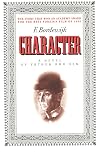
I no longer recall where I read that this is an unjustifiably neglected great book. Wherever it may have been, I am in complete agreement. I had never heard of the author nor of the book and now need to investigate Bordewijk (1884-1965) further. The book was written in 1938 and takes place in Rotterdam in the decade or two after the end of World War One. The novel follows Katadreuffe, born out of wedlock to an unusually determined self-denying woman who refuses to marry the man who fathered show more her son or to accept any assistance from him, her circumstances notwithstanding. The father, Dreverhaven, is a bailiff, responsible for enforcing debts, especially among the poor, and he is a creature out of Dickens. Indeed, the work as a whole has more than a whiff of Dickens. Katadreuffe grows up, intent on becoming a lawyer despite enormous obstacles, and he is a unusually self-disciplined, even fanatical, young man. Although father and son have few interactions, the novel fully justifies its subtitle: “a novel of son and father.” Character is, indeed, aptly titled and one is inescapably drawn to reflect on its manifestations in Katadreuffe and in his parents. It is, I think, really an extended meditation on the way character manifests itself in people and what it means. The leave-taking between son and father at the end of the novel is particularly noteworthy and in view of all that has preceded it, is an especially powerful scene. In addition, Bordewijk’s depiction of Rotterdam and of the small cast of characters is unsparing and poignant. Although not without its issues, I highly recommend the book. show less

De beste roman die ik tot nu toe van Bordewijk las. Meesterlijke combinatie van licht surrealisme, Nieuwe Zakelijkheid en een diep inzicht in de menselijke psyche, dat alles gespannen om een plot waarin twee krachtige karakters vlammend op elkaar toe razen.
Jade, jaspis en de jitterbug. Wijsheid en schoonheid uit het leven van baron Van Stralen op rijm by F. Bordewijk

Ton Ven is a pseudonym of the Dutch author F. Bordewijk (1884–1965). Jade, jaspis en de jitterbug. Wijsheid en schoonheid uit het leven van baron Van Stralen op rijm is a small volume of poetry of mainly free verse. Several poems are interconnected through the fictive character baron Van Stralen. The tone of all poems is very light and humorous, making me laugh out loud several times.

I have a confession to make. Back in high school, I did love reading (I have always loved reading). But like any other teenager, I hated being told what to do. Or what to read. So when I had to read a whole list of books for my Dutch class, I think I read maybe half of them, if that. I bluffed my way through my oral exam about literature, and that was that. A couple of years back I realized that I might not like other to tell me what a classic work of literature is, but if a book is show more considered a classic by many people over a long period, it could actually mean that the book was pretty good. I only ever tested this out with English literature though, and kind of kept skipping Dutch books (I still read mainly English because I like British and American writers better). I did start collecting Dutch classics like 'Max Havelaar', 'Camera Obscura' and 'De donkere kamer van Damocles', but I still never read them. After discovering a whole pile of my husbands Dutch books from high school (from his mandatory reading for Dutch), I figured, maybe I need to start doing my homework and read that list of Dutch classics.
So, 'Bint' is the first book I started. A short work (76 pages in my version) from the thirties by F. Bordewijk about school principal Mr. Bint who has decided to bring back discipline to the school. He has made himself unpopular in the town by doing so, and there won't be any new students. There is only year 4 and 5 kids left (juniors and seniors in high school). The story is told through the eyes of Van Bree, a temporary teacher in Dutch, replacing one that has been chased away by class 4D. 4D is Bint's special class, a collection of unruly kids who need the discipline he offers and follow his short and concise orders no matter what. The book describes the one year Van Bree teaches 4D and three other year 4 classes (the flowers, the browns and the greys, he calls them, 4D is the hell).
The language used in the book takes some getting used to. It is almost as if descriptions are only half written down, a lot more is implied than said. Of course there is a lot more going on than just the main story, why else would it be selected for Dutch class? It is a dystopia about discipline and mindlessly following orders, written around the time of the rise of fascism (1934). It is also about the leaders dispatching orders, and their strength. And it's about resisting discipline (and the futility of resistance, because the goal is unclear, the leaders of the resistance disappear and life goes on like before). At least, that is what I made of it, and I have no Dutch teacher to correct or grade my work ;) (I think, who knows who will comment). I enjoyed the book, and give it four out of five stars. show less
So, 'Bint' is the first book I started. A short work (76 pages in my version) from the thirties by F. Bordewijk about school principal Mr. Bint who has decided to bring back discipline to the school. He has made himself unpopular in the town by doing so, and there won't be any new students. There is only year 4 and 5 kids left (juniors and seniors in high school). The story is told through the eyes of Van Bree, a temporary teacher in Dutch, replacing one that has been chased away by class 4D. 4D is Bint's special class, a collection of unruly kids who need the discipline he offers and follow his short and concise orders no matter what. The book describes the one year Van Bree teaches 4D and three other year 4 classes (the flowers, the browns and the greys, he calls them, 4D is the hell).
The language used in the book takes some getting used to. It is almost as if descriptions are only half written down, a lot more is implied than said. Of course there is a lot more going on than just the main story, why else would it be selected for Dutch class? It is a dystopia about discipline and mindlessly following orders, written around the time of the rise of fascism (1934). It is also about the leaders dispatching orders, and their strength. And it's about resisting discipline (and the futility of resistance, because the goal is unclear, the leaders of the resistance disappear and life goes on like before). At least, that is what I made of it, and I have no Dutch teacher to correct or grade my work ;) (I think, who knows who will comment). I enjoyed the book, and give it four out of five stars. show less
Lists
Awards


You May Also Like


Associated Authors
Statistics
- Works
- 96
- Also by
- 13
- Members
- 1,915
- Popularity
- #13,437
- Rating
- 3.7
- Reviews
- 30
- ISBNs
- 116
- Languages
- 9
- Favorited
- 11