
Nathanael West (1903–1940)
Author of Miss Lonelyhearts & The Day of the Locust
About the Author
American novelist Nathanael West was born in New York City, the son of a prosperous building contractor. He began his college education at Tufts University but transferred to Brown University, from which he graduated in 1924. After graduation, West went to Europe and lived in Paris for a few years, show more where he wrote the short novel The Dream Life of Balso Snell (1931), an avant--garde work that reflected his concern with the emptiness of contemporary life. West's modest legacy of completed works reached its peak of recognition during the period when later Jewish American writers were discovering black humor. Among novels that chronicle the wasteland despair and grotesque comedy of the time between the wars, West's Miss Lonelyhearts (1933) and The Day of the Locust (1939) stand out as remarkable examples. The first is about a young man conducting a column of advice to the lovelorn who finds it increasingly impossible not to share the problems of his readers. The Day of the Locust story about a riot that ends with the burning of Los Angeles. If Franz Kafka (see Vol. 2) had lived to come to the United States and become a screenwriter, he might have written a book like The Day of the Locust, which Malcolm Cowley called the best novel ever written about Hollywood. West's other short novel, A Cool Million (1934), is, like The Dream Life of Balso Snell, an experimental work that offers variations on the theme of reality and illusion; both works look toward a literature of the absurd and deserve their place in literary history as influences on a school of American writers that came into prominence during the 1960s. West's own life had aspects of tragic absurdity. He was married to Eileen McKenney, the original of the central figure in My Sister Eileen, while his own sister became the wife of humorist S. J. Perelman. After writing Miss Lonelyhearts, West and his wife went to Hollywood and remained there until they were both killed in a car accident in 1940. (Bowker Author Biography) show less
Image credit: http://www.davidlavery.net/barfield/
Works by Nathanael West
Associated Works
The Norton Anthology of American Literature, Volume 2: 1865 to Present (1979) — Contributor, some editions — 137 copies
Years of Protest: A Collection of American Writings of the 1930's (1967) — Contributor — 44 copies, 1 review
The Ethnic Image in Modern American Literature, 1900-1950, Volumes 1-2 (1984) — Contributor — 1 copy
Tagged
Common Knowledge
- Canonical name
- West, Nathanael
- Legal name
- Weinstein, Nathan
- Other names
- von Wallenstein Weinstein, Nathan
- Birthdate
- 1903-10-17
- Date of death
- 1940-12-22
- Gender
- male
- Education
- Tufts University
Brown University (PhB ∙ 1924) - Occupations
- novelist
playwright
screenwriter
short story writer
poet
essayist (show all 7)
hotel manager - Organizations
- League of American Writers
Screen Writers Guild
Motion Picture Guild
Motion Picture Artists Committee
Motion Picture Democratic Committee
Hollywood Anti-Nazi League (show all 10)
Columbia Pictures
RKO Radio Pictures
Republic Pictures
Universal Studios - Relationships
- Perelman, S. J. (brother-in-law)
Perelman, Laura (sister)
McKenney, Eileen (wife)
McKenney, Ruth (sister-in-law) - Short biography
- Nathan Wallenstein Weinstein was the child of German-speaking Russian-Jewish parents living on the Upper West Side of Manhattan. He dropped out of high school and gained admission to college by falsifying his high school transcript. In 1931, West published his first work, The Dream Life of Balso Snell. In 1933, he got contract as a scriptwriter for Columbia Pictures and moved to Hollywood. He and his wife were both killed in a car accident in 1940.
- Cause of death
- car accident
- Nationality
- USA
- Birthplace
- New York, New York, USA
- Places of residence
- North Hollywood, California, USA
- Place of death
- El Centro, California, USA
- Burial location
- Mount Zion Cemetery, Maspeth, Queens County, New York, USA
- Map Location
- New York, USA
Members
Reviews

Now and then I reread books to see how they (or me for that matter) have withstood the test of time. Decades ago, Miss Lonelyhearts, the story of an empath advice columnist for a newspaper, in the throes of a mental breakdown, was considered to be "a comic masterpiece." For me, not so much! This is a bleak, dark novel, mercifully short, without a single redeeming feature, save an ill-fated love-interest named Betty. Coming back from a weekend in the country with Betty, our 'hero' observes show more "crowds of people moved through the street with a dream-like violence. As he looked at their broken hands and torn mouths he was overwhelmed by the sense to help them..." And thereby lies the tale, as he of all people is the least able! This was a Depression-era novel, so perhaps that it why it is so depressing! show less
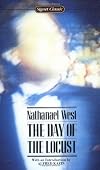
With a little bit of distance I can see that this is an accomplished novel, well written and stunningly relevant in places for all that it is seventy years old. The problem is that I just did not enjoy it! In fact, it left me feeling slightly uncomfortable and more than a little unclean. I appreciate it for its clever story telling but would struggle to recommend or to re-read.
Plot in a Nutshell
Less plot and more a study of a group of characters as told by Tod Hackett, a relatively recent show more arrival to Depression era Hollywood. Through his interactions with the would be stars, in reality minor extras with limited opportunity we see a spotlight shone on the promise of the American dream.
Thoughts
On paper the Golden Age of Hollywood is in full swing and the Depression sweeping the rest of America seems quieter here. However hiding not very far below the surface is a Hollywood where dreams don’t stand up to scrutiny and dreamers come to die. So far so depressing right? It gets worse…
West compellingly paints a picture of cynical, self serving characters – at first glance they all seem slightly overdone and almost caricatured versions of our current worst thoughts about Hollywood. It took me a little while to remind myself that this was not a modern day satirical take on Hollywood but rather an ‘of the age’ satirical take on Hollywood. The more we get to know them however we see each has zero ability for them to emotionally connect with each other – each interaction is underpinned by a strong sense of ‘what’s in it for me’. If West wanted to paint a soulless environment and relationships he succeeded. And that’s before was addressing the fact that main character is open to discussing his fantasies of raping the woman he is infatuated with.
On the subject of strong female characters; Faye is a real disappointment. The lust the male characters have for her permeates the book and should have the reader feeling much more sympathetic. She is after all still a teenager predominantly spending time with much older men. She is however decidedly unsympathetic and her manipulations of her would be suitors meant I could not connect with her at all. As a metaphor for Hollywood itself she was well written, as a character you could empathise with less so show less
Plot in a Nutshell
Less plot and more a study of a group of characters as told by Tod Hackett, a relatively recent show more arrival to Depression era Hollywood. Through his interactions with the would be stars, in reality minor extras with limited opportunity we see a spotlight shone on the promise of the American dream.
Thoughts
On paper the Golden Age of Hollywood is in full swing and the Depression sweeping the rest of America seems quieter here. However hiding not very far below the surface is a Hollywood where dreams don’t stand up to scrutiny and dreamers come to die. So far so depressing right? It gets worse…
West compellingly paints a picture of cynical, self serving characters – at first glance they all seem slightly overdone and almost caricatured versions of our current worst thoughts about Hollywood. It took me a little while to remind myself that this was not a modern day satirical take on Hollywood but rather an ‘of the age’ satirical take on Hollywood. The more we get to know them however we see each has zero ability for them to emotionally connect with each other – each interaction is underpinned by a strong sense of ‘what’s in it for me’. If West wanted to paint a soulless environment and relationships he succeeded. And that’s before was addressing the fact that main character is open to discussing his fantasies of raping the woman he is infatuated with.
On the subject of strong female characters; Faye is a real disappointment. The lust the male characters have for her permeates the book and should have the reader feeling much more sympathetic. She is after all still a teenager predominantly spending time with much older men. She is however decidedly unsympathetic and her manipulations of her would be suitors meant I could not connect with her at all. As a metaphor for Hollywood itself she was well written, as a character you could empathise with less so show less
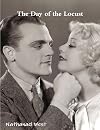
Rating: 3* of five
The Publisher Says: The Day of the Locust is a novel about Hollywood and its corrupting touch, about the American dream turned into a sun-drenched California nightmare. Nathaniel West's Hollywood is not the glamorous "home of the stars" but a seedy world of little people, some hopeful, some desparing, all twisted by their by their own desires—from the ironically romantic artist narrator to a macho movie cowboy, a middle-aged innocent from America's heartland, and the show more hard-as-nails call girl would-be-star whom they all lust after. An unforgettable portrayal of a world that mocks the real and rewards the sham, turns its back on love to plunge into empty sex, and breeds a savage violence that is its own undoing, this novel stands as a classic indictment of all that is most extravagant and uncontrolled in American life.
My Review:
Sad. Yes, that's it, I feel sad. This is a classic of Hollywood literature, I can even sort of see that, but it's as bleak as they come and it's all told, very little shown, at very crucial points. If this is a novel, I'm at a loss to see how; it's some biting character studies glued together by accidents of geography. To me it reads more like a treatment that had to be abandoned, was too dear to West's heart-shaped ice cube, and instead got its B12 shots, 50,000 volts, and liiiiiived.
So Tod (Death in German, get it?) HACKett (movie hanger-on, usu. a writer, get it?) falls for the vapidity that is bleached-blonde Faye Greener, as does poor rube-a-licious Homer Simpson (!!), as does no-bit extra Earle Shoop...I suspect, from some of Faye's father's mannerisms, that he and Faye got up to the badger game a time or two. What in the name of common sense is the appeal?! She's hard as nails, not terribly bright, and unbelievably self-centered. I couldn't abide her from the moment West put this in her mouth:
That wasn't fresh and new in 1939, either. I agree that this person exists in her legions at every doorway to stardom, but Faye doesn't rise above that generic feel at any turn. After each encounter with Faye, particularly the après-cockfight cocktail party and its aftermath, I want to ask West, "...AND?! What is it, why are these men so hot-to-trot for this trollop?" He's dead these 74 years, so he won't answer even if I shout, so I'm left bewildered.
Homer Simpson, apparently the lovable loser who gave cartoonist Matt Groening the name for his quarter-century old cartoon oaf, is the most realistic and fully drawn character in the piece. In creating Homer, West has fully focused our attention on him and relegated narrator Tod to the Nick Carraway position as he focuses on Homer and his back-story, his sad and empty existence (the part about the deck chair and the view is one of the best an most telling character tics West ladles on to Homer), and his doom (in the original Celtic meaning of Bha so an dàn duit, this was destined for thee). Homer tries and misses, tries and misses again, tries.... He's never, ever the fun guy or the sweet guy, he's the useful but horrendously annoying guy with the car and the cards.
His passion for the cipher Faye comes to its absolutely clearly telegraphed and inevitable conclusion, Tod twitters and flails ineffectually to interfere with it, and in the end it drives both Tod and Homer into the climactic ending of the book:
And this at last wove the book together for me, made the preceding ~200pp make some sense to me. This is West's cri de coueur and shout to the gods that Prometheus is back to make trouble again.
A year later he was dead. Hm.
There is no smallest question that West can craft some lovely sentences and some incisive character sketches. He can hang all them on a plot of sorts and make your readerly curiousity bump itch so bad you have to scratch it with his tyrannosaurus-armed stories, even at the risk of running afoul of the brute's severing teeth. But here, in this book, the alchemy that elevates Miss Lonelyhearts to the cold and glittering glory of Everest's heights settles instead into the weirder, less pristine shape of Kilimanjaro: Feet in the humid heat, midsection arid and weirdly populated with things not seen elsewhere, and then the transcendent snowy glory of the ending.
Some years back, my real-life book circle read What Makes Sammy Run? by Budd Schulberg. Sammy Glick, he of the title, is a character I can't forget and find myself thinking about. Sammy's is a story of hustle and flow, make and do and create...Tod never does one damned thing in this book except chase Faye and wander around. Yet which of these two books has been made into a movie? Not the solid, excellent What Makes Sammy Run?, no sirree, but this collection of grotesques gets made. In a weird sort of way, The Day of the Locust feels to me like a precursor to the viciously cuttingly unfunny humor of A Confederacy of Dunces. Both are utterly of a place, can't be told against the backdrop of any other place, and are pitilessly clear of vision. Both are the best-remembered works by their early-dead authors. And each is, taken on its own merits, marvelous parts in search of a gestalt to animate into more than some wonderful, memorable set-pieces embedded in perfunctory plotlike matrices. show less
The Publisher Says: The Day of the Locust is a novel about Hollywood and its corrupting touch, about the American dream turned into a sun-drenched California nightmare. Nathaniel West's Hollywood is not the glamorous "home of the stars" but a seedy world of little people, some hopeful, some desparing, all twisted by their by their own desires—from the ironically romantic artist narrator to a macho movie cowboy, a middle-aged innocent from America's heartland, and the show more hard-as-nails call girl would-be-star whom they all lust after. An unforgettable portrayal of a world that mocks the real and rewards the sham, turns its back on love to plunge into empty sex, and breeds a savage violence that is its own undoing, this novel stands as a classic indictment of all that is most extravagant and uncontrolled in American life.
My Review:
It is hard to laugh at the need for beauty and romance, no matter how tasteless, even horrible, the results of that need are. But it is easy to sigh. Few things are sadder than the truly monstrous.
Sad. Yes, that's it, I feel sad. This is a classic of Hollywood literature, I can even sort of see that, but it's as bleak as they come and it's all told, very little shown, at very crucial points. If this is a novel, I'm at a loss to see how; it's some biting character studies glued together by accidents of geography. To me it reads more like a treatment that had to be abandoned, was too dear to West's heart-shaped ice cube, and instead got its B12 shots, 50,000 volts, and liiiiiived.
So Tod (Death in German, get it?) HACKett (movie hanger-on, usu. a writer, get it?) falls for the vapidity that is bleached-blonde Faye Greener, as does poor rube-a-licious Homer Simpson (!!), as does no-bit extra Earle Shoop...I suspect, from some of Faye's father's mannerisms, that he and Faye got up to the badger game a time or two. What in the name of common sense is the appeal?! She's hard as nails, not terribly bright, and unbelievably self-centered. I couldn't abide her from the moment West put this in her mouth:
“I'm going to be a star some day," she announced as though daring him to contradict her.
"I'm sure you..."
"It's my life. It's the only thing in the whole world that I want."
"It's good to know what you want. I used to be a bookkeeper in a hotel,
but..."
"If I'm not, I'll commit suicide.”
That wasn't fresh and new in 1939, either. I agree that this person exists in her legions at every doorway to stardom, but Faye doesn't rise above that generic feel at any turn. After each encounter with Faye, particularly the après-cockfight cocktail party and its aftermath, I want to ask West, "...AND?! What is it, why are these men so hot-to-trot for this trollop?" He's dead these 74 years, so he won't answer even if I shout, so I'm left bewildered.
Homer Simpson, apparently the lovable loser who gave cartoonist Matt Groening the name for his quarter-century old cartoon oaf, is the most realistic and fully drawn character in the piece. In creating Homer, West has fully focused our attention on him and relegated narrator Tod to the Nick Carraway position as he focuses on Homer and his back-story, his sad and empty existence (the part about the deck chair and the view is one of the best an most telling character tics West ladles on to Homer), and his doom (in the original Celtic meaning of Bha so an dàn duit, this was destined for thee). Homer tries and misses, tries and misses again, tries.... He's never, ever the fun guy or the sweet guy, he's the useful but horrendously annoying guy with the car and the cards.
Only those who still have hope can benefit from tears. When they finish, they feel better. But to those without hope, whose anguish is basic and permanent, no good comes from crying. Nothing changes for them. They usually know this, but still can’t help crying.
His passion for the cipher Faye comes to its absolutely clearly telegraphed and inevitable conclusion, Tod twitters and flails ineffectually to interfere with it, and in the end it drives both Tod and Homer into the climactic ending of the book:
Their boredom becomes more and more terrible. They realize that they’ve been tricked and burn with resentment. Every day of their lives they read the newspapers and went to the movies. Both fed them on lynchings, murder, sex crimes, explosions, wrecks, love nests, fires, miracles, revolutions, war. This daily diet made sophisticates of them. The sun is a joke. Oranges can’t titillate their jaded palates. Nothing can ever be violent enough to make taut their slack minds and bodies. They have been cheated and betrayed. They have slaved and saved for nothing.
And this at last wove the book together for me, made the preceding ~200pp make some sense to me. This is West's cri de coueur and shout to the gods that Prometheus is back to make trouble again.
A year later he was dead. Hm.
There is no smallest question that West can craft some lovely sentences and some incisive character sketches. He can hang all them on a plot of sorts and make your readerly curiousity bump itch so bad you have to scratch it with his tyrannosaurus-armed stories, even at the risk of running afoul of the brute's severing teeth. But here, in this book, the alchemy that elevates Miss Lonelyhearts to the cold and glittering glory of Everest's heights settles instead into the weirder, less pristine shape of Kilimanjaro: Feet in the humid heat, midsection arid and weirdly populated with things not seen elsewhere, and then the transcendent snowy glory of the ending.
Some years back, my real-life book circle read What Makes Sammy Run? by Budd Schulberg. Sammy Glick, he of the title, is a character I can't forget and find myself thinking about. Sammy's is a story of hustle and flow, make and do and create...Tod never does one damned thing in this book except chase Faye and wander around. Yet which of these two books has been made into a movie? Not the solid, excellent What Makes Sammy Run?, no sirree, but this collection of grotesques gets made. In a weird sort of way, The Day of the Locust feels to me like a precursor to the viciously cuttingly unfunny humor of A Confederacy of Dunces. Both are utterly of a place, can't be told against the backdrop of any other place, and are pitilessly clear of vision. Both are the best-remembered works by their early-dead authors. And each is, taken on its own merits, marvelous parts in search of a gestalt to animate into more than some wonderful, memorable set-pieces embedded in perfunctory plotlike matrices. show less

horrifyingly ecstatic. the complete breakdown of physical reality in the final chapter, as if the narrative cannot bring itself to use human language for such a deplorable hell-pit. the all-pervasive violence that has infected 20th century americans and brought them to southern california—to convulse, to expire, to kill
Lists
Favourite Books (1)
Hidden Classics (1)
Antiheroes (1)
The "A" List (1)
Five star books (1)
Best First Lines (1)
Read These Too (1)
Awards


You May Also Like


Associated Authors
Statistics
- Works
- 21
- Also by
- 4
- Members
- 6,812
- Popularity
- #3,586
- Rating
- 3.7
- Reviews
- 161
- ISBNs
- 166
- Languages
- 13
- Favorited
- 29