
Jacqueline Harpman (1929–2012)
Author of I Who Have Never Known Men
About the Author
Works by Jacqueline Harpman
Associated Works
Tagged
Common Knowledge
- Canonical name
- Harpman, Jacqueline
- Legal name
- Harpman, Jacqueline
- Birthdate
- 1929-07-05
- Date of death
- 2012-05-24
- Gender
- female
- Education
- Université Libre de Bruxelles, Belgium (psychology)
Université Libre de Bruxelles, Belgium (medecine) - Occupations
- psychoanalyst
short story writer
novelist - Short biography
- Jacqueline Harpman was born in the Etterbeek section of Brussels, Belgium. Her father was a Dutch-born Jew, and the family fled to Casablanca when the Nazis invaded Belgium in World War II. They returned to Belgium after the war. After studying French literature at the University of Brussels, she began training to be a physician, but could not complete her medical studies after contracting tuberculosis. She turned to writing, and after publishing some short stories, published her first novel, Brève Arcadie, to critical acclaim in 1959. In 1980, she qualified as a psychoanalyst. She gave up writing novels after her fourth book was published, but resumed her writing career 20 years later. She produced about 12 novels and won several literary prizes, also serving on the jury for the prix Rossel, one of the most important in Belgium. She was married an architect and had two children.
- Nationality
- Belgium
- Birthplace
- Etterbeek, Brussels, Belgium
- Places of residence
- Casablanca, Morocco
- Place of death
- Brussels, Belgium
- Map Location
- Belgium
Members
Discussions
french science fiction novel, women imprisoned but a group accidently set free in Name that Book (February 2012)
Reviews
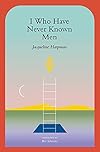
This was a "wow" book for me. I don't read much dystopian/science fiction literature, but this I really connected with.
The premise is that a group of 40 women (one a girl child) is contained in an underground cell, guarded by a group of men. Except for the child, our narrator, the women have vague memories of life before their imprisonment, but no recollection of how they got there, why they are there, or what led to their captivity. After at least a decade of this, a siren sounds and luck show more plus a bit of quick-thinking lead to their escape. As they navigate the world they emerge in, they wonder if they are still on Earth. They find no other humans except for the occasional holding cell that mirrors theirs, with all the women and sometimes all the guards deceased. They have plenty of food because the electricity in these cabins continues to work and there are deep freezers filled with food. I'll stop there with the plot points, but it continues to be fascinating and a compulsive read.
The book is narrated by the child and she is clearly at the end of her life while writing. This book worked for me because it never pretends that it is going to give you a lot of answers. Instead, it provides just enough detail to let your imagination work and leaves room for plenty of questions and themes to emerge.
I really loved it and will be thinking about it for a long time. Unlike most books, where I forget the plot almost immediately upon finishing, this one will stick with me for a long time.
I'm glad Transit Books has reissued this and I hope it continues to be read. show less
The premise is that a group of 40 women (one a girl child) is contained in an underground cell, guarded by a group of men. Except for the child, our narrator, the women have vague memories of life before their imprisonment, but no recollection of how they got there, why they are there, or what led to their captivity. After at least a decade of this, a siren sounds and luck show more plus a bit of quick-thinking lead to their escape. As they navigate the world they emerge in, they wonder if they are still on Earth. They find no other humans except for the occasional holding cell that mirrors theirs, with all the women and sometimes all the guards deceased. They have plenty of food because the electricity in these cabins continues to work and there are deep freezers filled with food. I'll stop there with the plot points, but it continues to be fascinating and a compulsive read.
The book is narrated by the child and she is clearly at the end of her life while writing. This book worked for me because it never pretends that it is going to give you a lot of answers. Instead, it provides just enough detail to let your imagination work and leaves room for plenty of questions and themes to emerge.
I really loved it and will be thinking about it for a long time. Unlike most books, where I forget the plot almost immediately upon finishing, this one will stick with me for a long time.
I'm glad Transit Books has reissued this and I hope it continues to be read. show less
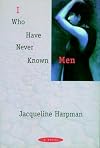
‘’My memory begins with anger.’’
Yes, I found a Dystopian novel I love more than 1984 and The Handmaid’s Tale.
Forty women live in a prison cell. The world as we know it doesn’t exist anymore. People have been imprisoned and the guards are watching them non-stop. How did the women find themselves there? Why? Where are they? What destroyed every social structure we have taken for granted? Is this Earth or another planet? No one can answer these questions and the days pass in terror show more and silence. The youngest woman is the one that tries to understand, her spirit still unbroken.
The women are using their hair as thread because every tool is forbidden. No one can console a crying child because they aren’t allowed to touch each other. You are not allowed to stay awake when sleep refuses to come. There is no 24-hour day. No religion to give you comfort. You can’t feel the wind or the rain. You can’t see the moon and the sun. You have to urinate and defecate in public. You are not allowed to kill yourself.
‘’I know only the stony plain, wandering, and the gradual loss of hope. I am the sterile offspring of a race about which I know nothing, not even whether it has become extinct. Perhaps, somewhere, humanity is flourishing under the stars, unaware that a daughter of its blood is ending her days in silence.’’
Harpman’s writing excels when the women are suddenly free. And this is not a spoiler because the heart of the story can be found after this pivotal moment. It is exactly then that everything becomes more frightening, when the struggle for survival in an unknown world begins. The youngest woman has to learn all there is to know about her body, language, everything the rest of the women can recall from a life wrapped in mists, long and forgotten. But what happens when it is your spirit, not your body that needs nourishment?
The prose is exquisite, the dialogue is sparse, poetic and cryptic. There is a tranquility and a subtlety that reminded of The Handmaid’s Tale and even the hardest moments are described almost melancholically. There is no vulgarity, no shock for the sake of it. We often use the words ‘’raw’’ and ‘’haunting’’ and they are absolutely suitable to characterize this novel. Don’t look for pseudo-feministic messages or divisions between the two sexes, this isn’t such a story. This is about freedom and survival and hope and these notions weren’t created exclusively for women or men. In that sense, the title is a tiny bit unsuccessful.
I would be negligent if I overlooked the beautiful and poignant introduction by Sophia Mackintosh. For me, this novel is equal to The Handmaid’s Tale. Possibly even better I really love Atwood’s classic. There are so many intense moments and such a rich narrative of a community populated only by women while Death is all around. This novel made me experience feelings that no other dystopian novel ever did. I would compare it to Station Eleven by Emily St. John Mandel and Into the Forest by Jean Hegland in terms of atmosphere and tone. I sincerely hope that it will become more appreciated with the new paperback release because most of us weren’t even aware of its existence. Perhaps its themes aren’t loud enough or feminist enough to follow the new cultural reality and become a TV-series of dubious quality but it is a masterpiece. The final pages verify it.
‘’All of a sudden, I found myself at the top. I was in what we later called a cabin, three walls and a door, also open, the plain spreading out before me. I bounded forward and looked. It was the world.’’
Many thanks to Penguin Random House UK and NetGalley for the ARC in exchange for an honest review.
My reviews can also be found on https://theopinionatedreaderblog.wordpress.com show less
Yes, I found a Dystopian novel I love more than 1984 and The Handmaid’s Tale.
Forty women live in a prison cell. The world as we know it doesn’t exist anymore. People have been imprisoned and the guards are watching them non-stop. How did the women find themselves there? Why? Where are they? What destroyed every social structure we have taken for granted? Is this Earth or another planet? No one can answer these questions and the days pass in terror show more and silence. The youngest woman is the one that tries to understand, her spirit still unbroken.
The women are using their hair as thread because every tool is forbidden. No one can console a crying child because they aren’t allowed to touch each other. You are not allowed to stay awake when sleep refuses to come. There is no 24-hour day. No religion to give you comfort. You can’t feel the wind or the rain. You can’t see the moon and the sun. You have to urinate and defecate in public. You are not allowed to kill yourself.
‘’I know only the stony plain, wandering, and the gradual loss of hope. I am the sterile offspring of a race about which I know nothing, not even whether it has become extinct. Perhaps, somewhere, humanity is flourishing under the stars, unaware that a daughter of its blood is ending her days in silence.’’
Harpman’s writing excels when the women are suddenly free. And this is not a spoiler because the heart of the story can be found after this pivotal moment. It is exactly then that everything becomes more frightening, when the struggle for survival in an unknown world begins. The youngest woman has to learn all there is to know about her body, language, everything the rest of the women can recall from a life wrapped in mists, long and forgotten. But what happens when it is your spirit, not your body that needs nourishment?
The prose is exquisite, the dialogue is sparse, poetic and cryptic. There is a tranquility and a subtlety that reminded of The Handmaid’s Tale and even the hardest moments are described almost melancholically. There is no vulgarity, no shock for the sake of it. We often use the words ‘’raw’’ and ‘’haunting’’ and they are absolutely suitable to characterize this novel. Don’t look for pseudo-feministic messages or divisions between the two sexes, this isn’t such a story. This is about freedom and survival and hope and these notions weren’t created exclusively for women or men. In that sense, the title is a tiny bit unsuccessful.
I would be negligent if I overlooked the beautiful and poignant introduction by Sophia Mackintosh. For me, this novel is equal to The Handmaid’s Tale. Possibly even better I really love Atwood’s classic. There are so many intense moments and such a rich narrative of a community populated only by women while Death is all around. This novel made me experience feelings that no other dystopian novel ever did. I would compare it to Station Eleven by Emily St. John Mandel and Into the Forest by Jean Hegland in terms of atmosphere and tone. I sincerely hope that it will become more appreciated with the new paperback release because most of us weren’t even aware of its existence. Perhaps its themes aren’t loud enough or feminist enough to follow the new cultural reality and become a TV-series of dubious quality but it is a masterpiece. The final pages verify it.
‘’All of a sudden, I found myself at the top. I was in what we later called a cabin, three walls and a door, also open, the plain spreading out before me. I bounded forward and looked. It was the world.’’
Many thanks to Penguin Random House UK and NetGalley for the ARC in exchange for an honest review.
My reviews can also be found on https://theopinionatedreaderblog.wordpress.com show less
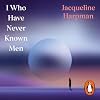
I who Have Never Known Men is a gem of a book. Jacqueline Harpman has managed to create a world on a planet that may or may not be Earth, but probably isn’t. The world that Harpman has created is totally believable and internally consistent. The story is told in first person by “The Child”, a nameless female possibly the last of her species. The setting is post-apocalyptic. The community is a group of forty women initially housed in a bunker guarded by men. Except for The Child, they show more all have past lives which they only vaguely remember. They are not allowed to touch each other, and escape seems out of the question when the book starts.
Meanwhile,The Child grows up motherless, sans culture, sans books, sans love, sans everything. Eventually the guards disappear and the women manage to escape, and set up a community of sorts. It appears that the guards have disappeared for good, and although they find other bunkers with women, they all contain only corpses. It is up to the escaped group to continue, to do their best to survive. They form a community and look after their physical needs.
The women have no memory of being put into the bunker or of how they were transported there. They do not even know where they are. There is a moon but is it Earth’s moon? They can’t remember what it looks like, , having come from cities where they never really looked at Earth’s moon. They know little of geography, math, or how to measure time. They can’t remember whether all the Earth days were the same length or not. The terrain is devoid of forests and the earth is soulless and bleak. There are no birds.
Being of critical mind, I tried to find flaws in the environment that Harpman had enticed me into. I couldn’t. There were no contradictions. It all made horrifying sense.
What I found intriguing about the book was the idea that a human could survive without knowledge of her own body or of the environment in which she has somehow entered. Having had no education at all, and being unable to write things down, though she has a concept of words and spelling and seems to know about the existence of books, The Child knows nothing. She cannot imagine the world in which her companions once lived.
As The Child matures and the community of women settle in makeshift villages where they make everything by hand, she tries to make sense of her world. She has not experienced love or touch in the bunker, and her only contact with men was that of the bunker guards that she could only see from a distance. Not only can she never know men but she is sterile. There is no hope for humanity continuing, and no desire for it to do so. She cannot love as she has never known love. In the bunker she was virtually ignored by the women and though in adolescence when she was still in the bunker, she felt a tingling of sexual desire and gazed at a young guard, she had no understanding of what this meant.
Though the women told her very little in the bunker, after fleeing, The Child is able to learn more. The group naturally breaks into sub-groups. Leaders emerge based on native intelligence and inherent wisdom. Without simple skills like long division and a basic knowledge of geography - the women attempt to discover the length of days and nights, light and dark, and the progression of seasons. But lacking the fundamentals this understanding is denied them. They are essentially living in a pre-Copernican world that has been parched of most life.
I really enjoyed the book and found the concept interesting. The story flows easily, and it was a book that I did not want to end. I highly recommend this book and I’ve no hesitation in giving it 4.5 stars. show less
Meanwhile,The Child grows up motherless, sans culture, sans books, sans love, sans everything. Eventually the guards disappear and the women manage to escape, and set up a community of sorts. It appears that the guards have disappeared for good, and although they find other bunkers with women, they all contain only corpses. It is up to the escaped group to continue, to do their best to survive. They form a community and look after their physical needs.
The women have no memory of being put into the bunker or of how they were transported there. They do not even know where they are. There is a moon but is it Earth’s moon? They can’t remember what it looks like, , having come from cities where they never really looked at Earth’s moon. They know little of geography, math, or how to measure time. They can’t remember whether all the Earth days were the same length or not. The terrain is devoid of forests and the earth is soulless and bleak. There are no birds.
Being of critical mind, I tried to find flaws in the environment that Harpman had enticed me into. I couldn’t. There were no contradictions. It all made horrifying sense.
What I found intriguing about the book was the idea that a human could survive without knowledge of her own body or of the environment in which she has somehow entered. Having had no education at all, and being unable to write things down, though she has a concept of words and spelling and seems to know about the existence of books, The Child knows nothing. She cannot imagine the world in which her companions once lived.
As The Child matures and the community of women settle in makeshift villages where they make everything by hand, she tries to make sense of her world. She has not experienced love or touch in the bunker, and her only contact with men was that of the bunker guards that she could only see from a distance. Not only can she never know men but she is sterile. There is no hope for humanity continuing, and no desire for it to do so. She cannot love as she has never known love. In the bunker she was virtually ignored by the women and though in adolescence when she was still in the bunker, she felt a tingling of sexual desire and gazed at a young guard, she had no understanding of what this meant.
Though the women told her very little in the bunker, after fleeing, The Child is able to learn more. The group naturally breaks into sub-groups. Leaders emerge based on native intelligence and inherent wisdom. Without simple skills like long division and a basic knowledge of geography - the women attempt to discover the length of days and nights, light and dark, and the progression of seasons. But lacking the fundamentals this understanding is denied them. They are essentially living in a pre-Copernican world that has been parched of most life.
I really enjoyed the book and found the concept interesting. The story flows easily, and it was a book that I did not want to end. I highly recommend this book and I’ve no hesitation in giving it 4.5 stars. show less

A little girl is placed in a jail cell with thirty-nine older women and kept there. Over the years, she grows into an adolescent in this strange environment where no one is allowed to touch another person. There are men who patrol the perimeter of the cell, but never speak. One day, the girl learns to rebel, just a little, and establishes her place within this hierarchy of women, none of whom know where they are or why they are being held.
This is an odd tale, and a fascinating one. There show more are no explanations, none of it makes sense, the conclusions drawn seem drawn from nothing, and yet this is a book that sticks in the mind and demands consideration. It's a look at how people might behave in intolerable circumstances, but also at how a women-only group might structure themselves. First published back in 1995 and now translated and republished by Transit Books, this is a great example of how small presses are making our literary landscape richer. show less
This is an odd tale, and a fascinating one. There show more are no explanations, none of it makes sense, the conclusions drawn seem drawn from nothing, and yet this is a book that sticks in the mind and demands consideration. It's a look at how people might behave in intolerable circumstances, but also at how a women-only group might structure themselves. First published back in 1995 and now translated and republished by Transit Books, this is a great example of how small presses are making our literary landscape richer. show less
Lists
el (1)
Overdue Podcast (1)
Awards


You May Also Like


Associated Authors
Statistics
- Works
- 30
- Also by
- 1
- Members
- 3,933
- Popularity
- #6,430
- Rating
- 4.1
- Reviews
- 119
- ISBNs
- 121
- Languages
- 13
- Favorited
- 1