
Ernle Bradford (1922–1986)
Author of The Great Siege: Malta 1565
About the Author
Image credit: Mares De Itaca
Works by Ernle Bradford
The Sultan's Admiral: Barbarossa: Pirate and Empire Builder (Tauris Parke Paperbacks) (1968) 61 copies
Sundered Cross, The 1 copy
Joahnniter und Malteser 1 copy
Associated Works
Tagged
Common Knowledge
- Canonical name
- Bradford, Ernle
- Legal name
- Bradford, Ernle Dusgate Selby
- Birthdate
- 1922-01-11
- Date of death
- 1986-05-08
- Gender
- male
- Education
- Uppingham School
- Occupations
- historian
radio broadcaster
magazine editor - Nationality
- UK
- Birthplace
- Cole Green, Norfolk, England, UK
- Places of residence
- Kalkara, Malta
- Map Location
- UK
Members
Reviews

When I picked up this book, I wasn’t expecting to find an open window into the fascinating world of Mediterranean geography, culture, myth, and religion. Bradford, a popular historian with more than 30 books to his name, offers an engaging and accessible exploration of the ancient world of Paul the Apostle. This isn’t a theological study but rather a historian’s objective look at the diverse religious landscape of the ancient Mediterranean, its influence on the emerging Christian show more faith, and the challenges faced in gaining new followers for the teachings of a Galilean carpenter.
It’s an incredible journey that leaves you craving more knowledge about the era. Ernle Bradford does an excellent job of placing Paul’s journeys in their historical and cultural context without becoming a theological treatise. I love books that open your eyes and inspire you to seek out further reading on the subject. A quick and thoroughly enjoyable read! show less
It’s an incredible journey that leaves you craving more knowledge about the era. Ernle Bradford does an excellent job of placing Paul’s journeys in their historical and cultural context without becoming a theological treatise. I love books that open your eyes and inspire you to seek out further reading on the subject. A quick and thoroughly enjoyable read! show less
The Great Siege, Malta 1565: Clash of Cultures: Christian Knights Defend Western Civilization Against the Moslem Tide by Ernle Bradford

In the summer of 1565 on the parched ground of Malta, the future of Western Civilization was decided. Would the Moslems continue their expansion into the Mediterranean, preying on European ships and taking Christian slaves as far away as England? Or could they be held back?
It was an epic struggle, an astounding tale of resolve and leadership, of disunity in command and disunity among allies.
Soleyman the First was on the move. Even his European foes grudgingly said he earned the title “The show more Magnificent”. He had conquered large parts of the Middle East. His movement into Europe was only stopped at the gates of Vienna in 1529. But, at age 70, he was not resting on his laurels. Malta was a strategic thorn in the side of the Ottoman Empire, a base Christians could use to attack his supply and communication lines.
It would not be the first time Soleyman had tangled with the Knights of St. John, the Hospitallers, who used Malta as their base. In 1493, he had driven them off Rhodes. But they had turned Malta with its fine harbors into a base for raiding Moslem shipping.
Soleyman ordered two men to lead the assault on Malta. Mustapha Pasha would command the army. Piali would command the naval part of the expedition.
The man they faced was the Grand Master of the Hospitallers, Jean Parisot de la Valette. A single-minded man of noble birth, he had given himself entirely to the Hospitallers whom he joined at the age of 20. He had survived a year as a galley slave in the Ottoman fleet. He would command the defense personally, fighting constantly under the hot sun in full armor at age 61.
It was Valette who knew a siege was coming and fortified the island, who firmed the resolve of his men in the siege. With Valette, this is not only a compelling historical account but a study in leadership. Before the siege, the locals had little reason to love the Knights. But, during the siege, none of them became a turncoat. Nor did any of the local Jewish population who had no call to love the Christians.
It was Valette’s resolve as a single commander that carried the day in the face of almost equal Moslem resolve and far superior numbers but a resolve weakened by their lack of a unified command.
Bradford’s story, one of the first accounts of the siege in English (King Henry VIII had disbanded the English chapter of the Hospitallers and contemporary accounts are in French, Italian, and Spanish), is compelling history: thirst and disease, Hospitaller forts falling one by one, calling on the Viceroy of Sicily to help, men swimming channels in the teeth of enemy fire, and desperate sallies.
Bradford concisely gives us the historical background to the main event, the organization and logistics of the opposing forces, maps of Malta and its fortifications, thumbnail biographies, and quotes from contemporary accounts. A glossary of terms is provided. There is no index, but that’s not a problem in a kindle edition.
But Bradford also brings something else besides his skillful narration: a deep knowledge of Malta’s terrain and people. He was stationed there as a member of the Royal Navy in the second siege of Malta in World War Two. He sailed around the islands extensively. And, most importantly, he gives us local history and legend and folklore and poems about the siege. These were left out of contemporary histories, and the Maltese language had no alphabet until the 19th century.
It’s a highly recommended book even for those not interested in military history or the Crusades and the peculiar Christian warriors they gave birth to. The Siege of Malta was their finest hour. show less
It was an epic struggle, an astounding tale of resolve and leadership, of disunity in command and disunity among allies.
Soleyman the First was on the move. Even his European foes grudgingly said he earned the title “The show more Magnificent”. He had conquered large parts of the Middle East. His movement into Europe was only stopped at the gates of Vienna in 1529. But, at age 70, he was not resting on his laurels. Malta was a strategic thorn in the side of the Ottoman Empire, a base Christians could use to attack his supply and communication lines.
It would not be the first time Soleyman had tangled with the Knights of St. John, the Hospitallers, who used Malta as their base. In 1493, he had driven them off Rhodes. But they had turned Malta with its fine harbors into a base for raiding Moslem shipping.
Soleyman ordered two men to lead the assault on Malta. Mustapha Pasha would command the army. Piali would command the naval part of the expedition.
The man they faced was the Grand Master of the Hospitallers, Jean Parisot de la Valette. A single-minded man of noble birth, he had given himself entirely to the Hospitallers whom he joined at the age of 20. He had survived a year as a galley slave in the Ottoman fleet. He would command the defense personally, fighting constantly under the hot sun in full armor at age 61.
It was Valette who knew a siege was coming and fortified the island, who firmed the resolve of his men in the siege. With Valette, this is not only a compelling historical account but a study in leadership. Before the siege, the locals had little reason to love the Knights. But, during the siege, none of them became a turncoat. Nor did any of the local Jewish population who had no call to love the Christians.
It was Valette’s resolve as a single commander that carried the day in the face of almost equal Moslem resolve and far superior numbers but a resolve weakened by their lack of a unified command.
Bradford’s story, one of the first accounts of the siege in English (King Henry VIII had disbanded the English chapter of the Hospitallers and contemporary accounts are in French, Italian, and Spanish), is compelling history: thirst and disease, Hospitaller forts falling one by one, calling on the Viceroy of Sicily to help, men swimming channels in the teeth of enemy fire, and desperate sallies.
Bradford concisely gives us the historical background to the main event, the organization and logistics of the opposing forces, maps of Malta and its fortifications, thumbnail biographies, and quotes from contemporary accounts. A glossary of terms is provided. There is no index, but that’s not a problem in a kindle edition.
But Bradford also brings something else besides his skillful narration: a deep knowledge of Malta’s terrain and people. He was stationed there as a member of the Royal Navy in the second siege of Malta in World War Two. He sailed around the islands extensively. And, most importantly, he gives us local history and legend and folklore and poems about the siege. These were left out of contemporary histories, and the Maltese language had no alphabet until the 19th century.
It’s a highly recommended book even for those not interested in military history or the Crusades and the peculiar Christian warriors they gave birth to. The Siege of Malta was their finest hour. show less

This, as you may expect would make a very exciting adventure story and this is more or less how Ernle Bradford treats the Siege. The Great Siege is better described as the story of the siege of Malta, than as the history of it. This is not a bad thing and Ernle Bradford is objective enough to recognise both the flaws of the Knights and the virtues of the Ottomans, even if the former clearly emerge as the heroes of this history. Since most histories form some form of narriteve, if only show more because they put a chronological order on things, I didn't mind this at all; rather enjoyed it, in fact.
http://cloggie.org/books/great-siege.html show less
http://cloggie.org/books/great-siege.html show less
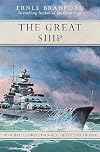
Author Ernle Bradford was a lieutenant in the Royal Nav y during WWII. This book follows the history of “great ships” – vessels expected to be decisive in naval warfare. Bradford starts with the Galleon of Venice, which held off an attack by war galleys under the Turkish admiral Barbarossa at the Battle of Preveza in 1538, and works his way through the Great Harry , the Spanish Armada, the Anglo-Dutch wars, Trafalgar, Hampton Roads, Lissa, Tshushima, Jutland, and the final replacement show more of battleships by the aircraft carrier and submarine.
The problem with the book is that there are no illustrations – no depictions of the ships or battles being described. Bradford is an excellent writer; his description of Jutland, for example, is as clear and understandable as any I’ve ever seen in print, but a couple of maps would have made it even more clear. Still, a worthwhile book; perhaps it’s a relief to get away from the seemingly endless flood of “coffee table” picture books about military hardware and have one that’s just text. show less
The problem with the book is that there are no illustrations – no depictions of the ships or battles being described. Bradford is an excellent writer; his description of Jutland, for example, is as clear and understandable as any I’ve ever seen in print, but a couple of maps would have made it even more clear. Still, a worthwhile book; perhaps it’s a relief to get away from the seemingly endless flood of “coffee table” picture books about military hardware and have one that’s just text. show less
Lists
You May Also Like


Associated Authors
Statistics
- Works
- 39
- Also by
- 5
- Members
- 3,061
- Popularity
- #8,339
- Rating
- 3.9
- Reviews
- 47
- ISBNs
- 197
- Languages
- 10
- Favorited
- 2