

Anita Nair
Author of Ladies Coupé
About the Author
Series
Works by Anita Nair
Goodnight and God Bless: On Life, Literature, and a Few Other Things, with Footnotes, Quotes, and Other Such Literary Diversions (2008) 11 copies, 2 reviews
Associated Works
Tagged
Common Knowledge
- Canonical name
- Nair, Anita
- Birthdate
- 1966-01-26
- Gender
- female
- Education
- NSS College, Ottappalam, Kerala (BA|English Language and Literature)
Virginia Center for Creative Arts, USA - Occupations
- writer
- Agent
- The Marsh Agency
- Nationality
- India
- Birthplace
- Shornur, Kerala, India
- Places of residence
- Bangalore, India
- Associated Place (for map)
- India
Members
Reviews
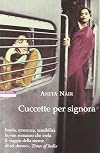
Una donna non può vivere sola. Può essere sfruttata, vampirizzata dalla famiglia, lavorare come una schiava, essere un oggetto sessuale, ma non può vivere sola, questo è la lezione che impara qualsiasi bambina indiana.
Ma la protagonista, costretta a lavorare per mantenere la famiglia dopo la morte del padre, eppure trattata con disprezzo dalla sorella e dai fratelli che pure mantiene, cerca la strada per la propria indipendenza partendo in un viaggio in cui spera di incontrare altre show more donne che le parlino della loro vita.
Sono mogli, madri, figlie e domestiche, e attraverso i loro racconti la sua decisioen si farà più forte e concreta, fini a ricercare un antico, perduto amore, a cui ha rinunciato a favore della sua ingrata famiglia.
Decisamente ben scritto, piacevolissimo e istruttivo, senza contare l'utile appendice di ricette indiane. show less
Ma la protagonista, costretta a lavorare per mantenere la famiglia dopo la morte del padre, eppure trattata con disprezzo dalla sorella e dai fratelli che pure mantiene, cerca la strada per la propria indipendenza partendo in un viaggio in cui spera di incontrare altre show more donne che le parlino della loro vita.
Sono mogli, madri, figlie e domestiche, e attraverso i loro racconti la sua decisioen si farà più forte e concreta, fini a ricercare un antico, perduto amore, a cui ha rinunciato a favore della sua ingrata famiglia.
Decisamente ben scritto, piacevolissimo e istruttivo, senza contare l'utile appendice di ricette indiane. show less
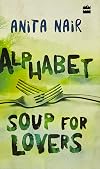
A delicious fantasy tale of a wife who doesn't love her husband - she didn't want to get caught up in all that love stuff, just wanted a practical marriage - who rents out a cottage to a South Indian movie star, with life changing results for them both. The glory is in the novel's structure - an alphabetical listing of South Indian food, fruits, grains, vegetables, and cooking methods, told in the voice of Komathi, the cook who raised Lena. She has the 360 degree view of Lena's childhood and show more bland marriage, and had her own life wrecked as a result of not taking chances. My impulse is to reach out to the Tamil moms I know to share this with them! It's a lovely, bittersweet tale. show less

Thank you, Anita Nair, for this riveting story. In the broad picture, this is a novel about families, and the consequences of choices made by individuals in those families. A husband thinks his life is stale; he leaves his wife, Meera, and the family. A wife blames her husband, Jak, for their daughter’s brokenness; she leaves them. The remaining children are caught in the storm.
A cyclone is the mirror image of this story. In its different stages, it parallels what is happening to these show more families. Jak is a weather expert. His “writings” on “The Metaphysics of Cyclones” structure the book into “stages”, and set the tone for the ensuing chapters, where the storm clouds in the two families continue to build.
Another device which Ms. Nair employs is to repeat a word or phrase from the end of one chapter in the beginning of the next. From Stage III:
Chapter IV: His aunt tells Jak, “…you mustn’t blame yourself for my life. No one is ever responsible for what happens to someone else. You have to accept that. It is the truth. … Jak bows his head. Redemption on a platter. Only, he cannot accept it.”
Chapter V: “Accept this day as a gift. Don’t clutter it up with this and that, Meera tells herself sternly.”
One of the themes in the novel is the universality of parenthood: “How can you cease to be a parent even if your child is determined to shrug off the mantle of being a child.”
Meera: “The glimpse in {her} eyes each time she held her back from an impetuous move. The animosity, the dislike.“
Jak: “As long as I held her close, I thought she was safe. She would come to no harm. How did I forget that? How did I let her go?”
The characterization in this story was complex and rich. The culture was foreign to me, but alive through the author’s words. Never having been to India, the setting as Ms. Nair described it pulled me in as well. Besides families and parenthood, the book covered a lot of territory: divorce, rape, abortion, weather, parenthood, Greek mythology, and a mystery. And all of it carefully stitched together in what was ultimately a beautiful story.
Well, now I’ve gone and made it sound dry. It is not. I found The Lilac House to be one of those rare “unputdownable” books. show less
A cyclone is the mirror image of this story. In its different stages, it parallels what is happening to these show more families. Jak is a weather expert. His “writings” on “The Metaphysics of Cyclones” structure the book into “stages”, and set the tone for the ensuing chapters, where the storm clouds in the two families continue to build.
Another device which Ms. Nair employs is to repeat a word or phrase from the end of one chapter in the beginning of the next. From Stage III:
Chapter IV: His aunt tells Jak, “…you mustn’t blame yourself for my life. No one is ever responsible for what happens to someone else. You have to accept that. It is the truth. … Jak bows his head. Redemption on a platter. Only, he cannot accept it.”
Chapter V: “Accept this day as a gift. Don’t clutter it up with this and that, Meera tells herself sternly.”
One of the themes in the novel is the universality of parenthood: “How can you cease to be a parent even if your child is determined to shrug off the mantle of being a child.”
Meera: “The glimpse in {her} eyes each time she held her back from an impetuous move. The animosity, the dislike.“
Jak: “As long as I held her close, I thought she was safe. She would come to no harm. How did I forget that? How did I let her go?”
The characterization in this story was complex and rich. The culture was foreign to me, but alive through the author’s words. Never having been to India, the setting as Ms. Nair described it pulled me in as well. Besides families and parenthood, the book covered a lot of territory: divorce, rape, abortion, weather, parenthood, Greek mythology, and a mystery. And all of it carefully stitched together in what was ultimately a beautiful story.
Well, now I’ve gone and made it sound dry. It is not. I found The Lilac House to be one of those rare “unputdownable” books. show less
 This review was written for LibraryThing Early Reviewers.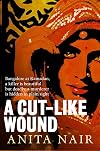
The recommendation for this very good book came to me via the ever-reliable Mrs Peabody Investigates and the best review I could write would be “ditto”. But we all know I’m going to be more wordy than that.
If you are the sort of reader who likes to travel vicariously through story then A CUT-LIKE WOUND is for you. Set in present-day Bangalore the book almost literally transported me across the globe. You really do get a sense of the place…the heat, the crowds, the fascinating social show more mix, the sometimes odd mixture of old and new. At times I was amazed at how different the world depicted is from my own then a few pages later I would be chuckling at the similarities (it seems working in government is much the same wherever you go) but I loved it all.
I also liked all the ideas and subjects the novel explores. A major component of the story is the treatment of the hijra community (transgender people and eunuchs) within Indian society and not in a token way to give the gook an exotic flavour. The subject is looked at from several perspectives and never strayed into dogmatic territory but always fascinated. In addition the novel touches on gender politics, the role of petty corruption and, though in a minor way, the impact of immigration into India.
The crime fiction element of the novel is a bit more uneven though it too has strengths. It starts in a fairly traditional manner with several murders occurring in Bangalore being identified as connected and a somewhat haphazard investigation follows. The policemen at the centre of things represent two ends of the professional investigator spectrum I suppose: the almost-fifty Borei Gowda who’s had the stuffing figuratively knocked out of him by the system and the fresh-faced sub-inspector Santosh, newly assigned to Gowda’s team and keen to learn. In the pair’s first meeting Gowda can’t help but be struck by their differences
Gowda saw the glitter of excitement in the young man’s eyes, the fervour to do good in his stance and gait, the smooth, shaven cheeks and the precision of his movements. The innocence of the uncorrupted mind; the naivety of youth. Gowda felt a pang of regret. Once, Gowda had been that young man, seeking to protect the weak and needy, aching to scourge the world of its evils. Where had it all gone?
The juxtaposition of the two perspectives carries right through the novel and is something of a highlight. The investigation struggles for a variety of reasons including jurisdictional competition and a lack of interest in the type of victims being affected. At times comparisons are made to western (i.e. American) style investigations but these are not always in the west’s favour. Where the book does fall down a little is in its resolution, particularly the reasoning provided for the string of truly horrendous crimes. It really didn’t seem plausible to me.
A CUT-LIKE WOUND offers many of my favourite things about modern crime fiction: an evocative setting, a wry sense of humour and an exploration of intriguing aspects of our modern world. The fact that neither the crimes themselves nor the ultimate reason for their occurrence are completely credible seems almost irrelevant. show less
If you are the sort of reader who likes to travel vicariously through story then A CUT-LIKE WOUND is for you. Set in present-day Bangalore the book almost literally transported me across the globe. You really do get a sense of the place…the heat, the crowds, the fascinating social show more mix, the sometimes odd mixture of old and new. At times I was amazed at how different the world depicted is from my own then a few pages later I would be chuckling at the similarities (it seems working in government is much the same wherever you go) but I loved it all.
I also liked all the ideas and subjects the novel explores. A major component of the story is the treatment of the hijra community (transgender people and eunuchs) within Indian society and not in a token way to give the gook an exotic flavour. The subject is looked at from several perspectives and never strayed into dogmatic territory but always fascinated. In addition the novel touches on gender politics, the role of petty corruption and, though in a minor way, the impact of immigration into India.
The crime fiction element of the novel is a bit more uneven though it too has strengths. It starts in a fairly traditional manner with several murders occurring in Bangalore being identified as connected and a somewhat haphazard investigation follows. The policemen at the centre of things represent two ends of the professional investigator spectrum I suppose: the almost-fifty Borei Gowda who’s had the stuffing figuratively knocked out of him by the system and the fresh-faced sub-inspector Santosh, newly assigned to Gowda’s team and keen to learn. In the pair’s first meeting Gowda can’t help but be struck by their differences
Gowda saw the glitter of excitement in the young man’s eyes, the fervour to do good in his stance and gait, the smooth, shaven cheeks and the precision of his movements. The innocence of the uncorrupted mind; the naivety of youth. Gowda felt a pang of regret. Once, Gowda had been that young man, seeking to protect the weak and needy, aching to scourge the world of its evils. Where had it all gone?
The juxtaposition of the two perspectives carries right through the novel and is something of a highlight. The investigation struggles for a variety of reasons including jurisdictional competition and a lack of interest in the type of victims being affected. At times comparisons are made to western (i.e. American) style investigations but these are not always in the west’s favour. Where the book does fall down a little is in its resolution, particularly the reasoning provided for the string of truly horrendous crimes. It really didn’t seem plausible to me.
A CUT-LIKE WOUND offers many of my favourite things about modern crime fiction: an evocative setting, a wry sense of humour and an exploration of intriguing aspects of our modern world. The fact that neither the crimes themselves nor the ultimate reason for their occurrence are completely credible seems almost irrelevant. show less
Lists
Awards


You May Also Like


Associated Authors
Statistics
- Works
- 37
- Also by
- 1
- Members
- 1,404
- Popularity
- #18,294
- Rating
- 3.6
- Reviews
- 82
- ISBNs
- 167
- Languages
- 15
- Favorited
- 1
