
Eudora Welty (1909–2001)
Author of The Optimist's Daughter
About the Author
Eudora Welty was born in Jackson, Mississippi on April 13, 1909. She was educated at the Mississippi State College for Women in Columbus, Mississippi, and at the University of Wisconsin. She moved to New York in 1930 to study advertising at the Columbia University business school. After her show more father's death, she moved back to Jackson in 1931. She held various jobs on local newspapers and at a radio station before becoming a publicity agent for the Works Progress Administration (WPA), part of Franklin Roosevelt's New Deal program. Travelling through the state of Mississippi opened her eyes to the misery of the great depression and resulted in a series of photographs, which were exhibited in a one-women show in New York in 1936 and were eventually published as One Time, One Place: Mississippi in the Depression in 1971. She stopped working for the WPA in 1936. Her first stories, Magic and Death of a Travelling Salesman, were published in small magazines in 1936. Some of her better-known short stories are Why I Live at the P.O., Petrified Man, and A Worn Path. Her short story collections include A Curtain of Green, The Golden Apples, The Wide Net and Other Stories, and The Bride of Innisfallen and Other Stories. Her first novel, The Robber Bridegroom, was published in 1942. Her other novels include Delta Wedding, The Ponder Heart, Losing Battles, and The Optimist's Daughter, which won the Pulitzer Prize in 1972. She received the gold medal for fiction from the National Institute of Arts and Letters in 1972. Her nonfiction works include A Snapshot Album, The Eye of the Storm: Selected Essays and Reviews, and One Writer's Beginnings. She died from complications following pneumonia on July 23, 2001 at the age of 92. (Bowker Author Biography) show less
Works by Eudora Welty
Eudora Welty : Complete Novels: The Robber Bridegroom, Delta Wedding, The Ponder Heart, Losing Battles, The Optimist's Daughter (Library of America) (1998) 525 copies, 3 reviews
Essential Welty CD: Why I Live at the P.O., A Memory, Powerhouse and Petrified Man (2006) 22 copies, 1 review
Becoming a Writer • On Becoming a Novelist • One Writer's Beginnings (1993) — Contributor — 17 copies
Eudora Welty on Short Stories 5 copies
RARE THE COLLECTED STORIES OF Eudora Welty - 1st/1st HCDJ 1980- Harcourt - VG+ [Hardcover] unknown (1950) 5 copies
Os Melhores Contos 3 copies
Atlantic Monthly 2 copies
The Short Stories of Eudora Welty 2 copies
Eudora Welty Reads: Why I Live at the P.O. Powerhouse, Petrified Man and Other of Her Stories/Audio Cassettes (1992) 2 copies
Death of a Traveling Salesman 2 copies
Bye-Bye, Brevoort: A One-Act Play 2 copies
Powerhouse 2 copies
Morgana 1 copy
A Writer's Life 1 copy
American Classics 1 copy
The Jackson Cookbook 1 copy
A Visit of Charity 1 copy
The Little Store 1 copy
Four Photographs 1 copy
Place in Fiction 1 copy
Welty, Eudora Archive 1 copy
[No title] 1 copy
Aptal İncir Ağacı 1 copy
Eudora Welty-member choice 1 copy
Associated Works
Literature: An Introduction to Fiction, Poetry, and Drama (1995) — Contributor, some editions — 1,012 copies, 7 reviews
Perrine's Literature: Structure, Sound, and Sense (1970) — Contributor, some editions — 893 copies, 4 reviews
The World of the Short Story: A 20th Century Collection (1986) — Contributor — 512 copies, 4 reviews
Points of View: An Anthology of Short Stories, Revised & Updated Edition (1995) — Contributor — 443 copies, 7 reviews
You've Got to Read This: Contemporary American Writers Introduce Stories that Held Them in Awe (1994) — Introduction; Contributor — 413 copies, 3 reviews
A Truth Universally Acknowledged: 33 Great Writers on Why We Read Jane Austen (2009) — Contributor — 411 copies, 18 reviews
Cries of the Spirit: A Celebration of Women's Spirituality (2000) — Contributor — 404 copies, 2 reviews
The Art of the Tale: An International Anthology of Short Stories (1986) — Contributor — 381 copies, 3 reviews
First Fiction: An Anthology of the First Published Stories by Famous Writers (1994) — Contributor — 196 copies, 1 review
Growing Up in the South: An Anthology of Modern Southern Literature (1991) — Contributor — 165 copies, 1 review
An American Album: One Hundred and Fifty Years of Harper's Magazine (2000) — Contributor — 145 copies, 1 review
The Norton Anthology of American Literature, Volume 2: 1865 to Present (1979) — Contributor, some editions — 136 copies
Writing Women's Lives: An Anthology of Autobiographical Narratives by Twentieth-Century American Women Writers (1994) — Contributor — 128 copies, 3 reviews
The Glorious American Essay: One Hundred Essays from Colonial Times to the Present (2020) — Contributor — 116 copies
The Heath Anthology of American Literature, Concise Edition (2003) — Contributor — 73 copies, 1 review
Selected Shorts: American Classics (Selected Shorts: A Celebration of the Short Story) (2010) — Contributor — 28 copies, 6 reviews
Fifty Years of the American Short Story from the O. Henry Awards 1919-1970 (1970) — Contributor — 17 copies, 1 review
The Best Short Stories of 1939 and the Yearbook of the American Short Story (1939) — Contributor — 8 copies
The Best Short Stories of 1940 and the Yearbook of the American Short Story (1940) — Contributor — 8 copies
Sylvia Plath's Tomato Soup Cake: A Compendium of Classic Authors' Favourite Recipes (2024) — Contributor — 6 copies
Fifty Years of the American Short Story from the O. Henry Awards 1919-1970, Volume 2 (1970) — Contributor — 5 copies
Modern Short Stories — Contributor — 2 copies
The Ethnic Image in Modern American Literature, 1900-1950, Volumes 1-2 (1984) — Contributor — 1 copy
Tagged
Common Knowledge
- Canonical name
- Welty, Eudora
- Legal name
- Welty, Eudora Alice
- Birthdate
- 1909-04-13
- Date of death
- 2001-07-23
- Gender
- female
- Education
- Mississippi State College for Women (Mississippi University for Women)
University of Wisconsin (BA|1929)
Columbia University Graduate School of Business (1930-31) - Occupations
- novelist
short story writer
photographer
publicity agent
reporter
lecturer (show all 7)
teacher - Organizations
- Fellowship of Southern Writers (charter member)
Works Progress Administration
The New York Times
Harvard University (lecturer)
Junior League of Jackson
Bread Loaf Writers' Conference - Awards and honors
- Presidential Medal of Freedom (1980)
National Medal of Arts (1986)
National Book Foundation Medal (1991)
Pulitzer Prize (1973)
American Academy of Arts and Letters (1972)
Chevalier de l'Ordre des Arts et des Lettres (1987) (show all 26)
Légion d'Honneur (Chevalier, 1996)
National Institute of Arts and Letters Gold Medal (1972)
National Book Award (1983)
Raven Award (1985)
Cleanth Brooks Medal for Lifetime Achievement (1991)
St Louis Literary Award (1983)
National Institute of Arts and Letters (1952)
Edward MacDowell Medal (1970)
National Medal for Literature (1980)
Common Wealth Award (1984)
Peggy V. Helmerich Distinguished Author Award (1991)
National Women's Hall of Fame (2000)
National Humanities Medal (1992)
Rea Award for the Short Story (1992)
PEN/Malamud Award for the Short Story (1992)
Charles Frankel Prize (1993)
Distinguished Alumni Award (American Association of State Colleges and Universities ∙ 1993)
America Award (2000)
Order of the South
First living author published in the Library of America series - Relationships
- Porter, Katherine Anne (friend)
Aswell, Mary Louise (friend|correspondent)
Macdonald, Ross (friend) - Cause of death
- complications of pneumonia
- Nationality
- USA
- Birthplace
- Jackson, Mississippi, USA
- Places of residence
- Jackson, Mississippi, USA
- Place of death
- Jackson, Mississippi, USA
- Burial location
- Greenwood Cemetery, Jackson, Mississippi, USA
- Map Location
- Jackson, Mississippi, Etats-Unis
- Associated Place (for map)
- Jackson, Mississippi, USA
Members
Discussions
Delta Wedding Group Read - Discussion Thread in 75 Books Challenge for 2022 (November 2022)
October 2014: Eudora Welty in Monthly Author Reads (October 2014)
Eudora Welty- American Author Challenge in 75 Books Challenge for 2014 (July 2014)
Reviews
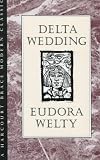
Had a dreamy quality that I enjoyed. The atmosphere was kind of beautiful and the descriptions were great and the scenes felt real. I liked it.
Weird/bad points: there was pretty much no conflict involved in the book even though quite a bit was set up, which was bizarre. For example, there are constant references to Troy's seeming unsuitability as a husband but nothing comes of it - and there's not really much explanation of WHY people talk about him as unsuitable.Near the end, Shelley show more witnesses him apparently shooting a black worker who's threatening him with a knife. The scene lasts maybe a page and she says it shows some sort of extreme unsuitability, but the event is never referenced again and Shelley makes no further comments about Troy, in thought or otherwise. The event itself is incredibly confusing and I have no idea what went on. Weird. There are a couple other similar scenes, which presumably have deeper implications or ones which aren't the obvious but aren't referenced again and don't seem to have an impact - George talking about "sleeping with" the vagrant girl Ellen finds in the woods - Ellen seems shocked but again nothing else happens, it doesn't affect their relationship and the girl is referenced once again in an ambiguous context. There are several times the author seems to be describing some sort of romantic tension between George and other people but maybe I'm reading too much into it. Every character is prone to going into deep reflection at every opportunity, which is pretty ridiculous but adds to the dream like quality of the book and really wasn't bad. There are a lot of named characters that it's impossible to keep track of and don't really have a point.
Bigger things: I note an event re: violence above - violence is treated as tainting someone in this one case. Yet Battle beating children happens often and is treated incredibly casually. He also threatens extreme violence casually and the one reference to this plays it off as a "oh haha our Battle!!" thing.
None of the Fairchilds are ever shown engaging in any work. Yet at the end of the book several describe how "draining" and "tiring" the wedding has been. The disconnect between words and experience is noticeable. The only reason I can see Troy being unsuitable, in fact, is in his job as an overseer - in doing their work, the work of the plantation owner running their lands, he's somehow "unclean". His presence impinges on the "paradise" of the Fairchilds' life - they have no experience of the reality of where their (obviously absolutely massive) income comes from. The thing is, this theme is hardly developed and shows mostly in omission, making me curious how the author felt about this.
The black workers have very little presence, even though they should be a constant presence around the house as domestic servants. The scenes that feature them show them as personality-less - they just obey orders happily - with 2 exceptions. Right at the end of the book, one says they don't like roses. This upsets Ellen, although we're not given much more than that. One character is visited at her house to ask about something lost and the Fairchilds who visited treat her vaguely dramatic searching as malicious - the one example of personality is shunned and considered bad.
In fact, I could think of only two other instances of things being treated as malicious or wrong in the book - the first is the mentally disabled preteen Maureen (who is referred to in rude terms) and the other is George's wife Robbie, who is again considered "unsuitable" but especially for leaving him when she feels hurt. Their real crime seems to be that they disturbed in some way the Fairchilds' untroubled existence.
I don't know if my view of the Fairchilds as horrible people who live an incredibly happy life merely by ignoring or shunning things that disturb it is an unreasonable one, but to me it was the only one that made sense and still let me enjoy the book. show less
Weird/bad points: there was pretty much no conflict involved in the book even though quite a bit was set up, which was bizarre. For example, there are constant references to Troy's seeming unsuitability as a husband but nothing comes of it - and there's not really much explanation of WHY people talk about him as unsuitable.
Bigger things: I note an event re: violence above - violence is treated as tainting someone in this one case. Yet Battle beating children happens often and is treated incredibly casually. He also threatens extreme violence casually and the one reference to this plays it off as a "oh haha our Battle!!" thing.
None of the Fairchilds are ever shown engaging in any work. Yet at the end of the book several describe how "draining" and "tiring" the wedding has been. The disconnect between words and experience is noticeable. The only reason I can see Troy being unsuitable, in fact, is in his job as an overseer - in doing their work, the work of the plantation owner running their lands, he's somehow "unclean". His presence impinges on the "paradise" of the Fairchilds' life - they have no experience of the reality of where their (obviously absolutely massive) income comes from. The thing is, this theme is hardly developed and shows mostly in omission, making me curious how the author felt about this.
The black workers have very little presence, even though they should be a constant presence around the house as domestic servants. The scenes that feature them show them as personality-less - they just obey orders happily - with 2 exceptions. Right at the end of the book, one says they don't like roses. This upsets Ellen, although we're not given much more than that. One character is visited at her house to ask about something lost and the Fairchilds who visited treat her vaguely dramatic searching as malicious - the one example of personality is shunned and considered bad.
In fact, I could think of only two other instances of things being treated as malicious or wrong in the book - the first is the mentally disabled preteen Maureen (who is referred to in rude terms) and the other is George's wife Robbie, who is again considered "unsuitable" but especially for leaving him when she feels hurt. Their real crime seems to be that they disturbed in some way the Fairchilds' untroubled existence.
I don't know if my view of the Fairchilds as horrible people who live an incredibly happy life merely by ignoring or shunning things that disturb it is an unreasonable one, but to me it was the only one that made sense and still let me enjoy the book. show less
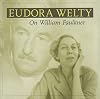
This is a collection of Welty's public writings about Faulkner, including a review of Intruder in the Dust; a deliciously wrathy letter to Edmund Wilson, who had critiqued the same novel with blinkers on, in her view ("there's such a thing as a literary frame of reference that isn't industrial New York City in 1948" she points out); a memorial tribute written for the Associated Press news service when Faulkner died; and some lectures and speeches. Lordy, I love this lady. She is right up show more there at the top of my list of people I wish I could sit down and talk to. And I'm pretty sure if she lived down the road, I could sit down and talk to her. She comes across as warm, witty, gracious, possessed of an intelligence I could learn from, totally lacking in Attitude but not about to take a lot of nonsense either. And, of course, she loves Faulkner the way I do...not academically, but like a slightly surly uncle who nevertheless tells terrific stories and sees things the rest of us would miss if not for him. She also reviewed a collection of Faulkner's Selected Letters. After pointing out that Faulkner would have hated the idea, but accepted the inevitability, of their publication, Welty dealt a bit with the content and the chronological presentation of the letters Joseph Blotner included in the chunky volume (there it sits, right on the shelf at the top of my desk). But then she wrote a paragraph that exemplifies why I do love her so. She said:
"No man ever put more of his heart and soul into the written word than did William Faulkner. If you want to know all you can about that heart and soul, the fiction where he put it is still right there. The writer offered it to us from the start, and when we didn't even want it or know how to take it and understand it; it's been there all along and is more than likely to remain. Read that."
Reviewed 2017 show less
"No man ever put more of his heart and soul into the written word than did William Faulkner. If you want to know all you can about that heart and soul, the fiction where he put it is still right there. The writer offered it to us from the start, and when we didn't even want it or know how to take it and understand it; it's been there all along and is more than likely to remain. Read that."
Reviewed 2017 show less
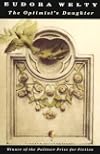
Eudora Welty, a great writer, a great title, and a Pulitzer prize? Oh, this should be an excellent read! Except, well, I spent a goodly part of the novel not being an excellent reader.
Being what felt like an unwitting part of Laurel's protracted numbness was unpleasant to me. Up until the last third, I wondered exactly what is this woman feeling, much like Laurel wondered what caused her father to lay languishing from what should have been a recoverable surgery. Was Laurel cold, or as show more emotionally shallow as her uncouth counterpart Fay? Was Laurel just too darn well-bred to mourn in a recognizable way? Or was there maybe some secret in the past of "the optimist's daughter" to be unhappily revealed? That emptiness of my understanding went on almost too long for me. If it weren't for Fay's outbursts and bad manners, my reaction would have been a bored flat-line. At least Fay and her lowbrow family gave me something to feel: outrage and insult on Laurel's genteel behalf, and I confess, an occasional superior guffaw.
Of course, all this was almost certainly under the complete control of Welty's mastery. I see now there was a clear trajectory to her story; it's just when she got there I was almost in despair that it would happen at all. Now I'm chagrined at my weak-reader impatience. I look back and recall certain bread crumbs that I couldn't savor because I was too impatient, too caught up with my thoughts, "Yes, yes, that's interesting, but for pity's sake, what's going on in that head of Laurel? Why doesn't she react to all these shenanigans?"
Then at last, when alone, after the childish Fay, the ridiculous Chisom family, the well-meaning bridesmaids, the drunk Major, and all the long-time friends leave, Laurel feels. Slowly but surely. Grief begins to roll over her. Grief over the death of her mother ten years before and memories of her mother's unhappy change of personality at the end. Grief over the tragic death of her husband cutting short their new life together. Grief over her father's puzzling marriage to the feisty Fay and his too willingly death. All of it catches up with her. So much grief, so much delayed grief. Oh, Miss Welty, I see. I see why Laurel was holding back. She had heavy losses and memories to sort out and I'm half-ashamed for wishing this on her. When that piece of paper with her mother's handwriting with the two words "this morning" flew up from the fire, tears filled my eyes. And that obnoxious Fay? Turns out in the end I realized Fay, too, had a lifetime of loss but of a different kind -- the loss of never having. And the poor thing wasn't even possessed of enough sense to realize it. What she did have was the survivor's base instinct to propel her swiftly into the future, a future without a past worth remembering.
After closing the book, I was tempted to promptly go back to the beginning, this time to read with more sympathy, to let Laurel feel her slow-realized grief at her own pace as any of us should be allowed to do. To pick up those discarded morsels and to taste them fully. And to read a prize-winner with more confidence. show less
Being what felt like an unwitting part of Laurel's protracted numbness was unpleasant to me. Up until the last third, I wondered exactly what is this woman feeling, much like Laurel wondered what caused her father to lay languishing from what should have been a recoverable surgery. Was Laurel cold, or as show more emotionally shallow as her uncouth counterpart Fay? Was Laurel just too darn well-bred to mourn in a recognizable way? Or was there maybe some secret in the past of "the optimist's daughter" to be unhappily revealed? That emptiness of my understanding went on almost too long for me. If it weren't for Fay's outbursts and bad manners, my reaction would have been a bored flat-line. At least Fay and her lowbrow family gave me something to feel: outrage and insult on Laurel's genteel behalf, and I confess, an occasional superior guffaw.
Of course, all this was almost certainly under the complete control of Welty's mastery. I see now there was a clear trajectory to her story; it's just when she got there I was almost in despair that it would happen at all. Now I'm chagrined at my weak-reader impatience. I look back and recall certain bread crumbs that I couldn't savor because I was too impatient, too caught up with my thoughts, "Yes, yes, that's interesting, but for pity's sake, what's going on in that head of Laurel? Why doesn't she react to all these shenanigans?"
Then at last, when alone, after the childish Fay, the ridiculous Chisom family, the well-meaning bridesmaids, the drunk Major, and all the long-time friends leave, Laurel feels. Slowly but surely. Grief begins to roll over her. Grief over the death of her mother ten years before and memories of her mother's unhappy change of personality at the end. Grief over the tragic death of her husband cutting short their new life together. Grief over her father's puzzling marriage to the feisty Fay and his too willingly death. All of it catches up with her. So much grief, so much delayed grief. Oh, Miss Welty, I see. I see why Laurel was holding back. She had heavy losses and memories to sort out and I'm half-ashamed for wishing this on her. When that piece of paper with her mother's handwriting with the two words "this morning" flew up from the fire, tears filled my eyes. And that obnoxious Fay? Turns out in the end I realized Fay, too, had a lifetime of loss but of a different kind -- the loss of never having. And the poor thing wasn't even possessed of enough sense to realize it. What she did have was the survivor's base instinct to propel her swiftly into the future, a future without a past worth remembering.
After closing the book, I was tempted to promptly go back to the beginning, this time to read with more sympathy, to let Laurel feel her slow-realized grief at her own pace as any of us should be allowed to do. To pick up those discarded morsels and to taste them fully. And to read a prize-winner with more confidence. show less

A one-sitting read with perfect characterizations and a twist on Faulkner's "The past is never dead..." Welty says the past is "impervious, and can never be awakened" but that memory "can be hurt, time and again". Somehow, I think they are both right. But I would have taken the bread board.
Reviewed in 2007
Reviewed in 2007
Lists
Southern Fiction (4)
Summer Reading (1)
1980 great books (1)
Read These Too (1)
Female Author (1)
Awards


You May Also Like


Associated Authors
Statistics
- Works
- 98
- Also by
- 109
- Members
- 15,278
- Popularity
- #1,490
- Rating
- 3.8
- Reviews
- 259
- ISBNs
- 266
- Languages
- 13
- Favorited
- 88


