
Margaret Anne Doody
Author of Aristotle Detective
About the Author
Margaret Doody is the John and Barbara Glynn Family Professor of Literature at the University of Notre Dame. She is the author of many books, including the Aristotle Detective series, the first three of which are available from the University of Chicago Press.
Image credit: http://www.facebook.com/album.php?aid=46448&id=21748996512&ref=mf
Series
Works by Margaret Anne Doody
Associated Works
Evelina; or, The History of a Young Lady's Entrance into the World (1778) — Editor, some editions; Introduction, some editions — 2,833 copies, 45 reviews
Cecilia, or Memoirs of an Heiress (1782) — Introduction, some editions; Editor, some editions — 842 copies, 19 reviews
Catharine: and Other Writings (Oxford World's Classics) (1993) — Editor, some editions — 510 copies, 8 reviews
Tagged
Common Knowledge
- Birthdate
- 1939-09-21
- Gender
- female
- Education
- Dalhousie University
- Occupations
- professor
- Nationality
- Canada
- Places of residence
- New Brunswick, Canada
- Associated Place (for map)
- New Brunswick, Canada
Members
Reviews

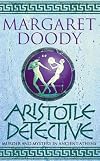
Picture this. The year is 332 B.C. and Athens is under the thumb of Alexander the Great. Closer to home, an Athenian citizen is found with an arrow clean through his jugular. A clear case of murder for no one stabs themselves to death with an arrow, so deduces the citizen public. What is not so clear is how Philemon, a young man already in exile for an accidental death in a barroom brawl, is fingered for the crime. Just how can an absent man commit such a heinous act? The task to prove his show more innocence falls to Philemon's cousin, Stephanos. Under Athenian law, inexperienced and naive Stephanos must defend the family name in Philemon's absence. Here's where Aristotle comes in. Once Stephanos's mentor, Stephanos knows he can trust Aristotle to guide him to the truth. Like all gripping suspense stories, all evidence points to Philemon's guilt and clearing his name becomes a Herculean task. It's the proverbial David and Goliath story with Stephanos the clear underdog. show less

332 B.C. The young Athenian, Stephanos, is trying to clear his cousin, Philemon, of a murder accusation. Apparently, Philemon has been exiled for manslaughter and so Stephanos feels he wasn't even in Athens at the time of the murder. He consults Aristotle, who philosophically and logically tries to figure out the solution. For the most part, Stephanos does the running around and interviewing while the philosopher offers advice and deductions. An heirloom, a red clay pot from the victim's show more house and a piece of horn from a Cretan bow found outside the house, are the first clues. After red herrings, attempted murder of Stephanos, and a trip by Aristotle to Corinth, an ingenious solution to the mystery is found and brought out in a courtroom drama. Ms. Doody wrote this novel in 1978, long before the current trend of mysteries set in ancient Greece. I felt this is one of the better in the genre; Ms. Doody also set me down right in the middle of Greek culture of those times. Workings of the Greek legal system and of Aristotle's lessons in rhetoric [we'd say public speaking] were fascinating.
Highly recommended. show less
Highly recommended. show less
A solid murder mystery set against the backdrop of quite a vividly depicted ancient Athens. The main characters were well-rounded and engaging, and there were some great spontaneous interactions combined with some fitting historical and literary references. The resolution was a somewhat predictable, and I felt the denouement was a little rushed, but these did not detract from it being overall just a decent story. Nothing dazzling, but certainly an enjoyable read.

"I misteri di Eleusi" è il quinto romanzo di Aristotele nei panni di uno Sherlock Holmes del IV secolo a.C. E se ogni storia poliziesca si ispira a un'opera dello Stagirita, quest'ultima sembra rimandare forse alla Politica. Ma il ricalco non è solo con la filosofia del grande filosofo, è la vita stessa di Atene e del mondo greco classico in età alessandrina a rivivere nella pagina: il funzionamento pratico della vita pubblica, le procedure ufficiali e i costumi privati, i modi di show more divertirsi e il mondo degli affari. E soprattutto quel senso sottile di smarrimento generale che dovette aver preso l'uomo greco nell'epoca di svolta in cui Aristotele si trovava a vivere.
Un nuovo romanzo di Margaret Doody della serie di gialli con Aristotele protagonista, ambientati nella Grecia del IV secolo. Il filosofo, intelligente, ironico, curioso, raccoglie indizi, trae ipotesi, e in una catena di deduzioni giunge alla spiegazione del delitto e all’arresto del colpevole. Dopo la metafisica, la fisica, la poetica questa volta l’autrice fa riferimento all’etica aristotelica.
Un orrendo omicidio è stato compiuto a casa di Gerone: Ippobate, suo cognato, viene trovato a terra con la testa fracassata. L’arma del delitto non si trova, ma Aristotele, subito chiamato sul posto, sospetta si tratti di un oggetto rotondo di marmo. Le cose si complicano perché strani furti di gioielli si verificano nelle case di chi potrebbe essere coinvolto mentre fervono i preparativi per il matrimonio di Stephanos, il discepolo prediletto. Sullo sfondo i riti di iniziazione nella città antica di Eleusi, celebrati nel santuario di Demetra, divinità della terra: durante la processione, momento culminante dei riti eleusini, il mistero cesserà di esser tale e Aristotele, come – dubitarne? – giungerà alla verità.
Ancora una volta l’autrice canadese ci trasporta nel mondo dell’antichità ricostruito in maniera filologicamente corretta e ci rende partecipi delle consuetudini e dei riti della Grecia classica. show less
Un nuovo romanzo di Margaret Doody della serie di gialli con Aristotele protagonista, ambientati nella Grecia del IV secolo. Il filosofo, intelligente, ironico, curioso, raccoglie indizi, trae ipotesi, e in una catena di deduzioni giunge alla spiegazione del delitto e all’arresto del colpevole. Dopo la metafisica, la fisica, la poetica questa volta l’autrice fa riferimento all’etica aristotelica.
Un orrendo omicidio è stato compiuto a casa di Gerone: Ippobate, suo cognato, viene trovato a terra con la testa fracassata. L’arma del delitto non si trova, ma Aristotele, subito chiamato sul posto, sospetta si tratti di un oggetto rotondo di marmo. Le cose si complicano perché strani furti di gioielli si verificano nelle case di chi potrebbe essere coinvolto mentre fervono i preparativi per il matrimonio di Stephanos, il discepolo prediletto. Sullo sfondo i riti di iniziazione nella città antica di Eleusi, celebrati nel santuario di Demetra, divinità della terra: durante la processione, momento culminante dei riti eleusini, il mistero cesserà di esser tale e Aristotele, come – dubitarne? – giungerà alla verità.
Ancora una volta l’autrice canadese ci trasporta nel mondo dell’antichità ricostruito in maniera filologicamente corretta e ci rende partecipi delle consuetudini e dei riti della Grecia classica. show less
Lists
Awards


You May Also Like


Associated Authors
Statistics
- Works
- 24
- Also by
- 15
- Members
- 1,301
- Popularity
- #19,739
- Rating
- 4.3
- Reviews
- 44
- ISBNs
- 83
- Languages
- 5
- Favorited
- 4