
Nafisa Haji
Author of The Writing on My Forehead
About the Author
Works by Nafisa Haji
הכתובת על מצחי 1 copy
Slatki ukus suza 1 copy
Tagged
Common Knowledge
- Birthdate
- 1969
- Gender
- female
- Nationality
- USA
- Birthplace
- Los Angeles, California, USA
- Associated Place (for map)
- California, USA
Members
Reviews
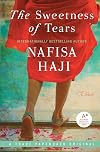
This is one of the best books I've read in a long while. It absolutely captured my interest from the first chapter and I found it hard to put it down!
The story is told in narrative form by several characters, one of whom is Jo, who grew up in a conservative Christian household with her brother Chris and a cast of other interesting family members. Along the way, Jo makes a startling discovery about her family history and unwittingly goes on a search to learn more about her heritage, learning show more Arabic and Urdu along the way and traveling to Pakistan and Iraq in an effort to find peace, set some things right, and to bring her family together.
This book is one of those rare finds that draws you in and takes you to another place and time. Haji walks a fine, and somewhat dangerous, line of writing characters who are deeply involved in both the Christian and Muslim religions. I very much appreciated how she presented both in a fair and unbiased light and allowed each to be what they were while showing how startlingly different and yet alike the two faiths are.
Definitely a recommended read, reminiscent of Khaled Hosseini's "The Kite Runner," and "A Thousand Splendid Suns." show less
The story is told in narrative form by several characters, one of whom is Jo, who grew up in a conservative Christian household with her brother Chris and a cast of other interesting family members. Along the way, Jo makes a startling discovery about her family history and unwittingly goes on a search to learn more about her heritage, learning show more Arabic and Urdu along the way and traveling to Pakistan and Iraq in an effort to find peace, set some things right, and to bring her family together.
This book is one of those rare finds that draws you in and takes you to another place and time. Haji walks a fine, and somewhat dangerous, line of writing characters who are deeply involved in both the Christian and Muslim religions. I very much appreciated how she presented both in a fair and unbiased light and allowed each to be what they were while showing how startlingly different and yet alike the two faiths are.
Definitely a recommended read, reminiscent of Khaled Hosseini's "The Kite Runner," and "A Thousand Splendid Suns." show less
 This review was written for LibraryThing Early Reviewers.
This is a FANTASTIC novel by Nafisa Haji, that speaks about love, for family, for God, and for oneself. Whatever expectations I had of this book, Nafisa Haji trumped and exceeded all of them. It is a beautifully written novel, one that is sure to evoke many emotions in its reader.
The book revolves around Jo, who come from a conservative Christian family, but finds herself questioning her faith all the time. During her spiritual struggle, she comes to find out the startling truth about her show more past, and her history. In order to reconcile with her lost self, she travels to Chicago, Pakistan and Iraq - learning Urdu and Arabic on the way, so that she can find herself amongst it all, bring her family together and find some semblance of peace in her life.
The journey that Jo takes is truly inspiring, and Haji's writing is, no other way to put it, simply sublime. With her words, the author literally transports you from the mundane to places like Pakistan and Iraq, and describes them so vividly that you cannot help but feel as if you are, experiencing the majlis in the streets of Pakistan, or the sweltering heat of Iraq's desert. This book was no ordinary book, it felt like a portal that transported you to another place and time, and did it convincingly. Also, the way that author Nafisa Haji speaks of both Islam and Christianity in a fair and unbiased light, all the while drawing parallels between them and highlighting how very similar the two religions really are, is truly commendable. I would recommend this book to anyone and everyone - it is an immensely rewarding read, and a book I'll cherish forever. show less
The book revolves around Jo, who come from a conservative Christian family, but finds herself questioning her faith all the time. During her spiritual struggle, she comes to find out the startling truth about her show more past, and her history. In order to reconcile with her lost self, she travels to Chicago, Pakistan and Iraq - learning Urdu and Arabic on the way, so that she can find herself amongst it all, bring her family together and find some semblance of peace in her life.
The journey that Jo takes is truly inspiring, and Haji's writing is, no other way to put it, simply sublime. With her words, the author literally transports you from the mundane to places like Pakistan and Iraq, and describes them so vividly that you cannot help but feel as if you are, experiencing the majlis in the streets of Pakistan, or the sweltering heat of Iraq's desert. This book was no ordinary book, it felt like a portal that transported you to another place and time, and did it convincingly. Also, the way that author Nafisa Haji speaks of both Islam and Christianity in a fair and unbiased light, all the while drawing parallels between them and highlighting how very similar the two religions really are, is truly commendable. I would recommend this book to anyone and everyone - it is an immensely rewarding read, and a book I'll cherish forever. show less
This review was written for LibraryThing Early Reviewers.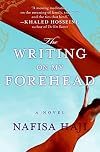
I love family stories. My own family's included. When my maternal grandparents were alive, I loved listening to them talk about the past. After they were gone, I found quite a few treasures among the old photographs and letters my grandmother had held onto during her life time. I wanted to know everything about them, about my family. As an extension, I am quite fond of novels where a character delves into her own family history, whether it be uncovering a long held family secret or finding show more strength in the past by those who came before--often both.
The Writing on My Forehead by Nafisa Haji is one such novel. Framed around her own story, protagonist Saira reaches into her memories for answers to help her through a very difficult and tragic time in her life. Alongside the present day story is a coming of age story as Saira sets out on her chosen path. Bucking tradition, family and faith, she refuses to marry and pursues a career in journalism. And yet it is that very tradition, family and faith that will be there for her in the end.
I liked Saira. She is intelligent and curious about the world around her, unafraid to ask questions. Raised in the United States, she is faced with a culture that values individuality and another, her family's, that is more centered around family and tradition. I was reminded of Jhumpa Lahiri's The Namesake, which also touched on this topic. I really appreciated how the author handled the cultural aspects of the novel. Although Saira may have chosen an unconventional path, characters like her sister, Ameena who was more traditional, were not painted in a negative light. Both lifestyles were portrayed realistically--having negative as well as positive aspects.
One of the most interesting characters was Mohsin, Saira's cousin. He had discovered their grandfather's journal in a trunk in the attic and shared the grandfather's story with Saira. Roshan Qadar had been an activist, fighting for the betterment of the Indian people. Mohsin hoped to follow in his footsteps. Mohsin, her grandfather and the example of her favorite aunt are what shaped Saira's choices in life. My only disappointment is that more time wasn't spent on Mohsin's story, especially given the important role he played in Saira's life once she became a journalist.
That favorite aunt of Saira's was a favorite character of mine as well. Big Nanima, as Saira called her, is a professor in Pakistan. She had never married, not so much by choice but by circumstance. She had studied in England and was a great inspiration for Saira. Even while she encouraged Saira to make her own choices in life, she also asked her to remember her family and not be so quick to toss away the traditions the family held so dear.
I thoroughly enjoyed The Writing on My Forehead. There is so much that we can learn from the stories of our families. While Saira's own story at times seemed secondary to the stories of her family members, it is a rich novel; while at times tragic, it is also full of redemption and heart.
Source: Novel provided by publisher for review. show less
The Writing on My Forehead by Nafisa Haji is one such novel. Framed around her own story, protagonist Saira reaches into her memories for answers to help her through a very difficult and tragic time in her life. Alongside the present day story is a coming of age story as Saira sets out on her chosen path. Bucking tradition, family and faith, she refuses to marry and pursues a career in journalism. And yet it is that very tradition, family and faith that will be there for her in the end.
I liked Saira. She is intelligent and curious about the world around her, unafraid to ask questions. Raised in the United States, she is faced with a culture that values individuality and another, her family's, that is more centered around family and tradition. I was reminded of Jhumpa Lahiri's The Namesake, which also touched on this topic. I really appreciated how the author handled the cultural aspects of the novel. Although Saira may have chosen an unconventional path, characters like her sister, Ameena who was more traditional, were not painted in a negative light. Both lifestyles were portrayed realistically--having negative as well as positive aspects.
One of the most interesting characters was Mohsin, Saira's cousin. He had discovered their grandfather's journal in a trunk in the attic and shared the grandfather's story with Saira. Roshan Qadar had been an activist, fighting for the betterment of the Indian people. Mohsin hoped to follow in his footsteps. Mohsin, her grandfather and the example of her favorite aunt are what shaped Saira's choices in life. My only disappointment is that more time wasn't spent on Mohsin's story, especially given the important role he played in Saira's life once she became a journalist.
That favorite aunt of Saira's was a favorite character of mine as well. Big Nanima, as Saira called her, is a professor in Pakistan. She had never married, not so much by choice but by circumstance. She had studied in England and was a great inspiration for Saira. Even while she encouraged Saira to make her own choices in life, she also asked her to remember her family and not be so quick to toss away the traditions the family held so dear.
I thoroughly enjoyed The Writing on My Forehead. There is so much that we can learn from the stories of our families. While Saira's own story at times seemed secondary to the stories of her family members, it is a rich novel; while at times tragic, it is also full of redemption and heart.
Source: Novel provided by publisher for review. show less
I've been struggling to write my review of The Sweetness of Tears for weeks now and cannot adequately put into words the impact the book had. Ms. Haji's story of family, politics, and religion delves into topics that most people consider to be too sensitive to discuss given their proximity to current events, but she does so the sensitivity that the situation warrants. Jo March's quest uncovers family secrets while allowing the reader the chance to put aside biases and view current events show more from another perspective. In the rapidly expanding global economy, where countries are becoming considerably more dependent upon each other, the lessons of tolerance and respect highlighted in The Sweetness of Tears is as timely as it is beautiful.
The Sweetness of Tears is one of those novels which contains gems that deserve to be highlighted and remembered forever. There is so much wisdom packed into its 374 pages that it requires savoring and slow reading. Ms. Haji ensures that her readers do just that by jumping between characters and in time, as Jo's family history is slowly revealed to her. Each story builds upon the last, until the reader, and Jo, get the full picture.
Compassion, faith and empathy are three of the main themes, which becomes extremely important in the context of post-9/11 life and the subsequent War on Terror executed by the U.S. As Jo struggles to find her identity in light of the new information about her parentage she receives, her struggles mirror the reader's as we all struggle to make sense of the new world into which we were plunged after the attacks on the World Trade Center. What makes The Sweetness of Tears so powerful is the fact that the U.S. is not portrayed as the heroes. Ms. Haji does not shy away from the abuse of prisoners in places like Abu Ghraib or Guantanamo Bay, nor from the mental trauma such actions have on soldiers and contractors who witness these situations. Rather, she challenges the reader to view such proceedings from the Iraqi/Pakistani/Afghan perspective. It is a powerful lesson.
The Sweetness of Tears is not perfect. The jump between narrators is confusing, made more so by the fact that often the context in which the character's story occurs is nebulous and not clearly defined. The reader struggles to understand the time frame in which the individual story is occurring. For example, Jo only hints at the actual 9/11 attacks. It is not until she finally discusses her employment requiring security clearances and background checks where the reader understands that she was still in college during the attacks and that her role as an interpreter would be put to use in the War on Terror. Similarly, Partition, the Vietnam War and other culturally significant events are mentioned after the fact. Keeping one's bearing in the novel proves difficult at times as a result.
In spite of its weaknesses, The Sweetness of Tears remains a beautiful story of empathy and compassion, proving that two fundamentally different cultures can live together peaceably. It is a lesson everyone can and should learn, if only to help prevent more conflict in this conflict-laden world of ours.
Thank you to LibraryThing's Early Reader program for my reading copy! show less
The Sweetness of Tears is one of those novels which contains gems that deserve to be highlighted and remembered forever. There is so much wisdom packed into its 374 pages that it requires savoring and slow reading. Ms. Haji ensures that her readers do just that by jumping between characters and in time, as Jo's family history is slowly revealed to her. Each story builds upon the last, until the reader, and Jo, get the full picture.
Compassion, faith and empathy are three of the main themes, which becomes extremely important in the context of post-9/11 life and the subsequent War on Terror executed by the U.S. As Jo struggles to find her identity in light of the new information about her parentage she receives, her struggles mirror the reader's as we all struggle to make sense of the new world into which we were plunged after the attacks on the World Trade Center. What makes The Sweetness of Tears so powerful is the fact that the U.S. is not portrayed as the heroes. Ms. Haji does not shy away from the abuse of prisoners in places like Abu Ghraib or Guantanamo Bay, nor from the mental trauma such actions have on soldiers and contractors who witness these situations. Rather, she challenges the reader to view such proceedings from the Iraqi/Pakistani/Afghan perspective. It is a powerful lesson.
The Sweetness of Tears is not perfect. The jump between narrators is confusing, made more so by the fact that often the context in which the character's story occurs is nebulous and not clearly defined. The reader struggles to understand the time frame in which the individual story is occurring. For example, Jo only hints at the actual 9/11 attacks. It is not until she finally discusses her employment requiring security clearances and background checks where the reader understands that she was still in college during the attacks and that her role as an interpreter would be put to use in the War on Terror. Similarly, Partition, the Vietnam War and other culturally significant events are mentioned after the fact. Keeping one's bearing in the novel proves difficult at times as a result.
In spite of its weaknesses, The Sweetness of Tears remains a beautiful story of empathy and compassion, proving that two fundamentally different cultures can live together peaceably. It is a lesson everyone can and should learn, if only to help prevent more conflict in this conflict-laden world of ours.
Thank you to LibraryThing's Early Reader program for my reading copy! show less
This review was written for LibraryThing Early Reviewers.Awards


You May Also Like


Statistics
- Works
- 6
- Members
- 461
- Popularity
- #53,307
- Rating
- 3.9
- Reviews
- 50
- ISBNs
- 36
- Languages
- 10
- Favorited
- 1
