
Mahbod Seraji
Author of Rooftops of Tehran
About the Author
Image credit: By Tablotoop - Tablotoop - Own work, Public Domain, https://commons.wikimedia.org/w/index.php?curid=10057924
Works by Mahbod Seraji
Noches de verano 1 copy
Associated Works
My Bookstore: Writers Celebrate Their Favorite Places to Browse, Read, and Shop (2012) — Contributor — 616 copies, 16 reviews
Tagged
Common Knowledge
- Birthdate
- 1958
- Gender
- male
- Education
- University of Iowa
- Nationality
- Iran (birth)
- Associated Place (for map)
- Iran
Members
Reviews
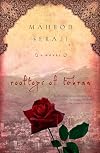
Rooftops of Tehran was touching without being sappy. It tells of young love and friendship in 1973-4's Iran, but is never overdramatic about it. I've rarely been so interested in reading about two teenage boys as much as I was with Pasha and Ahmed - one is well read and a little sensitive and the other is witty yet caring. I've read a few books taking place in Iran, but haven't come across such a feeling of both humor and community as I did here. I'm hoping for a sequel.
This review was written for LibraryThing Member Giveaways.
"Rooftops of Tehran" is a coming-of-age novel that begins as the story of four young people caught up in the excitement of first love. In their exhilaration, the four of them see the adult world through youth’s fresh eyes and they can hardly wait to carve out places for themselves in that world. However, "Rooftops of Tehran," set in the Shah’s Iran of 1973-1974, is much more than a love story; it is also a tragic tale of defiance and courage in a society in which the price of defiance is show more often imprisonment and execution.
Best friends Pasha and Ahmed have fallen in love with Zari and Faheemeh, two young women already engaged to be married to others. Faheemeh’s engagement is a recent one but Zari was betrothed to Doctor at birth, the result of an arrangement between two families wishing to ensure closeness for generations to come. Ahmed, bold and brash as always, refuses to be bound by tradition and challenges his rival for Faheemeh’s affections, willing to suffer a beating at the hands of Faheemeh’s brothers in the process. Pasha, on the other hand, has come to love and admire Doctor and he feels great guilt over his love for Doctor’s fiancé. Try as he might, however, Pasha finds it impossible to stop thinking about Zari.
Pasha, Ahmed, Zari and Faheemeh become inseparable friends during one gloriously innocent summer during which they spend long days at Zari’s home talking about life, books, and the future. It is a time during which Ahmed wins Faheema’s hand and Zari begins to question her feelings about Doctor and Pasha. Everything, though, comes crashing down around their heads one night when the Shah’s not-so-secret police pay a visit to the neighborhood. Pasha, alone in his rooftop hideaway, inadvertently exposes the person the police are seeking – a mistake that will have grave consequences for those closest to him.
Mahbod Seraji tells his tragic love story in a way that emphasizes the universal truths shared by people everywhere. All of us possess the same basic hopes, experiences and dreams for ourselves and our families, and we have more in common than not. This is so true that, while reading "Rooftops of Tehran," it is sometimes easy to forget that the story takes place in Iran rather than in a location more familiar to the reader. When things begin to go bad, however, the reader is jolted back to a keen awareness of the dangers of everyday life under the Shah of Iran’s brutal dictatorship.
Seraji, who arrived in the U.S. when he was 19, has vividly recreated a world that no longer exists, an Iranian culture that, frankly, was probably no less tolerant than the one of today, considering the regime that replaced the Shah. It was a world in which family, morality, education, and tradition were keys to happiness – much as they are today in Iran and everywhere else in the world. Mr. Seraji tells a good story, one that will gratify fans of several different genres.
Rated at: 4.0 show less
Best friends Pasha and Ahmed have fallen in love with Zari and Faheemeh, two young women already engaged to be married to others. Faheemeh’s engagement is a recent one but Zari was betrothed to Doctor at birth, the result of an arrangement between two families wishing to ensure closeness for generations to come. Ahmed, bold and brash as always, refuses to be bound by tradition and challenges his rival for Faheemeh’s affections, willing to suffer a beating at the hands of Faheemeh’s brothers in the process. Pasha, on the other hand, has come to love and admire Doctor and he feels great guilt over his love for Doctor’s fiancé. Try as he might, however, Pasha finds it impossible to stop thinking about Zari.
Pasha, Ahmed, Zari and Faheemeh become inseparable friends during one gloriously innocent summer during which they spend long days at Zari’s home talking about life, books, and the future. It is a time during which Ahmed wins Faheema’s hand and Zari begins to question her feelings about Doctor and Pasha. Everything, though, comes crashing down around their heads one night when the Shah’s not-so-secret police pay a visit to the neighborhood. Pasha, alone in his rooftop hideaway, inadvertently exposes the person the police are seeking – a mistake that will have grave consequences for those closest to him.
Mahbod Seraji tells his tragic love story in a way that emphasizes the universal truths shared by people everywhere. All of us possess the same basic hopes, experiences and dreams for ourselves and our families, and we have more in common than not. This is so true that, while reading "Rooftops of Tehran," it is sometimes easy to forget that the story takes place in Iran rather than in a location more familiar to the reader. When things begin to go bad, however, the reader is jolted back to a keen awareness of the dangers of everyday life under the Shah of Iran’s brutal dictatorship.
Seraji, who arrived in the U.S. when he was 19, has vividly recreated a world that no longer exists, an Iranian culture that, frankly, was probably no less tolerant than the one of today, considering the regime that replaced the Shah. It was a world in which family, morality, education, and tradition were keys to happiness – much as they are today in Iran and everywhere else in the world. Mr. Seraji tells a good story, one that will gratify fans of several different genres.
Rated at: 4.0 show less
Set in 1973-1974 Iran, seventeen-year-old protagonist Pasha and his friend, Ahmed, spend time on the rooftop of his home, stargazing and talking about life. He falls in love with the girl next door but cannot act on his feelings because she is engaged to one of his (older) good friends. The story takes place during the last Shah’s regime, and abuses of power are a focal point for the storyline. The two young men, though not politically active yet, are influenced by the human rights show more violations they witness.
It is elegantly written, and the narrative arc is robust. The characters are well developed, and it is easy to care about what happens to them. The story is told in flashbacks and flash-forwards, converging as the book nears its climax. It is filled with references to Persian culture. Although there is definitely a good bit of disturbing content, there are also happy moments and a bit of comic relief through Ahmed’s antics. Coming of age stories are hit or miss with me, and I am happy to say, this is one is a hit. It is complex enough to maintain the reader’s interest and the love story never falls into saccharine territory. show less
It is elegantly written, and the narrative arc is robust. The characters are well developed, and it is easy to care about what happens to them. The story is told in flashbacks and flash-forwards, converging as the book nears its climax. It is filled with references to Persian culture. Although there is definitely a good bit of disturbing content, there are also happy moments and a bit of comic relief through Ahmed’s antics. Coming of age stories are hit or miss with me, and I am happy to say, this is one is a hit. It is complex enough to maintain the reader’s interest and the love story never falls into saccharine territory. show less
“Rooftops of Tehran” tells the story of Pasha, his best friend Ahmed and the girls they love, Zari and Faheemeh navigating the tricky process of growing up in the Shah’s Iran. For the first half or 2/3rds of the book the narration is split between a time period starting in the summer of 1973 and Pasha’s stay in a mental hospital in 1974. He knows that something traumatic and terrible has happened, but he has no recollection of what it is.
This split in action could have turned out show more very cheesy and sensationalistic. Instead, Seraji got me involved in his characters so that I was genuinely interested in what had happened to put Pasha in a mental hospital and had me reading every page with interest and apprehension. Although the culture in which these characters were operating is very different from my own, I found them to be very relatable and real. I also loved the peak into pre-revolutionary Iran and found the hints of the coming revolution absolutely fascinating, particularly when people speculated about who should or would lead the revolution and worried about the possible influence of mullahs.
I really enjoyed “Rooftops of Tehran,” it really pulled me into Iran in the mid-1970s in an interesting way with well-developed characters and an interesting plot. show less
This split in action could have turned out show more very cheesy and sensationalistic. Instead, Seraji got me involved in his characters so that I was genuinely interested in what had happened to put Pasha in a mental hospital and had me reading every page with interest and apprehension. Although the culture in which these characters were operating is very different from my own, I found them to be very relatable and real. I also loved the peak into pre-revolutionary Iran and found the hints of the coming revolution absolutely fascinating, particularly when people speculated about who should or would lead the revolution and worried about the possible influence of mullahs.
I really enjoyed “Rooftops of Tehran,” it really pulled me into Iran in the mid-1970s in an interesting way with well-developed characters and an interesting plot. show less
You May Also Like


Associated Authors
Statistics
- Works
- 2
- Also by
- 1
- Members
- 567
- Popularity
- #44,117
- Rating
- 3.9
- Reviews
- 34
- ISBNs
- 17
- Languages
- 5
- Favorited
- 1
