
Juan Gabriel Vásquez
Author of The Sound of Things Falling
About the Author
Juan Gabriel Vásquez was born in Bogotá, Colombia in 1973. He studied law at the University of Rosario and received a doctorate in Latin American literature at the Sorbonne. He is the author of The Informants (Los Informantes), The Secret History of Costaguana (Historia Secreta de Costaguana), show more and The Sound of Things Falling (El Ruido de las Cosas al Caer), which won International Dublin Literary Award in 2014. (Bowker Author Biography) show less
Image credit: From Wikipedia
Works by Juan Gabriel Vásquez
Gammazcilar 1 copy
Dusen Seylerin Gurultusu 1 copy
Associated Works
Lunatics, Lovers and Poets: Twelve Stories after Cervantes and Shakespeare (2016) — Contributor — 37 copies
Tagged
Common Knowledge
- Canonical name
- Vásquez, Juan Gabriel
- Birthdate
- 1973-01-01
- Gender
- male
- Education
- Bogota University (Law)
Sorbonne University (Literature) - Occupations
- translator
writer
journalist - Awards and honors
- Premio Roger Caillois (2012)
Premio Real Academia Española (2014)
Alfaguara Novel Prize (2011) - Relationships
- Mariana Montoya (wife)
Martina Vasquez (daughter)
Carlota Vasquez (daughter) - Nationality
- Colombia
- Birthplace
- Bogotá, Colombia
- Places of residence
- Bogotá, Colombia
Barcelona, Spain - Map Location
- Colombia
Members
Reviews

Gabriel García Márquez begins one of his newspaper columns from January 1982 with the news that the exiled Colombian sculptor Feliza Bursztyn has “died of grief” in a Paris restaurant, at a dinner party he and his wife were hosting. Many years later, these words catch the attention of the narrator of this latest novel by Juan Gabriel Vásquez. Like the previous one, Volver la vista atrás, this is the biography of a distinguished Colombian artist in the form of a novel, as the narrator show more collects documents about Feliza’s life and interviews her husband, Pablo Leyva, and other witnesses to her life in an attempt to investigate the — of course unanswerable — question “why was Feliza sad?”
In the process of digging into her life, we visit an important slice of Colombian history, from the arrival of her (Jewish) parents there on a visit in 1933 and their decision to stay after hearing of Hitler’s coming to power in Germany, through to the violence following the assassination of Jorge Eliécer Gaitán in 1948 and to the further episodes of political violence after the Cuban revolution. We also follow Feliza’s personal life, her three husbands, and her career as an artist, from life-classes in New York to studying with Zadkine in Paris and embracing the then-new genre of welding abstract sculptures out of found pieces of scrap metal, and later taking up kinetic sculpture and installations, to the bafflement of conservative Colombian society. A woman with a welding torch was bad enough in Bogotá in the sixties, but one who liked to give her incomprehensible works titles with satirical political or feminist undertones was practically impossible.
As the narrator acknowledges, any view of a person’s life after their death is necessarily incomplete — there are certainly documents he didn‘t find, witnesses who disappeared before he could talk to them, things that they wouldn’t have been comfortable telling him, and things about Feliza that were simply never recorded anywhere, not least what was going on inside her head. But with a novelist’s licence, he can engage our imaginations and go a little deeper in recreating a possible view of her personality than he would be able to as a biographer who needs to show a source for every fact. And, of course, he can ensure that more people read the book — I doubt that many people outside Colombia would be interested in a biography of a sculptor who died forty years ago, but if it’s a novel that says “Juan Gabriel Vásquez” on the cover, it stands a good chance of getting on the reading-list of your book-club. Be that as it may, it was a very engaging read, and I’m sure I learnt something about Colombia and about abstract sculpture from it… show less
In the process of digging into her life, we visit an important slice of Colombian history, from the arrival of her (Jewish) parents there on a visit in 1933 and their decision to stay after hearing of Hitler’s coming to power in Germany, through to the violence following the assassination of Jorge Eliécer Gaitán in 1948 and to the further episodes of political violence after the Cuban revolution. We also follow Feliza’s personal life, her three husbands, and her career as an artist, from life-classes in New York to studying with Zadkine in Paris and embracing the then-new genre of welding abstract sculptures out of found pieces of scrap metal, and later taking up kinetic sculpture and installations, to the bafflement of conservative Colombian society. A woman with a welding torch was bad enough in Bogotá in the sixties, but one who liked to give her incomprehensible works titles with satirical political or feminist undertones was practically impossible.
As the narrator acknowledges, any view of a person’s life after their death is necessarily incomplete — there are certainly documents he didn‘t find, witnesses who disappeared before he could talk to them, things that they wouldn’t have been comfortable telling him, and things about Feliza that were simply never recorded anywhere, not least what was going on inside her head. But with a novelist’s licence, he can engage our imaginations and go a little deeper in recreating a possible view of her personality than he would be able to as a biographer who needs to show a source for every fact. And, of course, he can ensure that more people read the book — I doubt that many people outside Colombia would be interested in a biography of a sculptor who died forty years ago, but if it’s a novel that says “Juan Gabriel Vásquez” on the cover, it stands a good chance of getting on the reading-list of your book-club. Be that as it may, it was a very engaging read, and I’m sure I learnt something about Colombia and about abstract sculpture from it… show less
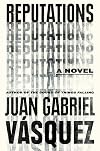
A remarkable work, the best of the several novels of his that I’ve read; among other things, it made me wonder why his name doesn’t appear more in our Nobel speculations. (Yes. It does. But I wonder whether it should be given even more consideration than we generally accord it.) Javier Mallarino is an enormously influential political cartoonist in Colombia. His caricatures change lives and destroy careers and governments. He is quite proud of the body of work he has produced over four show more decades, to the point of being just a bit too self-satisfied. And so Vasquez uses that self-satisfaction to analyze the nature of truth. Reputations is a deeply insightful novel asking hard questions beautifully posed: do caricatures depict or do they invent reality? Does intent matter? Does doubt help? Or hinder? Perhaps most important: how does one draw the lines of moral responsibility for one’s actions? Is it even possible? In a perfectly imagined confluence of coincidences, Mallarino is forced to confront these questions in the context of a caricature he drew years ago that may have literally destroyed lives. Was the caricature justified? Does it matter? What kind of power does he have? How should he use it? I will admit to being ever so slightly disappointed at the ending but this is a very impressive work; unhesitatingly recommended. show less
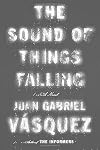
Rating: 4* of five
The Publisher Says: In the city of Bogotá, Antonio Yammara reads an article about a hippo that had escaped from a derelict zoo once owned by legendary Colombian drug kingpin Pablo Escobar. The article transports Antonio back to when the war between Escobar’s Medellín cartel and government forces played out violently in Colombia’s streets and in the skies above.
Back then, Antonio witnessed a friend’s murder, an event that haunts him still. As he investigates, he show more discovers the many ways in which his own life and his friend’s family have been shaped by his country’s recent violent past. His journey leads him all the way back to the 1960s and a world on the brink of change: a time before narco-trafficking trapped a whole generation in a living nightmare.
Vásquez is “one of the most original new voices of Latin American literature,” according to Nobel Prize winner Mario Vargas Llosa, and The Sound of Things Falling is his most personal, most contemporary novel to date, a masterpiece that takes his writing—and will take his literary star—even higher.
I received this ARC from the publisher as part of LibraryThing's Early Reviewers program
My Review: To every rule its exception: This book is praised highly by a writer whose work I abhor, Jonathan Franzen; and ordinarily that means I will avoid the book so as not to read even a Pearl-Rule 46pp of something I'm bound to hate.
Ha ha ha, rules. I liked this book a lot. Well, "like" is a weird word for the emotional resonance of the book. I responded to the book like a tuning fork responds to a smack.
The fact is that I am a fan of Latin American literature because, like this book and author, most of the translated works are political and tendentious in their natures, and so are the authors. So am I. So it's usually a good fit.
This story, which feels as personal as the blurb suggests it actually is, made me very uncomfortable, as I watched Colombia's descent into warlord rule and civil failure. I suspect I'd feel the same fearful anger if I were to visit Montana or Idaho or Wyoming, places that white supremacist/apocalyptic christian cultists have claimed for themselves. When nutball extremists take over a place, it's a failure of civil authority, and that is a crime. The net effect is the same as the drug cartels' takeover of Colombia in the 1970s or the current failure of civil authority in Mexico today or the Cascadian separatist movement here.
These are not positive developments, they have tremendous costs in personal misery, and they are much to be deplored. Vásquez does his deploring by focusing tightly on the emotional and psychic costs of civil failure to a small group of friends, Antonio's friends and his good self. It's a sad, sad chronicle of horror and rage. And it's wrapped in beautiful words expressing solidly grounded truths:
Translator McLean has done a marvelous job of making poetry in the English, and while I haven't read the original Spanish text, I can only say that she is unlikely to have made such handsome bricks without good, abundant straw.
If I must pick a nit, and I must, it's that the structure of the novel is a tad more complex than is strictly speaking necessary to tell the author's very involving story. It's not hard to follow, but it's just artificial enough to pop the reader out of the narrative flow. That's almost never a good thing. (Okay, it's never a good thing, but I've learned not to make absolute statements because some little twidgee or another will come along and say something tiresome about my opinions and frankly I'm over it.)
I hope, that issue aside, that you will all race out to your local bookeries and procure copies of this book. It's got something important to say to us in the USA about the incredibly high cost of allowing dissent to become dissolution. Colombia failed its citizens, and their agony only slowly passes. Mexico is mid-failure, and is much closer to us. And yet we allow our own idiot rebels a far freer hand in obstructing and undermining our governmental institutions and shredding our social fabric in the name of some illusory "right" they assert that they have to do this to us all.
Read the book. Learn the cost. The price of the right wing's version of freedom is too goddamned high, and Vásquez knows it first hand. Please listen to him.
This work is licensed under a Creative Commons Attribution-NonCommercial-ShareAlike 3.0 Unported License. show less
The Publisher Says: In the city of Bogotá, Antonio Yammara reads an article about a hippo that had escaped from a derelict zoo once owned by legendary Colombian drug kingpin Pablo Escobar. The article transports Antonio back to when the war between Escobar’s Medellín cartel and government forces played out violently in Colombia’s streets and in the skies above.
Back then, Antonio witnessed a friend’s murder, an event that haunts him still. As he investigates, he show more discovers the many ways in which his own life and his friend’s family have been shaped by his country’s recent violent past. His journey leads him all the way back to the 1960s and a world on the brink of change: a time before narco-trafficking trapped a whole generation in a living nightmare.
Vásquez is “one of the most original new voices of Latin American literature,” according to Nobel Prize winner Mario Vargas Llosa, and The Sound of Things Falling is his most personal, most contemporary novel to date, a masterpiece that takes his writing—and will take his literary star—even higher.
I received this ARC from the publisher as part of LibraryThing's Early Reviewers program
My Review: To every rule its exception: This book is praised highly by a writer whose work I abhor, Jonathan Franzen; and ordinarily that means I will avoid the book so as not to read even a Pearl-Rule 46pp of something I'm bound to hate.
Ha ha ha, rules. I liked this book a lot. Well, "like" is a weird word for the emotional resonance of the book. I responded to the book like a tuning fork responds to a smack.
The fact is that I am a fan of Latin American literature because, like this book and author, most of the translated works are political and tendentious in their natures, and so are the authors. So am I. So it's usually a good fit.
This story, which feels as personal as the blurb suggests it actually is, made me very uncomfortable, as I watched Colombia's descent into warlord rule and civil failure. I suspect I'd feel the same fearful anger if I were to visit Montana or Idaho or Wyoming, places that white supremacist/apocalyptic christian cultists have claimed for themselves. When nutball extremists take over a place, it's a failure of civil authority, and that is a crime. The net effect is the same as the drug cartels' takeover of Colombia in the 1970s or the current failure of civil authority in Mexico today or the Cascadian separatist movement here.
These are not positive developments, they have tremendous costs in personal misery, and they are much to be deplored. Vásquez does his deploring by focusing tightly on the emotional and psychic costs of civil failure to a small group of friends, Antonio's friends and his good self. It's a sad, sad chronicle of horror and rage. And it's wrapped in beautiful words expressing solidly grounded truths:
Adulthood brings with it the pernicious illusion of control, perhaps even depends on it. I mean that mirage of dominion over our own life that allows us to feel like adults, for we associate maturity with autonomy, the sovereign right to determine what is going to happen to us next.
Translator McLean has done a marvelous job of making poetry in the English, and while I haven't read the original Spanish text, I can only say that she is unlikely to have made such handsome bricks without good, abundant straw.
If I must pick a nit, and I must, it's that the structure of the novel is a tad more complex than is strictly speaking necessary to tell the author's very involving story. It's not hard to follow, but it's just artificial enough to pop the reader out of the narrative flow. That's almost never a good thing. (Okay, it's never a good thing, but I've learned not to make absolute statements because some little twidgee or another will come along and say something tiresome about my opinions and frankly I'm over it.)
I hope, that issue aside, that you will all race out to your local bookeries and procure copies of this book. It's got something important to say to us in the USA about the incredibly high cost of allowing dissent to become dissolution. Colombia failed its citizens, and their agony only slowly passes. Mexico is mid-failure, and is much closer to us. And yet we allow our own idiot rebels a far freer hand in obstructing and undermining our governmental institutions and shredding our social fabric in the name of some illusory "right" they assert that they have to do this to us all.
Read the book. Learn the cost. The price of the right wing's version of freedom is too goddamned high, and Vásquez knows it first hand. Please listen to him.
This work is licensed under a Creative Commons Attribution-NonCommercial-ShareAlike 3.0 Unported License. show less
 This review was written for LibraryThing Early Reviewers.
What a beautiful, sad, well-written story. The author includes all the details I needed to feel, smell, hear, taste, and see the setting for this story without compromising plot strength or character development. In these days of books that are too long because they've not been well-edited either by the author or the publisher, this book stands out as a beautifully faceted and brilliant gem. The ending is ambiguous, but I did not mind that at all. In my experience, foreign authors - or maybe show more their readers - have a greater tolerance for ambiguity so the plot line does not end all neatly tied up, just like life. show less
Lists
. (1)
Awards


You May Also Like


Associated Authors
Statistics
- Works
- 28
- Also by
- 5
- Members
- 3,056
- Popularity
- #8,352
- Rating
- 3.9
- Reviews
- 132
- ISBNs
- 235
- Languages
- 13
- Favorited
- 4

