
Robert H. Rimmer (1917–2001)
Author of The Harrad Experiment
About the Author
Series
Works by Robert H. Rimmer
The X-Rated Videotape Guide IV: Over 1,100 Reviews of 1992-1993 Adult Movies (1994) 6 copies, 1 review
The Rebellion of Yale Marratt 2 copies
The Way to Go: Four Men & Three Women Sailing from Florida to Cozumel & Belize- a Story of Sex, Lust & Drug Trafficking- (2000) 2 copies
The Harrad Letters 1 copy
Discussion of Proposition 31 1 copy
Proposición Treinta y Uno 1 copy
Associated Works
Tagged
Common Knowledge
- Legal name
- Rimmer, Robert Henry
- Birthdate
- 1917-03-14
- Date of death
- 2001-08-01
- Gender
- male
- Education
- Bates College
Harvard (MBA) - Occupations
- family printing business
- Nationality
- USA
- Birthplace
- Quincy, Massachusetts, USA
- Associated Place (for map)
- Massachusetts, USA
Members
Reviews
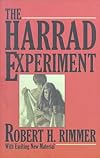
The Harrad Experiment is set in the 1960s, and tells of a college established to form new styles of looking at relationships. It is written in diary-style, by four of the fictional students, covering their four years there.
This is an interesting book, which at the time of its publication, was revolutionary. Keep in mind it was written when censorship was considered a good thing, by an author who had to travel to India to get a copy of the Kama Sutra.
I was surprised to learn that during the show more first twelve years, before it went out of print, The Harrad Experiment sold 3 million copies. It garnered a huge following, and people thought Harrad College was a real place, and clamored to attend. The author received letters from people all over. Had the internet been around, it would have spawned blogs and forums and communities.
As it stands, along with the works of Robert Heinlein, it is considered one of the founding novels that lead to the modern polyamory movement. I am polyamorous, living with two life-partners in a triad relationship, and we are raising three children. I owe my lifestyle to this book, although I didn't read it until many years after becoming poly.
I started reading this book a few years back, but found it a bit boring, perhaps because the co-ed dorms and free-love living arrangements were not so shocking to me, as a practicing poly person in the early 2000s. So the authors hook failed on me. Also I think I was also expecting something a bit more sci-fi. After about 20% in, I set it down. I just returned to it, determined to finish it no matter what.
It does get a little more interesting, and plot points *do* happen, though I still found it a bit dry. The dialog is stiff and at times, not natural, just the author speaking through his characters.
Oddly, due to the setting, culture, and subject matter, it reminded me a bit of Pamela Dean's Tam Lin, which is also set in a college (in the early 1970s), and I almost wonder if she was slightly influenced by The Harrad Experiment. (Not to imply Tam Lin is a novel about polyamory - it isn't, though her characters do experiment with the new sexual mores than 1973 provided them.)
Rimmer imagines a world in which sex is a product of love, deep abiding connection with other human beings, of learning the inner landscape of multiple lovers to create life-long bonds of family. He extends this idea of family to children, with the idea of creating family units for the purpose of raising happy, healthy human beings.
I found some of his approaches a bit fixated on "the right way" to do things, that all society should follow the authors ways, or perish. The book did cross the lines into being preachy. The author has his idea of what is good and right based on his personal experiences, and rules out experiences and preferences of others.
For example, he is against all forms of what he calls "sick sex", which contextually, he implies BDSM, kink, and other lifestyle variations. Some people do find deep connection and spirituality in power exchange, but he is unable to recognize this.
Likewise, he comes across as a bit homophobic, focusing on heterosexuality, and ignoring the family bonds and importance of the power of love in homosexual unions. Parts also come off a bit sexist.
This book is a product of its time, so I can't blame him too much, given that it is *still* hard to think outside those boxes in today's age.
Rimmer also has, both in the novel and in the essay at the end, a staunch anti-porn stance. This is understandable, since his goal is to rid the world of rutting, physical, mindless sex, in favor of emotional and spiritual connection. That is to be commended. Indeed, those who only understand the physical form are surely missing something, and that is indeed a huge part of sex in America today. But both types of sex have a place within a person's life and relationships.
In spite of itself, Harrad University gave off a culty vibe. It is run by a married couple, and at the end of the four years, the students seem lock-step with what the teachers have given them. The students are off to convert the world to their exact standards, with regimented rules and new laws that will solve all problems and make everyone be happy.
Rimmer has a naive view of what makes people unhappy in life, and what makes people incompatible with each other. His conclusions seem very utopian, i.e. if only the world would follow my plan, there would be no war, no divorce, no addiction, just happy children frolicking about. In fact, we are psychologically complex creatures, difficult to persuade. We clutch our childhood pain, and brandish our defense mechanisms, and all these things lead much more often to human pain than outmoded monogamy. Human beings are not healed so easily, nor are they persuaded to change their morality, no matter how much it makes sense for them to do so.
His essay at the end, and the discussions of the students in their fourth year, present some good ideas that seem really great on the surface, but with deeper thought would prove to have all sorts of unintended consequences.
After finishing this novel, I was surprised to learn two things. One, that there is a movie based on this novel, available on YouTube, which I have added to my To Watch list. And secondly, there is no Wikipedia article for the novel. And their should be, since I'm sure the history of this book, and how it was received by America, is fascinating. Rimmer's biography provided in the back of the book was not enough to sate my curiosity. show less
This is an interesting book, which at the time of its publication, was revolutionary. Keep in mind it was written when censorship was considered a good thing, by an author who had to travel to India to get a copy of the Kama Sutra.
I was surprised to learn that during the show more first twelve years, before it went out of print, The Harrad Experiment sold 3 million copies. It garnered a huge following, and people thought Harrad College was a real place, and clamored to attend. The author received letters from people all over. Had the internet been around, it would have spawned blogs and forums and communities.
As it stands, along with the works of Robert Heinlein, it is considered one of the founding novels that lead to the modern polyamory movement. I am polyamorous, living with two life-partners in a triad relationship, and we are raising three children. I owe my lifestyle to this book, although I didn't read it until many years after becoming poly.
I started reading this book a few years back, but found it a bit boring, perhaps because the co-ed dorms and free-love living arrangements were not so shocking to me, as a practicing poly person in the early 2000s. So the authors hook failed on me. Also I think I was also expecting something a bit more sci-fi. After about 20% in, I set it down. I just returned to it, determined to finish it no matter what.
It does get a little more interesting, and plot points *do* happen, though I still found it a bit dry. The dialog is stiff and at times, not natural, just the author speaking through his characters.
Oddly, due to the setting, culture, and subject matter, it reminded me a bit of Pamela Dean's Tam Lin, which is also set in a college (in the early 1970s), and I almost wonder if she was slightly influenced by The Harrad Experiment. (Not to imply Tam Lin is a novel about polyamory - it isn't, though her characters do experiment with the new sexual mores than 1973 provided them.)
Rimmer imagines a world in which sex is a product of love, deep abiding connection with other human beings, of learning the inner landscape of multiple lovers to create life-long bonds of family. He extends this idea of family to children, with the idea of creating family units for the purpose of raising happy, healthy human beings.
I found some of his approaches a bit fixated on "the right way" to do things, that all society should follow the authors ways, or perish. The book did cross the lines into being preachy. The author has his idea of what is good and right based on his personal experiences, and rules out experiences and preferences of others.
For example, he is against all forms of what he calls "sick sex", which contextually, he implies BDSM, kink, and other lifestyle variations. Some people do find deep connection and spirituality in power exchange, but he is unable to recognize this.
Likewise, he comes across as a bit homophobic, focusing on heterosexuality, and ignoring the family bonds and importance of the power of love in homosexual unions. Parts also come off a bit sexist.
This book is a product of its time, so I can't blame him too much, given that it is *still* hard to think outside those boxes in today's age.
Rimmer also has, both in the novel and in the essay at the end, a staunch anti-porn stance. This is understandable, since his goal is to rid the world of rutting, physical, mindless sex, in favor of emotional and spiritual connection. That is to be commended. Indeed, those who only understand the physical form are surely missing something, and that is indeed a huge part of sex in America today. But both types of sex have a place within a person's life and relationships.
In spite of itself, Harrad University gave off a culty vibe. It is run by a married couple, and at the end of the four years, the students seem lock-step with what the teachers have given them. The students are off to convert the world to their exact standards, with regimented rules and new laws that will solve all problems and make everyone be happy.
Rimmer has a naive view of what makes people unhappy in life, and what makes people incompatible with each other. His conclusions seem very utopian, i.e. if only the world would follow my plan, there would be no war, no divorce, no addiction, just happy children frolicking about. In fact, we are psychologically complex creatures, difficult to persuade. We clutch our childhood pain, and brandish our defense mechanisms, and all these things lead much more often to human pain than outmoded monogamy. Human beings are not healed so easily, nor are they persuaded to change their morality, no matter how much it makes sense for them to do so.
His essay at the end, and the discussions of the students in their fourth year, present some good ideas that seem really great on the surface, but with deeper thought would prove to have all sorts of unintended consequences.
After finishing this novel, I was surprised to learn two things. One, that there is a movie based on this novel, available on YouTube, which I have added to my To Watch list. And secondly, there is no Wikipedia article for the novel. And their should be, since I'm sure the history of this book, and how it was received by America, is fascinating. Rimmer's biography provided in the back of the book was not enough to sate my curiosity. show less
I first read this book back in the 60's when it was first published. At the time, it was a bold, exciting view of life as we wanted it, back in the day. I remember coming home from a date and not being able to find my copy; I asked the parents and was told they had thrown it out (and they let me read ANYTHING) because I had left "that trash out" for my younger (12 yr old) brother to read. (Who already knew all about the subject, since he was an extremely early bloomer.)
I bought another copy show more with my very scarce pocket money so as to finish.
Now, 40 years later, I found it again at a book sale, with "new exciting material" added. Actually, not so much.
The ideas in the book now seem so idealistic, and at the same time, so dated. At the time, co-ed living was simply not done, and even just plain living together in the "outside" world was really unusual. Now, it seems like every teenager has had many sexual experiences (or so they would have you believe), and living together is not even worthy of comment. And the idea of having to read, as 18 yr olds, various sex manuals to learn how to do it is fairly laughable.
I actually think that this is unfortunate, and life would be a lot better for many many people if some of the more conservative values were still in vogue.
The idealized life espoused in The Harrad Experiment, including reasonably-priced education for everyone, mature attitudes toward family, etc., never came to be. And never will. At the time it was written, an average decent wage for one of the parents was less than $10K a year and when he was given a raise to $40,000 a year as a dirty trick, his life became much less pleasant. And $500,000 constituted "filthy rich." Things have changed. And not necessarily for the better.
The Harrad Experiment was a product of the time in which it was written--sexual freedom, women's lib, racial and religious bias just beginning to be tested, the "age of Aquarius." Not to mention Vietnam, a scar that will never go away.
I grew up during those times, and they were heady indeed. We realized things were changing, and hoped for a bright, different future. For whatever you feel about that, good or bad, it didn't come true. show less
I bought another copy show more with my very scarce pocket money so as to finish.
Now, 40 years later, I found it again at a book sale, with "new exciting material" added. Actually, not so much.
The ideas in the book now seem so idealistic, and at the same time, so dated. At the time, co-ed living was simply not done, and even just plain living together in the "outside" world was really unusual. Now, it seems like every teenager has had many sexual experiences (or so they would have you believe), and living together is not even worthy of comment. And the idea of having to read, as 18 yr olds, various sex manuals to learn how to do it is fairly laughable.
I actually think that this is unfortunate, and life would be a lot better for many many people if some of the more conservative values were still in vogue.
The idealized life espoused in The Harrad Experiment, including reasonably-priced education for everyone, mature attitudes toward family, etc., never came to be. And never will. At the time it was written, an average decent wage for one of the parents was less than $10K a year and when he was given a raise to $40,000 a year as a dirty trick, his life became much less pleasant. And $500,000 constituted "filthy rich." Things have changed. And not necessarily for the better.
The Harrad Experiment was a product of the time in which it was written--sexual freedom, women's lib, racial and religious bias just beginning to be tested, the "age of Aquarius." Not to mention Vietnam, a scar that will never go away.
I grew up during those times, and they were heady indeed. We realized things were changing, and hoped for a bright, different future. For whatever you feel about that, good or bad, it didn't come true. show less

An exploration of american sexual attitudes of the 1950's written as an attack on them. It was an adequate "Dirty Book" of the time.

very "het male as universal perspective", but the author tried.
Lists
You May Also Like


Associated Authors
Statistics
- Works
- 31
- Also by
- 1
- Members
- 502
- Popularity
- #49,319
- Rating
- 3.2
- Reviews
- 11
- ISBNs
- 64
- Favorited
- 1