
Charles Prepolec
Author of Gaslight Grimoire: Fantastic Tales of Sherlock Holmes
About the Author
Image credit: Photo by Kristen Prepolec.
Series
Works by Charles Prepolec
Beyond Rue Morgue Anthology: Further Tales of Edgar Allan Poe's 1st Detective (2013) — Editor — 57 copies, 3 reviews
Tagged
Common Knowledge
- Birthdate
- 1966
- Gender
- male
- Nationality
- Canada
- Birthplace
- Calgary, Alberta, Canada
- Places of residence
- Calgary, Alberta, Canada
- Associated Place (for map)
- Alberta, Canada
Members
Reviews
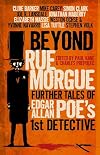
Either you’re already familiar with Poe’s “The Murders in the Rue Morgue” or you’re not. If not, that’s easily rectified, as it has long been in the public domain and a copy is included in this volume. It is often credited as being the first detective story – I’ve seen arguments made for a couple of earlier works, but let’s not be pedantic – even though the term “detective” had not yet been coined at the time of its writing. Poe himself described “Rue Morgue” as a show more “tale of ratiocination.” The protagonist, the Chevalier C. Auguste Dupin, a man of almost unparalleled intellect and insight, serves as the prototype for many of his succeeding and better known detectives, such as Holmes and Poirot. Dupin also reappears in two other Poe stories not collected here but those are also easily available. There’s little point to me reviewing such a well-known tale as “Rue Morgue,” so I will simply say that Dupin’s methods involve Poe’s “ratiocination,” the application of careful observation, along with inductive reasoning, to draw conclusions based on minute and seemingly trivial observations. You’ve seen Holmes do it a million times, but Dupin did it first. This is a collection of short stories that attempt to extend Poe’s work on Dupin, either directly (by offering some further adventures of Dupin himself) or indirectly, by writing in Poe’s style and usually describing a descendant of Dupin’s dealing with a similar, seemingly impossible and outré crime.
Contents of this collection are as follows:
Introduction by the editors, Paul Kane and Charles Prepolec
Edgar Allan Poe’s “The Murders in the Rue Morgue”
Mike Carey, “The Sons of Tammany”
Simon Clark, “The Unfathomed Darkness”
Weston Ochse and Yvonne Navarro, “The Weight of a Dead Man”
Jonathan Maberry, “The Vanishing Assassin”
Joe R. Lansdale, “The Gruesome Affair of the Electric Blue Lightning”
Elizabeth Massie, “From Darkness, Emerged, Returned”
Lisa Tuttle, “After the End”
Stephen Volk, “The Purloined Face”
Clive Barker, “New Murders in the Rue Morgue” (other than “Rue Morgue” itself, this is the only reprint in the volume)
Now, on to the new stories (I promise not to wreck any of the mysteries for you):
Mike Carey, “The Sons of Tammany”: Dupin travels to Boss Tweed’s New York City in 1870 and quickly runs afoul of that city’s corrupt political machine as he investigates the strange deaths of some workers constructing the Brooklyn Bridge. The transposition of the mannerly Dupin to the rough-and-tumble New York setting works very well, though at times he comes off as a bit too much of a caricature. The mystery is well done though, and the dialogue occasionally very funny.
Simon Clark, “The Unfathomed Darkness”: An excellent mystery in the precise mold of Poe’s creation. Clark probably captures Poe’s voice, the character of Dupin, and the style of Dupin’s mysteries better than any other writer in the collection. Dupin must solve the mystery of a corpse found facedown in the snow, with – seemingly impossibly – no footprints or any marks visible around the corpse. I hope that Clark plans more Dupin pastiches, because he really nailed the tone and language perfectly.
Weston Ochse and Yvonne Navarro, “The Weight of a Dead Man”: This story was well written, but a bit far out there, perhaps straying too far from the original. It’s a mystery solved by Dupin’s grandson, Nate Dupes, in the Wild West on the Mexican border in 1895. Decent story, but only a tenuous connection to Dupin.
Jonathan Maberry, “The Vanishing Assassin”: Well-written piece concerning the savage murder of a dealer in Japanese antiquities. The more Dupin learns about the victim, the more his sympathies lie with the killer.
Joe R. Lansdale, “The Gruesome Affair of the Electric Blue Lightning”: I actually really like Lansdale’s work and don’t think I’ve ever seen anything of his that doesn’t work well. How could you not love a story involving an ape, the Necronomicon, and some bizarre science fiction gadgetry? Any story that connects Poe with Grimm’s fairy tales, Frankenstein, and the Cthulhu Mythos has got to be a good one! Could only have been conceived of my Joe Lansdale.
Elizabeth Massie, “From Darkness, Emerged, Returned”: Like the Ochse/Navarro story, this one is a short piece about a distant relative of Dupin’s, in this case his great-granddaughter Molly, who lives in Brooklyn in the early twentieth century. Molly is a bit of a shut-in who observes life outside her apartment windows all day, including the aftermath of her love interest’s murder. It’s not at all a bad story, it’s actually kind of fun, but it has only the most tenuous connection to Dupin.
Lisa Tuttle, “After the End”: A very melancholic little piece about Dupin’s last case involving a serial killer who savages his victims in the style of a wolf, as revealed through a medium at a séance. The premise and prose in the story were both very well done; this is probably the darkest and most chilling of the stories in the collection, and might have been something that Poe himself might have conceived. No spoilers, but I just don’t care for the resolution of the story or Tuttle’s portrayal of Dupin.
Stephen Volk, “The Purloined Face”: This is a bit of an odd duck for me, a story that I’m not quite sure works. A young Sherlock Holmes is informally apprenticed to an old Poe, who apparently faked his own death (!) and is living in Paris masquerading as Dupin, solving crimes the Paris police are unable to. The pair gets caught up in a series of acid-throwing disfigurements at a Parisian theater in a story mimicking The Phantom of the Opera. It was jarring to me to see Holmes depicted as a pretty clueless and bumbling young man, almost useless in the face of the persnickety old Poe’s genius. Perhaps I’m simply complaining about this story as a Sherlock Holmes purist; there’s nothing inherently wrong with the story, per se, it just doesn’t ring true for me. If you go into this one less wedded to the idea of what a young Sherlock Holmes should be like, you might appreciate it more than I have.
Clive Barker, “New Murders in the Rue Morgue” : A truly dark and melancholic story – not surprising, given its author – about Dupin’s great-nephew Lewis investigating a series of crimes and strange events that seem closely tied in, or at least sharply reminiscent of, the original Rue Morgue murders. The resolution is pretty twisted and not for the faint of heart, but I liked it.
All in all, this collection was a little bit of a mixed bag when it came to the quality of the stories it contains, but that’s not unusual for an anthology. I’d have liked to see a few of the stories attempt more of a pastiche of Poe’s Dupin mysteries, rather than just use the basic concept as a springboard for a very different kind of story, but there’s little to complain about here. Each story had merit, and some were downright excellent. There’s clearly still plenty of room available for more actual stories of Dupin’s hitherto unrecorded adventures, and I hope Titan Books or another publisher takes up that challenge. If you’re at all intrigued by the character of Dupin and his unique brand of “ratiocination,” and appreciate the idea of a man of reason tangling with the unknown, then I’d highly recommend this collection.
Review copyright © 2014 J. Andrew Byers show less
Contents of this collection are as follows:
Introduction by the editors, Paul Kane and Charles Prepolec
Edgar Allan Poe’s “The Murders in the Rue Morgue”
Mike Carey, “The Sons of Tammany”
Simon Clark, “The Unfathomed Darkness”
Weston Ochse and Yvonne Navarro, “The Weight of a Dead Man”
Jonathan Maberry, “The Vanishing Assassin”
Joe R. Lansdale, “The Gruesome Affair of the Electric Blue Lightning”
Elizabeth Massie, “From Darkness, Emerged, Returned”
Lisa Tuttle, “After the End”
Stephen Volk, “The Purloined Face”
Clive Barker, “New Murders in the Rue Morgue” (other than “Rue Morgue” itself, this is the only reprint in the volume)
Now, on to the new stories (I promise not to wreck any of the mysteries for you):
Mike Carey, “The Sons of Tammany”: Dupin travels to Boss Tweed’s New York City in 1870 and quickly runs afoul of that city’s corrupt political machine as he investigates the strange deaths of some workers constructing the Brooklyn Bridge. The transposition of the mannerly Dupin to the rough-and-tumble New York setting works very well, though at times he comes off as a bit too much of a caricature. The mystery is well done though, and the dialogue occasionally very funny.
Simon Clark, “The Unfathomed Darkness”: An excellent mystery in the precise mold of Poe’s creation. Clark probably captures Poe’s voice, the character of Dupin, and the style of Dupin’s mysteries better than any other writer in the collection. Dupin must solve the mystery of a corpse found facedown in the snow, with – seemingly impossibly – no footprints or any marks visible around the corpse. I hope that Clark plans more Dupin pastiches, because he really nailed the tone and language perfectly.
Weston Ochse and Yvonne Navarro, “The Weight of a Dead Man”: This story was well written, but a bit far out there, perhaps straying too far from the original. It’s a mystery solved by Dupin’s grandson, Nate Dupes, in the Wild West on the Mexican border in 1895. Decent story, but only a tenuous connection to Dupin.
Jonathan Maberry, “The Vanishing Assassin”: Well-written piece concerning the savage murder of a dealer in Japanese antiquities. The more Dupin learns about the victim, the more his sympathies lie with the killer.
Joe R. Lansdale, “The Gruesome Affair of the Electric Blue Lightning”: I actually really like Lansdale’s work and don’t think I’ve ever seen anything of his that doesn’t work well. How could you not love a story involving an ape, the Necronomicon, and some bizarre science fiction gadgetry? Any story that connects Poe with Grimm’s fairy tales, Frankenstein, and the Cthulhu Mythos has got to be a good one! Could only have been conceived of my Joe Lansdale.
Elizabeth Massie, “From Darkness, Emerged, Returned”: Like the Ochse/Navarro story, this one is a short piece about a distant relative of Dupin’s, in this case his great-granddaughter Molly, who lives in Brooklyn in the early twentieth century. Molly is a bit of a shut-in who observes life outside her apartment windows all day, including the aftermath of her love interest’s murder. It’s not at all a bad story, it’s actually kind of fun, but it has only the most tenuous connection to Dupin.
Lisa Tuttle, “After the End”: A very melancholic little piece about Dupin’s last case involving a serial killer who savages his victims in the style of a wolf, as revealed through a medium at a séance. The premise and prose in the story were both very well done; this is probably the darkest and most chilling of the stories in the collection, and might have been something that Poe himself might have conceived. No spoilers, but I just don’t care for the resolution of the story or Tuttle’s portrayal of Dupin.
Stephen Volk, “The Purloined Face”: This is a bit of an odd duck for me, a story that I’m not quite sure works. A young Sherlock Holmes is informally apprenticed to an old Poe, who apparently faked his own death (!) and is living in Paris masquerading as Dupin, solving crimes the Paris police are unable to. The pair gets caught up in a series of acid-throwing disfigurements at a Parisian theater in a story mimicking The Phantom of the Opera. It was jarring to me to see Holmes depicted as a pretty clueless and bumbling young man, almost useless in the face of the persnickety old Poe’s genius. Perhaps I’m simply complaining about this story as a Sherlock Holmes purist; there’s nothing inherently wrong with the story, per se, it just doesn’t ring true for me. If you go into this one less wedded to the idea of what a young Sherlock Holmes should be like, you might appreciate it more than I have.
Clive Barker, “New Murders in the Rue Morgue” : A truly dark and melancholic story – not surprising, given its author – about Dupin’s great-nephew Lewis investigating a series of crimes and strange events that seem closely tied in, or at least sharply reminiscent of, the original Rue Morgue murders. The resolution is pretty twisted and not for the faint of heart, but I liked it.
All in all, this collection was a little bit of a mixed bag when it came to the quality of the stories it contains, but that’s not unusual for an anthology. I’d have liked to see a few of the stories attempt more of a pastiche of Poe’s Dupin mysteries, rather than just use the basic concept as a springboard for a very different kind of story, but there’s little to complain about here. Each story had merit, and some were downright excellent. There’s clearly still plenty of room available for more actual stories of Dupin’s hitherto unrecorded adventures, and I hope Titan Books or another publisher takes up that challenge. If you’re at all intrigued by the character of Dupin and his unique brand of “ratiocination,” and appreciate the idea of a man of reason tangling with the unknown, then I’d highly recommend this collection.
Review copyright © 2014 J. Andrew Byers show less

Review Written for Library Thing Early Reviewers.
From the book title, I didn't realize that the contents, ten short stories each written by a different author and each telling disparate plots, focused on the Gothic elements of the Victorian scene. Of course, some of the original Conan Doyle plots also incorporate certain Gothic storytelling devices as well, e.g., dark mysterious isolated mansions, heroines without supportive relations, mysterious noises in the night, and so on, all of which show more is elucidated in the preface to this book. As I am currently immersing myself in Sherlockiana, this preface was very helpful in sorting out these elements. Each of the stories involves the Consulting Detective but some are told from the point of view of Dr. Watson, while in others his role is assigned to other characters; I enjoyed those with Watson more, in general. A few of the stories could have been as successful without forcing the Gothic into the narrative. They all adopt a Victorian turn of phrase in the text.
In general, I would recommend this collection if you like the Conan Doyle originals and I do admire the creativity of the various and diverse authors who approached the project from novel and unique perspectives. Note that this is part of a series of Gaslight collections on Mr. Holmes - I believe that this is the fourth in the series - and I had not heard of these books before, so cannot compare this recently published release to those preceding it. show less
From the book title, I didn't realize that the contents, ten short stories each written by a different author and each telling disparate plots, focused on the Gothic elements of the Victorian scene. Of course, some of the original Conan Doyle plots also incorporate certain Gothic storytelling devices as well, e.g., dark mysterious isolated mansions, heroines without supportive relations, mysterious noises in the night, and so on, all of which show more is elucidated in the preface to this book. As I am currently immersing myself in Sherlockiana, this preface was very helpful in sorting out these elements. Each of the stories involves the Consulting Detective but some are told from the point of view of Dr. Watson, while in others his role is assigned to other characters; I enjoyed those with Watson more, in general. A few of the stories could have been as successful without forcing the Gothic into the narrative. They all adopt a Victorian turn of phrase in the text.
In general, I would recommend this collection if you like the Conan Doyle originals and I do admire the creativity of the various and diverse authors who approached the project from novel and unique perspectives. Note that this is part of a series of Gaslight collections on Mr. Holmes - I believe that this is the fourth in the series - and I had not heard of these books before, so cannot compare this recently published release to those preceding it. show less
 This review was written for LibraryThing Early Reviewers.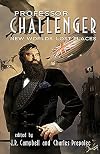
A new anthology of short stories featuring the eponymous Professor Challenger, Sir Arthur Conan Doyle's irascible scientist/adventurer first encountered along with his various friends in The Lost World. A disarming introduction by co-editor Charles Prepolec readily admits that the good Professor has very much played second fiddle to Sherlock Holmes (and maybe even third fiddle to Brigadier Gerard). Nonetheless Prepolec makes a convincing case for Challenger to be better known, citing his show more influence on science fiction and his undoubted longevity. A lengthy foreward by Christopher Roden expands on these themes as well as comprehensively examining Challenger and Co's origins, both real life and fictional.
I have admit to having some reservations about many of the stories in this anthology – there seemed to be a few too many borrowings from other authors such as HG Wells, Algernon Blackwood, HP Lovecraft and William Hope Hodgson. This kind of literary name dropping has been pretty much done to death by the likes of Kim Newman whose near obsessive recycling of other people's work has yielded ever decreasing returns in the Anno Dracula series. Never mind the story just check out those references! In the main though this anthology's use of other authors' creations is well done: Josh Reynold's Time's Black Gulf rather gratuitously adds Blackwood's John Silence and Hope Hodgson's Carnicki the Ghost Finder to the cast of Conan Doyle regulars yet redeems itself by making excellent use of two of the Cthulhu Mythos's time travelling entities to wrong foot the reader with a just-when-you-think-it's-all-over false climax.
The Cthulhu Mythos also rears its ugly head in Simon Kurt Unsworth's “The Fool's Sea” as Challenger takes on HPL's most infamous creation (or possibly just one of its spawn). Although action packed Unsworth's story is subtle in the way it avoids what Lovecraft himself jokingly termed “Yog-Sothery”, nary a mention of Great Old Ones, forbidden books, or nameless cults.
HG Wells' influence makes itself felt in a number of stories, most notably in King of the Moon by Lawrence G Connolly which sees Challenger and a motley band of lunar explorers engage in a bout of Selenite baiting. It's a slight tale but enjoyable for its sheer breakneck pace and raucous humour. Professor Challenger and the Crimson Wonder is humorous in a different way, a clever pastiche of the epistolary novel by Guy Adams and James Goss, featuring a wry thread of proto-feminist wit.
Not all of the stories are a success: Hind and Horn by Wendy Wager is bafflingly opaque while Out of the Depths by Andrew J Wilson is a sprawling mess. Yet even they're not without interest. Hind and Horn has an atmospheric Irish post WW1 setting which I'd like to have seen explored in more detail. Out of the Depths is overwhelmed by the sheer number of ideas it tries to shoehorn into its relatively short narrative. I suspect it would make a highly entertaining novel where its multifarious outlandish concepts and globetrotting storyline would get more room to breathe.
Realistically this collection isn't going to see Professor Challenger topple Sherlock Holmes from his position at the head of the Conan Doyle pantheon. It is though a justified and mostly worthwhile tribute to a character who deserves more recognition. show less
I have admit to having some reservations about many of the stories in this anthology – there seemed to be a few too many borrowings from other authors such as HG Wells, Algernon Blackwood, HP Lovecraft and William Hope Hodgson. This kind of literary name dropping has been pretty much done to death by the likes of Kim Newman whose near obsessive recycling of other people's work has yielded ever decreasing returns in the Anno Dracula series. Never mind the story just check out those references! In the main though this anthology's use of other authors' creations is well done: Josh Reynold's Time's Black Gulf rather gratuitously adds Blackwood's John Silence and Hope Hodgson's Carnicki the Ghost Finder to the cast of Conan Doyle regulars yet redeems itself by making excellent use of two of the Cthulhu Mythos's time travelling entities to wrong foot the reader with a just-when-you-think-it's-all-over false climax.
The Cthulhu Mythos also rears its ugly head in Simon Kurt Unsworth's “The Fool's Sea” as Challenger takes on HPL's most infamous creation (or possibly just one of its spawn). Although action packed Unsworth's story is subtle in the way it avoids what Lovecraft himself jokingly termed “Yog-Sothery”, nary a mention of Great Old Ones, forbidden books, or nameless cults.
HG Wells' influence makes itself felt in a number of stories, most notably in King of the Moon by Lawrence G Connolly which sees Challenger and a motley band of lunar explorers engage in a bout of Selenite baiting. It's a slight tale but enjoyable for its sheer breakneck pace and raucous humour. Professor Challenger and the Crimson Wonder is humorous in a different way, a clever pastiche of the epistolary novel by Guy Adams and James Goss, featuring a wry thread of proto-feminist wit.
Not all of the stories are a success: Hind and Horn by Wendy Wager is bafflingly opaque while Out of the Depths by Andrew J Wilson is a sprawling mess. Yet even they're not without interest. Hind and Horn has an atmospheric Irish post WW1 setting which I'd like to have seen explored in more detail. Out of the Depths is overwhelmed by the sheer number of ideas it tries to shoehorn into its relatively short narrative. I suspect it would make a highly entertaining novel where its multifarious outlandish concepts and globetrotting storyline would get more room to breathe.
Realistically this collection isn't going to see Professor Challenger topple Sherlock Holmes from his position at the head of the Conan Doyle pantheon. It is though a justified and mostly worthwhile tribute to a character who deserves more recognition. show less
This review was written for LibraryThing Early Reviewers.Holmes and Watson Encounter the Unknown
What a pleasant mash up of genres Gaslight Gothic provides. These adroit tales bring our heroes into close proximity to the supernatural with chill and skill. Open this volume of creepy stories and I dare you to keep the jitters at bay.
I wish I had saved the first story for last, Mark Latham’s Cuckoo’s Hour is sublime, because the last two tales are a bit anti-climactic theme wise, Angela Slatter’s A Matter of Light, a bitter remonstration of the show more skills and talents of our champions in the name of paternalistic iconoclasting, and Lyndsay Faye’s The Song of a Want, perfectly Dicksonian but curiously missing the intrepid duo. James Lovegrove’s The Strange Case of Dr. Sacker and Mr. Hope will leave its malign distortions of psyche and dimensional confluence lingering down your lumbars.
You get the idea. Keep several lights on. As if it would do any good. show less
What a pleasant mash up of genres Gaslight Gothic provides. These adroit tales bring our heroes into close proximity to the supernatural with chill and skill. Open this volume of creepy stories and I dare you to keep the jitters at bay.
I wish I had saved the first story for last, Mark Latham’s Cuckoo’s Hour is sublime, because the last two tales are a bit anti-climactic theme wise, Angela Slatter’s A Matter of Light, a bitter remonstration of the show more skills and talents of our champions in the name of paternalistic iconoclasting, and Lyndsay Faye’s The Song of a Want, perfectly Dicksonian but curiously missing the intrepid duo. James Lovegrove’s The Strange Case of Dr. Sacker and Mr. Hope will leave its malign distortions of psyche and dimensional confluence lingering down your lumbars.
You get the idea. Keep several lights on. As if it would do any good. show less
This review was written for LibraryThing Early Reviewers.Awards

You May Also Like


Associated Authors
Statistics
- Works
- 7
- Members
- 446
- Popularity
- #54,978
- Rating
- 3.7
- Reviews
- 65
- ISBNs
- 13
- Languages
- 1
