
Vicki Baum (1888–1960)
Author of Grand Hotel
About the Author
Works by Vicki Baum
Novelas. I 4 copies
Pariser Platz 13: Eine Komödie aus dem Schönheitssalon und andere Texte über Kosmetik, Alter und Mode (2006) 4 copies
Best-in-Books: Grand Hotel / Voice of Bugle Ann / Life with Father / Mutiny on the Bounty / Postman Always Rings Twice (1962) 3 copies
Tanzpause : Novelle 2 copies
Novelas / 2 copies
MARION. TOMO I Y TOMO II. 2 copies
Novelas. III 2 copies
C'è ancora il paradiso 2 copies
Elu võõraslaps : [romaan] 2 copies
Sentença de morte 1 copy
[No title] 1 copy
Lo que los hombre nunca saben. Novela. Traducción de Mª Luz Morales. Sobrecubierta de M. R. (1950) 1 copy
Az utolsó tánc 1 copy
El dulce lago de las damas 1 copy
Vida hipotecada 1 copy
Die Strandwache 1 copy
Das Joch 1 copy
Hier stand ein Hotel [Roman] 1 copy
Martha: Opera in Three Acts [vocal score, adaptation ] — English libretto by — 1 copy
Almas liberadas 1 copy
Tweeëntwintig biografieën 1 copy
Tisztítótűz 1 copy
Tornare al nido 1 copy
Tenía que suceder 1 copy
Il lago delle vergini 1 copy
Vita senza mistero 1 copy
Qui c'era un albergo 1 copy
Vrouwenbad 1 copy
Futuras vedetas. Romance 1 copy
Career 1 copy
El Ultimo día. Novelas. 9 1 copy
Associated Works
Der Adler ist gelandet. Bourgeon, Roger: Sieg über die Nacht. Baum, Vicki: Die goldenen Schuhe. Aldridge, James: Ein Pony für zwei. (1977) 5 copies
Het Beste Boek 65: Bel Ria / De jongens uit Brazilië / De gouden schoentjes / Bij de olifanten (1978) — Author — 3 copies, 1 review
Es muss einer den Frieden beginnen: Jahrhundertautoren gegen den Krieg (2014) — Contributor — 2 copies, 1 review
The American Home, October 1932 — Contributor — 1 copy
Tagged
Common Knowledge
- Canonical name
- Baum, Vicki
- Legal name
- Baum, Hedwig
- Birthdate
- 1888-01-24
- Date of death
- 1960-08-29
- Gender
- female
- Education
- Vienna Conservatory
- Occupations
- novelist
journalist
harpist
nurse
screenwriter - Organizations
- Berliner Illustrirte Zeitung
Vienna Concert Society - Short biography
- Vicki Baum was born into a Jewish Viennese family and began writing in her teens. However, her earliest career was as a musician playing the harp. She later worked as a magazine journalist. During World War I, she served for a short time as a nurse. Vicki Baum published her first book at age 31. She's most famous today for her 1929 novel that was made into the Academy Award-winning film Grand Hotel, but she wrote many other bestsellers. She emigrated to the USA with her family, worked as a Hollywood screenwriter, gained US citizenship in 1938, and wrote her later works in English rather than German. Her memoir, It Was All Quite Different, was published posthumously in 1964.
- Cause of death
- leukemia
- Nationality
- Austria (birth)
USA (naturalized 1938) - Birthplace
- Vienna, Austria
- Places of residence
- Vienna, Austria
USA - Place of death
- Hollywood, California, USA
- Associated Place (for map)
- USA
Members
Reviews
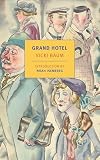
Grand Hotel takes place in interwar Berlin, following a cast of characters who are staying in, work at, or otherwise pass through the eponymous luxury hotel: a playboy baron who moonlights as a gentleman thief, an ageing and distraught ballerina, a disfigured war veteran doctor, and more. Vicki Baum does a great job at conjuring up the whirl of life in Weimar Berlin and, on the whole, of balancing the froth and the humorous observations with more elegiac moments. There are places where the show more pacing sags, and towards the last third of the novel some of the plot points got a bit too schmaltzy/pulpy for me. Still, a page-turner right towards the end. show less

I had intended to read Danger from Deer for #Germanlit month – joyfully pulling it from the shelves – so intrigued by the title, I ignored the other two Vicki Baum novels I had tbr. After I had read about thirty pages (and was hooked) I began to question whether the novel had been written in German. The American setting, and something about the way it was written made it not seem at all like a novel in translation. I turned to Wikipedia – it seems that all of Vicki Baum’s post war show more novels were written in English. Oh, well I can’t therefore claim to have joined in GermanLit month after all – and won’t have time for anything else. The intention was there –perhaps next year.
The title which so intrigued me is taken from a sign that was apparently displayed in Bushy park.
“Danger from Deer
The public are warned that it is dangerous at all times to go close to these animals. The danger is especially great during the rutting season.”
It is difficult to imagine shy, gentle, soft eyed little deer as ever being dangerous. In Danger from Deer, Vicki Baum created a monstrous character, whose tiny stature and doe-eyed beauty belies her true nature.
Mrs Ann Ambros is a tiny, frail looking elderly lady, who around the end of the second world war, is aided by a porter as she steps up into a railway car in California. Aboard the train she is further aided by the family lawyer and his friend a Major Ryerson, as she impatiently awaits the arrival of her step-daughter Joy. Mrs Ambros and Joy are embarking upon a journey to meet Mrs Ambros’s son Charles, Joy’s adored half-brother, it’s a journey which will result in trouble for Charles, and once aboard the train Joy is quick to plead with her mother to change her plans.
We quickly get a sense of how things are for Joy, shackled to her manipulative mother – her best years behind her, at least one romance spoiled for her. Joy is determined that Charles’s life with his wife will not be similarly ruined by their mother’s spiteful interference. Later, with Ann claiming to be unable to sleep aboard the train, and claiming the attention she feels is her due, she and Joy go out onto the small gated viewing platform, as the train hurtles on its way. In a moment of frustrated madness Joy pushes her step-mother from the platform, before rushing inside to raise the alarm.
As Ann Ambros (seemingly indestructible) lies shaken and confused where she fell, she imagines she can hear her dead husband’s voice.
“A great thundering, roaring noise fell down from above and out of it the voice was calling:
‘Angelina! Angelina!’
‘Yes. Here I am,’ Mrs Ambros answered meekly and with great effort she opened her eyes. Even then she could only see a borderless great nothing spinning around her in crazy circles, as though she were being rolled away in a black barrel. Dizzily she contemplated that this black nothing wherein she was trundled along was probably what the magazines called the Outer Spaces and it made her dimly wonder how she had ever arrived here.”
Memories come rushing in – and we are taken back to the time when Ann aged fifteen met her husband Florian Ambros – destined to become a great violinist. He had called her Angelina – and the name stuck, from here on she is almost always referred to by the name bestowed on her by Florian. Ann, the youngest of the two Ballard sisters, is very aware of her own beauty, as soon as she meets Florian she becomes fixated upon him. She knows what she wants, and is very good at wheedling to get it. She also has a temper, and is capable of great rage, when things don’t go her way.
“The day Florian left San Francisco without so much as a goodbye for her, she had beaten their little dog. She was tossed about by such a rage of hurt and disappointment that she had to let it out somehow and so she beat up the dog.”
Things don’t always go Angelina’s (as I should call her) way. After all, she is still very young. Florian is desperate to buy The Empress; a precious Stradivarius, and the Ballard girls will come with a handsome settlement. Despite Angelina’s utter devotion, Florian married her older sister Maud. Maud, is good, caring and gentle, though her health is not as robust as her little sister’s. Angelina makes do with Clyde Hopper, a large, older wealthy man, she doesn’t love, and lives with him on a Hawaiian plantation – which she hates. Sadly, Angelina loses her child, while back in San Francisco Maud and Florian are blessed with their daughter Joy.
In time, obstacles are swept aside – Angelina still knows what she wants. She becomes Florian’s lover after helping to rescue three-year-old Joy from the San Francisco fire of 1906, and in time, finally his wife.
We then meet up with Joy again in a railway waiting room, as she waits, shaken and frightened by what she has done. A search party is under way, and Joy is convinced her mother is dead. Joy remembers her dear father with sad affection, her mother with frequent anger.
“The bitch, thought Joy, the mean, possessive bitch! Took me away from my real mother and made an exhibition of it and hurt her to the quick. Took me and took Father away from Maud, who was sick and could do no nothing but sit there and watch it with that quiet wistful smile of hers. And when Maud did not die fast enough, she took a hand in it and hastened the process a bit. I know the sort of slow poisons she has at her command, oh, don’t I know them!”
Throughout her life – Mrs Ambros, plots and schemes, when money is needed, she resorts to insurance fraud, and as Joy and later her own son Charles grow up, Angelina controls their life too, calling Joy ‘Daughter dearest.’
Joy can only wait anxiously, as the search party gets underway, terrified that she might be as insane as Angelina hinted that she might be, after all. Will Mrs Ambros be found, and what will happen to Joy if she is?
Danger from Deer was a marvellous read, very different to her much earlier work Grand Hotel which I read for #WITmonth, but hugely entertaining and in Mrs Ambros Baum created a wonderfully unforgettable character. show less
The title which so intrigued me is taken from a sign that was apparently displayed in Bushy park.
“Danger from Deer
The public are warned that it is dangerous at all times to go close to these animals. The danger is especially great during the rutting season.”
It is difficult to imagine shy, gentle, soft eyed little deer as ever being dangerous. In Danger from Deer, Vicki Baum created a monstrous character, whose tiny stature and doe-eyed beauty belies her true nature.
Mrs Ann Ambros is a tiny, frail looking elderly lady, who around the end of the second world war, is aided by a porter as she steps up into a railway car in California. Aboard the train she is further aided by the family lawyer and his friend a Major Ryerson, as she impatiently awaits the arrival of her step-daughter Joy. Mrs Ambros and Joy are embarking upon a journey to meet Mrs Ambros’s son Charles, Joy’s adored half-brother, it’s a journey which will result in trouble for Charles, and once aboard the train Joy is quick to plead with her mother to change her plans.
We quickly get a sense of how things are for Joy, shackled to her manipulative mother – her best years behind her, at least one romance spoiled for her. Joy is determined that Charles’s life with his wife will not be similarly ruined by their mother’s spiteful interference. Later, with Ann claiming to be unable to sleep aboard the train, and claiming the attention she feels is her due, she and Joy go out onto the small gated viewing platform, as the train hurtles on its way. In a moment of frustrated madness Joy pushes her step-mother from the platform, before rushing inside to raise the alarm.
As Ann Ambros (seemingly indestructible) lies shaken and confused where she fell, she imagines she can hear her dead husband’s voice.
“A great thundering, roaring noise fell down from above and out of it the voice was calling:
‘Angelina! Angelina!’
‘Yes. Here I am,’ Mrs Ambros answered meekly and with great effort she opened her eyes. Even then she could only see a borderless great nothing spinning around her in crazy circles, as though she were being rolled away in a black barrel. Dizzily she contemplated that this black nothing wherein she was trundled along was probably what the magazines called the Outer Spaces and it made her dimly wonder how she had ever arrived here.”
Memories come rushing in – and we are taken back to the time when Ann aged fifteen met her husband Florian Ambros – destined to become a great violinist. He had called her Angelina – and the name stuck, from here on she is almost always referred to by the name bestowed on her by Florian. Ann, the youngest of the two Ballard sisters, is very aware of her own beauty, as soon as she meets Florian she becomes fixated upon him. She knows what she wants, and is very good at wheedling to get it. She also has a temper, and is capable of great rage, when things don’t go her way.
“The day Florian left San Francisco without so much as a goodbye for her, she had beaten their little dog. She was tossed about by such a rage of hurt and disappointment that she had to let it out somehow and so she beat up the dog.”
Things don’t always go Angelina’s (as I should call her) way. After all, she is still very young. Florian is desperate to buy The Empress; a precious Stradivarius, and the Ballard girls will come with a handsome settlement. Despite Angelina’s utter devotion, Florian married her older sister Maud. Maud, is good, caring and gentle, though her health is not as robust as her little sister’s. Angelina makes do with Clyde Hopper, a large, older wealthy man, she doesn’t love, and lives with him on a Hawaiian plantation – which she hates. Sadly, Angelina loses her child, while back in San Francisco Maud and Florian are blessed with their daughter Joy.
In time, obstacles are swept aside – Angelina still knows what she wants. She becomes Florian’s lover after helping to rescue three-year-old Joy from the San Francisco fire of 1906, and in time, finally his wife.
We then meet up with Joy again in a railway waiting room, as she waits, shaken and frightened by what she has done. A search party is under way, and Joy is convinced her mother is dead. Joy remembers her dear father with sad affection, her mother with frequent anger.
“The bitch, thought Joy, the mean, possessive bitch! Took me away from my real mother and made an exhibition of it and hurt her to the quick. Took me and took Father away from Maud, who was sick and could do no nothing but sit there and watch it with that quiet wistful smile of hers. And when Maud did not die fast enough, she took a hand in it and hastened the process a bit. I know the sort of slow poisons she has at her command, oh, don’t I know them!”
Throughout her life – Mrs Ambros, plots and schemes, when money is needed, she resorts to insurance fraud, and as Joy and later her own son Charles grow up, Angelina controls their life too, calling Joy ‘Daughter dearest.’
Joy can only wait anxiously, as the search party gets underway, terrified that she might be as insane as Angelina hinted that she might be, after all. Will Mrs Ambros be found, and what will happen to Joy if she is?
Danger from Deer was a marvellous read, very different to her much earlier work Grand Hotel which I read for #WITmonth, but hugely entertaining and in Mrs Ambros Baum created a wonderfully unforgettable character. show less
Grand Hotel is set in the post World-War One world of the Weimar era. Berlin of the 1920’s, and here we meet a host of remarkably well drawn characters, who are explored in astute and searching detail.
Through the revolving doors of the Grand Hotel come all kinds; the war damaged, the dying, beautiful ageing ballerina, businessman, thief. The hotel exists to provide the very best of everything for their guests, and yet there is a feeling that like some of its guests, the hotel’s best days show more are in the past. The porter on the front desk is a count, putting his ancestry behind him to serve the guests of the Grand Hotel.
Doctor Otternshlag, is the first of the hotel residents who we meet, a veteran from the war, half his face destroyed by a shell, he sits in the hotel lounge viewing the same scene as the day before, reading the paper, as does every day. He asks the porter if there are any letters for him, a telegram perhaps or a message, there isn’t – there never is, no matter how many times he asks.
Having just received a fatal medical diagnosis Otto Kringelein has come to the Grand Hotel in order to live – if only for a few days, really live for the first time in his life. An unhappily married bookkeeper from Fredersdorf, Kringelein is about to experience all the good things that have so far passed him by, before it’s too late. Intent on spending his savings, and life insurance, after years of very careful living, Otto has wads of cash in his wallet for the first time. When presenting himself at the hotel on his first day, he looks shabby and ill, and is shown eventually to an inferior room. Quiet, unassuming Otto Kringelein going against the habits of a lifetime, demands a better room, and gets it. A room costing fifty marks a day, with a bathroom he can use whenever he likes.
“Kringelein, obstinate now that he has run amok, insisted that he required a superior and a beautiful and expensive room, at the very least a room like Preysing’s. He seemed to think the name of Preysing was a name to conjure with. He had not yet taken off his overcoat. His trembling hands clutched the old crumbling Fredersdorf sandwiches while he blinked his eyes and demanded an expensive room. He was exhausted and ill and ready to cry. For some weeks past he had begun to cry very easily for physical reasons connected with his health. Suddenly, just as he was about to give in, he won the day. He was given Room No. 70, a first floor suite with a sitting room and bath, fifty marks a day. ‘Good,’ he said, ‘with a bathroom? Does that mean that I can have a bath whenever I like?’ Count Rohna without a tremor said that was so. Kringelein moved in for the second time. “
Kringelein’s boss, company director Herr Preysing comes to the hotel for a vital business meeting, desperate to secure a deal for his family firm which is not doing as well as he pretends. Hoping to secure a merger between his firm and another Berlin firm, the deal hinges on a potential contract with a third Manchester firm. Preysing, who has bullied Kringelein for years doesn’t even recognise his employee at first, so full of his own importance, Kringelein so far outside his radar. Doctor Otternshlag takes pity on Kringelein, briefly extending the hand of friendship, even accompanying him to the ballet, before Kringelein is taken up by a more glamourous seeming figure. Gaigern, handsome, athletic, baron and professional thief, whose accomplice – in the guise of his chauffeur is settled into the servants’ quarters. Gaigern is a man who turns heads, presenting himself as an elegant, wealthy and very correct.
“There was a smell of lavender and expensive cigarettes, immediately followed by a man whose appearance was so striking that many heads turned to look at him. He was unusually tall and extremely well dressed, and his step was as elastic as a cat’s or a tennis champion’s. He wore a dark blue trench coat over his dinner jacket. This was scarcely correct perhaps, but it gave an attractively negligent air to his appearance. He patted pageboy No. 24 on his sleek head, stretched out his arm, without looking, over to the porter’s table for a handful of letters which he put straight into his pocket, taking out at the same time a pair of buckskin gloves.”
Grusinskaya is a fragile beauty, a famous ballerina fighting a battle with age. Her performances at the nearby theatre each evening playing to greatly reduced audiences, with no call for an encore. Her best days are behind her – and she knows, she’s is tired, the rigours of her art physically exhaust her. Accompanying her is her maid Suzette, to whom Grusinskaya says ‘Leave me alone’ the line which spoken by Greta Garbo became ‘I want to be alone’ in the film adaptation, and her very valuable pearls. Gaigern and his ‘chauffeur’ have their greedy eyes trained on the idea of those pearls. However, with the plans made, it is inevitable that not everything goes quite to plan. Finding out that Kringelein has money, presents him with a tempting alternative to his original purpose.
Meanwhile Preysing finds his head being turned by a young secretary generally known as Flämmchen or Falm the second (Flam the first being her elder sister). A beautiful young girl whose desire is only to make it into the movies somehow, longing for, glamour and the chance to travel. While Preysing is dissembling in business, lusting after a girl young enough to be his daughter, Kringelein is starting to live. Spending money on clothes, dancing, gambling attending a boxing match, racing through the streets of Berlin in a car, flying in an aeroplane, he learns about exhilaration. Both he and Herr Preysing will find themselves, and their lives considerably altered by the time they leave the hotel.
The lives and various concerns of these characters are woven together brilliantly by Vicki Baum, exploring their hopes, fears, secrets and regrets. There are shades of light and dark in this novel, moments of black comedy, and others of great poignancy. The life, atmosphere of a German hotel in the late 1920’s is brought to life with breath-taking clarity. Grand Hotel is a wonderful; immersive novel, which I am delighted to have discovered. show less
Through the revolving doors of the Grand Hotel come all kinds; the war damaged, the dying, beautiful ageing ballerina, businessman, thief. The hotel exists to provide the very best of everything for their guests, and yet there is a feeling that like some of its guests, the hotel’s best days show more are in the past. The porter on the front desk is a count, putting his ancestry behind him to serve the guests of the Grand Hotel.
Doctor Otternshlag, is the first of the hotel residents who we meet, a veteran from the war, half his face destroyed by a shell, he sits in the hotel lounge viewing the same scene as the day before, reading the paper, as does every day. He asks the porter if there are any letters for him, a telegram perhaps or a message, there isn’t – there never is, no matter how many times he asks.
Having just received a fatal medical diagnosis Otto Kringelein has come to the Grand Hotel in order to live – if only for a few days, really live for the first time in his life. An unhappily married bookkeeper from Fredersdorf, Kringelein is about to experience all the good things that have so far passed him by, before it’s too late. Intent on spending his savings, and life insurance, after years of very careful living, Otto has wads of cash in his wallet for the first time. When presenting himself at the hotel on his first day, he looks shabby and ill, and is shown eventually to an inferior room. Quiet, unassuming Otto Kringelein going against the habits of a lifetime, demands a better room, and gets it. A room costing fifty marks a day, with a bathroom he can use whenever he likes.
“Kringelein, obstinate now that he has run amok, insisted that he required a superior and a beautiful and expensive room, at the very least a room like Preysing’s. He seemed to think the name of Preysing was a name to conjure with. He had not yet taken off his overcoat. His trembling hands clutched the old crumbling Fredersdorf sandwiches while he blinked his eyes and demanded an expensive room. He was exhausted and ill and ready to cry. For some weeks past he had begun to cry very easily for physical reasons connected with his health. Suddenly, just as he was about to give in, he won the day. He was given Room No. 70, a first floor suite with a sitting room and bath, fifty marks a day. ‘Good,’ he said, ‘with a bathroom? Does that mean that I can have a bath whenever I like?’ Count Rohna without a tremor said that was so. Kringelein moved in for the second time. “
Kringelein’s boss, company director Herr Preysing comes to the hotel for a vital business meeting, desperate to secure a deal for his family firm which is not doing as well as he pretends. Hoping to secure a merger between his firm and another Berlin firm, the deal hinges on a potential contract with a third Manchester firm. Preysing, who has bullied Kringelein for years doesn’t even recognise his employee at first, so full of his own importance, Kringelein so far outside his radar. Doctor Otternshlag takes pity on Kringelein, briefly extending the hand of friendship, even accompanying him to the ballet, before Kringelein is taken up by a more glamourous seeming figure. Gaigern, handsome, athletic, baron and professional thief, whose accomplice – in the guise of his chauffeur is settled into the servants’ quarters. Gaigern is a man who turns heads, presenting himself as an elegant, wealthy and very correct.
“There was a smell of lavender and expensive cigarettes, immediately followed by a man whose appearance was so striking that many heads turned to look at him. He was unusually tall and extremely well dressed, and his step was as elastic as a cat’s or a tennis champion’s. He wore a dark blue trench coat over his dinner jacket. This was scarcely correct perhaps, but it gave an attractively negligent air to his appearance. He patted pageboy No. 24 on his sleek head, stretched out his arm, without looking, over to the porter’s table for a handful of letters which he put straight into his pocket, taking out at the same time a pair of buckskin gloves.”
Grusinskaya is a fragile beauty, a famous ballerina fighting a battle with age. Her performances at the nearby theatre each evening playing to greatly reduced audiences, with no call for an encore. Her best days are behind her – and she knows, she’s is tired, the rigours of her art physically exhaust her. Accompanying her is her maid Suzette, to whom Grusinskaya says ‘Leave me alone’ the line which spoken by Greta Garbo became ‘I want to be alone’ in the film adaptation, and her very valuable pearls. Gaigern and his ‘chauffeur’ have their greedy eyes trained on the idea of those pearls. However, with the plans made, it is inevitable that not everything goes quite to plan. Finding out that Kringelein has money, presents him with a tempting alternative to his original purpose.
Meanwhile Preysing finds his head being turned by a young secretary generally known as Flämmchen or Falm the second (Flam the first being her elder sister). A beautiful young girl whose desire is only to make it into the movies somehow, longing for, glamour and the chance to travel. While Preysing is dissembling in business, lusting after a girl young enough to be his daughter, Kringelein is starting to live. Spending money on clothes, dancing, gambling attending a boxing match, racing through the streets of Berlin in a car, flying in an aeroplane, he learns about exhilaration. Both he and Herr Preysing will find themselves, and their lives considerably altered by the time they leave the hotel.
The lives and various concerns of these characters are woven together brilliantly by Vicki Baum, exploring their hopes, fears, secrets and regrets. There are shades of light and dark in this novel, moments of black comedy, and others of great poignancy. The life, atmosphere of a German hotel in the late 1920’s is brought to life with breath-taking clarity. Grand Hotel is a wonderful; immersive novel, which I am delighted to have discovered. show less
Life is not a straight line. You go in through the door and come out a different person, or even dead in the most extreme cases. This happened to all the guests. But in the meantime, you enjoy life. The Baron enjoyed the pleasures of life while Grusinskaya almost lost the enjoyment of dance but a night's love changed that. The epitome must be Kringelein, who had to accelerate the enjoyment of life because of his impending death. But of course, there must be a cautionary tale in the form of show more Preysing. He succumbed to desire, and that changed his life forever. show less
Lists
Isle Royale (1)
Schwob Nederland (1)
Awards


You May Also Like


Associated Authors
Statistics
- Works
- 92
- Also by
- 11
- Members
- 1,855
- Popularity
- #13,873
- Rating
- 3.7
- Reviews
- 46
- ISBNs
- 205
- Languages
- 11
- Favorited
- 5

