
Susan Tyler Hitchcock
Author of Geography of Religion: Where God Lives, Where Pilgrims Walk
About the Author
Susan Tyler Hitchcock holds a B.A. and M.A. in English from the University of Michigan and a Ph.D. in English from the University of Virginia
Image credit: Biblion
Series
Works by Susan Tyler Hitchcock
Associated Works
Tagged
Common Knowledge
- Birthdate
- 1950-03-30
- Gender
- female
- Education
- University of Michigan (BA|English Literature)
University of Michigan (MA|English Literature)
University of Virginia (PhD|English) - Occupations
- Book editor, National Geographic
Humanities professor, University of Virginia - Nationality
- USA (birth)
- Birthplace
- Ann Arbor, Michigan, USA
- Places of residence
- Ann Arbor, Michigan, USA (birth)
near Charlottesville, Virginia, USA - Map Location
- USA
Members
Discussions
Frankenstein in Thing(amabrarian)s That Go Bump in the Night (October 2007)
Reviews
Few works of art are as beautiful as an old tree.
I live in a part of Florida where ancient trees, mostly oaks, can be found practically anywhere — surrounding my condo complex, on an adjacent golf course where I like to walk in the evening, on the grounds of a nearby church. They take my breath away.
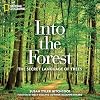
And so I love Susan Tyler Hitchcock's “Into the Forest: The Secret Language of Trees.” Hitchcock writes beautifully about trees, yet her words are overpowered by the photographs that show more dominate this National Geographic book. One cannot turn a page without finding a gorgeous photograph — a Japanese maple, an ancient apple tree, fig trees in Australia, children climbing a tree, beech trees in Virginia, cypress trees in a Louisiana bayou and on and on.
One need not read a word to love this book. But anyone who does read the text will be rewarded. Hitchcock's essays are brief — to make room for all those photos — but they say a lot in few words. She tells of a tree estimated to be more than 5,000 years old. Its location is kept a secret to protect it. Trees still survive that were in Hiroshima when the city was otherwise destroyed by an atomic bomb. She describes "forest bathing" — simply walking through a forest slowly and breathing in the air.
Trees have value even beyond their beauty and the worth of the wood and fruit they produce. The author writes that just one red maple tree in Ohio removes 5,500 pounds of carbon emissions over 20 years. It saves 570 kilowatt-hours of electricity. Imagine what a forest can do. show less
I live in a part of Florida where ancient trees, mostly oaks, can be found practically anywhere — surrounding my condo complex, on an adjacent golf course where I like to walk in the evening, on the grounds of a nearby church. They take my breath away.
And so I love Susan Tyler Hitchcock's “Into the Forest: The Secret Language of Trees.” Hitchcock writes beautifully about trees, yet her words are overpowered by the photographs that show more dominate this National Geographic book. One cannot turn a page without finding a gorgeous photograph — a Japanese maple, an ancient apple tree, fig trees in Australia, children climbing a tree, beech trees in Virginia, cypress trees in a Louisiana bayou and on and on.
One need not read a word to love this book. But anyone who does read the text will be rewarded. Hitchcock's essays are brief — to make room for all those photos — but they say a lot in few words. She tells of a tree estimated to be more than 5,000 years old. Its location is kept a secret to protect it. Trees still survive that were in Hiroshima when the city was otherwise destroyed by an atomic bomb. She describes "forest bathing" — simply walking through a forest slowly and breathing in the air.
Trees have value even beyond their beauty and the worth of the wood and fruit they produce. The author writes that just one red maple tree in Ohio removes 5,500 pounds of carbon emissions over 20 years. It saves 570 kilowatt-hours of electricity. Imagine what a forest can do. show less
What an astoundingly beautiful book.
In more than one way; of course the photography is out of this world. It’s from National Geographic. But the accompanying text takes you into a place of magic as it shares the stories of the forests. There is so much to learn. So much I didn’t know. Did you know the aspen that has spread so far and wide? I hadn’t, but now the wonder of it is there for all to learn.
There is magic in the forest. I don’t know about you but when I go walking among the show more trees there is such a sense of peace and calm. Even if the birds are singing, I still feel as if I am alone.
Now that I’ve gone all mystical on you let me just put it out there – this is a truly beautiful book full of gorgeous photos of trees and the forest. Just looking through it will bring you joy. It’s worth it for that alone. But the stories will get you thinking. And wondering what the trees are saying. show less
In more than one way; of course the photography is out of this world. It’s from National Geographic. But the accompanying text takes you into a place of magic as it shares the stories of the forests. There is so much to learn. So much I didn’t know. Did you know the aspen that has spread so far and wide? I hadn’t, but now the wonder of it is there for all to learn.
There is magic in the forest. I don’t know about you but when I go walking among the show more trees there is such a sense of peace and calm. Even if the birds are singing, I still feel as if I am alone.
Now that I’ve gone all mystical on you let me just put it out there – this is a truly beautiful book full of gorgeous photos of trees and the forest. Just looking through it will bring you joy. It’s worth it for that alone. But the stories will get you thinking. And wondering what the trees are saying. show less
The name "National Geographic" appears right on the cover of this book, so I admit I began reading with certain expectations of a scientific analysis of natural phenomena. And while reading, I kept looking back at the cover, thinking "National Geographic endorsed this? They put their name . . . on this?"
This book might have been better as a work of fiction, or perhaps the author could have penned a volume of poetry extolling the virtues of nature. But as it is, I don't think it works very show more well. For one thing, it's way too religious. I'm not sure exactly what religion is being expressed—certainly there is no mention of God or of faith—but it's definitely driving at some specific set of beliefs. I was expecting to learn about trees, and instead, I was treated to a sort of New Age-y celebration of what I can only describe as a higher consciousness that results from communing with nature. I'm paraphrasing here, but the idea was that if one spends enough time in nature and feels emotions deeply enough, one can actually literally hear the trees "breathe." I had been curious about the scientific phenomenon wherein trees purify the air and release oxygen. What did I learn? I learned trees have lungs. (Wait, something's not right, here.)
Is there actual science here? Yes, some, but after the fashion of many religious texts, it is buried under a layer of sermons. It's so nice of this author, who has never met me, to tell me (directly, and in the second person) exactly what is wrong with me, and why I need to repent. So much is wrong with this, but for starters, I would suggest that probably most people who pick up this book already care about plants and about nature. To use a religious expression, she's preaching to the choir. Or brow-beating, in this case. And then there's this little gem: "Do you purchase food made with palm oil, from trees grown on plantations where rainforests once stood? Do you eat beef from farmed cattle, a global industry tearing away at the Amazon? Are you choosing rainforest wood for building: mahogany, rosewood, ebony, teak? Rethink such choices . . ." Well, I've rethought ONE choice. DNF at 49%. show less
This book might have been better as a work of fiction, or perhaps the author could have penned a volume of poetry extolling the virtues of nature. But as it is, I don't think it works very show more well. For one thing, it's way too religious. I'm not sure exactly what religion is being expressed—certainly there is no mention of God or of faith—but it's definitely driving at some specific set of beliefs. I was expecting to learn about trees, and instead, I was treated to a sort of New Age-y celebration of what I can only describe as a higher consciousness that results from communing with nature. I'm paraphrasing here, but the idea was that if one spends enough time in nature and feels emotions deeply enough, one can actually literally hear the trees "breathe." I had been curious about the scientific phenomenon wherein trees purify the air and release oxygen. What did I learn? I learned trees have lungs. (Wait, something's not right, here.)
Is there actual science here? Yes, some, but after the fashion of many religious texts, it is buried under a layer of sermons. It's so nice of this author, who has never met me, to tell me (directly, and in the second person) exactly what is wrong with me, and why I need to repent. So much is wrong with this, but for starters, I would suggest that probably most people who pick up this book already care about plants and about nature. To use a religious expression, she's preaching to the choir. Or brow-beating, in this case. And then there's this little gem: "Do you purchase food made with palm oil, from trees grown on plantations where rainforests once stood? Do you eat beef from farmed cattle, a global industry tearing away at the Amazon? Are you choosing rainforest wood for building: mahogany, rosewood, ebony, teak? Rethink such choices . . ." Well, I've rethought ONE choice. DNF at 49%. show less

It would have been remarkable enough that Charles and Mary Lamb, the son and daughter of servants, both rose to become significant literary figures in 18th century England, intimate friends with the likes of Samuel Taylor Coleridge and William Wordsworth. What makes their story even more remarkable is that Mary was officially insane, having stabbed and killed their mother with a kitchen knife. Susan Tyler Hitchcock tells their story in “Mad Mary Lamb” (2005).
Mental instability seemed to show more run in the Lamb family, and Charles himself suffered from bouts of depression. He was devoted to his sister, who was about a decade older, and when she was released from the madhouse, she moved in with him. Neither ever married, and they lived together until Charles died in 1834. They even, in effect, adopted a daughter together..
Yet about once a year Mary could feel and Charles could see that she was again being overcome by madness. He would lead her to one or another madhouse, where she would stay for several weeks. Hitchcock goes into detail about what madhouses were like in that era, long periods in a straitjacket being among the most bearable treatments. Upon her return home she would resume her housework, earning money making clothing for women and, in time, writing.
Charles is regarded as one of England's best essayists, but Mary was a skilled writer in her own right, although most of her work was not credited to her at the time. The children's books the siblings wrote together carried only her brother's name, even though most the writing was hers. This was even before Mary Ann Evans wrote her novels under the name of George Eliot to increase their appeal to publishers and readers, so Mary Lamb wrote in an age when female writers faced significant challenges. Hitchcock seems to blame Charles for grabbing the credit rather than giving him his due for encouraging his sister's literary efforts.
Even so, Coleridge, Wordsworth and others recognized Mary's abilities and welcomed her participation in the literary discussions held almost nightly in the Lamb home.
Hitchcock tries now and then to turn her biography into a feminist tract. At one point she even suggests Mary's killing of her mother might have been a good career move because it led to living with Charles and rubbing shoulders with literary greats. Like Mary Lamb, the author is at her best when she is thinking straight.
One can still go into any good bookstore and find or order a copy of “Tales from Shakespeare,” the most significant book Charles and Mary Lamb wrote together. Today both of their names are on the cover. show less
Mental instability seemed to show more run in the Lamb family, and Charles himself suffered from bouts of depression. He was devoted to his sister, who was about a decade older, and when she was released from the madhouse, she moved in with him. Neither ever married, and they lived together until Charles died in 1834. They even, in effect, adopted a daughter together..
Yet about once a year Mary could feel and Charles could see that she was again being overcome by madness. He would lead her to one or another madhouse, where she would stay for several weeks. Hitchcock goes into detail about what madhouses were like in that era, long periods in a straitjacket being among the most bearable treatments. Upon her return home she would resume her housework, earning money making clothing for women and, in time, writing.
Charles is regarded as one of England's best essayists, but Mary was a skilled writer in her own right, although most of her work was not credited to her at the time. The children's books the siblings wrote together carried only her brother's name, even though most the writing was hers. This was even before Mary Ann Evans wrote her novels under the name of George Eliot to increase their appeal to publishers and readers, so Mary Lamb wrote in an age when female writers faced significant challenges. Hitchcock seems to blame Charles for grabbing the credit rather than giving him his due for encouraging his sister's literary efforts.
Even so, Coleridge, Wordsworth and others recognized Mary's abilities and welcomed her participation in the literary discussions held almost nightly in the Lamb home.
Hitchcock tries now and then to turn her biography into a feminist tract. At one point she even suggests Mary's killing of her mother might have been a good career move because it led to living with Charles and rubbing shoulders with literary greats. Like Mary Lamb, the author is at her best when she is thinking straight.
One can still go into any good bookstore and find or order a copy of “Tales from Shakespeare,” the most significant book Charles and Mary Lamb wrote together. Today both of their names are on the cover. show less
Lists
True Crime (1)
Awards


You May Also Like


Associated Authors
Statistics
- Works
- 28
- Also by
- 1
- Members
- 1,224
- Popularity
- #20,979
- Rating
- 3.8
- Reviews
- 28
- ISBNs
- 54
- Languages
- 4