
Charles Eric Maine (1921–1981)
Author of Alph
About the Author
Disambiguation Notice:
pen name of David McIlwain
Series
Works by Charles Eric Maine
La giostra del tempo e dello spazio 4 copies
Millemondi Estate 1976: tre romanzi completi di Charles E. Maine — Author — 3 copies
Spaceways To Venus 1 copy
Luna chiama terra 1 copy
Caminhos do espaço 1 copy
Associated Works
Analog Science Fiction/Science Fact: Vol. XCIII, No. 2 (April 1974) (1974) — Contributor — 25 copies
Space Science Fiction, Spring 1957 (Vol. 1 ∙ No.1) — Contributor — 6 copies
Tagged
Common Knowledge
- Canonical name
- Maine, Charles Eric
- Legal name
- McIlwain, David
- Other names
- Rayner, Robert
Wade, Robert - Birthdate
- 1921-01-21
- Date of death
- 1981-11-30
- Gender
- male
- Organizations
- Royal Air Force (WWII)
- Nationality
- UK
- Birthplace
- Liverpool, Lancashire, England, UK
- Place of death
- London, England, UK
- Map Location
- England, UK
- Disambiguation notice
- pen name of David McIlwain
Members
Reviews
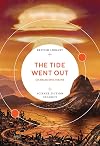
A minor masterpiece of British dystopian science fiction, this has all the barely repressed trauma of the Second World War returning as utter cynicism about human goodness under extreme conditions. The good exists but it cannot long survive a final struggle for survival.
It is a work of the atomic age. An Anglo-American H-Bomb test (the book at least has the good grace not to blame the Soviets) splits open the Pacific Ocean. The seas drain away into cavities below. Violent responses in the show more crust cause a similar breach in the Atlantic. Water disappears in stages.
This is just about all there is to the science in the fiction (and, of course, it is not in itself credible) but that is not the point. The point is to create a world where there is no hope, a few people know there is no hope for most and those few try to manage the rest of humanity long enough to save themselves.
The protagonist of the novel, Philip Wade, is a hard drinking journalist who is recruited under somewhat ambiguous conditions into government service as a propagandist. The story is not only about humanity under conditions of apocalypse but about elite manipulation of the mass.
It becomes increasingly clear as society crumbles (trade cannot reach island Britain, food, water and energy become scarce, society collapses into violence and criminality, even the military start to become bandits) that the few are collaborating internationally to create a safe haven in the icy Arctic.
We never see things directly from the point of view of the bureaucratic elite. This just gives the orders and manipulates. The author, Charles Eric Maine, concentrates on their agent, his weaknesses, his morality, his laziness, his cynicism and what he will do to save himself and his family.
Maine has taken the oppressions of the wartime State (which extended themselves well into the Cold War era), what was observable in human behaviour during the war and a natural and very modern distrust of the good will of authority in order to create a true existential nightmare.
I will not do spoilers but let us say that the breakdown of society is relentless. Maine spares his reader nothing. Human relationships are permitted no room for any idealism because the moment an ideal enters a man's mind, that man is lost in survival terms.
Sexual behaviour is treated with remarkable honesty. We understand how women becomed forced into a loss of all conventional moral standards and how men become callous and brutal as food and water become scarce. Life itself becomes cheap.
When forced into survival mode, the elite considers the survival of humanity to be merely the survival of itself. 'Who you know', 'a word in the ear' and 'usefulness' to the elite's own organised plan of survival will indicate whether you are to be saved or left to rot.
Elites (much as in the real world today) have more in common with each other across the world than any have with their doomed populations. A lot of the tragedy here is that the elite may be right. There are only mechanisms and resources to save the 'few', so why not those who are most organised?
This is a dark book but it is not telling an untruth. Cormac Macarthy perhaps is only more unrelenting in his account of social collapse. Kevin Brownlow and Andrew Mollo's 'It Happened Here' (1964) alone equals it in describing the moral complexity of being caught in an untenable political situation.
As an insight into the human condition at its very core, I find it superior to the efforts of George Orwell (who was merely making a rather simplistic political point in '1984') or Aldous Huxley (whose fears are intellectual and abstract in 'Brave New World').
Maine writes well and this should be considered a science thriller in which the science is just the trigger for a tale of socio-political horror. What it says is all the more disturbing for being true - when things really fall apart, those with resources will clamber over the rest to survive.
Above all, it is one of a sequence of dystopian science fiction novels that appeared throughout the 1950s. They marked the sinking mood of Britain after loss of empire in contrast to the generally techno-utopian approach of American science fiction.
This is the British Library addition which has a useful short introduction by Mike Ashley contextualising the novel within that dystopian tradition. Re-published just before the nation entered another low point, it bears re-visiting as essentially British. show less
It is a work of the atomic age. An Anglo-American H-Bomb test (the book at least has the good grace not to blame the Soviets) splits open the Pacific Ocean. The seas drain away into cavities below. Violent responses in the show more crust cause a similar breach in the Atlantic. Water disappears in stages.
This is just about all there is to the science in the fiction (and, of course, it is not in itself credible) but that is not the point. The point is to create a world where there is no hope, a few people know there is no hope for most and those few try to manage the rest of humanity long enough to save themselves.
The protagonist of the novel, Philip Wade, is a hard drinking journalist who is recruited under somewhat ambiguous conditions into government service as a propagandist. The story is not only about humanity under conditions of apocalypse but about elite manipulation of the mass.
It becomes increasingly clear as society crumbles (trade cannot reach island Britain, food, water and energy become scarce, society collapses into violence and criminality, even the military start to become bandits) that the few are collaborating internationally to create a safe haven in the icy Arctic.
We never see things directly from the point of view of the bureaucratic elite. This just gives the orders and manipulates. The author, Charles Eric Maine, concentrates on their agent, his weaknesses, his morality, his laziness, his cynicism and what he will do to save himself and his family.
Maine has taken the oppressions of the wartime State (which extended themselves well into the Cold War era), what was observable in human behaviour during the war and a natural and very modern distrust of the good will of authority in order to create a true existential nightmare.
I will not do spoilers but let us say that the breakdown of society is relentless. Maine spares his reader nothing. Human relationships are permitted no room for any idealism because the moment an ideal enters a man's mind, that man is lost in survival terms.
Sexual behaviour is treated with remarkable honesty. We understand how women becomed forced into a loss of all conventional moral standards and how men become callous and brutal as food and water become scarce. Life itself becomes cheap.
When forced into survival mode, the elite considers the survival of humanity to be merely the survival of itself. 'Who you know', 'a word in the ear' and 'usefulness' to the elite's own organised plan of survival will indicate whether you are to be saved or left to rot.
Elites (much as in the real world today) have more in common with each other across the world than any have with their doomed populations. A lot of the tragedy here is that the elite may be right. There are only mechanisms and resources to save the 'few', so why not those who are most organised?
This is a dark book but it is not telling an untruth. Cormac Macarthy perhaps is only more unrelenting in his account of social collapse. Kevin Brownlow and Andrew Mollo's 'It Happened Here' (1964) alone equals it in describing the moral complexity of being caught in an untenable political situation.
As an insight into the human condition at its very core, I find it superior to the efforts of George Orwell (who was merely making a rather simplistic political point in '1984') or Aldous Huxley (whose fears are intellectual and abstract in 'Brave New World').
Maine writes well and this should be considered a science thriller in which the science is just the trigger for a tale of socio-political horror. What it says is all the more disturbing for being true - when things really fall apart, those with resources will clamber over the rest to survive.
Above all, it is one of a sequence of dystopian science fiction novels that appeared throughout the 1950s. They marked the sinking mood of Britain after loss of empire in contrast to the generally techno-utopian approach of American science fiction.
This is the British Library addition which has a useful short introduction by Mike Ashley contextualising the novel within that dystopian tradition. Re-published just before the nation entered another low point, it bears re-visiting as essentially British. show less

In Alph, Charles Eric Maine has produced a crisply written book that portrays a dystopic future society peopled entirely by women due to an unexpected side-effect of a commonly-used birth control pill. In the opening chapter, the last man is intentionally left to die in the frozen wastes of Antarctica, only to have his 500-year old corpse used to recreate the first human male infant in over half a millenium, an infant whose birth heralds huge sociological and political upheavals in this show more Lesbian society.
While as a work of science fiction and authorship it is certainly very readable, my problem with this work is that - like the Greek myth of the Amazons and the early modern Europeans myths of societies of women warriors in South America from the Age of European Exploration, Maine has created a morality play that portrays lesbians as perverted, of female-led societies as inherently corrupt and decadent. He uses pseudo-science to rationalize homophobic, sexist view-points. While some of the sociological outcomes of an accidentally single-sex world ring true, his narrative as a whole loses credibility when it grandstands against female same sex desire.
Where his works rings the most true is in its description of political dynamics and how power elites - of any gender or class - will fight to stay in control. show less
While as a work of science fiction and authorship it is certainly very readable, my problem with this work is that - like the Greek myth of the Amazons and the early modern Europeans myths of societies of women warriors in South America from the Age of European Exploration, Maine has created a morality play that portrays lesbians as perverted, of female-led societies as inherently corrupt and decadent. He uses pseudo-science to rationalize homophobic, sexist view-points. While some of the sociological outcomes of an accidentally single-sex world ring true, his narrative as a whole loses credibility when it grandstands against female same sex desire.
Where his works rings the most true is in its description of political dynamics and how power elites - of any gender or class - will fight to stay in control. show less

I love Maine's characters and their relationships. Most of all I love the witty dialogue. This makes his writing fun to read. This book has an average SF plot dealing with Artificial Intelligence. It's the clever style of writing that wins me over. Does he write deep profound SF? No. Does he write interesting stories? Yes.

Charles Eric Maine is an interesting writer. Some of this British author's other works have a bit Raymond Chandler mixed with SF. Not all of his books are good but I will read every one of them to find the jewels. This book is one of the jewels. It is a fun and disturbing read.
This is an early effort to realistically describe Moon science. For a 1957 book about a moon landing/crash it is very well researched and imagined. It focuses on the struggle for survival against the elements by flawed show more individuals. If the moon doesn't kill you the battle for the remaining resources will. Maybe there are no heroes. This one is going to stay with me for a while. show less
This is an early effort to realistically describe Moon science. For a 1957 book about a moon landing/crash it is very well researched and imagined. It focuses on the struggle for survival against the elements by flawed show more individuals. If the moon doesn't kill you the battle for the remaining resources will. Maybe there are no heroes. This one is going to stay with me for a while. show less
You May Also Like


Associated Authors
Statistics
- Works
- 32
- Also by
- 4
- Members
- 994
- Popularity
- #25,915
- Rating
- 3.2
- Reviews
- 29
- ISBNs
- 28
- Languages
- 4