

Neil McKenna
Author of The Secret Life of Oscar Wilde
About the Author
Works by Neil McKenna
Tagged
Common Knowledge
- Gender
- male
- Occupations
- journalist
- Nationality
- UK
- Associated Place (for map)
- UK
Members
Reviews
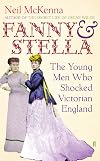
In the right hands, this could have been a fascinating work of history, but while the blurb for Fanny and Stella states that it's "meticulously researched and dazzlingly written", for me it failed on both counts. McKenna has clearly read widely on the trial at the heart of this book and on Victorian England, but it's not clear that he's read deeply on it; not only does he fail to follow some interesting lines of inquiry and contextualisation which are only hinted at here, he also frequently show more and infuriatingly commits the cardinal sin of the popular historian, speculating wildly and giving that speculation as well-grounded fact. I lost count of the number of times I rolled my eyes at McKenna telling us what one person thought about another, what another person felt during sex, what emotions ran through an entire crowd—there is no way for him to know any of these things! If you want to write fiction, write fiction, and the style of the prose here does indicate that McKenna's tempted in that direction. While the purple prose may have been a deliberate affectation, a parody of Victoriana, it's one which is deeply wearying after several pages. There's enough drama inherent in the central story without any additional baroque flourishes: Frederick 'Fanny' Park, a judge’s son, and Ernest 'Stella' Boulton, two middle-class transvestite prostitutes who consorted with labourers and lords and whose arrest on the charge of enticing others to commit sodomy transfixed England in 1870. Diverting enough to read to the end, but not to be recommended as a work of history. show less
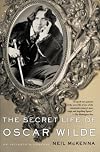
So. This is exactly the biography of Oscar Wilde I would write if I were to uh, write one. It focuses on the important questions like, "Whom did he have sex with, maybe?" and "Whom did his friends have sex with, maybe?" No matter if in answering these questions he uses the most questionable sources, for example Trelawny Backhouse, who in addition to claiming all sorts of salacious things about Oscar Wilde and Bosie also claimed to have had sex with the Empress of China. Frankly, if there was show more anything, anything that had to do with Oscar Wilde and homosexuality and I was writing a book on Oscar Wilde and homosexuality, I would go ALL OUT, too and just put everything I could find in there. If I found out that some guy had sent letters to Oscar and later Oscar had dinner with him then I am writing that, yeah, maybe they had sex, okay? All in the effort to answer the biggest, most important question: "Just how much of a flaming queen was Oscar Wilde?" because the answer is girl, the man was OSCAR WILDE, you could make up all sorts of shit and it wouldn't come close. show less
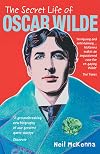
My first reaction to this book when I came across it in Waterstone's Piccadilly in May was to wonder how I had never come across it before. But when I looked at the publishing details, it wasn't as surprising. I did most of my Oscar Wilde reading in 2001 and what reading I did after the summer was going by the lists I had compiled then. In 2003-2004 I was busy with other reading and while I may have come across reviews of McKenna's book, there would always have been many more books at hand.
A show more quote from The Times on the front cover says "McKenna makes an impassioned case for re-gaying Wilde" and it was certainly refreshing to read something that challenged the views put forward in Richard Ellman's biography, which, as far as I know, have been more or less universally accepted as the probable truth - and Ellman's Oscar Wilde, if I remember correctly, did not have romantic friendships, did not do boys until Robbie Ross (it struck me at some point that I couldn't remember reading, in Ellman or elsewhere, how Wilde met Ross - McKenna reckons a first meeting in a public toilet wouldn't be too far-fetched - and so on). Moreover, McKenna's account of Oscar's love for Lord Alfred Douglas is the first one I've read that actually makes some sense (although at times it seemed to me that McKenna was trying too hard to justify Bosie and his actions), and the same goes for the relationship between Bosie's brother Viscount Drumlanrig and Lord Rosebery.
I really enjoyed reading this biography. show less
A show more quote from The Times on the front cover says "McKenna makes an impassioned case for re-gaying Wilde" and it was certainly refreshing to read something that challenged the views put forward in Richard Ellman's biography, which, as far as I know, have been more or less universally accepted as the probable truth - and Ellman's Oscar Wilde, if I remember correctly, did not have romantic friendships, did not do boys until Robbie Ross (it struck me at some point that I couldn't remember reading, in Ellman or elsewhere, how Wilde met Ross - McKenna reckons a first meeting in a public toilet wouldn't be too far-fetched - and so on). Moreover, McKenna's account of Oscar's love for Lord Alfred Douglas is the first one I've read that actually makes some sense (although at times it seemed to me that McKenna was trying too hard to justify Bosie and his actions), and the same goes for the relationship between Bosie's brother Viscount Drumlanrig and Lord Rosebery.
I really enjoyed reading this biography. show less
"With a cast of peers, politicians and prostitutes, drag queens, doctors and detectives, Fanny and Stella us a Victorian Peepshow, exposing the startling underbelly of ninteenth-century London. By turns tragic and comic, meticulously reserched and dazzlingly written, Fanny and Stella is an enthralling tour-de-force."
I was a little disapointed in that I found this book more tragic than funny. I started to feel sorry for many of the people involved in this case. at times i forgot that I was show more reading a story based on real life as the word usage and short tales pulled the characters to the forfrunt of the story. I would then be dragged back to the facts of the case reminding me that this is based on true life.
In all an enthralling read that may affect how you see history in the future show less
I was a little disapointed in that I found this book more tragic than funny. I started to feel sorry for many of the people involved in this case. at times i forgot that I was show more reading a story based on real life as the word usage and short tales pulled the characters to the forfrunt of the story. I would then be dragged back to the facts of the case reminding me that this is based on true life.
In all an enthralling read that may affect how you see history in the future show less
Lists
Awards


You May Also Like


Associated Authors
Statistics
- Works
- 5
- Members
- 588
- Popularity
- #42,663
- Rating
- 3.8
- Reviews
- 9
- ISBNs
- 15
- Languages
- 2