
A. Grove Day (1904–1994)
Author of Rascals in Paradise
About the Author
Works by A. Grove Day
Horror in Paradise: Grim and Uncanny Tales from Hawaii and the South Seas (1986) — Editor — 59 copies
The Greatest American Short Stories: Twenty Classics of Our Heritage (1953) — Editor — 21 copies, 1 review
Jack London in the South Seas 5 copies
The Spell of the Pacific: An Anthology of Its Literature — Editor — 4 copies
V. Blasco Ibáñez 1 copy
Ka Palapala Hemolele: Comments on the First Hawaiian Bible (Reprinted from KOKUA, November 1949.) (1949) 1 copy
Hawaii 1 copy
Associated Works
Mark Twain in Hawaii: Roughing it in the Sandwich Islands Hawaii in the 1860s (1990) — Foreword; Foreword — 180 copies, 7 reviews
Best-In-Books: Twilight for the Gods / 20,000 Miles South / Rascals in Paradise / Lincoln's Commando / Bermuda (1957) — Contributor — 4 copies
Tagged
Common Knowledge
- Canonical name
- Day, A. Grove
- Legal name
- Day, Arthur Grove
- Birthdate
- 1904-04-29
- Date of death
- 1994-03-26
- Gender
- male
- Education
- Stanford University
- Occupations
- professor (English)
- Organizations
- University of Hawaii at Manoa
- Awards and honors
- Hawaii Award for Literature
- Short biography
- A. Grove Day was a prolific author, teacher, and scholar of Hawaii and the South Pacific who wrote or edited more than fifty books. Born in Philadelphia and educated at Stanford University, where he befriended John Steinbeck, Day was also one of the co-founders of Pacific Science: A Quarterly Devoted to the Biological and Physical Sciences of the Pacific Region. Many of his works, including Mark Twain’s Letters from Hawaii and Best South Sea Stories, remain local bestsellers in Hawaii. He died in 1994 at the age of eighty-nine.
- Nationality
- USA
- Birthplace
- Philadelphia, Pennsylvania, USA
- Places of residence
- Oahu, Hawaii, USA
- Associated Place (for map)
- USA
Members
Reviews

The perfect accompaniment to our trip. Starting with Captain Cook's disastrous arrival and moving through the tales of great writer/traveler visitors like Twain, Stevenson and Isabella Bird, with voices of Polynesian culture woven in, you get a fascinating picture of Hawaii that is not just a tourist paradise.
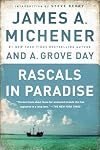
These portraits of pirates, con men, adventurers, and ne'er-do-wells operating in the Pacific from the China coast to Hawaii offer a look at just what often made the South Seas genre appealing to its readership in the 19th and 20th centuries. Yes, these are histories but with just the right emphases, mythologizing, and superb storytelling to engage a general audience. James A. Michener needs no introduction as a creator of strong narratives mixed with history and adventure. But his show more co-author, A. Grove Day, is not as well known. Day was a figure of enormous importance in the genre. A professor at the University of Hawaii, he edited a large number of volumes on the literature and history of the Pacific. His efforts in the 1980s, in fact, may have preserved the readership for authors such as James Norman Hall, whose books remain available as used paperbacks largely because of Day.
Rascals in Paradise, then, blends the talents of two prolific writers. And it doesn't disappoint. These are the sort of historical sketches that will lead those with even a glancing interest in their subjects to find out more. And there is much more to be told. Written in 1957, not only does the collection omit and bend history to its authors' particular points of interest, but I'm sure much more is now known about the people described in the book's ten chapters. I'm certainly not an expert in the area, but just briefly looking up a few of the people about whom Michener and Day claim "nothing else is known," I discovered that indeed there is a great deal more known.
But as I say, Michener and Day had a bit of a different agenda at work, here. Foremost, they were interested in producing a work of literature more than a work of history. And they were feeding into a mystique of the Pacific and the South Seas just then, in the late 1950s, becoming intensely popular. Veterans of World War II in the Pacific had become financially and career successful enough in the postwar years to begin making pilgrimages to the South Seas, especially Hawaii. And Hawaii itself was about to become America's 50th state. Tiki culture was booming in popular film and, now, in the late 1950s and 1960s, television. Rascals in Paradise was largely reflective of that. As, of course, was Michener's subsequent magnum opus, Hawaii, which was to be published two years later before itself being made into two different feature films in 1966 and 1970.
The best story in this bunch? Hard to say, because they are all good, even the last chapter and the sketch of Edgar Leetag, the so-called "father of American velvet painting," God curse him. show less
Rascals in Paradise, then, blends the talents of two prolific writers. And it doesn't disappoint. These are the sort of historical sketches that will lead those with even a glancing interest in their subjects to find out more. And there is much more to be told. Written in 1957, not only does the collection omit and bend history to its authors' particular points of interest, but I'm sure much more is now known about the people described in the book's ten chapters. I'm certainly not an expert in the area, but just briefly looking up a few of the people about whom Michener and Day claim "nothing else is known," I discovered that indeed there is a great deal more known.
But as I say, Michener and Day had a bit of a different agenda at work, here. Foremost, they were interested in producing a work of literature more than a work of history. And they were feeding into a mystique of the Pacific and the South Seas just then, in the late 1950s, becoming intensely popular. Veterans of World War II in the Pacific had become financially and career successful enough in the postwar years to begin making pilgrimages to the South Seas, especially Hawaii. And Hawaii itself was about to become America's 50th state. Tiki culture was booming in popular film and, now, in the late 1950s and 1960s, television. Rascals in Paradise was largely reflective of that. As, of course, was Michener's subsequent magnum opus, Hawaii, which was to be published two years later before itself being made into two different feature films in 1966 and 1970.
The best story in this bunch? Hard to say, because they are all good, even the last chapter and the sketch of Edgar Leetag, the so-called "father of American velvet painting," God curse him. show less

1.5 stars for some of the stories holding more of my interest, but overall 1 star. it's ironic - usually when i read michener i find myself going to the computer to look things up, to see if some of his characters are real or based on real people because they are so rich with information and texture and character development. i'm usually convinced that at least some of his characters were taken from reality, but i have always been wrong. now, to read a book of his that is actually based on show more fact - this is labeled fiction but isn't - i find myself totally bored and disappointed. he left out almost all of what makes his books good, and long - the character development, the motivation behind the actions, all the history that makes us care about what's happening and why it matters. maybe he had less information about these people because he didn't make them up himself. but it made it far less interesting to read, for me. this was the shortest book of his that i've read, and the only one that was co-authored. definitely my least favorite of his so far. show less
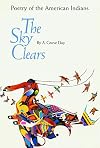
This collection of translated poems from a well-selected Bibliography (211 sources), provides insight into the culture, and even the existential angst, of native American Indians. Emphasizes many of the women's songs. The translations appear to be quite "iffy" -- the anthropologists are trying to be scientific, and the poets are looking for a "soul". For example, the Hopi "Discharming Song" - where the essential word of the repetition is locked up in this unfamiliar word "discharm" ! (I keep show more hearing Ishi's songs in my head, the ones he sang to audiences who did not understand.) show less
Lists
Awards

You May Also Like


Associated Authors
Statistics
- Works
- 42
- Also by
- 6
- Members
- 1,094
- Popularity
- #23,490
- Rating
- 3.8
- Reviews
- 15
- ISBNs
- 57
- Languages
- 1