
John W. Campbell, Jr. (1910–1971)
Author of The Best of John W. Campbell
About the Author
Series
Works by John W. Campbell, Jr.
Who Goes There? The Novella That Formed the Basis of "The Thing" [novella and screen treatment] (2009) 337 copies, 24 reviews
Analog Science Fiction/Science Fact: Vol. LXXXVIII, No. 4 (December 1971) (1971) — Editor — 22 copies
Selected Stories From the Astounding Science Fiction Anthology (Berkley SF, X1490) (1967) — Editor — 15 copies
Arcot, Morey & Wade: the Complete, Classic Space Opera Series-The Black Star Passes, Islands of Space, Invaders from the Infinite (2008) 13 copies
Atomic Power 8 copies
Astounding Science Fiction 1946 06 — Editor — 7 copies
Wer da? / Der schwarze Kaiser / Fluch der Unsterblichkeit. Drei Science Fiction Romane in einem Band. (1979) 5 copies
The 37th Golden Age of Science Fiction MEGAPACK : John W. Campbell, Jr., Volume 1 (2017) — Author — 5 copies
The 39th Golden Age of Science Fiction MEGAPACK : John W. Campbell, Jr., Volume 2 (2018) — Author — 5 copies
Unknown, April 1939 4 copies
The Battery of Hate 3 copies
Astounding Science Fiction 1942 09 — Editor — 3 copies
Astounding/Analog Science Fact & Fiction 1961 January (British Edition) — Editor — 3 copies
Astounding Science Fiction 1960 January (British Edition) — Editor — 3 copies
The Invaders 3 copies
Rebellion 3 copies
Conquest of the Planets, The 2 copies
Unknown Worlds, October 1941 2 copies
Unknown Worlds, February 1942 2 copies
Islands of Space M-143 2 copies
Unknown Worlds, December 1942 2 copies
Das Ding aus einer anderen Welt & Parasite Deep: Zwei Monster-Thriller in einem Band (2016) 2 copies
Analog, Science Fiction, Science Fact, September, Vol. LXXXII, & No 1, October, Vol. LXXXII, 1968 (1968) 2 copies
Other Eyes Watching 2 copies
Astounding Science Fiction 1958 March (British Edition) — Editor — 2 copies
Astounding 2 copies
The Black Star Passes [short story] 2 copies
Astounding/Analog Science Fact & Fiction 1960 June (British Edition) — Editor — 2 copies
The Derelicts of Ganymede 2 copies
The Escape 2 copies
The Tenth World 2 copies
Frictional Losses [short story] 2 copies
Oblio (Robotica) 1 copy
I figli di Mu 1 copy
La Cosa 1 copy
The Thing from Another World 1 copy
Invaders from the Infinite and Other Works of Science Fiction by John W. Campbell (Unexpurgated Edition) (Halcyon Classics) (2010) 1 copy
Who Goes There? 1 copy
Twilight / Night 1 copy
ASTOUNDING SCIENCE FICTION MAY AND JUNE 1956 — Editor — 1 copy
Solarite [short story] 1 copy
Aarn Munro 2 1 copy
Marooned 1 copy
All 1 copy
Aarn Munro 4 1 copy
Aarn Munro 3 1 copy
Analog Science Fact/Science Fiction 1961 April (British Edition) — Editor — 1 copy
Gefangene des Mondes 1 copy
The Brain Pirates 1 copy
The Immortality Seekers 1 copy
Venus Equilateral 1 copy
Der Luftpirat 1 copy
The Metal Horde 1 copy
Analog. I 1 copy
Planet of Eternal Night 1 copy
Space Rays 1 copy
The Electronic Siege 1 copy
The Idealists 1 copy
The Irrelevant 1 copy
The Moon is Hell! 1 copy
The Classic Collection of John W. Campbell Jr.: Who Goes There?: The Last Evolution, Atomic Power 1 copy
Urania 0087 - I FIGLI DI MU 1 copy
The Metal Horde 1 copy
Associated Works
The Science Fiction Hall of Fame, Volume One: The Greatest Science Fiction Stories of All Time (1970) — Contributor — 2,094 copies, 34 reviews
The Science Fiction Hall of Fame, Volume Two A: The Greatest Science Fiction Novellas of All Time (1973) — Contributor — 990 copies, 12 reviews
Before the Golden Age: A Science Fiction Anthology of the 1930s (Book 3) (1974) — Contributor, some editions — 286 copies, 5 reviews
Analog Anthology #1: Fifty Years of the Best Science Fiction From Analog (1980) — Contributor; Contributor — 117 copies, 1 review
They Came From Outer Space: 12 Classic Science Fiction Tales That Became Major Motion Pictures (1980) — Contributor — 91 copies, 1 review
Time Machines: The Greatest Time Travel Stories Ever Written (1998) — Contributor — 82 copies, 5 reviews
Before the Golden Age Volume 4 : A Science Fiction Anthology of the 1930's (1976) — Contributor — 56 copies, 1 review
Analog Science Fiction/Science Fact: Vol. XCV, No. 9 (September 1975) (1975) — Contributor — 24 copies, 1 review
Science-Fiction Classics: The Stories That Morphed Into Movies (1999) — Contributor — 24 copies, 1 review
Androids, Time Machines and Blue Giraffes: A Panorama of Science Fiction (1973) — Contributor — 13 copies, 1 review
Short Science Fiction Collection 011 4 copies
Μεγάλη Ανθολογία Ε.Φ. 1. (1934 - 1950) — Contributor — 1 copy
Tagged
Common Knowledge
- Legal name
- Campbell, John Wood, Jr.
- Other names
- Campbell, John W.
Stuart, Don A. - Birthdate
- 1910-06-08
- Date of death
- 1971-07-11
- Gender
- male
- Education
- Massachusetts Institute of Technology
- Occupations
- editor
science fiction writer - Organizations
- Analog Science Fiction and Fact
- Awards and honors
- Hugo (Professional Editor, Retro-Hugo, [1946], 1996)
Hugo (Professional Editor, Retro-Hugo, [1951], 2001)
Hugo (Professional Editor, Retro-Hugo, [1954], 2004) - Nationality
- USA
- Birthplace
- Newark, New Jersey, USA
- Place of death
- Mountainside, New Jersey, USA
- Associated Place (for map)
- New Jersey, USA
Members
Discussions
THE DEEP ONES: "Who Goes There?" by John W. Campbell in The Weird Tradition (March 2025)
Kickstarter for Letterpress Who Goes There? ends in 3 days in Fine Press Forum (August 2023)
Who Goes There? by John W. Campbell - ANGEL BOMB 2022 in Fine Press Forum (March 2023)
Reviews
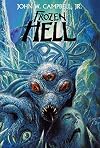
The Thing has long been my favorite horror movie--one of my favorite movies, period--and so reading the source material for the movie was long overdue. I ended up reading this extended version which was only published more recently, long after the original WHO GOES THERE? inspired the films. This longer version of the novella, discovered among Campbell's papers at Harvard, includes a longer and more developed introductory section of three chapters that were essentially cut prior to the show more initial publication.
First, I want to note that the preface and introduction here are well worth reading. In discussing Campbell's history and writings, they not only give context for the work (both long and short), but offer up a fantastic reading list for any reader who came to sci-fi late (like me) and is hoping to go back and read more of the classics. The novella itself is more than worth reading, of course. From a writer's perspective, it's fascinating to look at the decisions Campbell made and wonder what changes he might have made to the early chapters if he'd chosen to publish the full novella as a work initially. Now, there's certainly good case for understanding why he made the cuts, but I was still glad to read the whole.
This novella moves fast--especially in the final few chapters--and it was sometimes difficult for me to separate my hyper-awareness/memory of the movie from the story. I think, for me, that probably made the story even more encompassing and enjoyable, and that I might have felt it read too fast otherwise. But on the whole, I loved it--it's a fantastic piece of science fiction horror, worthy of time from any lover of the genre.
Absolutely recommended. show less
First, I want to note that the preface and introduction here are well worth reading. In discussing Campbell's history and writings, they not only give context for the work (both long and short), but offer up a fantastic reading list for any reader who came to sci-fi late (like me) and is hoping to go back and read more of the classics. The novella itself is more than worth reading, of course. From a writer's perspective, it's fascinating to look at the decisions Campbell made and wonder what changes he might have made to the early chapters if he'd chosen to publish the full novella as a work initially. Now, there's certainly good case for understanding why he made the cuts, but I was still glad to read the whole.
This novella moves fast--especially in the final few chapters--and it was sometimes difficult for me to separate my hyper-awareness/memory of the movie from the story. I think, for me, that probably made the story even more encompassing and enjoyable, and that I might have felt it read too fast otherwise. But on the whole, I loved it--it's a fantastic piece of science fiction horror, worthy of time from any lover of the genre.
Absolutely recommended. show less
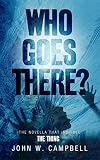
The stories in this collection are pretty solid, from the sci-fi horror of the title story and the currently topical horror of Dead Knowledge, through the maguffin-based gadget stories, to the far-future tales about the Heat Death of the universe. The tone runs from an optimistically plucky "Good Ole American Grit Will Overcome", to a decidedly pessimistic "What's the Point?", even if that end is untold billions of years in the future.
I like to do a bit of reading about authors, and looked show more up Campbell on Wikipedia, where I was disappointed to be reminded that he was the editor of the sci-fi magazine who rejected A [author:Samuel R. Delany|49111] story with a Black protagonist because he considered that his readers wouldn't accept a Black character. From which, I suddenly understand that all the characters I've just read about are, without any statement as such, White. There is just one outright racist view expressed in the book, not out of keeping for the time and audience for which it was written, but jarring and shocking to see on the page now.
Reading of other writers' (including [author:Isaac Asimov|16667]) condemnation of Campbell's racist and right-wing views reminded me of a note by [author:Philip K. Dick|4764] for his story The Golden Man in [book:The Collected Stories of Philip K. Dick, Volume 3: The Father-Thing|165913], in which he spoke of an editor who insisted that stories submitted on the subject of mutants would only be accepted if they were presented as superior to the common run of people, and ready to shepherd the "inferior" races into a utopian paradise. Sure enough, this editor turns out to be Campbell, by whom PKD refused to be constrained and sold his stories elsewhere, feeling unable to work with Campbell's supremacist views, which PKD explicitly compares to Nazi ideology.
Does it matter after all the years which have passed, and with Campbell's own passing? I think so. I'm put in mind of the Star Trek DS9 episodes in which Captain Sisko believes himself to be a 1950s sci-fi writer whose latest story, "Deep Space 9", is rejected by his editor because the captain of the space station is Black. Those episodes, surely inspired by Campbell and Delany, graphically illustrate the evil of systemic racism, of which Campbell was, as an influential editor, a significant part, and which system of oppression we clearly see continues today.
This understanding of Campbell's character and beliefs casts a different light on his stories of alien invaders determined to wipe out humanity (by which we now know he means Whites), of shapeshifting infiltrators able to pass as human instead of the sub-human beings they 'really' are, so that they can overrun us, and that "just one" instance of undisguised racism can be recognised as the tip of a most unpleasant iceberg.
Otherwise, pretty solid sci-fi. show less
I like to do a bit of reading about authors, and looked show more up Campbell on Wikipedia, where I was disappointed to be reminded that he was the editor of the sci-fi magazine who rejected A [author:Samuel R. Delany|49111] story with a Black protagonist because he considered that his readers wouldn't accept a Black character. From which, I suddenly understand that all the characters I've just read about are, without any statement as such, White. There is just one outright racist view expressed in the book, not out of keeping for the time and audience for which it was written, but jarring and shocking to see on the page now.
Reading of other writers' (including [author:Isaac Asimov|16667]) condemnation of Campbell's racist and right-wing views reminded me of a note by [author:Philip K. Dick|4764] for his story The Golden Man in [book:The Collected Stories of Philip K. Dick, Volume 3: The Father-Thing|165913], in which he spoke of an editor who insisted that stories submitted on the subject of mutants would only be accepted if they were presented as superior to the common run of people, and ready to shepherd the "inferior" races into a utopian paradise. Sure enough, this editor turns out to be Campbell, by whom PKD refused to be constrained and sold his stories elsewhere, feeling unable to work with Campbell's supremacist views, which PKD explicitly compares to Nazi ideology.
Does it matter after all the years which have passed, and with Campbell's own passing? I think so. I'm put in mind of the Star Trek DS9 episodes in which Captain Sisko believes himself to be a 1950s sci-fi writer whose latest story, "Deep Space 9", is rejected by his editor because the captain of the space station is Black. Those episodes, surely inspired by Campbell and Delany, graphically illustrate the evil of systemic racism, of which Campbell was, as an influential editor, a significant part, and which system of oppression we clearly see continues today.
This understanding of Campbell's character and beliefs casts a different light on his stories of alien invaders determined to wipe out humanity (by which we now know he means Whites), of shapeshifting infiltrators able to pass as human instead of the sub-human beings they 'really' are, so that they can overrun us, and that "just one" instance of undisguised racism can be recognised as the tip of a most unpleasant iceberg.
Otherwise, pretty solid sci-fi. show less

Four centuries in the future, humanity has colonised the solar system and is doing great when an alien race from a capricious and erratically-behaving star decide that the côterie of resource-rich planets around our much more stable Sun will be their new home. After an alien scouting party shows off their superior technology, a lone millionaire physics genius serving in the navy only has limited time to bring humanity's tech up to a level where they can compete with the Strangers. On top of show more that, he's got to do it single-handedly, and develop not only atomic power, but also faster-than-light space travel and a host of other militarily useful science.
This science fiction short was dated in so many respects that I found it hard to enjoy. First, there's the Van Vogtesque millionaire genius who, largely by himself, invents increasingly hand-wavey technological wonders to the point of ridiculousness (protective magnetic shielding, destructive UV rays,faster-than-light travel, culminating in his harnessing the power of Uncertainty itself ). Then there's its naive conception of atomic power as consequence-free (the story was published in the 1930s) and easily neutralised with a "neutron gun". And finally, there's the complete lack of female characters: everyone is a strong-jawed male with a background in the military, and the whole thing reeks of mid-20thC American exceptionalism (historical and mathematical references are to 20thC USA).
A time capsule more than genuinely fun to read. show less
This science fiction short was dated in so many respects that I found it hard to enjoy. First, there's the Van Vogtesque millionaire genius who, largely by himself, invents increasingly hand-wavey technological wonders to the point of ridiculousness (protective magnetic shielding, destructive UV rays,
A time capsule more than genuinely fun to read. show less
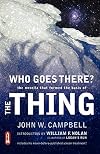
Creepy novella that packs all the horror thrill my weak stomach can handle; I can't carry that stomach anywhere near the 1982 film version that director John Carpenter cooked up. An awful-looking alien being is found frozen in the Antarctic and thawed out by researchers in the name of science. Foolish, foolish researchers. The horror is generated first by the alien's appearance, then by its awful abilities. Campbell was great with description and his characters prove their smarts as they show more creatively analyze and seek to correct their mistake. Very gripping once things start rolling, and just the right length for its subject. There's good reason why it keeps inspiring. show less
Lists
Awards


You May Also Like


Associated Authors
Statistics
- Works
- 738
- Also by
- 76
- Members
- 9,078
- Popularity
- #2,648
- Rating
- 3.8
- Reviews
- 135
- ISBNs
- 331
- Languages
- 9
- Favorited
- 1
