

Marc Laidlaw
Author of The 37th Mandala
About the Author
Image credit: From Sector W Wiki
Series
Works by Marc Laidlaw
An Evening's Honest Peril 4 copies
The Boy Who Followed Lovecraft 4 copies
Leng 4 copies
Great Breakthroughs in Darkness (Being, Early Entries from 'The Secret Encyclopaedia of Photography') [novelette] (1992) 3 copies
Mary Shelley's Frankenstein (Now with Extra Monsters): At Least One Monster Per Paragraph! This Is Our Guarantee! (2017) 3 copies
400 Boys 3 copies
His Powder'd Wig, His Crown of Thornes (in The Mammoth Book of Alternate Histories - WATSON) (1989) 3 copies
Sweetmeats 3 copies
The Vicar Of R'lyeh 2 copies
The Gargoyle's Handbook: Tales of Gorlen Vizenfirthe (The Adventures of Gorlen Vizenfirthe Book 2) (2021) 2 copies, 1 review
Sleepy Joe 2 copies
The Perfect Wave {novelette} 2 copies
Muzak For Torso Murders 2 copies
Cell Call 2 copies
A Mammoth, So Called 1 copy
Epistle 3 1 copy
The Black Bus 1 copy
Jane 1 copy
Flight Risk 1 copy
Forget You 1 copy
Deepscreen 1 copy
Total Conversion 1 copy
Wunderkindergarten 1 copy
Open Open Letter 1 copy
Associated Works
Storming the Reality Studio: A Casebook of Cyberpunk and Postmodern Science Fiction (1991) — Contributor — 263 copies
The Year's Best Fantasy and Horror: Seventeenth Annual Collection (2004) — Contributor — 241 copies, 9 reviews
What Might Have Been, Volumes 1 & 2: Alternate Empires, Alternate Heroes (1990) — Contributor — 184 copies, 2 reviews
Tales from Isaac Asimov's Science Fiction Magazine: Short Stories for Young Adults (1986) — Contributor — 42 copies
The Magazine of Fantasy and Science Fiction August 2008, Vol. 115, No. 2 (2008) — Contributor — 20 copies, 1 review
The Magazine of Fantasy and Science Fiction September/October 2013, Vol. 125, Nos. 3 & 4 (2013) — Contributor — 19 copies, 4 reviews
The Magazine of Fantasy and Science Fiction May/June 2014, Vol. 126, Nos. 5 & 6 (2014) — Contributor — 19 copies, 2 reviews
Isaac Asimov's Science Fiction Magazine: Vol. 10, No. 10 [October 1986] (1986) — Contributor — 15 copies
The Magazine of Fantasy and Science Fiction August 1999, Vol. 97, No. 2 (1999) — Contributor — 14 copies, 1 review
The Magazine of Fantasy and Science Fiction March/April 2016, Vol. 130, Nos. 3 & 4 (2016) — Contributor — 13 copies
Isaac Asimov's Science Fiction Magazine: Vol. 11, No. 12 [December 1987] (1987) — Contributor — 12 copies
Asimov's Science Fiction: Vol. 42, No. 5 & 6 [May/June 2018] (2018) — Contributor — 12 copies, 1 review
Asimov's Science Fiction: Vol. 43, No. 11 & 12 [November/December 2019] (2019) — Contributor — 5 copies
Rod Serling's the Twilight Zone Magazine 1987 01 January-February — Contributor — 1 copy
Mondaugen — Contributor — 1 copy
Science Fiction Eye #08, Winter 1991 — Contributor — 1 copy
Tagged
Common Knowledge
- Birthdate
- 1960
- Gender
- male
- Education
- University of Oregon
- Occupations
- science fiction writer
horror writer
scriptwriter
novelist - Organizations
- Valve Corporation
- Nationality
- USA
- Birthplace
- Los Angeles, California, USA
- Places of residence
- San Francisco, California, USA
Laguna Beach, California, USA - Associated Place (for map)
- California, USA
Members
Reviews

## Calafia was the first child born to wires.
## And already she was a star.
Kalifornia's a fun, if dated, cyberpunk romp set in a nearby 2050 California. It mixes the usual cyberpunk tropes -- the entire culture is hooked up via circa 1993 predictions of TV and PC technologies -- with the counterculture philosophizing and bizarro humor of writer Marc Laidlaw. While Laidlaw's prose fiction has largely flown under folks' radars, he's well-known for his involvement with Valve Software and their show more flagship series, Half-Life, from 1998 to his retirement in 2015. His work with Valve is frequently cited as setting the foundation for the complex video game narratives we get today.
[N.B. This review includes images, and was formatted for my site, dendrobibliography -- located here.]
By the year 2050 of Laidlaw's Kalifornia, most first-world citizens are wired directly to TV -- a very different TV than we have today. Viewers don't just watch scripted performances on a flatscreen, they experience what the actors experience. Since all actors are hooked up to send and receive these signals, viewers can bounce around to whomever they wish and have whatever experience they wish, even off script, making for very public, very reality-TV lives for actors.
There are also human-animal hybrids walking Kalifornia's streets and contributing to the economy. Dog-men accompany cops or work their own beats; seal-men are butlers; etc. It's a silly addition that adds some serious bizarro humor to the story.
Laidlaw's novel opens during California's bicentennial celebration. Wire-star Poppy Figueroa is in the middle of her greatest performance: The live-streaming birth of her daughter, Calafia -- herself the first baby born to the wires. Calafia's hooked up to the send / receive system from the womb, marking a next step for humankind's collective experience. A conspiracy leads to Calafia's immediate abduction by cult of Kali-worshiping crazies who live in the barren Holy Land of central California -- effectively Mad Max territory by 2050 -- and who give Calafia the more fitting name of the title: Kalifornia.
The cult around Kalifornia hopes to use her revolutionary wire-birth technology as a means of connecting the minds of senders and receivers beyond just passive experiences, but to the will of a singular entity. It's all a bit mad, but I dig it. Poppy's extended Figueroa family are a dysfunctional bunch, full of pedophilia, incest, the draw of stardom. The real stars of the novel are Poppy's brother Sonny and his transgenic chauffeur-of-sorts Cornelius -- a lovable seal! -- on a quest to escape laziness and return Kalifornia to her family.
## An entire nation, moving as one, could be turned against any enemy. They would be irresistible. Internal strife weakens and destroys armies and nations; but in such a group there would be no dissent, no resistance.
Wire stations' effects on viewers are more akin to Rocko's Modern Life commentary than anything, but Laidlaw's ideas are also prescient in ways that predicted both the Survivor / Big Brother explosion, the Oculus Rift, and Twitch streaming as a profession.
Kalifornia is fun, for sure. It just leans more towards forgettable at times, and is hurt, I think, by shallow commentary on social issues (often involving the transgenics). Each of the book's three parts sheds some of the aimlessness caused by the genre mashup, building up to a fantastic final act around the conspiracy's push for a collective experience. It's cool; it's funny; I just don't think the good ideas are used enough.
## “Oy vey,” Reb said as they walked on. “You can’t tell this was ever America. Religious freedom went right out the window when no one was looking.”
## “What about my freedom?” Sandy asked boldly.
## Reb shrugged. “You should have held on to it tighter. Don’t worry, you’ll do all right. We have some good regular customers. Like the Church of Christ, Nuclear Scientist. They’re pretty interesting. Claim they can split the Holy Trinity to produce safe, clean energy efficiently. They need research subjects. You want to donate your immortal soul to a power company?”
## “I’d rather keep it in one piece.”
## “Maybe you’d make a good Ignostic. That’s the Siblings of the Otiose Order. They study all the things God can’t be bothered with. You could have a rewarding spiritual career counting balls of lint.” show less
## And already she was a star.
Kalifornia's a fun, if dated, cyberpunk romp set in a nearby 2050 California. It mixes the usual cyberpunk tropes -- the entire culture is hooked up via circa 1993 predictions of TV and PC technologies -- with the counterculture philosophizing and bizarro humor of writer Marc Laidlaw. While Laidlaw's prose fiction has largely flown under folks' radars, he's well-known for his involvement with Valve Software and their show more flagship series, Half-Life, from 1998 to his retirement in 2015. His work with Valve is frequently cited as setting the foundation for the complex video game narratives we get today.
[N.B. This review includes images, and was formatted for my site, dendrobibliography -- located here.]
By the year 2050 of Laidlaw's Kalifornia, most first-world citizens are wired directly to TV -- a very different TV than we have today. Viewers don't just watch scripted performances on a flatscreen, they experience what the actors experience. Since all actors are hooked up to send and receive these signals, viewers can bounce around to whomever they wish and have whatever experience they wish, even off script, making for very public, very reality-TV lives for actors.
There are also human-animal hybrids walking Kalifornia's streets and contributing to the economy. Dog-men accompany cops or work their own beats; seal-men are butlers; etc. It's a silly addition that adds some serious bizarro humor to the story.
Laidlaw's novel opens during California's bicentennial celebration. Wire-star Poppy Figueroa is in the middle of her greatest performance: The live-streaming birth of her daughter, Calafia -- herself the first baby born to the wires. Calafia's hooked up to the send / receive system from the womb, marking a next step for humankind's collective experience. A conspiracy leads to Calafia's immediate abduction by cult of Kali-worshiping crazies who live in the barren Holy Land of central California -- effectively Mad Max territory by 2050 -- and who give Calafia the more fitting name of the title: Kalifornia.
The cult around Kalifornia hopes to use her revolutionary wire-birth technology as a means of connecting the minds of senders and receivers beyond just passive experiences, but to the will of a singular entity. It's all a bit mad, but I dig it. Poppy's extended Figueroa family are a dysfunctional bunch, full of pedophilia, incest, the draw of stardom. The real stars of the novel are Poppy's brother Sonny and his transgenic chauffeur-of-sorts Cornelius -- a lovable seal! -- on a quest to escape laziness and return Kalifornia to her family.
## An entire nation, moving as one, could be turned against any enemy. They would be irresistible. Internal strife weakens and destroys armies and nations; but in such a group there would be no dissent, no resistance.
Wire stations' effects on viewers are more akin to Rocko's Modern Life commentary than anything, but Laidlaw's ideas are also prescient in ways that predicted both the Survivor / Big Brother explosion, the Oculus Rift, and Twitch streaming as a profession.
Kalifornia is fun, for sure. It just leans more towards forgettable at times, and is hurt, I think, by shallow commentary on social issues (often involving the transgenics). Each of the book's three parts sheds some of the aimlessness caused by the genre mashup, building up to a fantastic final act around the conspiracy's push for a collective experience. It's cool; it's funny; I just don't think the good ideas are used enough.
## “Oy vey,” Reb said as they walked on. “You can’t tell this was ever America. Religious freedom went right out the window when no one was looking.”
## “What about my freedom?” Sandy asked boldly.
## Reb shrugged. “You should have held on to it tighter. Don’t worry, you’ll do all right. We have some good regular customers. Like the Church of Christ, Nuclear Scientist. They’re pretty interesting. Claim they can split the Holy Trinity to produce safe, clean energy efficiently. They need research subjects. You want to donate your immortal soul to a power company?”
## “I’d rather keep it in one piece.”
## “Maybe you’d make a good Ignostic. That’s the Siblings of the Otiose Order. They study all the things God can’t be bothered with. You could have a rewarding spiritual career counting balls of lint.” show less

Prior to helping instigate a paradigm shift in game narrative under Valve Software, Marc Laidlaw was a cult figure primarily known for embedding eastern mysticism into otherwise traditional cyberpunk tales. The result was a string of snarky satires like Neon Lotus (1988) and Kalifornia (1993) that infused originality into the otherwise limited genre he — however small his role — helped define in the mid-’80s with names like Rudy Rucker and Bruce Sterling. Today, Laidlaw’s known for show more his work with Valve Software from 1997–2016, where he worked as the narrative lead on games like Half-Life (1998) and Dota 2 (2013).
[N.B. This review includes images, and was formatted for my site, dendrobibliography -- located here.]
Before he got that gig, however, he published a clever horror novel called the 37th Mandala. Like with his cyberpunk stories, Laidlaw’s voice was snarky and lighthearted, even when the narrative itself was squirming with Lovecraft’s unknown cosmos, whipping ethereal tentacles, and gore pouring from the walls.
Derek Crowe, a rotten person and an equally-rotten author, has just published his latest ‘non-fiction’ treat to a new-age audience desperate for enlightenment. This book, the Mandala Rites — which taps into the Eastern concept of the mandalas heretofore unknown to cultural appropriation — proves a perfect addition to a market spuming for meaningless symbolism and ever-increasing nebulousness, to a crowd of the lost fighting to find any kind of point amidst the waves of consumerism....
Using a fictitious source, Derek presents rites to channel 37 different mandalas, all meant to guide an aimless generation down the road to easy enlightenment. The real source for the material comes from a deceased friend, who presented the rites to him as a warning against unseen astral forces seeking the psychological enslavement of humanity. Derek keeps the invocations for the 37 mandalas unchanged, but rewrites the text from oppressive and sinister to generic feel-good mysticism.
## “I suspect they are organisms, or something like organisms. Archetypes of decay….Each I think is a template from which an infinite number can be struck — an astral chromosome, if you will….Our souls are their food, the human race their hunting ground, and they breed in our souls like maggots in carrion, giving birth to flies.” [Loc. 2575]
At an east-coast lecture for his newly-released Rites, Derek gets a ride to the airport from an adoring fan named Michael and his skeptical wife Lenore, both members of this new generation of hopeless victims. Lenore finds herself uncharacteristically drawn to the mandala symbols, enough to partake in her husband’s ridiculous rituals.
In this yarn, Michael’s something of a sick puppy; a naive new-ager eager to believe anything and everything — Derek’s perfect victim and worst nightmare. Likable, his main characteristics are however subservience to those around him and impressionability. As he settles into the 37th mandala ritual, waving his arms around and visualizing beams of energy flowing every which way from his sweaty palms, Lenore acts under the influence of the unseen 37th mandala, which uses her and the ritual to fully tether itself to body and soul. The pair wake up among dead, used-up bodies, and Lenore under the thrall of a dangerous power. Desperate to find answers with Derek and his imaginary team of occultists in San Francisco, the couple unwittingly leave a trail of abuse, bodies, and gore in their race across the country.
Derek’s never likable. Not believing a word of what he writes, he’s always too eager to assume the worst in everyone around him — Lenore, rather than being possessed and indifferent to his ‘charm,’ is nothing more than a fan stalking him, desperate to get intimate; Michael’s a sheep, trying to pimp his wife to get closer to an occult idol (despite his openly poor view of Derek’s veracity). Though Derek’s rotten for a reason — he’s haunted by accidentally killing his childhood sweetheart, getting her viciously stung by bees (she’s allergic) and delivering her to her Christian Scientist mother instead of doctors — the reasons aren’t enough to redeem his character. It’s not enough to redeem his taking advantage of the original author of the Mandala Rites, either, pushing the author to his death, nor is it enough to excuse him stealing a withered human skin covered in all 37 mandala symbols and then wearing that skin in a full body suit.
When Michael and Lenore catch up with Derek, he’s neck-deep in his skin-suit of symbols, bowing to the crowds of obsessive fans lining up. (Eyes obviously obscured by the prospect of money. Brain not really sure why he’s wearing a literal skin-suit, but feeling propelled by the mandalas nonetheless.) Real occult forces are now using Derek and his fanbase as puppets to usher in a new age defined by the mandala’s psychological, devouring hunger. The mandalas, it’s suggested, are already having a parasitic influence across the country, spreading into pop culture as part of a night club, as a string of murders, as trading cards, as Derek’s book.
It’s subtly horrific, subtly Lovecraftian. Laidlaw’s writing style bounces between pedestrian and arthouse and bizarro satire, which benefits a unique voice and unique ideas, but doesn’t always feel cohesive (as seen in Derek’s past tragedy completely failing to humanize him). There’s way too much going on in the background, beginning to end, too many styles the book tries to cover at times. The 37th Mandala is a solid page-turner, and an addictive novel of ideas desperately needed in horror, but it’s not always enough to stop the narrative from feeling overcrowded, or the characters underdeveloped. A good turn for horror aficionados hungering for something original, it’s best left with genre fans. show less
[N.B. This review includes images, and was formatted for my site, dendrobibliography -- located here.]
Before he got that gig, however, he published a clever horror novel called the 37th Mandala. Like with his cyberpunk stories, Laidlaw’s voice was snarky and lighthearted, even when the narrative itself was squirming with Lovecraft’s unknown cosmos, whipping ethereal tentacles, and gore pouring from the walls.
Derek Crowe, a rotten person and an equally-rotten author, has just published his latest ‘non-fiction’ treat to a new-age audience desperate for enlightenment. This book, the Mandala Rites — which taps into the Eastern concept of the mandalas heretofore unknown to cultural appropriation — proves a perfect addition to a market spuming for meaningless symbolism and ever-increasing nebulousness, to a crowd of the lost fighting to find any kind of point amidst the waves of consumerism....
Using a fictitious source, Derek presents rites to channel 37 different mandalas, all meant to guide an aimless generation down the road to easy enlightenment. The real source for the material comes from a deceased friend, who presented the rites to him as a warning against unseen astral forces seeking the psychological enslavement of humanity. Derek keeps the invocations for the 37 mandalas unchanged, but rewrites the text from oppressive and sinister to generic feel-good mysticism.
## “I suspect they are organisms, or something like organisms. Archetypes of decay….Each I think is a template from which an infinite number can be struck — an astral chromosome, if you will….Our souls are their food, the human race their hunting ground, and they breed in our souls like maggots in carrion, giving birth to flies.” [Loc. 2575]
At an east-coast lecture for his newly-released Rites, Derek gets a ride to the airport from an adoring fan named Michael and his skeptical wife Lenore, both members of this new generation of hopeless victims. Lenore finds herself uncharacteristically drawn to the mandala symbols, enough to partake in her husband’s ridiculous rituals.
In this yarn, Michael’s something of a sick puppy; a naive new-ager eager to believe anything and everything — Derek’s perfect victim and worst nightmare. Likable, his main characteristics are however subservience to those around him and impressionability. As he settles into the 37th mandala ritual, waving his arms around and visualizing beams of energy flowing every which way from his sweaty palms, Lenore acts under the influence of the unseen 37th mandala, which uses her and the ritual to fully tether itself to body and soul. The pair wake up among dead, used-up bodies, and Lenore under the thrall of a dangerous power. Desperate to find answers with Derek and his imaginary team of occultists in San Francisco, the couple unwittingly leave a trail of abuse, bodies, and gore in their race across the country.
Derek’s never likable. Not believing a word of what he writes, he’s always too eager to assume the worst in everyone around him — Lenore, rather than being possessed and indifferent to his ‘charm,’ is nothing more than a fan stalking him, desperate to get intimate; Michael’s a sheep, trying to pimp his wife to get closer to an occult idol (despite his openly poor view of Derek’s veracity). Though Derek’s rotten for a reason — he’s haunted by accidentally killing his childhood sweetheart, getting her viciously stung by bees (she’s allergic) and delivering her to her Christian Scientist mother instead of doctors — the reasons aren’t enough to redeem his character. It’s not enough to redeem his taking advantage of the original author of the Mandala Rites, either, pushing the author to his death, nor is it enough to excuse him stealing a withered human skin covered in all 37 mandala symbols and then wearing that skin in a full body suit.
When Michael and Lenore catch up with Derek, he’s neck-deep in his skin-suit of symbols, bowing to the crowds of obsessive fans lining up. (Eyes obviously obscured by the prospect of money. Brain not really sure why he’s wearing a literal skin-suit, but feeling propelled by the mandalas nonetheless.) Real occult forces are now using Derek and his fanbase as puppets to usher in a new age defined by the mandala’s psychological, devouring hunger. The mandalas, it’s suggested, are already having a parasitic influence across the country, spreading into pop culture as part of a night club, as a string of murders, as trading cards, as Derek’s book.
It’s subtly horrific, subtly Lovecraftian. Laidlaw’s writing style bounces between pedestrian and arthouse and bizarro satire, which benefits a unique voice and unique ideas, but doesn’t always feel cohesive (as seen in Derek’s past tragedy completely failing to humanize him). There’s way too much going on in the background, beginning to end, too many styles the book tries to cover at times. The 37th Mandala is a solid page-turner, and an addictive novel of ideas desperately needed in horror, but it’s not always enough to stop the narrative from feeling overcrowded, or the characters underdeveloped. A good turn for horror aficionados hungering for something original, it’s best left with genre fans. show less
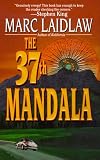
A New Age fraud revises what were channeled threats into optimistic goo from strange spiritual beings. The monsters are cleverly conceived octopus vampires, a type of supernatural scavengers. I don't believe them when they are shown threatening humans physically but their psychic menace is always real.
The style is smoothly competent even if not remarkable and the premise pretty original for the genre. Mandalas are symbols used for mediation in Eastern religion. When a New Age con artist, Derek Crowe, encounters some occult lore concerning them, he makes them the subject of his latest book, ignoring and twisting warnings of their nature--and when his readers, such as Michael and Leonore, use them, they tap into a destructive malign force.
I think my main problem with the book, why it never show more rises beyond the usual B-movie fare for me, are the characters. They're a mix of crackpots and grifters. The naivete and the minutia of New Age craziness of characters like Michael and the predatory cynicism of Derek got on my one nerve. For me to find a novel suspenseful, I have to have something at stake with the characters, and I just couldn't care for any of them.
If you love feeling creeped out, if horror appeals to you as a genre for its own sake, you might enjoy this more than I did--but for those who are looking for more--who want to be dazzled by style or be on the edge of your seat worried about characters you care for--well, I don't think this is where you'd look. show less
I think my main problem with the book, why it never show more rises beyond the usual B-movie fare for me, are the characters. They're a mix of crackpots and grifters. The naivete and the minutia of New Age craziness of characters like Michael and the predatory cynicism of Derek got on my one nerve. For me to find a novel suspenseful, I have to have something at stake with the characters, and I just couldn't care for any of them.
If you love feeling creeped out, if horror appeals to you as a genre for its own sake, you might enjoy this more than I did--but for those who are looking for more--who want to be dazzled by style or be on the edge of your seat worried about characters you care for--well, I don't think this is where you'd look. show less
Lists
Awards


You May Also Like


Associated Authors
Statistics
- Works
- 50
- Also by
- 59
- Members
- 551
- Popularity
- #45,289
- Rating
- 3.7
- Reviews
- 14
- ISBNs
- 31
- Languages
- 4
