

Kerri Sakamoto
Author of The Electrical Field
About the Author
Works by Kerri Sakamoto
Sakamoto, Kerri (About) 1 copy
Associated Works
Charlie Chan Is Dead: An Anthology of Contemporary Asian American Fiction (1993) — Contributor — 169 copies, 3 reviews
Tagged
Common Knowledge
- Birthdate
- 1960
- Gender
- female
- Agent
- The Bukowski Agency
- Nationality
- Canada
- Associated Place (for map)
- Canada
Members
Reviews
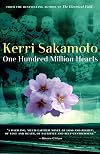
Miyo has spent her whole life being cared for by her father so she is shocked after his death to find out how much of his life has been hidden from her. Leaving her lover and traveling to Japan with the stepmother she never knew she had, she meets her enigmatic younger half-sister Hana and comes face to face with a different picture of her father than she ever expected. Hana has discovered that their father was not just a soldier who never actually served in WWII, he was in fact a kamikaze show more pilot whose war ended before he could fulfil his destiny. All this new knowledge, combined with the potential that Miyo's mother was exposed to radiation during the war, thereby causing Miyo's physical problems, turns Miyo's world upside down.
This is a slow, elegaic, and oftentimes confusingly written novel. None of the characters inspired much sympathy, not Hana with her penchant for disappearances and unwillingness to really share; not Ryu, Hana's stoic boyfriend; not Setsuko, the emotionally cold stepmother; not David, Miyo's oddly off-kilter, possesive boyfriend; not Masao, the father obsessed with duty rather than love; and not even Miyo struggling to keep-up and unravel the mysteries everyone else has already discovered. There is just something cold and remote about this tale that even the surprise in the end doesn't humanize. Each of the characters seem so wrapped up in his or her own drama, to the exculsion of all other story threads, that they don't come together to provide a cogent whole. And while the themes of loss, sacrifice, and duty spiral throughout the story, they seem more reported on rather than felt through the characters' actions. Well-written but hard to connect to emotionally, this was not one of my favorite reads of the month. show less
This is a slow, elegaic, and oftentimes confusingly written novel. None of the characters inspired much sympathy, not Hana with her penchant for disappearances and unwillingness to really share; not Ryu, Hana's stoic boyfriend; not Setsuko, the emotionally cold stepmother; not David, Miyo's oddly off-kilter, possesive boyfriend; not Masao, the father obsessed with duty rather than love; and not even Miyo struggling to keep-up and unravel the mysteries everyone else has already discovered. There is just something cold and remote about this tale that even the surprise in the end doesn't humanize. Each of the characters seem so wrapped up in his or her own drama, to the exculsion of all other story threads, that they don't come together to provide a cogent whole. And while the themes of loss, sacrifice, and duty spiral throughout the story, they seem more reported on rather than felt through the characters' actions. Well-written but hard to connect to emotionally, this was not one of my favorite reads of the month. show less
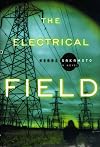
This book may well be impossible for me to review.
Really, I'm sitting here stuck.
It's not a bad book, though I didn't really like it (as though my preferences are indicative of objective quality—and what would even be objective quality in art or literature? But that's a whole 'nother topic.)
Anyway
[b:The Electrical Field|917331|The Electrical Field|Kerri Sakamoto|http://photo.goodreads.com/books/1179437985s/917331.jpg|1181808] is the story of Asako Saito, a second-generation Japanese woman show more apparently living in Canada, according to the catalogue data, who lived in one of the internment camps during WWII.
I actually grew up near one of those camps. Tule Lake, CA. It was, I think, the largest, and also had the highest security. George Takei lived there for a time. And for some reason, it never seemed to be all that well-known, or at least not referenced with the same frequency of Manzanar. Factoid: apparently my hometown has several of the Tule Lake houses still standing. None are at the site anymore, but a few survived and are still scattered around town.
I don't know where the Saitos spent the war, I couldn't tell from the text, and I haven't looked at other reviews or even the book's page to get the information. Because the uncertainty was a huge part of my reading experience.
Asako is the template of an unreliable narrator, and from the reader's perspective (at least this reader) it's a disorienting experience, trying to follow the actual plot outside the character. Her perspective is just so...skewed.
And there is something of a mystery to the novel, but it's only a mystery because the narrator is hiding all the information from the reader, which is another reason why Asako's point of view is so distracting. She can't focus, and neither can the reader. In terms of payoff, as reading this as a mystery, the answer isn't worth it. But then again, it's also an important aspect of the character.
Not really a pleasant character, or someone you particularly want to root for—although worthy of pity—but a well-drawn one, as constructed by the author. She's internally consistent, as disturbed as she is.
I don't know if Asako could be diagnosed with a specific mental illness from the text, that's not the point. Before reading however, I think it's important to note that she has twisted just by life. This isn't something like a tragic fault of the character, I think, just illustrative of how impossible it is for a human being cut off so thoroughly from others to exist in a healthy mental space. Like Lord of the Flies.
I would have liked a glossary of the Japanese words used in the text (yes, I'm that handicapped). Generally I'm no fan of hand-holding from authors, but while the terms used weren't completely opaque in-text, Japanese does have contextual terms that don't seem to translate as one-to-one ratio as many of the romance languages can approximate in English.
So yeah. Not sure where that ended up. A lot to say for not having any idea still what, exactly, I think of this novel.
I do recommend anyone interested in displaced characters, or culture clashes, or unreliable narrators check out this book. And if you've already found it somewhere, it's worth the read. show less
Really, I'm sitting here stuck.
It's not a bad book, though I didn't really like it (as though my preferences are indicative of objective quality—and what would even be objective quality in art or literature? But that's a whole 'nother topic.)
Anyway
[b:The Electrical Field|917331|The Electrical Field|Kerri Sakamoto|http://photo.goodreads.com/books/1179437985s/917331.jpg|1181808] is the story of Asako Saito, a second-generation Japanese woman show more apparently living in Canada, according to the catalogue data, who lived in one of the internment camps during WWII.
I actually grew up near one of those camps. Tule Lake, CA. It was, I think, the largest, and also had the highest security. George Takei lived there for a time. And for some reason, it never seemed to be all that well-known, or at least not referenced with the same frequency of Manzanar. Factoid: apparently my hometown has several of the Tule Lake houses still standing. None are at the site anymore, but a few survived and are still scattered around town.
I don't know where the Saitos spent the war, I couldn't tell from the text, and I haven't looked at other reviews or even the book's page to get the information. Because the uncertainty was a huge part of my reading experience.
Asako is the template of an unreliable narrator, and from the reader's perspective (at least this reader) it's a disorienting experience, trying to follow the actual plot outside the character. Her perspective is just so...skewed.
And there is something of a mystery to the novel, but it's only a mystery because the narrator is hiding all the information from the reader, which is another reason why Asako's point of view is so distracting. She can't focus, and neither can the reader. In terms of payoff, as reading this as a mystery, the answer isn't worth it. But then again, it's also an important aspect of the character.
Not really a pleasant character, or someone you particularly want to root for—although worthy of pity—but a well-drawn one, as constructed by the author. She's internally consistent, as disturbed as she is.
I don't know if Asako could be diagnosed with a specific mental illness from the text, that's not the point. Before reading however, I think it's important to note that she has twisted just by life. This isn't something like a tragic fault of the character, I think, just illustrative of how impossible it is for a human being cut off so thoroughly from others to exist in a healthy mental space. Like Lord of the Flies.
I would have liked a glossary of the Japanese words used in the text (yes, I'm that handicapped). Generally I'm no fan of hand-holding from authors, but while the terms used weren't completely opaque in-text, Japanese does have contextual terms that don't seem to translate as one-to-one ratio as many of the romance languages can approximate in English.
So yeah. Not sure where that ended up. A lot to say for not having any idea still what, exactly, I think of this novel.
I do recommend anyone interested in displaced characters, or culture clashes, or unreliable narrators check out this book. And if you've already found it somewhere, it's worth the read. show less
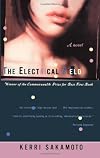
A woman, Chisako, a Japanese woman, and her lover, a Caucasian man she was working with, are found murdered in small Ontario town in the opening pages of the novel, and Chisako's husband, Yano, has disappeared with his two children. Yano is an unpleasant man, a niesei, obsessed with getting compensation from the government for the internment of Japanese during the war. The story is told through the eyes of Asako Saito, a middle-aged woman who lives alone with her bedridden father and her show more brother, Strum, across an open field of electric transmission towers The action moves back in time to describe Asako's relationship with Chisako, and with Yano, and the present, it focuses on the search for Yano and the children and the involvement of Sachi, a young, wild girl who was a friend of Yano's son, and who enlists Asako's help, against her better judgement, in trying to find them.
Through the story, Asako has to confront her own relationship with Chisako and Yano, and through that, the ghosts of her past disappointments that have led her to a life practically entombed with her invalid father and her not too helpful brother, whom she thinks is not too bright, but who may simply never had much chance to establish his own identity against the memory of a cherished older brother who died many years before. A well-told story of emotional entanglements and the negative consequences that can befall people even when they think they are acting for good reasons. show less
Through the story, Asako has to confront her own relationship with Chisako and Yano, and through that, the ghosts of her past disappointments that have led her to a life practically entombed with her invalid father and her not too helpful brother, whom she thinks is not too bright, but who may simply never had much chance to establish his own identity against the memory of a cherished older brother who died many years before. A well-told story of emotional entanglements and the negative consequences that can befall people even when they think they are acting for good reasons. show less
neighbor of murdered adultress puzzles over life in Ontario with daddy
6.00
6.00
Awards


You May Also Like


Associated Authors
Statistics
- Works
- 5
- Also by
- 1
- Members
- 330
- Popularity
- #71,936
- Rating
- 3.5
- Reviews
- 5
- ISBNs
- 23
- Languages
- 2