
Jon Clinch
Author of Finn
About the Author
Works by Jon Clinch
Associated Works
My Bookstore: Writers Celebrate Their Favorite Places to Browse, Read, and Shop (2012) — Contributor — 621 copies, 16 reviews
Tagged
Common Knowledge
- Birthdate
- 20th Century
- Gender
- male
- Education
- Syracuse University
- Occupations
- English teacher
folk singer
metalworker
illustrator
typeface designer
house painter (show all 8)
copywriter
advertising executive - Awards and honors
- Pennsylvania Teacher of the Year Award
- Relationships
- Clinch, Wendy (spouse)
- Short biography
- Jon Clinch is an American novelist. Originally from upstate Oneida, New York, he graduated from Syracuse University and went on to teach American literature. Formerly creative director for various advertising agencies in the Philadelphia area, he now lives in Vermont. He has written stories which have been published in MSS magazine.
In February 2007 Random House published his first novel, Finn, a critically acclaimed backstory about "Pap Finn," Huckleberry Finn's father from Mark Twain's Adventures of Huckleberry Finn (1884).
Named an American Library Association Notable Book, Finn was also named one of the best novels of 2007 by the Washington Post, the Chicago Tribune, the Christian Science Monitor and Book Sense. It was also shortlisted for the National Book Critics Circle's first-ever Best Recommended List and the Sargent First Novel Prize.
Clinch's second novel, Kings of the Earth, was published by Random House in July 2010 to wide critical acclaim, and was named #1 on the annual summer reading list published by O, The Oprah Magazine.
Marley, his reimagining of the world of Charles Dickens's A Christmas Carol, was published by Simon & Schuster's Atria imprint in October 2019. Reviewing the book in the New York Times, critic Simon Callow wrote, "By some uncanny act of artistic appropriation, [Clinch] has, without imitating Dickens, entered into the phantasmagoric realm that is the great novelist’s quintessential territory. Clinch has done something remarkable in Marley, not merely offering a parergon to Dickens’s little masterpiece, imagining the soil out of which the action of A Christmas Carol grows, but creating a free-standing dystopian universe, a hideous vision of nascent capitalism in which nothing is real and every transaction is a fraud. - Nationality
- USA
- Birthplace
- Oneida, New York, USA
- Places of residence
- Vermont, USA
- Associated Place (for map)
- USA
Members
Reviews
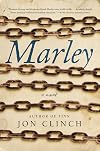
If you've read Dickens's A Christmas Carol, you know that Ebeneezer wasn't always a scrooge. Marley, too, shows him in his younger days, when he took care of his widowed mother, adored his sister Fan, and fell in love with Belle. What changed him? According to Clinch's novel, it was Jacob Marley. The two met at boarding school, where the headmaster was virtually absent, the teachers negligent, the boys pretty much self-educated, and bullies like Marley allowed to ride roughshod over the show more others. Marley was a schemer: by the time they matriculated, Ebeneezer was in so much debt to him that he couldn't refuse the offer of a partnership. Marley recognized not only that Scrooge was great with numbers but that he preferred to hide his head in the account books and leave everything else up to his devious partner. By setting up several dummy businesses through which he could cheat clients and invest in unscrupulous investments (like the slave trade), he made a fortune, lost half of the partnership's fortune (Scrooge's half, of course), and made a second fortune, which he stashed away in secret passages of his home and kept hidden from Scrooge, constantly insisting that they were on the verge of financial disaster. When Scrooge finds out about Marley's lies and crimes, instead of confronting him, he delves deeper into the accounts in hopes of finding ways to make the books balance. His single-mindedness comes between him and the ever-patient Belle (as well as the discovery that Marley had not, as he claimed, withdrawn his investments in the slave trade). Marley will stoop to anything--arson, theft, revenge, blackmail, murder--and glories in his success. He even ingratiates himself to the Scrooge family, first courting and then disappointing Fan, then courting her again with disastrous results.
If you've wondered what dark deeds Jacob Marley must have done to deserve an eternity of haunting the earth in chains, Clinch's re-imagining of the Dickens classic will be just your cuppa. You may end up a little less inclined to blame Scrooge for his own shortcomings (or maybe not!). show less
If you've wondered what dark deeds Jacob Marley must have done to deserve an eternity of haunting the earth in chains, Clinch's re-imagining of the Dickens classic will be just your cuppa. You may end up a little less inclined to blame Scrooge for his own shortcomings (or maybe not!). show less
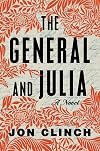
The General and Julia takes us back and forth in time with Ulysses S. Grant and his beloved wife, touching on the high and low points of his life, featuring the final "Forty Days and Forty Nights" during which he labored through pain and drug-induced disorientation to finish the memoirs he hoped--and Sam Clemens promised--would assure his family's financial future after the General was gone. The prose is never flowery, nor even poetic, and yet Clinch can take my breath away with a simple show more turn of phrase. Describing the rising KKK, for instance, there's this: "...they are organized the way a hurricane is organized, madly a-spin around a terrible void. That void is hatred, and it draws every weak and broken thing to it." Why has no one ever put it quite so succinctly before? Even in this relatively short and intentionally limited treatment of his life, it is clear that Grant was more than a General, less than a god, human to the core. This is an engaging, poignant portrait of a man whose genius served him well in certain phases of his life, but whose generous nature left him vulnerable to exploitation. Clinch's talent for "raising the dead" (his own words) in historical fiction places him at the top of my list of greatest living American authors. show less
List five things you think you know about Ebenezer Scrooge. (Mean as a snake, obsessed with money, dumped by his sweetheart as a young man, lives alone in a big creepy house, gets redeemed by visits from Christmas spirits…) If anything on your list relates to how he met his business partner, Jacob Marley, you’ve been watching too many movies, and owe yourself a re-read of the Dickens original. BUT FIRST---get your hands on a copy of Jon Clinch’s Marley, so you’re ready to learn the show more truth about Jacob and Ebenezer. I don’t know whether Dickens gave much thought to the relationship between the two tight-fisted covetous old sinners, or the exact nature of their business, beyond usury. (I mean, they had to get the money from somewhere before they could lend it out, right?) He didn’t share it with his readers, if so. And what the heck is with that huge, apparently mostly empty house Scrooge lives in, having inherited it from Marley? Dickens didn’t explain that either, except for a brief reference to wine merchants using the basement for storage. But the fact that he left all that to Jon Clinch’s imagination is a fine gift from the 19th century to the 21st, and it’s one you still have plenty of time to give yourself for Christmas. The characters are much more fully-fleshed than Dickens’ version, both better and worse than we previously knew them to be. Complex, rather than contrived to present a lesson. And this is a darned good Victorian story. I re-read A Christmas Carol after finishing Marley, to verify that Clinch didn’t change anything fundamental from the source. I didn’t catch him taking a single liberty, but even if I missed something, and there is any inconsistency, I’d say Dickens got it wrong. show less
Finn by Jon Clinch
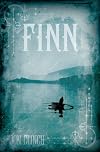
A brutal view of The Adventures of Huckleberry Finn's father. Well written and compelling. Huck's father is a horror show of a human being. He's a man scarred by serious mental illness and alcoholism. Finn is cruel to everyone, but saves his hate and cruelest blows to the lowest castes that surround him. He's a paranoid sadist and serial killer in the making.
I only remember the broadest strokes of Twain's book, but this book stands on its own. The language of the book is more Cormac McCarthy show more than Mark Twain, though less lyrical and more gothic than either. show less
I only remember the broadest strokes of Twain's book, but this book stands on its own. The language of the book is more Cormac McCarthy show more than Mark Twain, though less lyrical and more gothic than either. show less
Lists
Awards


You May Also Like


Associated Authors
Statistics
- Works
- 11
- Also by
- 1
- Members
- 1,645
- Popularity
- #15,615
- Rating
- 3.8
- Reviews
- 105
- ISBNs
- 47
- Languages
- 1
- Favorited
- 2
