
Brian A. Catlos
Author of Infidel Kings and Unholy Warriors: Faith, Power, and Violence in the Age of Crusade and Jihad
About the Author
Brian R. Catlos is a professor of religious studies at the University of Colorado, Boulder, and a research associate at the University of California, Santa Cruz. He is the author of the prizewinning history The Victors and the Vanquished: Christians and Muslims of Catalonia and Aragon, 1050-1300 show more and of Muslims of Medieval Latin Christendom, c. 1050-1614, and is featured in the documentary Cities of Light: The Rise and Fall of Islamic Spain. He and his family divide their time between Boulder, Barcelona, and rural Castile. show less
Works by Brian A. Catlos
Infidel Kings and Unholy Warriors: Faith, Power, and Violence in the Age of Crusade and Jihad (2014) 155 copies, 2 reviews
The Victors and the Vanquished: Christians and Muslims of Catalonia and Aragon, 1050-1300 (2004) 24 copies
Muslims of Medieval Latin Christendom, c.1050–1614 (Cambridge Medieval Textbooks (Paperback)) (2014) 23 copies
Tagged
Common Knowledge
- Birthdate
- 1966-01-11
- Gender
- male
- Nationality
- Canada
- Associated Place (for map)
- Canada
Members
Reviews
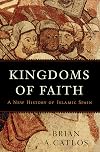
My approach to things I know little or nothing about is to read as many books as possible about it; hence, after Hugh Kennedy’s Muslim Spain and Portugal, I picked up Kingdoms of Faith, by Brian Catlos. Catlos proposes that two myths about al-Andalus – that it was a place of peace and tolerance among Muslims, Christians, and Jews; and that the Reconquista by Christian Spain was an epic, heroic “clash of civilizations” – are exaggerated.
The first myth – “conveniencia” – has show more some truth to it; Christians and Jews were tolerated under Muslim rule, as long as they “knew their place” and payed the dhimmi tax. Some rose to high positions in the government, as advisers (although these were always convenient scapegoats if things went poorly). The Sunni Muslims of Spain were usually more interested in persecuting other Muslims – Shi’ites and Kharijites – who were considered apostates and therefore subject to the death penalty. (Interestingly enough, there was a similar controversy in the Jewish community in al-Andalus over Karaites, who were fundamentalists rejecting the Talmud). And the Sunni Muslims were frequently quite willing to fight each other – often using Christian mercenaries – for political ends; the most dramatic example was at the very end of Muslim Spain, where the last ruler of Granada, Abu ‘l-Hassan ‘Ali, had to fight his own son (Abu ‘Abd Allah Muhammad) and brother (Muhammad ibn Sa’d) at the same time he was trying to fend off Fernando and Isabel.
The flip side was the Christian kingdoms of the Iberia were also usually more interested in fighting their co-religionists – often using Muslim mercenaries – than “reconqusita”. Portugal, Leon, Castile, Navarre, Aragon, Valencia, Barcelona and Murcia were at each other’s throats as often as not, until the final union of the Castilian and Aragonese crowns. The Spanish national hero, Rodrigo Diaz de Vivar – El Cid – was just as likely to be fighting Christians on behalf of Muslims as fighting Muslims on behalf of Christians.
One thing Catlos covers that is left out of Kennedy is the post-Reconquista history of Spanish Muslims. Originally, they were promised they could continue to practice Islam; this was quickly withdrawn and they were given the choice of exile or conversion. The converts – “moriscos” or “New Christians” - attracted continuous attention from the Inquisition; finally, between 1609 and 1614, all around 320000 were expelled; some arranged their own passage but the poor were simply dumped on the shore in Africa (where they were rejected by the natives – they were Christians, after all).
Catlos is more readable than Hugh Kennedy, with better maps and explanations. He’s not adverse to a little cuteness – one chapter is titled “The Return of the King”, another is “The General, the Caliph, His Wife, and Her Lover”, and when al-Mansur bi-Llah raided as far north as Santiago de Compostela and returned to Córdoba with the ponderous chimes of the cathedral, Catlos comments he “…had grabbed Spanish Christianity by the bells”. Useful illustrations and maps are spread through the text, there’s an appendix with the amirs, caliphs and sultans of al-Anadalus, a handy glossary of Arabic words, and a good bibliography and index. Recommended. show less
The first myth – “conveniencia” – has show more some truth to it; Christians and Jews were tolerated under Muslim rule, as long as they “knew their place” and payed the dhimmi tax. Some rose to high positions in the government, as advisers (although these were always convenient scapegoats if things went poorly). The Sunni Muslims of Spain were usually more interested in persecuting other Muslims – Shi’ites and Kharijites – who were considered apostates and therefore subject to the death penalty. (Interestingly enough, there was a similar controversy in the Jewish community in al-Andalus over Karaites, who were fundamentalists rejecting the Talmud). And the Sunni Muslims were frequently quite willing to fight each other – often using Christian mercenaries – for political ends; the most dramatic example was at the very end of Muslim Spain, where the last ruler of Granada, Abu ‘l-Hassan ‘Ali, had to fight his own son (Abu ‘Abd Allah Muhammad) and brother (Muhammad ibn Sa’d) at the same time he was trying to fend off Fernando and Isabel.
The flip side was the Christian kingdoms of the Iberia were also usually more interested in fighting their co-religionists – often using Muslim mercenaries – than “reconqusita”. Portugal, Leon, Castile, Navarre, Aragon, Valencia, Barcelona and Murcia were at each other’s throats as often as not, until the final union of the Castilian and Aragonese crowns. The Spanish national hero, Rodrigo Diaz de Vivar – El Cid – was just as likely to be fighting Christians on behalf of Muslims as fighting Muslims on behalf of Christians.
One thing Catlos covers that is left out of Kennedy is the post-Reconquista history of Spanish Muslims. Originally, they were promised they could continue to practice Islam; this was quickly withdrawn and they were given the choice of exile or conversion. The converts – “moriscos” or “New Christians” - attracted continuous attention from the Inquisition; finally, between 1609 and 1614, all around 320000 were expelled; some arranged their own passage but the poor were simply dumped on the shore in Africa (where they were rejected by the natives – they were Christians, after all).
Catlos is more readable than Hugh Kennedy, with better maps and explanations. He’s not adverse to a little cuteness – one chapter is titled “The Return of the King”, another is “The General, the Caliph, His Wife, and Her Lover”, and when al-Mansur bi-Llah raided as far north as Santiago de Compostela and returned to Córdoba with the ponderous chimes of the cathedral, Catlos comments he “…had grabbed Spanish Christianity by the bells”. Useful illustrations and maps are spread through the text, there’s an appendix with the amirs, caliphs and sultans of al-Anadalus, a handy glossary of Arabic words, and a good bibliography and index. Recommended. show less
In this sprawling popular account of the rise and fall of Al-Andalus, the Muslim lands of the Iberian peninsula, the author is trying to get down to basics. This means that Catlos has little use for the vision of Muslim Iberia as a paradise of tolerance; tolerance was the practice of putting up with that one could not put under one's control. Nor does Catlos buy into a vision of a clash of cultures, as the most important conflicts were often those within the relevant religious cultures. The show more salient point being that ethnicity and family usually triumphed over theology. What one does get is a swirling kaleidoscope of social change that, whatever else one wants to say, Catlos argues is as much part of the history of "The West" as any other region or period you might want to point to. I would recommend this book, even if this gallop through history will probably seem superficial to the specialist while still being exhausting to the novice. show less
Infidel Kings and Unholy Warriors: Faith, Power, and Violence in the Age of Crusade and Jihad by Brian A. Catlos
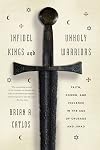
A decent introduction to the history of the Mediterranean which manages to be informed by the most recent scholarship while still accessible to the interested lay reader, though the prose rarely rises beyond the serviceable. Catlos' thematic approach helps give a sense of the interconnected nature of the medieval world—of ethnic diversity, pragmatism, violence, and cultural innovation—particularly in the chapters on Iberia, which I believe is the author's area of speciality. He show more emphasises that faith was only one of the factors which drove the Crusades, and perhaps not even one of the primary ones. I could see this being useful as a textbook in an upper-level undergrad seminar on the topic (it's perhaps too dense and dry for lower level general courses.)
Catlos does attempt to incorporate women into the narrative, which I appreciated. Sitt al-Qusur, a twelfth-century Egyptian princess who helped to thwart a palace coup and avenge her brother's murder, was a particularly fascinating individual. However, there were some ways in which Catlos framed women's actions that made me wince, and a couple of spots in which he was flat out wrong, most notably when it comes to assessing the nature of medieval women's power and authority. He writes that "[i]n northern Italy and southern France, women could inherit noble titles and even rule as countesses and duchesses—the most famous example being Duchess Eleanor of Aquitaine, Crusader and queen consort of France and England" (274) which can surely only result from a lack of familiarity with the past thirty or forty years of work on women's history. The countess Blanche of Champagne would surely beg to differ—as would sisters Jeanne and Marguerite of Flanders, both of whom ruled as countesses, both of whom were known as "of Constantinople" because of their father's brief rule as Latin emperor of that city, and neither of whom are mentioned in this book. show less
Catlos does attempt to incorporate women into the narrative, which I appreciated. Sitt al-Qusur, a twelfth-century Egyptian princess who helped to thwart a palace coup and avenge her brother's murder, was a particularly fascinating individual. However, there were some ways in which Catlos framed women's actions that made me wince, and a couple of spots in which he was flat out wrong, most notably when it comes to assessing the nature of medieval women's power and authority. He writes that "[i]n northern Italy and southern France, women could inherit noble titles and even rule as countesses and duchesses—the most famous example being Duchess Eleanor of Aquitaine, Crusader and queen consort of France and England" (274) which can surely only result from a lack of familiarity with the past thirty or forty years of work on women's history. The countess Blanche of Champagne would surely beg to differ—as would sisters Jeanne and Marguerite of Flanders, both of whom ruled as countesses, both of whom were known as "of Constantinople" because of their father's brief rule as Latin emperor of that city, and neither of whom are mentioned in this book. show less
Brian Catlos’ Kingdoms of Faith is a thorough history of Al-Andalus from its origins in the Umayyad conquests of the early 8th century, to the fall of the last Muslim kingdom in the late 15th century, and on to the final expulsion of the Moriscos (crypto-Muslims or Christians of recent Muslim ancestry) in the early 17th century. The book draws heavily on recent scholarship, and I can see it being very useful in prepping for classes at the undergraduate level on medieval Iberia. However, I show more would be hesitant to assign this as a textbook equivalent because Catlos has a tendency to confuse "dense litany" with narrative and because of the particular tack he takes. (While the subtitle refers to this as a “new” history of Islamic Spain, it is in truth a rather old-fashioned political narrative history, what I think of as the Catherine Morland school: “the quarrels of popes and kings, with wars or pestilences, in every page; the men all so good for nothing, and hardly any women at all.") One for medievalists and very diligent general readers. show less
Awards


You May Also Like


Associated Authors
Statistics
- Works
- 9
- Members
- 453
- Popularity
- #54,168
- Rating
- 3.6
- Reviews
- 9
- ISBNs
- 45
- Languages
- 3