
Sue Kaufman (1926–1977)
Author of Diary of a Mad Housewife: A Novel
About the Author
Image credit: Courtesy of Serpent's Tail Press
Works by Sue Kaufman
Associated Works
In the Stacks: Short Stories about Libraries and Librarians (2002) — Contributor — 547 copies, 13 reviews
Tagged
Common Knowledge
- Birthdate
- 1926-08-07
- Date of death
- 1977-06-25
- Gender
- female
- Education
- Vassar College
- Occupations
- novelist
short story writer - Organizations
- Authors League
Mademoiselle magazine - Short biography
- Sue Kaufman was born in Long Island, New York. She graduated from Vassar College in 1947, the same year she published her first short story and went to work as assistant fiction editor for Mademoiselle Magazine. In 1953, she married Dr. Jeremiah Barondess, with whom she had a son. She became a freelance fiction writer in 1949, producing articles and short stories for prominent magazines. She also wrote novels under her maiden name, including The Happy Summer Days (1959), Green Holly (1962), The Headshrinker’s Test (1969), Life with Prudence, A Chilling Tale (1974), and Falling Bodies (1974). Her best-known work was Diary of a Mad Housewife (1967) which was made into a film with the same title in 1970. She died at age 50, committing suicide the day before she was due to be admitted to a treatment facility for depression.
- Cause of death
- suicide
- Nationality
- USA
- Birthplace
- Long Island, New York, USA
- Places of residence
- New York, New York, USA
- Place of death
- New York, New York, USA
- Associated Place (for map)
- New York, USA
Members
Reviews
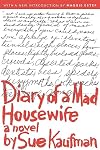
Diary of a Mad Housewife is predictable and yet - not. Bettina Balser is a middle-class housewife and mother in New York City. She has two daughters, ages seven and nine and an up and coming lawyer for a husband. She thinks she is slowly going out of her mind until her husband plays it big in the stock market and moves up in his law firm. By all standards they are now rich. Suddenly, Bettina's mental stability goes from questionable to outright mad. She thinks she has every phobia in the show more book. As the Balser family status changes life unravels even more for Bettina. Her husband Jonathan's demands for only the finest everything has Bettina running around like his personal assistant, even in the bedroom. The only way Bettina can sort through her emotions, resentments and increasing mania is to start a journal. This diary is her release, the outpouring of everything.
In the end, and the end is somewhat predictable, Bettina comes to understand that every stability (mental health included) comes at a price and everyone is paying at some level. show less
In the end, and the end is somewhat predictable, Bettina comes to understand that every stability (mental health included) comes at a price and everyone is paying at some level. show less

1967. A proto-feminist classic. Bettina Balser, née Munvies, is a middle class mother on Central Park West. Her husband is a lawyer and a hopeless social climber. He forces her to accompany him on an endless round of cocktail parties, art gallery openings and theatre events, in hopes of breaking into the next level of society. She is very depressed and just barely holding it together with booze, nembutal, and an extra-marital affair.
It's a very accurate portrayal of depression, but show more sometimes I had a hard time feeling as sorry for her as I might otherwise because they have a maid and people who come in to do the laundry and caterers and live on fucking Central Park West fer chrissakes. But all that obviously doesn't make debilitating depression much easier. show less
It's a very accurate portrayal of depression, but show more sometimes I had a hard time feeling as sorry for her as I might otherwise because they have a maid and people who come in to do the laundry and caterers and live on fucking Central Park West fer chrissakes. But all that obviously doesn't make debilitating depression much easier. show less
This 1967 gem is one of my all-time favorite books -- which I'm currently re-reading. I originally swiped Diary from my "mudther's" collection of book club books as a tween or early teen. I've always enjoyed the The Balser Family Thanksgiving dinner scene...a true classic, but as an adult, I'm catching so many other nuances I missed the first time around. Have things changed? Not as much as you'd think. The New York City housewife from my mother's generation is a classic archetype, and I was show more amazed at how much I could relate to her particular problems. Put this on your list for your next book club discussion. show less
Have to disagree with the previous review in terms of the book portraying depression. Although the clinical aspects of depression may be reflected in the story, I believe that the emphasis is actually on the fact that the protagonist wasn't depressed at all, but rather supressed or oppressed (lots of pressing anyway!) by her husband, class expectations and so on. The prose is marvellous, the descriptions vivid and a window on upper class New York "Society" with a capital "S". Tina, the show more protagonist, is an example of what Betty Friedan termed women with a "problem that has no name" show less
Lists
A Novel Cure (1)
Awards

You May Also Like


Associated Authors
Statistics
- Works
- 5
- Also by
- 2
- Members
- 447
- Popularity
- #54,864
- Rating
- 3.5
- Reviews
- 17
- ISBNs
- 25
- Languages
- 4
- Favorited
- 1