
Margaret Randall
Author of Sandino's daughters : testimonies of Nicaraguan women in struggle
About the Author
Margaret Randall is the author of dozens of books of poetry and prose, including Hayde Santamara, Cuban Revolutionary: She Led by Transgression and Che on My Mind, both also published by Duke University Press.
Works by Margaret Randall
Gathering rage : the failure of twentieth century revolutions to develop a feminist agenda (1992) 44 copies, 1 review
Women brave in the face of danger : photographs of and writings by Latin and North American women (1985) 20 copies, 1 review
As If the Empty Chair/Como si la silla vacía : Poems for the Disappeared/Poemas para los desaparecidos (2011) 3 copies
Ecstasy Is a Number; Poems 3 copies
This great people has said "enough" and has begun to move ... : poems from the struggle in Latin America (1972) 3 copies
Cuban women now : afterword 1974 3 copies
Mujeres en la revolucion: Margaret Randall conversa con mujeres cubanas (Spanish Edition) (1978) 2 copies
Opresión y liberación de la mujer 2 copies
Margaret Randall Las mujeres 1 copy
La mujer cubana ahora 1 copy
CRISTIANOS EN LA REVOLUCION 1 copy
Parte de la solución 1 copy
Weaving Notebook 1 copy
Poems of the glass 1 copy
Randall, Margaret Archive 1 copy
EL CORNO EMPLUMADO — Editor — 1 copy
Associated Works
A Woman Like That: Lesbian and Bisexual Writers Tell Their Coming Out Stories (1999) — Contributor — 259 copies, 3 reviews
She Who Was Lost Is Remembered: Healing from Incest Through Creativity (New Leaf Series) (1993) — Preface — 27 copies
Tagged
Common Knowledge
- Canonical name
- Randall, Margaret
- Birthdate
- 1936-12-06
- Gender
- female
- Occupations
- writer
photographer
teacher
activist - Nationality
- USA
- Birthplace
- New York, New York, USA
- Places of residence
- Albuquerque, New Mexico, USA
- Associated Place (for map)
- USA
Members
Reviews
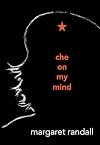
Margaret Randall’s Che on My Mind is a history of South America, citizen rebellion, and deep-felt loss. Randall moved to Mexico in the early 1960s for a change in scenery from the McCarthyism still brewing in the US, married a Mexican poet, and became enamored with the culture there. While she gets to Cuba only after Che Guevara is assassinated, her relationship with Che’s sister and her own past inform her story. It is a story of reflection, of revolution, and of redemption.
Ernesto show more “Che” Guevara’s journey started as an academic and a doctor. During the 1940s and 1950s, he journeyed around South America touring the countryside, helping the disadvantaged, and seeing firsthand how the lower classes lived. He took part in the 1954 Guatemalan coup d’état, the Cuban Revolution, and even the Simba Rebellion in the Congo. But, after each struggle to change the world, he had to become more elusive, more guerilla-like. His death in 1967 was a critical blow to revolutionary activities across the region.
There is a bit of problem here of subject deification. Randall openly decries US-style democracy and believe that full Marxist revolution is the only way to political and social liberation. Her source material is, however, useful and insightful. She gathers together reminisces, letters, and creative writing from the revolutionary period to show the atmosphere of the time. Her own subjective injections work with prose as a whole, but definitely move this book out of the arena of true academic histories. She looks at both Che’s life and how other writers have placed Che’s life in the context of the region, and for that combined perspective, this one was a very interesting read. show less
Ernesto show more “Che” Guevara’s journey started as an academic and a doctor. During the 1940s and 1950s, he journeyed around South America touring the countryside, helping the disadvantaged, and seeing firsthand how the lower classes lived. He took part in the 1954 Guatemalan coup d’état, the Cuban Revolution, and even the Simba Rebellion in the Congo. But, after each struggle to change the world, he had to become more elusive, more guerilla-like. His death in 1967 was a critical blow to revolutionary activities across the region.
There is a bit of problem here of subject deification. Randall openly decries US-style democracy and believe that full Marxist revolution is the only way to political and social liberation. Her source material is, however, useful and insightful. She gathers together reminisces, letters, and creative writing from the revolutionary period to show the atmosphere of the time. Her own subjective injections work with prose as a whole, but definitely move this book out of the arena of true academic histories. She looks at both Che’s life and how other writers have placed Che’s life in the context of the region, and for that combined perspective, this one was a very interesting read. show less
Margaret Randall
In her latest book [book:Che on My Mind|17859206] (expected publication date October 4, 2013 by Duke University Press), [author:Margaret Randall|28970] distills her experiences over a lifetime of work as a feminist poet, writer, photographer and social activist, considering throughout what Che Guevara has meant to her personally, artistically, and politically.
This is not a biography of Che Guevara, or a memoir, or a work of historical analysis. Throughout, Randall paints show more with a wide brush, relying on her own experiences and distillations of a lifetime of reading, writing, and activism to write her impressionistic essays. My first time reading the book, I was thrown a bit by her approach to certain historical questions, such as whether Castro essentially had abandoned Che Guevara to his fate in the jungles of Bolivia. I was looking for more traditional historical documentation to support Randall's assertions in these passages. However, after re-reading the book, I was able to adjust my focus. Randall very clearly states her approach to this volume as an exploration of her own impressions of Guevara, the impact he has had on her life, and how she understands his past and future relevance for social and political activists. Her examination of what Che Guevara means to her is most assuredly biased, but rather than being an unintended flaw, this is precisely what Randall means to focus on and explore. [book:Che on My Mind|17859206] is a personal document from a social activist and artist who, although she did not know Che personally, was deeply engaged in the Cuban revolution. Randall who seeks to document her own history with Che Guevara as a figurehead, an inspiration, and, at times, a focus for frustration.
Randall is also very clear about her own background. She was born in New York City in 1936, and has lived in Albuquerque, New York, Seville, Mexico City, Havana, and Managua. The biography on her website provides a succinct overview of her life:
"In the turbulent 1960s she co-founded and co-edited EL CORNO EMPLUMADO / THE PLUMED HORN, a bilingual literary journal which for eight years published some of the most dynamic and meaningful writing of an era....
"Margaret was privileged to live among New York’s abstract expressionists in the 1950s and early ’60s, participate in the Mexican student movement of 1968, share important years of the Cuban revolution (1969-1980), the first four years of Nicaragua’s Sandinista project (1980-1984), and visit North Vietnam during the heroic last months of the U.S. American war in that country (1974)....
"In 1984, Margaret came home to the United States, only to be ordered deported when the government invoked the 1952 McCarran-Walter Immigration and Nationality Act, judging opinions expressed in some of her books to be "against the good order and happiness of the United States." The Center for Constitutional Rights defended her and many writers and others joined in an almost five-year battle for reinstatement of citizenship. She won her case in 1989. In 1990 she was awarded the Lillian Hellman and Dashiell Hammett grant for writers victimized by political repression; and in 2004 was the first recipient of PEN New Mexico’s Dorothy Doyle Lifetime Achievement Award for Writing and Human Rights Activism." (http://www.margaretrandall.org/Biography)
Graffiti at the building in Vallegrande, Bolivia where Che Guevara's body was laid out
Some specific themes run through Randall's writing in this volume. One of the most interesting to me was how she used her feminist lens to critique and (in some cases) come to terms with some aspects of Geuvara's history, particularly his relationships with women and his engaging in violence to further political aims. Randall's conclusions in some cases read as attempts to explain away less laudatory aspects of Che's life and persona -- her discussion of his possible homophobia was not especially convincing, for example. But at least she poses these questions, opening up space for her readers to ask their own questions. What to make of the fact that Che was a white man leading black men during his time in Congo? And how to come to terms with his ordering brutal executions in Cuba?
At the same time, Randall is quite compelling in her discussion of Che's influence on her as an activist. She speaks of his rising about his own severe asthma to work tirelessly for the causes he believed in, when he could have led a privileged existence as a doctor. She sees Che as having such a strong hold on her generation because of his commitment to work for social and political change at great cost to himself and his family. She also emphasizes that, to her mind, Che Guevara was motivated by great love, which fueled his work for change. His contradictions make him more human. And there may be lessons to learn from those contradictions too. For example, Randall explores how Che's idealism both fueled his commitment for change but also doomed his work in the Congo and Bolivia to failure.
Contrasting symbolism -- the second image is of graffiti in a Palestinian refugee camp
Randall concludes her book with a discussion of the significance that Che Guevara's image holds for 21st-century activists. Given the marketing behemoth that has spread Che's image throughout the world, and the controversies over whether he is a laudable symbol for freedom and equality or a mass murderer who should be condemned, this section emphasizes that we all construct and shape our symbols within the specific context of our cultures' beliefs, dreams, struggles, and conflicts. Will Che Guevara be a trendy symbol representing a surface-level commitment to a vague conception of freedom? Will he be an icon divorced of any clear message? Or will some take after Randall and use Che as a source of inspiration, a catalyst for questions, a symbol of change?
The marketing of Che Guevara in the 21st century
I received an ARC of this book from Netgalley in return for an honest review. show less
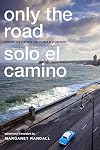
Only the Road/Solo el camino: Eight Decades of Cuban Poetry is a timely book. Now that Cuba is open to American tourism and visitors, it is appropriate that a comprehensive collection of Cuban poetry be made available in translation. After all, the best way to travel is with the poetry of the place you are going to read ahead and to read when you are there. There is an uncanny magic reading a poem in situ.
Margaret Randall collected the poems for this volume and did all the translation. As show more someone who knows the challenges of translation from Spanish to English, I think she has done a masterful job of keeping the spirit and the poetry intact. I am grateful that she provided both the Spanish and the English versions because even the best translations sometimes lack the urgency of the original.
Solo el camino begins with Tengo, a poem by Nicolás Guillén that captured the simple exultance of victory, the satisfaction from going without to having and of having not just material things, but having dignity. It is anthemic. Then there is the beautifully romantic tragedy of Emilio Ballads writing of the impossibility of gay love in mid 20th century Cuba in De toro modo. “Can you fathom the deaf grayness of that stone: never?” It is a poem that goes from romantic joy to broken despair in just a few words.
There are short, brilliantly witty poems from Samuel Feijó such as Poética which celebrates the concerts of birds that fill the forests, with not one getting credit for the score. Poems full of warmth and humor, though few words. Then there are the apocalyptic prophetic poems of María Elena Hernández. The poetry comes in all forms, long, short, angry and joyful, political, and romantic. It is representative of humanity, and of course, of Cuba. This anthology is also an exemplar in how to be mindful of diversity of voices. There are many women poets, a rarity in anthologies unless specifically anthologies of women writers. The introduction by Randall has a lot to teach anthologists about how to be mindful and how to do real outreach.
At times, some of the magic is lost in translation, not so much on the page, but aloud. Spanish has a fluency, a facility for poetry that English will never achieve. Randall effectively captures the meaning, the imagery and the heart of the poems, but cannot always produce the flow, the assonance, the aural magic of Spanish poetry. That magic comes in part from the construction of the language, the way verbs are conjugated, the fact there are not five ways to pronounce “a” and other innate qualities that we just don’t have in English.
I recommend Only the Road/Solo el camino highly. It’s a beautiful collection of poetry, some that has not been published in English translation and will be new to readers. It is also a corrective to the biased view of Cuban literature as repressed or propaganda depending on how widely published it is. We are opening up to Cuba finally, so it is incumbent on us to understand it better and how better than through its poetry.
Only the Road/Solo el Camino will be published on October 14, 2016.
I received a temporary e-galley of Only the Road/Solo el camino from the publisher via NetGalley.
http://tonstantweaderreviews.wordpress.com/2016/09/14/only-the-roadsolo-el-camin... show less
Margaret Randall collected the poems for this volume and did all the translation. As show more someone who knows the challenges of translation from Spanish to English, I think she has done a masterful job of keeping the spirit and the poetry intact. I am grateful that she provided both the Spanish and the English versions because even the best translations sometimes lack the urgency of the original.
Solo el camino begins with Tengo, a poem by Nicolás Guillén that captured the simple exultance of victory, the satisfaction from going without to having and of having not just material things, but having dignity. It is anthemic. Then there is the beautifully romantic tragedy of Emilio Ballads writing of the impossibility of gay love in mid 20th century Cuba in De toro modo. “Can you fathom the deaf grayness of that stone: never?” It is a poem that goes from romantic joy to broken despair in just a few words.
There are short, brilliantly witty poems from Samuel Feijó such as Poética which celebrates the concerts of birds that fill the forests, with not one getting credit for the score. Poems full of warmth and humor, though few words. Then there are the apocalyptic prophetic poems of María Elena Hernández. The poetry comes in all forms, long, short, angry and joyful, political, and romantic. It is representative of humanity, and of course, of Cuba. This anthology is also an exemplar in how to be mindful of diversity of voices. There are many women poets, a rarity in anthologies unless specifically anthologies of women writers. The introduction by Randall has a lot to teach anthologists about how to be mindful and how to do real outreach.
At times, some of the magic is lost in translation, not so much on the page, but aloud. Spanish has a fluency, a facility for poetry that English will never achieve. Randall effectively captures the meaning, the imagery and the heart of the poems, but cannot always produce the flow, the assonance, the aural magic of Spanish poetry. That magic comes in part from the construction of the language, the way verbs are conjugated, the fact there are not five ways to pronounce “a” and other innate qualities that we just don’t have in English.
I recommend Only the Road/Solo el camino highly. It’s a beautiful collection of poetry, some that has not been published in English translation and will be new to readers. It is also a corrective to the biased view of Cuban literature as repressed or propaganda depending on how widely published it is. We are opening up to Cuba finally, so it is incumbent on us to understand it better and how better than through its poetry.
Only the Road/Solo el Camino will be published on October 14, 2016.
I received a temporary e-galley of Only the Road/Solo el camino from the publisher via NetGalley.
http://tonstantweaderreviews.wordpress.com/2016/09/14/only-the-roadsolo-el-camin... show less

After reading Randall's book about her life in Cuba, [To Change the World], I made a trip to the university library and came home with more of her books. This short book focuses mainly on her fight with the U.S. Immigration and Naturalization Services to regain her American citizenship. Randall was born in New York, moving to New Mexico as a child. While spending a couple of years in Mexico and needing to work, she became a Mexican citizen in order to work and support her children there. show more When the Mexican government took away her passport, she was forced underground in order to get out of Mexico, and moved to Cuba. She then moved to Nicaragua for awhile before deciding to return to the U.S. Her parents were aging and her children were grown and living their own lives and she desperately missed her own culture. After years of studying and writing about revolutionary thinking and women revolutionaries, visiting many countries for her research, she was exhausted.
When she married a U.S. citizen and decided to stay, she applied for permanent resident status. This was denied and she was eventually officially deported due to her earlier writing and teaching that was interpreted as being anti-American and pro-Communist. She remained in the U.S. while several appeals were made. This book is basically the story of these legal battles and the national support Randall gained during this time. Are U.S. citizens allowed to express beliefs that oppose the American government? Randall ultimately wins because a judge rules that she had given up her U.S. citizenship under financial duress and thus never actually lost it. However, the case did result in some changes in immigration law about dissent in the U.S.
This is a very short book and I found the First Amendment legal battles fascinating, especially as seen through Randall's eyes after her experiences with repression and censorship in other countries. I believe I understand free speech rights much better due to this book.
Several of Randall's poems are included in this small volume and I found them very evocative and impacting. This was the opposite experience I had when I first read one of her volumes of poetry and didn't know what she was talking about. It was a lesson to me of reading poetry and other literature in context with some background knowledge. In her book I read earlier [To Change the World], Randall writes extensively about the importance specifically of poetry but also of art and other cultural factors, in evoking and sustaining the emotions supporting beliefs that keep people motivated over the long term in making and sustaining societal change. This became clear with my reading of her poetry in this volume.
My favorite poem in this volume is entitled "I didn't mean it personally". Here is one verse as Randall is being reprimanded for taking things so personally:
Might you be talking about the personal monogram,
careful initials machine-stitched just for you
on the home-ec hankie, the polo shirt, or satin travel case
in which you can go anywhere
with that very personal diamond?
Can you guess where the stone
cut from South African rock
by South African shoulders, South African lungs,
stopped being hometown earth, became
your personal status symbol, beneath that monogram
or on your personal wrist?
.......
I know.
You didn't mean it personally.
Recommended for anyone interested in Randall or free speech issues. I also very much enjoyed the poetry.
Five stars show less
When she married a U.S. citizen and decided to stay, she applied for permanent resident status. This was denied and she was eventually officially deported due to her earlier writing and teaching that was interpreted as being anti-American and pro-Communist. She remained in the U.S. while several appeals were made. This book is basically the story of these legal battles and the national support Randall gained during this time. Are U.S. citizens allowed to express beliefs that oppose the American government? Randall ultimately wins because a judge rules that she had given up her U.S. citizenship under financial duress and thus never actually lost it. However, the case did result in some changes in immigration law about dissent in the U.S.
This is a very short book and I found the First Amendment legal battles fascinating, especially as seen through Randall's eyes after her experiences with repression and censorship in other countries. I believe I understand free speech rights much better due to this book.
Several of Randall's poems are included in this small volume and I found them very evocative and impacting. This was the opposite experience I had when I first read one of her volumes of poetry and didn't know what she was talking about. It was a lesson to me of reading poetry and other literature in context with some background knowledge. In her book I read earlier [To Change the World], Randall writes extensively about the importance specifically of poetry but also of art and other cultural factors, in evoking and sustaining the emotions supporting beliefs that keep people motivated over the long term in making and sustaining societal change. This became clear with my reading of her poetry in this volume.
My favorite poem in this volume is entitled "I didn't mean it personally". Here is one verse as Randall is being reprimanded for taking things so personally:
Might you be talking about the personal monogram,
careful initials machine-stitched just for you
on the home-ec hankie, the polo shirt, or satin travel case
in which you can go anywhere
with that very personal diamond?
Can you guess where the stone
cut from South African rock
by South African shoulders, South African lungs,
stopped being hometown earth, became
your personal status symbol, beneath that monogram
or on your personal wrist?
.......
I know.
You didn't mean it personally.
Recommended for anyone interested in Randall or free speech issues. I also very much enjoyed the poetry.
Five stars show less
Lists
Awards


You May Also Like


Associated Authors
Statistics
- Works
- 97
- Also by
- 10
- Members
- 688
- Popularity
- #36,763
- Rating
- 4.1
- Reviews
- 15
- ISBNs
- 123
- Languages
- 1
- Favorited
- 2