
Estelle Freedman
Author of Intimate Matters: A History of Sexuality in America
About the Author
Estelle B. Freedman is a founder of the Program in Feminist Studies at Stanford University.
Works by Estelle Freedman
Their Sisters' Keepers: Women's Prison Reform in America, 1830-1930 (Women And Culture Series) (1981) 18 copies
Feminism and Future of Women(14 Lectures on 7 Compact Discs (The Modern Scholar) (2004) 12 copies, 1 review
Associated Works
Forgotten Heroes: Inspiring American Portraits from Our Leading Historians (1999) — Contributor — 122 copies, 1 review
Tagged
Common Knowledge
- Birthdate
- 1947
- Gender
- female
- Map Location
- United States
Members
Reviews
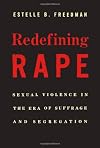
Freedman covers feminists' and civil rights activists' attempts to broaden the definition of rape from the colonial era to the present day. As the author argues, who is protected by rape is largely linked to who is entitled to full citizenship. Women actively sought ways to have more control over their bodies, by advocating for women jurors, women police officers, as well as participated in grassroots activism to expand the definition of rape to include the act of seduction, the protection show more of young girls, and street harassment (called mashing at the time). She also has a chapter of the sexual vulnerability of boys, which emerged as our modern ideas of sexuality formed at the turn of the century, and with the arrival of new immigrants who were associated with sodomy. The bulk of the book covers the 1840/50s to the 1930/40s. She does, however, start in the colonial era and goes with the present day by demonstrating that our current debates over the meaning of rape is largely reflective of prior arguments.
Those interested in women's history and African American history will find this book as a great contribution to the politics of women's bodies. Social class and race were crucial aspects in determining whether a women's account of rape was believable, and often middle- and upper-middle class white men got off the hook by pointing out their accusers' prior sexual history (an issues that has not gone away). Those interested in women's history will also be interested in the chapter titled "Smashing the Masher," where she documents white and black women efforts to take on men who harassed them in the street. Reflective of modern-day defense class, some women advocated for women police officers, and some women took boxing lessons to defend themselves. This demonstrated women's rejection of male protection and embracement of self-reliance.
Regarding the book weaknesses: she does not discuss Latino and Asian women. Mexican women are mentioned, but not as a political force. The Mexican-American civil rights movement has its origins in the 1920s, and it makes the reader wonder if Mexican women were viewed as sexually available, and if so, did they resist. As for Asian women, since one-third of Chinese women immigrants were prostitutes, it does beg the question of what type of organizing, if any exist, emerged to challenge the position of Chinese women. Although rape is a broad topic, and I did not expect the author to cover every form of rape, I did wonder what type of activism or concerns did people have regarding the emergence of women colleges. They appeared in the late 1800s, and girls on their own and away from their parents' supervision probably cause some social anxiety. Other than those two issues, the author accomplishes her goal by showing that the current culture war over the meaning of rape is a reoccurring theme in society. And as she states in the end, our struggle to define rape will continue so long as inequalities in race and gender continue to characterize American society. In our current times, this book is well needed. show less
Those interested in women's history and African American history will find this book as a great contribution to the politics of women's bodies. Social class and race were crucial aspects in determining whether a women's account of rape was believable, and often middle- and upper-middle class white men got off the hook by pointing out their accusers' prior sexual history (an issues that has not gone away). Those interested in women's history will also be interested in the chapter titled "Smashing the Masher," where she documents white and black women efforts to take on men who harassed them in the street. Reflective of modern-day defense class, some women advocated for women police officers, and some women took boxing lessons to defend themselves. This demonstrated women's rejection of male protection and embracement of self-reliance.
Regarding the book weaknesses: she does not discuss Latino and Asian women. Mexican women are mentioned, but not as a political force. The Mexican-American civil rights movement has its origins in the 1920s, and it makes the reader wonder if Mexican women were viewed as sexually available, and if so, did they resist. As for Asian women, since one-third of Chinese women immigrants were prostitutes, it does beg the question of what type of organizing, if any exist, emerged to challenge the position of Chinese women. Although rape is a broad topic, and I did not expect the author to cover every form of rape, I did wonder what type of activism or concerns did people have regarding the emergence of women colleges. They appeared in the late 1800s, and girls on their own and away from their parents' supervision probably cause some social anxiety. Other than those two issues, the author accomplishes her goal by showing that the current culture war over the meaning of rape is a reoccurring theme in society. And as she states in the end, our struggle to define rape will continue so long as inequalities in race and gender continue to characterize American society. In our current times, this book is well needed. show less
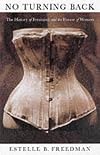
This was written in 2002, before the round of backlashes that we're currently suffering through happened, when to some degree there were a vision of progress, a future with more equality. A time before being female on the internet was an offence to some.
Yes I'm an angry feminist, I am tired of fighting the same fight, different day. A lot of the points made here are stuff we're still dealing with over a decade later, it would be so easy to let it drop and just keep my head under the parapet show more but damn it, I'm tired of listening to young women with privilege claiming that they don't need feminism or don't think feminism has done them any favours. Yes there are some women who are radical and take a very anti-male line but often that's also part of a conversation we need to have. We are accepting fewer and fewer boxes we're willing to let people live in and that's a sad thing to disallow people from variety. I have no problem with people who want to wear makeup or wear culturally/religiously appropriate clothing (sometimes referred to as "modest" but that's a whole other can of worms) but I have a huge problem when you tell me I'm not professional for not wearing makeup, when men don't have to, or that I was asking for it...
It's food for thought. One of the ones that stopped me and made me think compared some of the ways we have normalised plastic surgery as being somewhat comparable to, in a minor way, to genital mutilation, both culturally acceptable as ways of making women more "attractive" to men, but both have costs. One is more severe, yes, but when I read about labioplasty and the damage being done to some children by having parents without facial expressions curtsey of botox I wonder.
I found it an occasionally demanding book, and occasionally it made me rage that this stuff is still so pertinent. show less
Yes I'm an angry feminist, I am tired of fighting the same fight, different day. A lot of the points made here are stuff we're still dealing with over a decade later, it would be so easy to let it drop and just keep my head under the parapet show more but damn it, I'm tired of listening to young women with privilege claiming that they don't need feminism or don't think feminism has done them any favours. Yes there are some women who are radical and take a very anti-male line but often that's also part of a conversation we need to have. We are accepting fewer and fewer boxes we're willing to let people live in and that's a sad thing to disallow people from variety. I have no problem with people who want to wear makeup or wear culturally/religiously appropriate clothing (sometimes referred to as "modest" but that's a whole other can of worms) but I have a huge problem when you tell me I'm not professional for not wearing makeup, when men don't have to, or that I was asking for it...
It's food for thought. One of the ones that stopped me and made me think compared some of the ways we have normalised plastic surgery as being somewhat comparable to, in a minor way, to genital mutilation, both culturally acceptable as ways of making women more "attractive" to men, but both have costs. One is more severe, yes, but when I read about labioplasty and the damage being done to some children by having parents without facial expressions curtsey of botox I wonder.
I found it an occasionally demanding book, and occasionally it made me rage that this stuff is still so pertinent. show less

I recognize how difficult it could be to write a book about sexuality and not have it seem lurid or sensational. Unfortunately, this book seems too determined to let everyone know it is a scholarly text, and the prose is overly dry and formal. in some places, it feels more like a college paper that ballooned into a book, with many chapters starting with a "this is what this chapter will cover" beginning and ending with a "this is what this chapter has covered" conclusion. There is some show more fascinating but of data here along with some well documented accounts of sexuality hundreds of years ago, but it's something of a slog to get through. show less
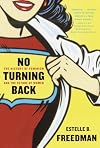
Freedman has managed to write a history and a survey of global feminism that is at once accessible, activist and academic.
The compact size and the colorful comic-inspired cover design of the trade paperback edition bely its serious scope. It is truly comprehensive, opening with a powerful argument for feminism (lingering on the term's ever-troubled, never-popular nature), proceeding through the history of various feminisms, marching on through topics as diverse as the impact of globalization show more on female laborers in the developing world to contrasting feminist opinions on the agency of sex workers. While the focus is primarily on the U.S., the global perspective does comes through. She manages to tone down the usual prominence of European and Euro-American influences while elevating the profile and contributions of feminists throughout the world. For the global sections, examples are drawn as readily from China and West Africa as from the United States. Freedman raises the bar for creating a feminist narrative that is continually mindful of the influences of class, race and culture as well as gender concerns.
I recommend this book for committed feminists, those lamenting the so-called `death of feminism,' and for closet feminists who are bothered by the f-word. show less
The compact size and the colorful comic-inspired cover design of the trade paperback edition bely its serious scope. It is truly comprehensive, opening with a powerful argument for feminism (lingering on the term's ever-troubled, never-popular nature), proceeding through the history of various feminisms, marching on through topics as diverse as the impact of globalization show more on female laborers in the developing world to contrasting feminist opinions on the agency of sex workers. While the focus is primarily on the U.S., the global perspective does comes through. She manages to tone down the usual prominence of European and Euro-American influences while elevating the profile and contributions of feminists throughout the world. For the global sections, examples are drawn as readily from China and West Africa as from the United States. Freedman raises the bar for creating a feminist narrative that is continually mindful of the influences of class, race and culture as well as gender concerns.
I recommend this book for committed feminists, those lamenting the so-called `death of feminism,' and for closet feminists who are bothered by the f-word. show less
Lists
Awards


You May Also Like


Associated Authors
Statistics
- Works
- 14
- Also by
- 4
- Members
- 1,686
- Popularity
- #15,250
- Rating
- 3.9
- Reviews
- 11
- ISBNs
- 34