
J. R. R. Tolkien (1892–1973)
Author of The Hobbit
About the Author
A writer of fantasies, Tolkien, a professor of language and literature at Oxford University, was always intrigued by early English and the imaginative use of language. In his greatest story, the trilogy The Lord of the Rings (1954--56), Tolkien invented a language with vocabulary, grammar, syntax, show more even poetry of its own. Though readers have created various possible allegorical interpretations, Tolkien has said: "It is not about anything but itself. (Certainly it has no allegorical intentions, general, particular or topical, moral, religious or political.)" In The Adventures of Tom Bombadil (1962), Tolkien tells the story of the "master of wood, water, and hill," a jolly teller of tales and singer of songs, one of the multitude of characters in his romance, saga, epic, or fairy tales about his country of the Hobbits. Tolkien was also a formidable medieval scholar, as evidenced by his work, Beowulf: The Monster and the Critics (1936) and his edition of Anciene Wisse: English Text of the Anciene Riwle. Among his works published posthumously, are The Legend of Sigurd and Gudrún and The Fall of Arthur, which was edited by his son, Christopher. In 2013, his title, TheHobbit (Movie Tie-In) made The New York Times Best Seller List. (Bowker Author Biography) show less
Disambiguation Notice:
Please do not combine this page with the John Tolkien author page. If any works by J. R. R. Tolkien appear on that page, they should be aliased to this one.
Also please don't combine it with the page of Christopher Tolkien, even though he edited a lot of his father's works posthumously.
Series
Works by J. R. R. Tolkien
The Shaping of Middle-Earth: The Quenta, the Ambarkanta and the Annals (1986) 2,399 copies, 8 reviews
The Annotated Hobbit (1988) — Cover artist, some editions; Illustrator, some editions — 2,139 copies, 20 reviews
Beowulf: A Translation and Commentary, Together with Sellic Spell (2014) — Translator; Contributor — 2,090 copies, 17 reviews
The Fall of Númenor and Other Tales from the Second Age of Middle-Earth (2022) 1,367 copies, 13 reviews
Tales from the Perilous Realm: Farmer Giles of Ham / The Adventures of Tom Bombadil / Leaf by Niggle / Smith of Wootton Major (1997) 947 copies, 16 reviews
The Nature of Middle-earth : Late Writings on the Lands, Inhabitants, and Metaphysics of Middle-earth (2021) 886 copies, 6 reviews
Tree and Leaf: Including "Mythopoeia" and "The Homecoming of Beorhtnoth" (2001) 853 copies, 10 reviews
Tree and Leaf. Smith of Wootton Major. The Homecoming of Beorhtnoth, Beorhthelm's Son (1945) 627 copies, 6 reviews
The Battle of Maldon together with The Homecoming of Beorhtnoth and 'The Tradition of Versification in Old English' (2023) 250 copies, 4 reviews
The Great Tales Of Middle-Earth: The Children of Húrin, Beren and Lúthien, and The Fall of Gondolin (2018) 203 copies, 1 review
Tolkien Fantasy Tales Box Set (The Tolkien Reader/The Silmarillion/Unfinished Tales/Sir Gawain and the Green Knight) (2003) 142 copies
Tolkien Myths and Legends Box Set: Sir Gawain and the Green Knight, The Legend of Sigurd and Gudrún, The Fall of Arthur, Beowulf (2025) 29 copies
The J. R. R. Tolkien Deluxe Edition Collection: " The Children of Hurin " , " The Silmarillion " , " The Hobbit " and " The Lord of the Rings " (2007) 17 copies
Great Tales of Middle-earth Box Set: The Children of Húrin, Beren and Lúthien, The Fall of Gondolin (2025) 13 copies
The Return of the King (A Story of the Hobbits) Book and Record (See the Pictures; Hear the Record; Read the Book, 382) (1980) 10 copies
Parma Eldalamberon XXII: The Feanorian Alphabet Part 1; Quenya Verb Structure (2015) — Author — 8 copies
Parma Eldalamberon XVII: Words, Phrases & Passages in various tongues in The Lord of the Rings (2021) 8 copies
THE HOBBIT: PART SIX 8 copies
Fellowship of the Ring, The 8 copies
J.R.R. Tolkien : the Hobbit : drawings, watercolors, and manuscripts, June 11-September 30, 1987 Patrick & Beatrice Hagg (1987) 8 copies
The Book of Lost Tales I; The Book of Lost Tales II; Unfinished Tales of Numenor and Middle-earth (2003) 7 copies
Parma Eldalamberon XI: i Lam na Ngoldathon - The Grammar and Lexicon of the Gnomish tongue (1995) 7 copies
The Lord of the Rings: The Two Towers, The Fellowship of the Ring, and The Return of the King 7 copies
The Devil's Coach-Horses 6 copies
The Two Towers 6 copies
Trzysta przekładów dla fanów pod nieba skłonem... : Ring Rhyme J.R.R. Tolkiena w językach żywych, martwych i zmyślonych (2007) 5 copies
Campaign and Adventure Guidebook for Middle Earth (Including the Wild Lands, East, South, & North) (1984) 5 copies
The Silmarillion Boxed Folio Society 4 copies
Selbstinspektion und Inspektion : GMP-Forderungen zur Qualitätssicherung im Arzneimittel-Bereich 3 copies
Tolkien cards. The lord of the rings 3 copies
新版 指輪物語〈3〉/二つの塔〈上〉 3 copies
Las Dos Torres. Ilustrado por Alan Lee (NE revisada) (Biblioteca J. R. R. Tolkien) (2025) 3 copies, 1 review
Lord Of The Rings Trilogy 1978 Second Edition Revised Boxed Set [Hardcover] J.R.R. Tolkien (1965) 2 copies
Folio Society Lord of the Rings 2 copies
The Lord of the Rings 2 copies
The Tale of Gondolin — Author — 2 copies
Kit Grandes Contos Tolkien 2 copies
Le Seigneur des Anneaux - Tome 1 édition reliée et illustrée : La Fraternité de l'Anneau (2025) 2 copies
Angles and Britons — Author — 2 copies
English and Welsh 2 copies
On Translating Beowulf 2 copies
The Children of Húrin Paperback Box Set: The Children of Hurin / The Silmarillion / Unfinished Tales (2008) 2 copies, 1 review
Hobbit Box Set 2 copies
Der Herr der Ringe / Gesamtausgabe: Der Herr der Ringe, Audio-CDs, Tl.1-30, 11 Audio-CDs. 756 Min. 2 copies
Tolkien Cards. The Hobbit Series two 2 copies
Mythopoeia 2 copies
Os fragmentos de Bovadium – Uma obra satírica inédita de J.R.R. Tolkien (Portuguese Edition) 1 copy
Book Of Lost Tales 2 Hme 2 by J.R.R. Tolkien (May 15 1992) — Author — 1 copy
Сильмариллион 1 copy
שר הטבעות 1 copy
Again 1 copy
Lo Hobbit e altri 5 volumi 1 copy
Nezavršene priče 1 copy
Smith of Wootton Major 1 copy
Малые Произведения 1 copy
The Two Towers 25th Anniversary [Movie tie-in]: Being the Second Part of The Lord of the Rings 1 copy
Hª Tierra Media Nº05/12 - El camino perdido y otros relatos (Historia de la Tierra Media nº 5) (Spanish Edition) 1 copy, 1 review
Der Herr der Ringe, limitierte Amazon.de Sammleredition (11 CD's, Spielzeit 756 Minuten) (2001) 1 copy
O SENHOR DOS ANÉIS 1 copy
Scrisori de la Mos Craciun 1 copy
The Hobbit 1 copy
JRR Tolkien - The Hobbit 1 copy
A Middle English Vocabulary 1 copy
The Lord of the Rings Pop-Up 1 copy
Contes & légendes inachevés 1 copy
Hobit 1 copy
Deca Hurinova 1 copy
Pad Numenora 1 copy
Pad Gondolina 1 copy
Beren i Lutijena 1 copy
El silmarillion 1 copy
Chúa tể những chiếc nhẫn 1 copy
Lord of the Rings The Hobbit 1 copy
Le due torri 1 copy
TLOTR - The Two Towers 1 copy
La Compagnia Dell'Anello 1 copy
Il Silmarillon 1 copy
The King of the Golden Hall (The Lord of the Rings, #2) (The Two Towers, book 3, chapter 6) 1 copy, 1 review
Mathoms: A Treasury of Writings, Including a Brief History of, and Other Works Related to The Hobbit 1 copy
Umbar, haven of the corsairs 1 copy
Bombadil Goes Boating [poem] 1 copy
Básně I 1 copy
2000 1 copy
Map of Beleriand 1 copy
Thror's Map 1 copy
A Spring Harvest 1 copy
Fifty new poems for children 1 copy
lo hobbit 1 copy
Tales of Hurin 1 copy
The Trolls 1 copy
Osanwe-Kenta 1 copy
Básně III 1 copy
Geschriften van Midden-aarde 1 copy
Básně II 1 copy
The Battles of Middle Earth 1 copy
THE HOBBIT , COLLINS MODERN CLASSICS [Paperback] TOLKIEN , John Ronald Reuel and Wyatt , David 1 copy
Il cacciatore di draghi 1 copy
Návrat krále 1 copy
Anotirani Hobit 1 copy
Hª Tierra Media Nº 04/12 - La formación de la Tierra Media: 4 (Biblioteca J. R. R. Tolkien) (2026) 1 copy, 1 review
De smid van Groot-Wolding 1 copy
Dvě věže 1 copy
Il Signore Degli Anelli 1 copy
Le due torri 1 copy
La compagnia dell'anello 1 copy
Racconti incompiuti 1 copy
La caduta di Gondolin 1 copy
Il Silmarillion 1 copy
I figli di Húrin 1 copy
Hobbit, ili, Tuda i obratno ; Fermer Dzailz iz Hema ; List raboty Niglja ; Kuznets iz bolšogo Vuttona (2002) 1 copy
Beren e Lúthien 1 copy
The Book of Job 1 copy
THE SHAPING OF MIDDLE-EARTH (THE HISTORY OF MIDDLE-EARTH, BOOK 4): THE HISTORY OF MIDDLE-EARTH 4 1 copy
Appendices And Index 1 copy
Associated Works
Beowulf: A Verse Translation [Norton Critical Edition] (2000) — Contributor — 1,033 copies, 9 reviews
Beowulf: A Prose Translation [Norton Critical Edition, 1st ed.] (1975) — Contributor — 410 copies, 2 reviews
The Poetry Pharmacy: Tried-and-True Prescriptions for the Heart, Mind, and Soul (2017) 196 copies, 5 reviews
Tales Before Narnia: The Roots of Modern Fantasy and Science Fiction (2008) — Contributor — 126 copies, 3 reviews
J.R.R. Tolkien: Master of Fantasy (Lerner Biographies) (1992) — Associated Name — 99 copies, 3 reviews
The Prentice Hall Anthology of Science Fiction and Fantasy (2000) — Contributor — 99 copies, 2 reviews
Fantasists on Fantasy: A collection of Critical Reflections by Eighteen Masters of the Art (1984) — Contributor — 93 copies, 1 review
Piers Plowman; with Sir Gawain and the Green Knight, Pearl and Sir Orfeo (anon.) (1975) — Translator, some editions — 69 copies
The Best of Both Worlds: An Anthology of Stories for All Ages (1968) — Contributor — 25 copies, 1 review
J.R.R. Tolkien: An Audio Portrait of the Author of The Hobbit and The Lord of the Rings (2001) — Contributor — 20 copies, 1 review
Drawings by Tolkien [cat. exp., Ashmolean Museum, Oxford, 14. Dec - 27. Feb 1977; National Book League, London, 2. Mar-7. Apr, 1977 (1976) 10 copies
Die englische Literatur 10 in Text und Darstellung. 20. Jahrhundert 2. (2001) — Contributor — 6 copies
Tolkien Studies: Volume XIX, Supplement — Author — 3 copies
Leeds University verse, 1914-24 — Contributor — 1 copy
A Northern venture : verses by members of the Leeds University English School Association — Contributor — 1 copy
Tagged
Common Knowledge
- Canonical name
- Tolkien, J. R. R.
- Legal name
- Tolkien, John Ronald Reuel
- Other names
- Beren
Ronald - Birthdate
- 1892-01-03
- Date of death
- 1973-09-02
- Gender
- male
- Education
- Exeter College, Oxford (BA|1915|MA|1919)
King Edward's School, Birmingham, England, UK
St. Philip's School, Birmingham, England, UK - Occupations
- professor (English)
reader (English)
poet
philologist
fantasy writer
writer (show all 10)
novelist
translator
soldier
artist - Organizations
- Oxford University (Merton Professor of English Language and Literature, 1945-59)
Oxford University (Rawlinson and Bosworth Professor of Anglo-Saxon, 1925-45)
Oxford University (Leverhulme Research Fellow, 1934-36)
Merton College, Oxford University (Emeritus Fellow)
Pembroke College, Oxford University (Fellow)
University of Leeds (Reader in English; Professor of English Language) (show all 10)
Tolkien Society (Honorary President in perpetuo)
Oxford English Dictionary
Lancashire Fusiliers (Lieutenant, 1915-1918)
Inklings - Awards and honors
- Order of the British Empire (Commander ∙ 1972)
Royal Society of Literature (Fellow, 1957)
Benson Medal (1967)
SF Hall Of Fame (2013)
Gandalf Award (Grand Master of Fantasy ∙ 1974)
Bog & Idé-prisen (2002) (show all 14)
Sir Israel Gollancz Memorial Lecturer, British Academy (1936)
Andrew Lang Lecturer, University of St. Andrews, Fife (1939)
W. P. Ker Lecturer, University of Glasgow (1953)
O'Donnell Lecturer, Oxford University (1955)
Skeat prize (1914)
Honorary D. Litt (National University Of Ireland ∙ 1954)
Oxford University (Honorary D. Litt ∙ 1972)
Honorary Doctorate (University of Liège ∙ 1954) - Relationships
- Tolkien, Christopher (son)
Tolkien, John (son)
Tolkien, Simon (grandson)
Tolkien, Michael (grandson)
Tolkien, Priscilla (daughter)
Tolkien, Hilary (brother) (show all 15)
Tolkien, Tracy (granddaughter-in-law)
Tolkien, Baillie (daughter-in-law)
Mitchell, Bruce (student)
Bliss, Alan (student)
D'Ardenne, S. R. T. O. (student)
Burchfield, R. W. (student)
Auden, W. H. (student)
Sisam, Kenneth (tutor)
Tolkien, Edith (wife) - Short biography
- John Ronald Reuel Tolkien (3 January 1892 – 2 September 1973) was an English writer, poet, philologist, and academic. He was the author of the high fantasy works The Hobbit and The Lord of the Rings.
He served as the Rawlinson and Bosworth Professor of Anglo-Saxon and Fellow of Pembroke College, Oxford, from 1925 to 1945 and Merton Professor of English Language and Literature and Fellow of Merton College, Oxford, from 1945 to 1959. He was at one time a close friend of C. S. Lewis—they were both members of the informal literary discussion group known as the Inklings. Tolkien was appointed a Commander of the Order of the British Empire by Queen Elizabeth II on 28 March 1972.
After Tolkien's death, his son Christopher published a series of works based on his father's extensive notes and unpublished manuscripts, including The Silmarillion. These, together with The Hobbit and The Lord of the Rings, form a connected body of tales, poems, fictional histories, invented languages, and literary essays about a fantasy world called Arda and Middle-earth[b] within it. Between 1951 and 1955, Tolkien applied the term legendarium to the larger part of these writings.
While many other authors had published works of fantasy before Tolkien, the great success of The Hobbit and The Lord of the Rings led directly to a popular resurgence of the genre. This has caused Tolkien to be popularly identified as the "father" of modern fantasy literature or, more precisely, of high fantasy. In 2008, The Times ranked him sixth on a list of "The 50 greatest British writers since 1945". Forbes ranked him the fifth top-earning "dead celebrity" in 2009. - Cause of death
- bleeding ulcer and chest infection
- Nationality
- UK
- Birthplace
- Bloemfontein, Orange Free State
- Places of residence
- Oxford, Oxfordshire, England, UK
West Midlands, England, UK
Leeds, Yorkshire, England, UK
Bournemouth, Dorset, England, UK
Bloemfontein, South Africa
Birmingham, Warwickshire, England, UK - Place of death
- Bournemouth, Dorset, England, UK
- Burial location
- Wolvercote Cemetery, Oxford, Oxfordshire, England, UK
- Map Location
- England, UK
- Disambiguation notice
- Please do not combine this page with the John Tolkien author page. If any works by J. R. R. Tolkien appear on that page, they should be aliased to this one.
Also please don't combine it with the page of Christopher Tolkien, even though he edited a lot of his father's works posthumously.
Members
Discussions
J.R.R. Tolkien Published Titles and Related Books by The Easton Press in Easton Press Collectors (July 2025)
Hobbit LE in Folio Society Devotees (February 2025)
OT: What should a fine press Hobbit & Lord of the Rings include? in Fine Press Forum (February 2025)
Lord of the Rings LE 2022 in Folio Society Devotees (November 2024)
The Tolkien Thread (4) in Folio Society Devotees (November 2024)
Tolkien Lord of the Rings DLE in Easton Press Collectors (September 2024)
OT - Tolkien Interview of 22 March 1968 with The Daily Telegraph in Folio Society Devotees (September 2024)
Smaug’s wealth in Tolkien Lovers (June 2024)
Lord of the Rings LE Copy No.1 on eBay UK in Folio Society Devotees (July 2023)
Book Discussion: The Silmarillion in The Green Dragon (April 2023)
LoTR Limited Edition in Folio Society Devotees (April 2023)
OT: New The Silmarillion 2022 Illustrated Deluxe edition in Folio Society Devotees (November 2022)
OT - New Edition of LoTR with Tolkien illustrations in Folio Society Devotees (October 2022)
Interesting Tolkien-related links in Council of Elrond (September 2022)
The Tolkien Thread (3) in Folio Society Devotees (May 2022)
New Tolkien Book in Council of Elrond (March 2022)
J.R.R. Tolkien in Legacy Libraries (February 2022)
History of Lord of the Rings Returns in Easton Press Collectors (October 2021)
Tolkien's own illustrations appear in LOTR for the first time in Council of Elrond (October 2021)
wishlist: LotR illustrated DLE in Easton Press Collectors (October 2021)
New Tolkien discovery in Council of Elrond (August 2021)
Lord of the Rings Group Read in 2019 Category Challenge (April 2021)
Silmarillion read-through in Council of Elrond (February 2021)
New Hobbit audiobook? in Council of Elrond (December 2020)
Did Clark Ashton Smith read Tolkien? in Council of Elrond (March 2020)
New website for Tolkien research; new book in Council of Elrond (March 2017)
The Legend of Sigurd and Gudrun Slipcase Deluxe Edition in The Green Dragon (July 2015)
The Tolkien Thread (2) in Folio Society Devotees (July 2015)
Revisiting Middle Earth before The Hobbit hits the big screen in The Green Dragon (February 2015)
The Tolkien Thread in Folio Society Devotees (August 2014)
about test in Brightcopy Test Group (July 2013)
Group Read: The Hobbit (Spoiler-free thread) in Hogwarts Express (April 2013)
The Hobbit - Book vs. Movie (Spoilers Expected) in The Green Dragon (February 2013)
Silmarillion in Book talk (December 2012)
J.R.R. Tolkien's The Hobbit reviewed by jseger9000 in Reviews reviewed (July 2011)
Gene Wolfe's tribute to Tolkien in Political Conservatives (June 2011)
Tolkein and Lewis in Friends of Jack (C.S. Lewis) (January 2010)
Fellowship of the Ring discussion, Part II chapters 4-6 in Hogwarts Express (October 2008)
The Children of Húrin Book Discussion: Post after you finish the book. in The Green Dragon (October 2008)
Fellowship of the Ring final discussion, Part II chapters 7-10 in Hogwarts Express (October 2008)
Fellowship of the Ring discussion, Part II chapters 1-3 in Hogwarts Express (October 2008)
Fellowship of the Ring discussion, chapters 7-9 in Hogwarts Express (September 2008)
Fellowship of the Ring discussion, chapters 4-6 in Hogwarts Express (September 2008)
Reviews
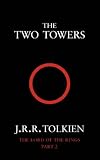
"One who passed in and came at length out of the echoing tunnel, beheld a plain, a great circle, somewhat hollowed like a vast shallow bowl… Once it had been green and filled with avenues, and groves of fruitful trees, watered by streams that flowed from the mountains to a lake. But no green thing grew there in the latter days of Saruman. The roads were paved with stone-flags, dark and hard…" (pg. 191)
As the three volumes of The Lord of the Rings can be considered one long book, it is show more hard to write a review of its second volume, The Two Towers, that says anything new from what I said in my review of the first. Consequently, this review should properly be considered an extension of my first, as those points also apply here.
As with Fellowship, The Two Towers is a great imaginative adventure though lacking in deeper literary presence, and it struggles to escape the shadow of the films (with the films generally displaying better storytelling decisions). The world-building is excellent (there's a reason 'Tolkien-esque' has become a byword for it), with Rohan in particular being brought to life. There's plenty of merry singing still, which is good news for the three or four people in the world who like it, but in general it's more restrained than Fellowship, which is good news for the rest of us.
The action is drier in Two Towers, perhaps because we're not following a band of heroes into intimate skirmishes anymore, as with the Fellowship in Moria, but instead armies on plains and in castles. The Battle of Helm's Deep is a disappointment; this is particularly glaring as it was done so well on film, but even without that reference point I imagine I would be puzzled by how it develops in Tolkien's story. The build-up to the battle lacks foreboding, the siege lacks tension, and the cavalry that rides in to save the day is led by some random rather than by Éomer. The pace is just off, and the battle is dealt with rather quickly (I remember this disappointment vividly from when I first read the book as a teenager around 2004). Surprisingly, so is Saruman's fall. The awakening of the Ents is an engaging storyline (you can mark that one for the books over the films) but ironically – considering it's Treebeard – it seems hasty. "Night lies over Isengard," Treebeard declares, only a hundred pages in to the story (pg. 103).
Of course, the dramatic ebb and flow of The Two Towers would seem disorienting to fans of the films, because the films' storyboarding begins to diverge markedly from Tolkien's. Whereas Fellowship was a linear quest adventure following one group of characters and was followed very faithfully by its film adaptation, The Two Towers has seen the Fellowship broken and scattered. Most notably, Part One of the book deals with the 'War' (Aragorn, Rohan, Helm's Deep, Gandalf, etc.) and Part Two focuses solely on Frodo and Sam's journey towards Mordor. The film's concurrent approach retains pace and focus, and is undoubtedly better for its medium (though, arguably, it could be better for the book too). Both parts of the book end deep into what fans of the films would consider to be The Return of the King's domain (Pippin looking into the Palantír ends Part One, whereas it opens the third film, while the battle against Shelob ends Part Two).
I don't say this to grumble as an uncultured film fan, as was the case when I read the book as a teenager. Instead, I would make the argument now that Tolkien's storyboarding decisions rob some key scenes of their power, and I'd like to think I'd have made this observation even if there weren't already films for comparison to highlight the matter. In particular, the Redemption of Boromir, who dies nobly as a sort of Horatius at the Bridge while protecting the hobbits from the Uruk-hai attack, is anti-climactic in print. This scene, delivered impressively at the end of the Fellowship film, is in the first few pages of the first chapter of the Two Towers book. It jars, both in pace and emotion, even if the underlying idea is compelling.
And this, ultimately, is the key point to make when reviewing Tolkien's The Lord of the Rings, even if I made the same point in my Fellowship review: these are impressive underlying ideas, and the fact that the films delivered them better is not a mark against Tolkien, but a credit to his imagination. Boromir's tragic redemption, Gandalf being reborn, Théoden being reborn (so to speak), the desperate stand at Helm's Deep, the march of the Ents, the introduction of Gollum: these are all great feats of storytelling, any one of which would make a lesser writer's reputation. As with the first book, many of the great lines from the screen come from Tolkien, not the screenwriters, even if the screenplays are great at repurposing some of them (the slow-talking Ents getting no further than 'Good Morning' being one good example (pg. 94)).
There are some oddities (Sauron says 'dainty' when speaking to Pippin through the Palantír (pg. 242), which probably embarrassed the Dark Lord when he played the conversation back to himself), but it's a question of priorities. You wouldn't complain about getting a splinter from a chest filled with treasures, and even though my review has focused on the flaws, it's only because that stuff emerges more readily when you're reading, while the good stuff quietly works its magic in the background. For example, I had something to say about the plainness of some of Tolkien's writing, particularly in the second part of the book when Frodo and Sam are travelling. Tolkien seems to spend paragraphs just to move them (and Gollum) another non-descript kilometre. But then, in their parting from Faramir, Gondor's captain gestures to the landscape – "On your west is an edge where the land falls into the great vales, sometimes suddenly and sheer, sometimes in long hillsides" (pg. 377) – and you can believe it. And I realised, rather shamefacedly, what a land Tolkien has prepared for us to roam in.
"They walked on in silence for a while, passing like grey and green shadows under the old trees, their feet making no sound; above them many birds sang, and the sun glistened on the polished roof of dark leaves in the evergreen woods of Ithilien." (pg. 347) show less
As the three volumes of The Lord of the Rings can be considered one long book, it is show more hard to write a review of its second volume, The Two Towers, that says anything new from what I said in my review of the first. Consequently, this review should properly be considered an extension of my first, as those points also apply here.
As with Fellowship, The Two Towers is a great imaginative adventure though lacking in deeper literary presence, and it struggles to escape the shadow of the films (with the films generally displaying better storytelling decisions). The world-building is excellent (there's a reason 'Tolkien-esque' has become a byword for it), with Rohan in particular being brought to life. There's plenty of merry singing still, which is good news for the three or four people in the world who like it, but in general it's more restrained than Fellowship, which is good news for the rest of us.
The action is drier in Two Towers, perhaps because we're not following a band of heroes into intimate skirmishes anymore, as with the Fellowship in Moria, but instead armies on plains and in castles. The Battle of Helm's Deep is a disappointment; this is particularly glaring as it was done so well on film, but even without that reference point I imagine I would be puzzled by how it develops in Tolkien's story. The build-up to the battle lacks foreboding, the siege lacks tension, and the cavalry that rides in to save the day is led by some random rather than by Éomer. The pace is just off, and the battle is dealt with rather quickly (I remember this disappointment vividly from when I first read the book as a teenager around 2004). Surprisingly, so is Saruman's fall. The awakening of the Ents is an engaging storyline (you can mark that one for the books over the films) but ironically – considering it's Treebeard – it seems hasty. "Night lies over Isengard," Treebeard declares, only a hundred pages in to the story (pg. 103).
Of course, the dramatic ebb and flow of The Two Towers would seem disorienting to fans of the films, because the films' storyboarding begins to diverge markedly from Tolkien's. Whereas Fellowship was a linear quest adventure following one group of characters and was followed very faithfully by its film adaptation, The Two Towers has seen the Fellowship broken and scattered. Most notably, Part One of the book deals with the 'War' (Aragorn, Rohan, Helm's Deep, Gandalf, etc.) and Part Two focuses solely on Frodo and Sam's journey towards Mordor. The film's concurrent approach retains pace and focus, and is undoubtedly better for its medium (though, arguably, it could be better for the book too). Both parts of the book end deep into what fans of the films would consider to be The Return of the King's domain (Pippin looking into the Palantír ends Part One, whereas it opens the third film, while the battle against Shelob ends Part Two).
I don't say this to grumble as an uncultured film fan, as was the case when I read the book as a teenager. Instead, I would make the argument now that Tolkien's storyboarding decisions rob some key scenes of their power, and I'd like to think I'd have made this observation even if there weren't already films for comparison to highlight the matter. In particular, the Redemption of Boromir, who dies nobly as a sort of Horatius at the Bridge while protecting the hobbits from the Uruk-hai attack, is anti-climactic in print. This scene, delivered impressively at the end of the Fellowship film, is in the first few pages of the first chapter of the Two Towers book. It jars, both in pace and emotion, even if the underlying idea is compelling.
And this, ultimately, is the key point to make when reviewing Tolkien's The Lord of the Rings, even if I made the same point in my Fellowship review: these are impressive underlying ideas, and the fact that the films delivered them better is not a mark against Tolkien, but a credit to his imagination. Boromir's tragic redemption, Gandalf being reborn, Théoden being reborn (so to speak), the desperate stand at Helm's Deep, the march of the Ents, the introduction of Gollum: these are all great feats of storytelling, any one of which would make a lesser writer's reputation. As with the first book, many of the great lines from the screen come from Tolkien, not the screenwriters, even if the screenplays are great at repurposing some of them (the slow-talking Ents getting no further than 'Good Morning' being one good example (pg. 94)).
There are some oddities (Sauron says 'dainty' when speaking to Pippin through the Palantír (pg. 242), which probably embarrassed the Dark Lord when he played the conversation back to himself), but it's a question of priorities. You wouldn't complain about getting a splinter from a chest filled with treasures, and even though my review has focused on the flaws, it's only because that stuff emerges more readily when you're reading, while the good stuff quietly works its magic in the background. For example, I had something to say about the plainness of some of Tolkien's writing, particularly in the second part of the book when Frodo and Sam are travelling. Tolkien seems to spend paragraphs just to move them (and Gollum) another non-descript kilometre. But then, in their parting from Faramir, Gondor's captain gestures to the landscape – "On your west is an edge where the land falls into the great vales, sometimes suddenly and sheer, sometimes in long hillsides" (pg. 377) – and you can believe it. And I realised, rather shamefacedly, what a land Tolkien has prepared for us to roam in.
"They walked on in silence for a while, passing like grey and green shadows under the old trees, their feet making no sound; above them many birds sang, and the sun glistened on the polished roof of dark leaves in the evergreen woods of Ithilien." (pg. 347) show less
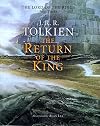
[The Return of the King] is my least favorite of the books; it is easily the least focused. Be careful, that is a matter of the books as compared to each other. Tolkien exists outside literatures typical realms. But the last book in the series actually highlights some weaknesses that could be overlooked in the earlier books because the surrounding material was so superior. Here, at the end of the matter, Tolkien exposes himself a bit.
First –
[The Return of the King] – who needs a king? I show more mean, come on, these are the same countries of men who have repeatedly exposed their weakness to evil and greed. Now, a man appears with an historically important sword and some claims about his lineage, and everyone melts. And I’m not sure that Middle Earth is going to be safe and free of trouble under the reign of men – at least, not these men. Don’t get your mithril shirt in a bunch, Strider is an impressive man, one who I’d follow. Only Faramir rivals him in terms of judgment, leadership, and skill. But Strider is the more impressive iteration of Aragorn’s personalities. The élan and mystery is lost when he begins to prance about. And Faramir, while the more sensitive and understanding, lets that quality devolve into weakness too often. I’d just as soon see Gandalf or Galadriel unite the world and lead. For that matter, Samwise, who becomes the Shire potentate, would be a fine unified leader. I just don’t trust that the time of men has come in Middle Earth – and Tolkien has exposed himself here with his over emphasis on the men and the king story. Remember, it was the Fellowship that saved the world, and the man in the group was the one who first put the Fellowship in danger. I would have been okay with less men and more elves or wizards or dwarves.
Second –
Where are the ladies? When Eowyn finally quits listening to all of the men in her life, all trying to protect her from being who she is, well, she kicks some Ring Wraith patootie. And Eowyn is really the only strong female character who has any real place in the story, save Galadriel. You have to look into the appendices before you find much about Arwen, save a couple of conversations and some vague references in [The Fellowship]. Why wasn’t there a female in the Fellowship? Tolkien overlooked the ladies in all of the books, but exposes himself by writing such a wonderful passage with Eowyn in the Battle of the Pelennor Fields, making it clear that there should have been more strong women along the way.
Finally –
For all of Tolkien’s gearing his characters up for battle, there is a pretty significant lack of battles in the books. The Battle of the Pelennor Fields and the Battle of Helms Deep are really the only ones. There are others that he skims through, and a bunch that he recounts through a character’s eyes after the fact. Couple that with the number of times that someone blows their horn or mounts a horse or grabs a shield and sword, and you start to feel a little cheated. Tolkien spends far too much time preparing for battle and not enough time in it – a little balance is needed. The same phenomenon appears when Tolkien begins peeling everyone off and having the characters saying goodbye. They say goodbye over dinner, then over breakfast, then on their horses, and then someone comes back and does it again.
[The Lord of the Rings] consumes you, sucks you in and won’t let you go, and that’s a good thing. The few criticisms I’ve offered are in the way of wanting more, wanting the experience to be perfect. But there are a rare few set of tales that can so capture your imagination; Tolkien was a master, if a little obsessive.
Bottom Line: Perhaps it is a melancholy for the way things began in Middle Earth, but, even with a new king, that world is a lesser place without Gandalf and the Elves and Frodo – maybe that’s why it’s hard to like this final chapter as much as the beginning.
4 bones!!!!! show less
First –
[The Return of the King] – who needs a king? I show more mean, come on, these are the same countries of men who have repeatedly exposed their weakness to evil and greed. Now, a man appears with an historically important sword and some claims about his lineage, and everyone melts. And I’m not sure that Middle Earth is going to be safe and free of trouble under the reign of men – at least, not these men. Don’t get your mithril shirt in a bunch, Strider is an impressive man, one who I’d follow. Only Faramir rivals him in terms of judgment, leadership, and skill. But Strider is the more impressive iteration of Aragorn’s personalities. The élan and mystery is lost when he begins to prance about. And Faramir, while the more sensitive and understanding, lets that quality devolve into weakness too often. I’d just as soon see Gandalf or Galadriel unite the world and lead. For that matter, Samwise, who becomes the Shire potentate, would be a fine unified leader. I just don’t trust that the time of men has come in Middle Earth – and Tolkien has exposed himself here with his over emphasis on the men and the king story. Remember, it was the Fellowship that saved the world, and the man in the group was the one who first put the Fellowship in danger. I would have been okay with less men and more elves or wizards or dwarves.
Second –
Where are the ladies? When Eowyn finally quits listening to all of the men in her life, all trying to protect her from being who she is, well, she kicks some Ring Wraith patootie. And Eowyn is really the only strong female character who has any real place in the story, save Galadriel. You have to look into the appendices before you find much about Arwen, save a couple of conversations and some vague references in [The Fellowship]. Why wasn’t there a female in the Fellowship? Tolkien overlooked the ladies in all of the books, but exposes himself by writing such a wonderful passage with Eowyn in the Battle of the Pelennor Fields, making it clear that there should have been more strong women along the way.
Finally –
For all of Tolkien’s gearing his characters up for battle, there is a pretty significant lack of battles in the books. The Battle of the Pelennor Fields and the Battle of Helms Deep are really the only ones. There are others that he skims through, and a bunch that he recounts through a character’s eyes after the fact. Couple that with the number of times that someone blows their horn or mounts a horse or grabs a shield and sword, and you start to feel a little cheated. Tolkien spends far too much time preparing for battle and not enough time in it – a little balance is needed. The same phenomenon appears when Tolkien begins peeling everyone off and having the characters saying goodbye. They say goodbye over dinner, then over breakfast, then on their horses, and then someone comes back and does it again.
[The Lord of the Rings] consumes you, sucks you in and won’t let you go, and that’s a good thing. The few criticisms I’ve offered are in the way of wanting more, wanting the experience to be perfect. But there are a rare few set of tales that can so capture your imagination; Tolkien was a master, if a little obsessive.
Bottom Line: Perhaps it is a melancholy for the way things began in Middle Earth, but, even with a new king, that world is a lesser place without Gandalf and the Elves and Frodo – maybe that’s why it’s hard to like this final chapter as much as the beginning.
4 bones!!!!! show less
The Fellowship Of The Ring: Being the First Part of The Lord of the Rings (The Lord of the Rings, 1) by J. R. R. Tolkien
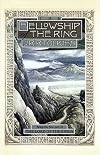
2021 review:
I've returned to Middle-earth (once again, after a six-year absence, in winter).
This time round I did what I have long desired, and outlined the whole damn book. I can now report that Fellowship has five-act structure (I suspect the individual books also have five-act structure, but don't quote me on that). All this pedantry helped me understand the shape of this novel and the operation of five-act structure itself, which can be opaque to those of us who have learned to write show more novels as if they were films. (The interminable chapters at Rivendell are themselves the third act. Lothlórien is not an afterthought, but integral to the denouement of the story.)
I admired the construction of each chapter and how Tolkien avoids writing an episodic story by continually looking backward or forward. In countless scenes, the characters are looking back at landscapes they've crossed, or listening to Aragorn describe the trek they're about to make in loving geological detail. This attention to setting knits each section of the story to those before and after and grounds the characters in their journey; we have a visceral sense of distance crossed, time passed, vistas we will never see again.
The attention to landscape also supports the guiding themes of the novel - the inevitability of change and loss, and our possible responses to it. I have more thoughts that I hope to get down about reading this novel during a long moment when time has gone melty and fear (of death, change, loss of power) is the presiding mood. Suffice it to say, there's something almost Daoist about the narrative's insistence on the inevitability of conflict and the generative nature of loss, smallness, refusal of power (though of course Tolkien's guiding theology is Christian, of a distinctly non-American bent).
There are so many passages here that sound uncanny echoes of our present world, though Tolkien's reliance on and propagation of racist and classist tropes continuously undercut the themes of his story. A recent podcast episode on Orientalism in fantasy fiction made me frantically scribble MORIA~ZIONISM? on the envelope I was using as a bookmark. It's hard not to read Aragorn's fated restoration, a counterpoint to lost kingdoms and failing magic, as conservative wish-fulfillment. Yet my speculation that the Dunlanders represent a Celtic remnant only led to the discovery that Tolkien favored Irish independence - the politics of Middle-earth are incoherent in the way that most stories about Dark Lords are bound to be.
I got pretty teary when Galadriel gives Sam his box of earth. May 2021 be the year when a beautiful woman promises us that someday we will return home, however unfamiliar that place may be, and plant a garden.
2015 review:
This is a good book to read every five years in the heart of winter.
I've read LotR too many times to count, but this time it felt like a wholly new book. I appreciated the clarity of the prose and Tolkien's deftness at creating suspense, horror, and wonder. Middle-earth and its inhabitants are painted in very few strokes and thus have the vividness of dreams.
(For that reason, the eternal fan dithering about Balrog wings and Legolas' hair color totally misses the point—you, the reader, decide what color Legolas' hair is. As a younger person, I absolutely read these novels with a fannish impatience, wanting to know details that are beyond the scope of Tolkien's prose. Now I have learned to be patient and trust my own imagination.)
(But just to be clear, Balrogs definitely do not have wings.)
Once more, the Shire was awesome and charming. I love how it is simply and unequivocally a pre-industrial England that never was (and which certainly does not belong in this quasi-medieval world). I suspect that Pippin may be an Oxford undergraduate. I have an image of him and Merry boating on the Isis and eating cucumber sandwiches.
December 2009 review:
This was, I think, my first time actually reading LotR directly after The Hobbit. It was a weird experience! The first half of Fellowship really is still in the world of The Hobbit, which reflects the experiences of the hobbits themselves, but also of course is the legacy of Tolkien's writing process. In many ways he used the actual process of creating the novel to structure the novel.
Some thoughts, from the point-of-view of someone who has read this book way too many times:
Everything set in the Shire is just totally awesome and charming. This allows the Shire to be a tangible presence through the rest of the novel. Bilbo is also a great character - Tolkien took the last scene of The Hobbit where Bilbo composes his first poem, and just ran with it.
Everything from Frodo's departure until Bree feels very episodic and Hobbit-y. Which does work, but I'm still not sure about Tom Bombadil. Tom Bombadil stops the novel. He knows this. He laughs in the face of plot. Would it have been better for Tolkien to have put something else there? Not sure. Tom Bombadil is the first one to tell them stories about the past, and it's there that Frodo has his dream of Tol Eressea. So Tolkien thought he was important to the larger whole at least, even once the novel had grown past his initial conception of The Hobbit II.
Aragorn is a lot of fun. I like how he can converse at the level of the hobbits and of the Elves. People who complain about Arwen being a non-character need to go back and reread Aragorn telling the story of Luthien and Beren. There is so much emotion on the page there.
Moria is awesome but in some ways has nothing to do with the larger story, besides a convenient place to kill Gandalf. We learn a bunch about Dwarves that is interesting if you've read The Hobbit but will never come up again. But that's Lord of the Rings for you. Soon after that we hear the Amroth and Nimrodel story which is cool and sad but also unrelated to anything, except to illustrate that Bad Things Happen To Elves.
I believe it was Peter Jackson who said in the film commentary that if you were writing Lord of the Rings as an original screenplay you would never put in Lothlorien and Galadriel. This shows that screenwriting is a silly business, because everything of importance in Fellowship pretty much happens in Lothlorien. Okay, slight exaggeration, but it's there that we really understand what the Ring is and what it will do to Middle-earth, and get our first metaphorical glimpse at the ship that will bear Frodo and Galadriel away at the end. Once Frodo offers Galadriel the Ring and is refused, he is set on his course to Mordor.
I also really liked the fording of the river Nimrodel to signal their entrance into Lothlorien - a symbol of purification that I hadn't noticed before.
This used to be my favorite book of the trilogy, but of course Tolkien never wanted it split up as a trilogy, and rereading it I can't help but look forward to the more substantial, less Tom Bombadil-y bits that come later! show less
I've returned to Middle-earth (once again, after a six-year absence, in winter).
This time round I did what I have long desired, and outlined the whole damn book. I can now report that Fellowship has five-act structure (I suspect the individual books also have five-act structure, but don't quote me on that). All this pedantry helped me understand the shape of this novel and the operation of five-act structure itself, which can be opaque to those of us who have learned to write show more novels as if they were films. (The interminable chapters at Rivendell are themselves the third act. Lothlórien is not an afterthought, but integral to the denouement of the story.)
I admired the construction of each chapter and how Tolkien avoids writing an episodic story by continually looking backward or forward. In countless scenes, the characters are looking back at landscapes they've crossed, or listening to Aragorn describe the trek they're about to make in loving geological detail. This attention to setting knits each section of the story to those before and after and grounds the characters in their journey; we have a visceral sense of distance crossed, time passed, vistas we will never see again.
The attention to landscape also supports the guiding themes of the novel - the inevitability of change and loss, and our possible responses to it. I have more thoughts that I hope to get down about reading this novel during a long moment when time has gone melty and fear (of death, change, loss of power) is the presiding mood. Suffice it to say, there's something almost Daoist about the narrative's insistence on the inevitability of conflict and the generative nature of loss, smallness, refusal of power (though of course Tolkien's guiding theology is Christian, of a distinctly non-American bent).
There are so many passages here that sound uncanny echoes of our present world, though Tolkien's reliance on and propagation of racist and classist tropes continuously undercut the themes of his story. A recent podcast episode on Orientalism in fantasy fiction made me frantically scribble MORIA~ZIONISM? on the envelope I was using as a bookmark. It's hard not to read Aragorn's fated restoration, a counterpoint to lost kingdoms and failing magic, as conservative wish-fulfillment. Yet my speculation that the Dunlanders represent a Celtic remnant only led to the discovery that Tolkien favored Irish independence - the politics of Middle-earth are incoherent in the way that most stories about Dark Lords are bound to be.
I got pretty teary when Galadriel gives Sam his box of earth. May 2021 be the year when a beautiful woman promises us that someday we will return home, however unfamiliar that place may be, and plant a garden.
2015 review:
This is a good book to read every five years in the heart of winter.
I've read LotR too many times to count, but this time it felt like a wholly new book. I appreciated the clarity of the prose and Tolkien's deftness at creating suspense, horror, and wonder. Middle-earth and its inhabitants are painted in very few strokes and thus have the vividness of dreams.
(For that reason, the eternal fan dithering about Balrog wings and Legolas' hair color totally misses the point—you, the reader, decide what color Legolas' hair is. As a younger person, I absolutely read these novels with a fannish impatience, wanting to know details that are beyond the scope of Tolkien's prose. Now I have learned to be patient and trust my own imagination.)
(But just to be clear, Balrogs definitely do not have wings.)
Once more, the Shire was awesome and charming. I love how it is simply and unequivocally a pre-industrial England that never was (and which certainly does not belong in this quasi-medieval world). I suspect that Pippin may be an Oxford undergraduate. I have an image of him and Merry boating on the Isis and eating cucumber sandwiches.
December 2009 review:
This was, I think, my first time actually reading LotR directly after The Hobbit. It was a weird experience! The first half of Fellowship really is still in the world of The Hobbit, which reflects the experiences of the hobbits themselves, but also of course is the legacy of Tolkien's writing process. In many ways he used the actual process of creating the novel to structure the novel.
Some thoughts, from the point-of-view of someone who has read this book way too many times:
Everything set in the Shire is just totally awesome and charming. This allows the Shire to be a tangible presence through the rest of the novel. Bilbo is also a great character - Tolkien took the last scene of The Hobbit where Bilbo composes his first poem, and just ran with it.
Everything from Frodo's departure until Bree feels very episodic and Hobbit-y. Which does work, but I'm still not sure about Tom Bombadil. Tom Bombadil stops the novel. He knows this. He laughs in the face of plot. Would it have been better for Tolkien to have put something else there? Not sure. Tom Bombadil is the first one to tell them stories about the past, and it's there that Frodo has his dream of Tol Eressea. So Tolkien thought he was important to the larger whole at least, even once the novel had grown past his initial conception of The Hobbit II.
Aragorn is a lot of fun. I like how he can converse at the level of the hobbits and of the Elves. People who complain about Arwen being a non-character need to go back and reread Aragorn telling the story of Luthien and Beren. There is so much emotion on the page there.
Moria is awesome but in some ways has nothing to do with the larger story, besides a convenient place to kill Gandalf. We learn a bunch about Dwarves that is interesting if you've read The Hobbit but will never come up again. But that's Lord of the Rings for you. Soon after that we hear the Amroth and Nimrodel story which is cool and sad but also unrelated to anything, except to illustrate that Bad Things Happen To Elves.
I believe it was Peter Jackson who said in the film commentary that if you were writing Lord of the Rings as an original screenplay you would never put in Lothlorien and Galadriel. This shows that screenwriting is a silly business, because everything of importance in Fellowship pretty much happens in Lothlorien. Okay, slight exaggeration, but it's there that we really understand what the Ring is and what it will do to Middle-earth, and get our first metaphorical glimpse at the ship that will bear Frodo and Galadriel away at the end. Once Frodo offers Galadriel the Ring and is refused, he is set on his course to Mordor.
I also really liked the fording of the river Nimrodel to signal their entrance into Lothlorien - a symbol of purification that I hadn't noticed before.
This used to be my favorite book of the trilogy, but of course Tolkien never wanted it split up as a trilogy, and rereading it I can't help but look forward to the more substantial, less Tom Bombadil-y bits that come later! show less
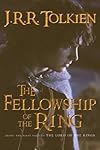
This is the first book I've read in 2020, the year I have the goal of reading longer books and those that intimidate me. I've read the Hobbit twice, once in fifth grade and then again last year, and I think it's a fun story, but I've never read the Lord of the Rings and haven't read much high fantasy.
I read this front to back, including the foreward and prologue - this made me very concerned that this book would be incredibly dry. It is noted that the trilogy is an attempt at "a really long show more story that would hold the attention of readers." Thankfully the meat of the story is usually not very dry.
I feel it reads well going into it thinking it will read like a DnD campaign rather than a "typical" novel - there are long journeys, battles, moments of rest, and I can imagine the successes, twists and turns, and failures as being controlled by a roll of the dice. (I'm not sure how typical this is for fantasy.)
There are slow moments, a lot of songs, and a lot of names of places and people, but I really enjoyed the importance of nature and the merging of human-like beings with the natural world.
Maybe it's just my current priorities in life that have colored my reading, but there were strong themes of stewardship of the land and immersion into nature. Nature is neither good nor evil in this text, rather it's shaped by the people around it. When nurtured and tended to such as Tom Bombadil and Galadriel have done, the land is abundant and nuturing back. In other regions, there is no steward for the land, and it is wild and is neither kind nor harsh.
The corrupt and imperialistc forces destory the natural world. Sam has visions of trees being felled in the Shire and smoke pouring out from a new brick building and he wishes to be home to protect it. Sam is also the character who is gifted soil with which he can garden when his journey is over. (And presumably rebuild.)
I wasn't really expecting the strength of this message of the goodness of working with the land to create bounty rather than its neglect and/or exploitation for one's personal power and gain. This message was a nice surprise because it isn't very well conveyed in the movies.
Overall, a different type of reading experience, but I enjoyed it. show less
Lists
Books Read in 2018 (14)
Sonlight Books (1)
The "A" List (1)
Read (1)
Antiheroes (1)
Read in 2005 (1)
Forest Books (1)
Formative books (1)
aijowenuwaneaw (1)
Read 2026 Ranked (1)
Art of Reading (1)
Backlisted (1)
LIDOS (1)
Must read (1)
Read in 2025 (1)
Books I've read (1)
al.vick-series (1)
A Novel Cure (1)
Put a Bird On It (1)
Elaina's (1)
Fiction For Men (1)
Take Four Books (1)
Best Young Adult (1)
Shelf 101 (1)
Mythic Fantasy (1)
Top 10 2021 (1)
Favorite Series (1)
Faerie Mythology (1)
Off on a Quest (1)
First Novels (1)
Ryan's Books (1)
1980s (1)
Read in 2003 (1)
2024-25 reading (1)
Christmas Books (1)
Best First Lines (1)
Epistolary Books (1)
The Nibelungs (1)
Delete This List (1)
Books About Boys (1)
Epic Fantasy (1)
100 knjiga (1)
Fantasy TBR (4)
Gen X Library (4)
Book club books (4)
el (4)
Nifty Fifties (4)
Best Audiobooks (3)
1950s (4)
LOTR wishlist (8)
Favourite Books (9)
Books Read in 2022 (10)
Books Read in 2021 (10)
Unread books (11)
Ambleside Books (6)
Five star books (4)
Overdue Podcast (5)
1970s (5)
Folio Society (6)
Ambleside Year 7 (2)
Elevenses (2)
um actually (2)
BBC Big Read (2)
BBC Big Read (2)
1930s (1)
Great Audiobooks (1)
Wanted List (1)
Books with Twins (1)
. (2)
Carole's List (2)
Comfort Reads (3)
Pageturners (2)
. (2)
BitLife (2)
Epic Fiction (2)
Robin (2)
Awards


Beowulf: A Translation and Commentary, Together with Sellic Spell (Finalist – Inklings Studies – 2015)
Beowulf: A Translation and Commentary, Together with Sellic Spell (Finalist – Inklings Studies – 2016)


Lord of the Rings Book 2 Fellowship of the Ring Part 1-2 {Japanese New Edition} (Hebrew Translation – 1980)
Lord of the Rings Book 3 Fellowship of the Ring Part 2-1 {Japanese New Edition} (Hebrew Translation – 1980)


You May Also Like


Associated Authors
Statistics
- Works
- 580
- Also by
- 71
- Members
- 509,577
- Popularity
- #3
- Rating
- 4.3
- Reviews
- 4,443
- ISBNs
- 4,717
- Languages
- 61
- Favorited
- 3,207


