
Vachel Lindsay (1879–1931)
Author of The Little Turtle
About the Author
From Springfield, Illinois, Lindsay studied at Hiram College, the Chicago Art Institute, and the New York Art School, turning to poetry only after he had no success as an artist. The appeal of Vachel Lindsay's poetry is, first and foremost, one of sound. Many of his poems are meant to be chanted show more aloud, intoned, or sung. The poet was a phenomenon in his day, who became famous for the recitation of his poems. He preached a gospel of beauty expressed in almost primitive cadences. His early art studies under Robert Henri gave him the ability to illustrate his own poems, and he developed an elaborate theory of art that has gone largely ignored. Among his best-known works are "General William Booth Enters Heaven", published in Poetry Magazine in 1913, and "The Congo" (1914). (Bowker Author Biography) show less
Image credit: Courtesy of the NYPL Digital Gallery (image use requires permission from the New York Public Library)
Works by Vachel Lindsay
General William Booth Enters Into Heaven and Other Poems by Nicholas Vachel Lindsay by Nicholas Vachel Lindsay (2007) 8 copies
Poetry of Vachel Lindsay : Complete and With Lindsay's Drawings (v. 3: Bibliography) (1986) 2 copies
The Daniel Jazz 1 copy
Short Poetry Collection 175 1 copy
“The Flower-fed Buffaloes” 1 copy
Aladdin and the Jinn [poem] 1 copy
TREE #5 (Summer 1975) 1 copy
What Semiramis Said [poem] 1 copy
Euclid [poem] 1 copy
The Little Turtle 1 copy
Associated Works
American Poetry: The Twentieth Century, Volume One: Henry Adams to Dorothy Parker (2000) — Contributor — 481 copies, 1 review
Poems Bewitched and Haunted (Everyman's Library Pocket Poets Series) (2005) — Contributor — 230 copies
From Totems to Hip-Hop: A Multicultural Anthology of Poetry Across the Americas 1900-2002 (2002) — Contributor — 182 copies
The Lincoln Anthology: Great Writers on His Life and Legacy from 1860 to Now (2008) — Contributor — 172 copies, 1 review
The Sophisticated Cat: A Gathering of Stories, Poems, and Miscellaneous Writings About Cats (1992) — Contributor — 112 copies, 1 review
Buzz Words: Poems About Insects (Everyman's Library Pocket Poets Series) (2021) — Contributor — 56 copies
American poets : an anthology of contemporary verse — Contributor — 4 copies
The Ethnic Image in Modern American Literature, 1900-1950, Volumes 1-2 (1984) — Contributor — 1 copy
Tagged
Common Knowledge
- Legal name
- Lindsay, Nicholas Vachel
- Birthdate
- 1879-11-10
- Date of death
- 1931-12-05
- Gender
- male
- Education
- Hiram College
New York School of Art (now The New School)
Chicago Art Institute - Occupations
- poet
lecturer
illustrator
movie critic
museum guide
journalist - Organizations
- Authors Guild
Playwrights and Composers of Great Britain
National Institute of Arts and Letters
Poetry Society of America
Incorporated Society of Playwrights
English Speaking Union (show all 14)
Cliff Dwellers
Players
Author's Club
Marshall Field's
Metropolitan Museum of Art
Nicholls Gas Tubing Works
Young Men's Christian Association
Anti-Saloon League - Awards and honors
- Poetry magazine prizes
Helen H. Levinson Prize
Litt.D., Baylor University
Litt.D., Hiram College
Vachel Lindsay House
Phi Beta Kappa - Relationships
- Teasdale, Sara (friend)
- Nationality
- USA
- Birthplace
- Springfield, Illinois, USA
- Places of residence
- Hiram, Ohio, USA
New York, New York, USA
Jacksonville, Florida, USA
Spokane, Washington, USA - Place of death
- Springfield, Illinois, USA
- Burial location
- Oak Ridge Cemetery, Springfield, Illinois, USA
- Associated Place (for map)
- USA
Members
Reviews

The poems are often musical in nature, often meant to be sung. They sometimes come across as collegiate cheers and other times as lullabies. The ethnic stereotypes are dated and might raise an eyebrow. The ethnic caricatures often take away from the poems in which they feature. I'm not sure the America portrayed within these pages ever existed; it most certainly no longer does.

In progress
I subscribe to Academy of American Poets service where they send to my email a poem a day. Upon receiving this one today (August 2,2025) I was taken by the irrepressible rhythm and chant of it, and its perfect flight of imagination with surprising insight.
Meeting Ourselves by Vachel Lindsay
We met ourselves as we came back
As we hiked the trail from the north.
Our foot-prints mixed in the rainy path
Coming back and going forth.
The prints of my comrade’s hob-nailed shoes
And my tramp show more shoes mixed in the rain.
We had climbed for days and days to the North
And this was the sum of our gain:
We met ourselves as we came back,
And were happy in mist and rain.
Our old souls and our new souls
Met to salute and explain—
That a day shall be as a thousand years,
And a thousand years as a day.
The powers of a thousand dreaming skies
As we shouted along the trail of surprise
Were gathered in our play:
The purple skies of the South and the North,
The crimson skies of the South and the North,
Of tomorrow and yesterday.
Turns out this poem was published in the 1920s and was written for "precocious children twelve or fifty years of age." I'm 66 now and cannot be precocious child, unless one can be belatedly precocious in one's second childhood. It's the kind of poem I could learn by heart and, at some odd opportunity, lift a line or two to sum up the occasion or to rally prevailing emotions. I rushed to find where I could read more and was again delighted when I read the book's title.
I am going to have a lot of fun with this one. Yeah, "poetry" and "fun," imagine! show less
I subscribe to Academy of American Poets service where they send to my email a poem a day. Upon receiving this one today (August 2,2025) I was taken by the irrepressible rhythm and chant of it, and its perfect flight of imagination with surprising insight.
Meeting Ourselves by Vachel Lindsay
We met ourselves as we came back
As we hiked the trail from the north.
Our foot-prints mixed in the rainy path
Coming back and going forth.
The prints of my comrade’s hob-nailed shoes
And my tramp show more shoes mixed in the rain.
We had climbed for days and days to the North
And this was the sum of our gain:
We met ourselves as we came back,
And were happy in mist and rain.
Our old souls and our new souls
Met to salute and explain—
That a day shall be as a thousand years,
And a thousand years as a day.
The powers of a thousand dreaming skies
As we shouted along the trail of surprise
Were gathered in our play:
The purple skies of the South and the North,
The crimson skies of the South and the North,
Of tomorrow and yesterday.
Turns out this poem was published in the 1920s and was written for "precocious children twelve or fifty years of age." I'm 66 now and cannot be precocious child, unless one can be belatedly precocious in one's second childhood. It's the kind of poem I could learn by heart and, at some odd opportunity, lift a line or two to sum up the occasion or to rally prevailing emotions. I rushed to find where I could read more and was again delighted when I read the book's title.
I am going to have a lot of fun with this one. Yeah, "poetry" and "fun," imagine! show less

This poet uses words to beat you around the head with a stick. His ideas are the ideological Christian-pacifist of the early 1900s. Women and the "savage peoples" are the idyll of nature. I felt most of the poems about "savage peoples" were patronizing.
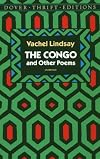
I frankly find the title poem pretty awful --both racist and silly. However, I dearly love General Booth Enters Heaven and Bryan. The Booth poem reminds me of Booth's saying he would play the tambourine with his toes if it brought one more soul to haven, and Lord Manfield's statement that the Salvation Army was the one truly Christian group in Britain. "Bryan" may not be fair to McKinlay, who was much more than Hanna's other suit of clothes, but it wonderfully conveys the excitement of the show more Bryan campaign. show less
Lists
You May Also Like


Associated Authors
Statistics
- Works
- 49
- Also by
- 38
- Members
- 679
- Popularity
- #37,220
- Rating
- 4.0
- Reviews
- 10
- ISBNs
- 98
- Languages
- 2
- Favorited
- 2

