
Jonis Agee
Author of The River Wife
About the Author
Jonis Agee teaches at the University of Nebraska-Lincoln.
Image credit: University of Nebraska - Lincoln
Works by Jonis Agee
Two Poems 1 copy
Mercury, A Short Story 1 copy
Associated Works
HAWK-WIND #2 — Contributor — 1 copy
Tagged
Common Knowledge
- Birthdate
- 1943-05-31
- Gender
- female
- Education
- University of Iowa (BA)
State University of New York, Binghamton (MA) (PhD) - Occupations
- university professor
scholar of English language and literature
screenwriter - Organizations
- University of Nebraska
College of St. Catherine - Relationships
- Spencer, Brent (husband)
Brenda (daughter)
Nora (daughter) - Nationality
- USA
- Birthplace
- Omaha, Nebraska, USA
- Places of residence
- Omaha, Nebraska, USA
St. Paul, Minnesota, USA
Missouri, USA - Associated Place (for map)
- USA
Members
Reviews

The chaos and brutality of Honey Parrish's life doesn't match the bucolic reputation of small town Iowa where she lives. Hers is a life constantly spinning just off center, dangerously close to spiraling altogether out of control. When she begins an affiar with Jasper Johnson, Divinity, Iowa's only black man, it seems that the little balance Honey was able to manage has been finally lost forever. Haunted by a dead lover, plagued by a lecherous boss, and at odds with her entire family, show more especially her brother who seems to be intent on killing either her or Jasper or both, Honey richocets through her days without much reason. She is desperate to connect with someone on her own terms but unable to decipher what those terms might be. As she tries to map a course for her life and thoughts, using butcher paper tacked to the walls of her trailer, the town sheriff forces her to confront a decades old, unsolved murder and figure out whether her dead lover, her ex-husband, or her brother was the killer.
Jonis Agee is the queen of marginalized, small town characters. These are not glorified and heroic characters, brimming with optimism and sterotypical middle American values. These are not rolling hills and suntipped stalks of grain. No, Agee grounds her stories in the hard scrabble and mundane existence of farming and ranching. Her characters don't glide through grain fields, they slog through mud and snow and bitter cold and repressive, sticky heat. And her characters are all haunted, some of them quite literally. They are haunted by their past, their self-doubt, and their weakness. These characters, who all seem to be living on the ragged fringe of society, are sometimes difficult to read about. Their mistakes and the chaos that composes their lives can be frustrating but you always feel like you are reading about real people, people who might inhabit your life and your days if you scratched a little deeper beneath the surface.
Agee writes with a poetic turn of phrase that, though juxtaposed to stark reality, never seems out of place. This was her first novel and, thougb her writing style and poetic voice have grown much over the years, it is still evident here and a pleasure to read. What has improved more over the years is her storytelling ability. Though the overall story is a good one, Agee builds up the mystery so slowly, dribbling out juicy details a little at a time, that the reader is looking for the mystery to play a larger role than it does in the final resolutions for Honey. And Agee, always quirky and eccentric with the characters, writes a few passages which stretch the bounds of believability. Her later novels show a much more practiced and experienced voice.
All in all, a very good read. Highly recommended, but beware if you are impatient with characters who don't make good decisions.
Four bones!!!! show less
Jonis Agee is the queen of marginalized, small town characters. These are not glorified and heroic characters, brimming with optimism and sterotypical middle American values. These are not rolling hills and suntipped stalks of grain. No, Agee grounds her stories in the hard scrabble and mundane existence of farming and ranching. Her characters don't glide through grain fields, they slog through mud and snow and bitter cold and repressive, sticky heat. And her characters are all haunted, some of them quite literally. They are haunted by their past, their self-doubt, and their weakness. These characters, who all seem to be living on the ragged fringe of society, are sometimes difficult to read about. Their mistakes and the chaos that composes their lives can be frustrating but you always feel like you are reading about real people, people who might inhabit your life and your days if you scratched a little deeper beneath the surface.
Agee writes with a poetic turn of phrase that, though juxtaposed to stark reality, never seems out of place. This was her first novel and, thougb her writing style and poetic voice have grown much over the years, it is still evident here and a pleasure to read. What has improved more over the years is her storytelling ability. Though the overall story is a good one, Agee builds up the mystery so slowly, dribbling out juicy details a little at a time, that the reader is looking for the mystery to play a larger role than it does in the final resolutions for Honey. And Agee, always quirky and eccentric with the characters, writes a few passages which stretch the bounds of believability. Her later novels show a much more practiced and experienced voice.
All in all, a very good read. Highly recommended, but beware if you are impatient with characters who don't make good decisions.
Four bones!!!! show less
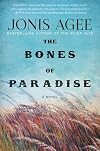
Birds call to their mates across the sandy plains. A multicolored cloud of butterflies wings its way across the grassy landscape. Astride a horse, a mysterious man finds the body of an Indian woman and her child in a shallow grave in the shadow of a windmill. Gunshots erupt across the expanse, and the man is killed.
With [The Bones of Paradise], Jonis Agee establishes herself as one of the most underappreciated writers of our time. Her delicate descriptions, echoing the tones and colors and show more sounds of the place where the story is rooted, are so poetic that it’s hard to believe you’re reading a western, complete with gun play and violence. She is a wordsmith equal to the great poets. Here is her description of one of the minor characters:
“Pushing the strand of damp hair off her forehead, she gave Grave a quick smile and tilted her head. Her eyes had a touch of green like the water I hay meadows. Sometimes, when she was angry, a dark cast appeared like the morning sky before rain. She was a handsome woman with light tortoiseshell skin that shone in the new summer light.”
Her skill with words is matched in her story creation. [The Bones of Paradise] is a family saga, rich in plain’s history and western sensibility. You’ll taste the dust in the air as her characters sift through the vengeance and greed that rules their lives. You’ll smell the blood in the air as the cavalry massacre the innocent at Wounded Knee. And the overripe plains sun will illuminate the spidery threads woven from these events into their lives.
In her main characters, Dulcinea and Rose, she’s created women to rival any cowboy. At the end, in the wake of her husband’s death, her son’s death, and attempts to swindle her out of her land, she ponders how to proceed with her life –
“Her faith had removed God, dispersed him like seed or gravel. It was not that God didn’t exist. It was that he wasn’t alone, but in pieces, parts, always whole, sufficient, always multiple. So like the ancient Greeks she trod lightly, carefully, tried to give no offense to the land, the sacred grass her feet crushed, the ants hurriedly preparing caverns for the winter, pushing tiny yellow boulders out of a hole the size of a bee’s leg. Oh the offense, to walk so clumsily through the world, to crush and bring havoc, that they couldn’t help. But to give no recognition to the cost of their being alive, to the price paid for their dreams by everything else?
Bottom Line: A lyrical and poetic book that will make you forget you’re reading a western. Agee is easily one of the most underappreciated writers of our time.
5 bones!!!!! show less
With [The Bones of Paradise], Jonis Agee establishes herself as one of the most underappreciated writers of our time. Her delicate descriptions, echoing the tones and colors and show more sounds of the place where the story is rooted, are so poetic that it’s hard to believe you’re reading a western, complete with gun play and violence. She is a wordsmith equal to the great poets. Here is her description of one of the minor characters:
“Pushing the strand of damp hair off her forehead, she gave Grave a quick smile and tilted her head. Her eyes had a touch of green like the water I hay meadows. Sometimes, when she was angry, a dark cast appeared like the morning sky before rain. She was a handsome woman with light tortoiseshell skin that shone in the new summer light.”
Her skill with words is matched in her story creation. [The Bones of Paradise] is a family saga, rich in plain’s history and western sensibility. You’ll taste the dust in the air as her characters sift through the vengeance and greed that rules their lives. You’ll smell the blood in the air as the cavalry massacre the innocent at Wounded Knee. And the overripe plains sun will illuminate the spidery threads woven from these events into their lives.
In her main characters, Dulcinea and Rose, she’s created women to rival any cowboy. At the end, in the wake of her husband’s death, her son’s death, and attempts to swindle her out of her land, she ponders how to proceed with her life –
“Her faith had removed God, dispersed him like seed or gravel. It was not that God didn’t exist. It was that he wasn’t alone, but in pieces, parts, always whole, sufficient, always multiple. So like the ancient Greeks she trod lightly, carefully, tried to give no offense to the land, the sacred grass her feet crushed, the ants hurriedly preparing caverns for the winter, pushing tiny yellow boulders out of a hole the size of a bee’s leg. Oh the offense, to walk so clumsily through the world, to crush and bring havoc, that they couldn’t help. But to give no recognition to the cost of their being alive, to the price paid for their dreams by everything else?
Bottom Line: A lyrical and poetic book that will make you forget you’re reading a western. Agee is easily one of the most underappreciated writers of our time.
5 bones!!!!! show less
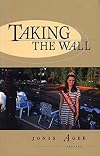
I don’t wear that kind of ball-cap. You know the kind – the ones that are plastic mesh on the back half and cushiony polyester up front. They usually have some kind of business logo up front because these are the cheapest kind of give-aways. You might find the bill rolled to an unnatural cone shape and the front marked with grease and oil smudges. I don’t wear that kind of ball-cap, but the characters who populate Jonis Agee’s collection of short fiction, [Taking the Wall], wear that show more kind of ball-cap with pride.
Most of you won’t have ever heard of Jonis Agee. Yet three of her books were chosen as New York Times Notable Books of the Year: [Bend This Heart], 1989; [Sweet Eyes], 1991; and [Strange Angels], 1993. Her milieu is the American Midwest and the characters of her books are the people who populate the small towns there. She gives voice to the frustrated narrow existence of the common people and finds the beauty in their simple, noble lives.
[Taking the Wall] focuses on race car driving, not NASCAR and Winston Cup, so much as dirt tracks in fields and demolition derbies. This is not a world that I would have ever wanted to read about, but Agee is a favorite author, so I dipped into the stories and found I couldn’t get away. Even though the stories describe races and cars, they are really about the lonely and broken people sliding through life one corner at a time, trying to avoid another encounter with the wall. Agee’s stories are riveting, largely due to her ability to tap into a common longing in the human soul. These people dream of better, even if it is out of their reach or they are incapable of seizing it. And when paired with Agee’s near perfect prose, the result is stunning. Let me let Agee speak for herself:
“You have to dream your way back to beginnings, that’s why stories start in the middle, like a fingering away from some rock you can’t see but imagine has to be there. Everything lives in a bowl the size it requires. The bucket of night that holds our melting sleep. Even the clar hard soil of Esparance’s farm found ways to use the burnt sticky liquor spilling from dreams. I know Blu’s gone on ahead of me now, so I stop in Missouri.”
Bottom Line: Sherwood Anderson for the racing fan – more about the unseen lives of common folk than about racing, Sherwood would have been proud.
5 bones!!!!!
A favorite for the year!!!!! show less
Most of you won’t have ever heard of Jonis Agee. Yet three of her books were chosen as New York Times Notable Books of the Year: [Bend This Heart], 1989; [Sweet Eyes], 1991; and [Strange Angels], 1993. Her milieu is the American Midwest and the characters of her books are the people who populate the small towns there. She gives voice to the frustrated narrow existence of the common people and finds the beauty in their simple, noble lives.
[Taking the Wall] focuses on race car driving, not NASCAR and Winston Cup, so much as dirt tracks in fields and demolition derbies. This is not a world that I would have ever wanted to read about, but Agee is a favorite author, so I dipped into the stories and found I couldn’t get away. Even though the stories describe races and cars, they are really about the lonely and broken people sliding through life one corner at a time, trying to avoid another encounter with the wall. Agee’s stories are riveting, largely due to her ability to tap into a common longing in the human soul. These people dream of better, even if it is out of their reach or they are incapable of seizing it. And when paired with Agee’s near perfect prose, the result is stunning. Let me let Agee speak for herself:
“You have to dream your way back to beginnings, that’s why stories start in the middle, like a fingering away from some rock you can’t see but imagine has to be there. Everything lives in a bowl the size it requires. The bucket of night that holds our melting sleep. Even the clar hard soil of Esparance’s farm found ways to use the burnt sticky liquor spilling from dreams. I know Blu’s gone on ahead of me now, so I stop in Missouri.”
Bottom Line: Sherwood Anderson for the racing fan – more about the unseen lives of common folk than about racing, Sherwood would have been proud.
5 bones!!!!!
A favorite for the year!!!!! show less

[The Bones of Paradise] is a sprawling historical Western set in the Nebraska Sand Hills at the end of the nineteenth century. In the opening pages, rancher J.B. Bennett is killed as he discovers the dead body of an Indian girl, setting in motion a struggle over the title of the land and a search for the killer.
The Sand Hills are wonderfully evoked by Agee's descriptions: "A person had to keep his eye on the smallest detail while the vast emptiness constantly tugged at his vision. You can show more get lost in a heartbeat out here, he'd told his wife. It took him most of his life to realize the significance of his own words." Throughout the novel, we are treated to the sights, sounds, and smells of this hard place.
But the novel isn't just about the challenges of ranching life; Agee also visits the massacre of the Ghost Dancers at Wounded Knee, recognizing that many of the ranchers lived on land stolen from the Indians, "who mourned the land, not as wealth but as the place where all was alive, all living, in one form or another. The whites took it but the dead still walked it, the spirits, whatever they were."
Dulcinea Bennett, J.B.'s wife and Rose, the murdered Indian girl's sister, are strong women, great characters who work together to fight for their place in this unforgiving country generally considered a man's world, as well as to find the murderer of their loved ones.
Highly recommended for fans of historical fiction with a strong sense of place. show less
The Sand Hills are wonderfully evoked by Agee's descriptions: "A person had to keep his eye on the smallest detail while the vast emptiness constantly tugged at his vision. You can show more get lost in a heartbeat out here, he'd told his wife. It took him most of his life to realize the significance of his own words." Throughout the novel, we are treated to the sights, sounds, and smells of this hard place.
But the novel isn't just about the challenges of ranching life; Agee also visits the massacre of the Ghost Dancers at Wounded Knee, recognizing that many of the ranchers lived on land stolen from the Indians, "who mourned the land, not as wealth but as the place where all was alive, all living, in one form or another. The whites took it but the dead still walked it, the spirits, whatever they were."
Dulcinea Bennett, J.B.'s wife and Rose, the murdered Indian girl's sister, are strong women, great characters who work together to fight for their place in this unforgiving country generally considered a man's world, as well as to find the murderer of their loved ones.
Highly recommended for fans of historical fiction with a strong sense of place. show less
Lists
Awards


You May Also Like


Associated Authors
Statistics
- Works
- 19
- Also by
- 5
- Members
- 918
- Popularity
- #27,945
- Rating
- 3.6
- Reviews
- 44
- ISBNs
- 42
- Languages
- 1
- Favorited
- 3
