

Carolyn Ives Gilman
Author of Dark Orbit: A Novel
About the Author
Series
Works by Carolyn Ives Gilman
Frost Painting [short fiction] 5 copies
The Honeycrafters 3 copies
The Real Thing 3 copies
Economancer 2 copies
Periphery 1 copy
Dreamseed 1 copy
The Wild Ships of Fairny 1 copy
Associated Works
The Year's Best Science Fiction: Nineteenth Annual Collection (2002) — Contributor — 557 copies, 6 reviews
The Year's Best Science Fiction: Fifteenth Annual Collection (1998) — Contributor — 467 copies, 2 reviews
The Year's Best Science Fiction: Twenty-Fourth Annual Collection (2007) — Contributor — 457 copies, 6 reviews
I Wish I'd Been There: Twenty Historians Bring to Life Dramatic Events That Changed America (2006) — Contributor — 302 copies, 3 reviews
The Year's Best Science Fiction: Twenty-Ninth Annual Collection (2012) — Contributor — 275 copies, 5 reviews
The Year's Best Science Fiction: Thirty-Fourth Annual Collection (2017) — Contributor — 147 copies, 4 reviews
Some of the Best from Tor.com: 2020 Edition: A Tor.com Original (2021) — Contributor — 101 copies, 3 reviews
The Long List Anthology Volume 5: More Stories from the Hugo Award Nomination List (The Long List Anthology Series) (2019) — Contributor — 53 copies
The Long List Anthology Volume 7: More Stories from the Hugo Award Nomination List (2022) — Contributor — 38 copies, 2 reviews
The Magazine of Fantasy and Science Fiction November/December 2011, Vol. 121, Nos. 5 & 6 (2011) — Author — 33 copies
The Magazine of Fantasy and Science Fiction June 1991, Vol. 80, No. 6 (1991) — Contributor — 22 copies
The Best from Fantasy and Science Fiction: A 45th Anniversary Anthology (1994) — Contributor — 21 copies
The Magazine of Fantasy and Science Fiction June/July 2009, Vol. 116, Nos. 6 & 7 (2013) — Contributor — 19 copies, 1 review
The Magazine of Fantasy and Science Fiction October/November 1996, Vol. 91, No. 4 & 5 (1996) — Contributor — 18 copies, 1 review
The Magazine of Fantasy and Science Fiction April 1990, Vol. 78, No. 4 (1990) — Contributor — 10 copies
Urania Millemondinverno 1991 — Contributor — 1 copy
Tagged
Common Knowledge
- Birthdate
- 1954
- Gender
- female
- Nationality
- USA
- Places of residence
- St. Louis, Missouri, USA
Washington, D.C., USA - Associated Place (for map)
- USA
Members
Reviews
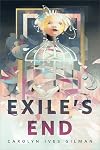
I’m a big fan of Gilman’s fiction. Her Isles of the Forsaken duology is a superior fantasy, but she has also spent a lot of time exploring her “Twenty Planets” universe – in two novels, two novellas, and several short stories. And now three novellas. A member of a believed-to-be-extinct race, the Atoka, turns up to a museum 700 years after the race were reputedly wiped out. This person wants to reclaim some of the museum’s Atoka artefacts. A small community managed to escape and show more survive on a distant world, and they want what belongs to them. Unfortunately, there are, as far as the museum is concerned, two problems. First, the main artefact, a painting of a young woman, has been adopted by the museum planet’s people and is central to their history of settling the planet. Second, the Atoka would periodically destroy all their possessions, and start again from scratch. It’s an argument perhaps more topical than it would have been, say, twenty years ago. While there have been repeated calls for the Elgin Marbles to be returned to Greece for several decades, for example, it’s only in the last couple of years that historical statues have been toppled by members of the general public who find them, and what they represent, offensive. The artefacts of Exile’s End are closer to the Elgin Marbles than Edward Colston’s statue, but they are all symbols of imperialism and colonialism. Gilman stacks the decks by making it plain the Atoka remnants will destroy the painting, thus manufacturing opposition to giving it back. But Gilman works through her argument carefully and clearly, and provides sufficient grounding for the position of the Atoka. Unfortunately, the Twenty Planets have only STL travel between worlds, meaning interstellar journeys separate origin and destination by decades. Which means there is a weird break in chronology in the novella, as its resolution takes place so many years later than its opening. The end is… fitting, but I do wonder if the story really needed it, and could have ended before everything arrived at the Atoka’s current home. Still, I would not be unhappy to see this on a few award shortlists next year. Gilman is under-appreciated. The novella can also be read for free on tor.com. show less
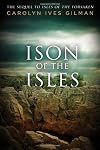
this is a more cohesive book with a stronger idea behind it than the first in the series, Isles of the Forsaken. it works as a military fantasy a little like Bujold's long Miles Vorkosigan journey. but it's also an interesting case study of a disastrous collision between a military culture which casually imposes its codified structures of authority, "justice" and law on a local population with none of those concepts and a culture instead based on harmony, balance, and sacrifice, with show more disastrous consequences traceable to a complete absence of mutual understanding. and that's a formal setup worthy of Ursula K. Le Guin. show less
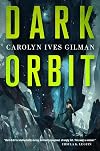
Wow. I picked this book up rather randomly (on the recommendation of io9 maybe?) so I had little to no expectations about it, having never read anything else by the author.
I loved it. I can't stop talking about the ideas in it - about epistemology (how do we know what we know?), about our senses, and how they shape our experience (sight in particular). In some ways the Big Ideas were more important to me than the actual story, but I was truly pleasantly surprised by how good that was, too. show more
I'm still a little unclear on some of the things that went down (particularly in Orem - timeline issues, mostly), but it was a very satisfying read. I would recommend it to people in particular who are not regular SF readers - it would be a great "gateway" book. But seasoned SF readers will also thoroughly enjoy it. Great characters, interesting plot, a play on first contact, and philosophy - it was kind of an ideal book for me! :) show less
I loved it. I can't stop talking about the ideas in it - about epistemology (how do we know what we know?), about our senses, and how they shape our experience (sight in particular). In some ways the Big Ideas were more important to me than the actual story, but I was truly pleasantly surprised by how good that was, too. show more
I'm still a little unclear on some of the things that went down (particularly in Orem - timeline issues, mostly), but it was a very satisfying read. I would recommend it to people in particular who are not regular SF readers - it would be a great "gateway" book. But seasoned SF readers will also thoroughly enjoy it. Great characters, interesting plot, a play on first contact, and philosophy - it was kind of an ideal book for me! :) show less
Carolyn Ives Gilman’s mind- and space-bending novel Dark Orbit transports the reader into a uniquely imagined future universe, and it is one of the most original science fiction stories I’ve read in years. It received high praise from the great Ursula K. Le Guin, and after reading it, I totally understand why.
Dark Orbit‘s plot twists and turns in unexpected ways, while delving into profound ideas about space, time, science, the human mind, and how we perceive the very fabric of show more reality. In some ways Gilman reminds me of Le Guin. Most obviously perhaps because of her interest in the spoken and unspoken rules of different societies, and how those rules shape human behaviour and human interaction. Just like Le Guin, Gilman also explores what happens when people either choose to abide by, or challenge such rules. That sounds dry and academic, perhaps, but when it’s skillfully woven into a novel (as it is here) it provides depth and detail that makes the invented world feel real.
Gilman’s prose is sleek, unsentimental, and well-crafted, and she pulls you into her future-verse easily and swiftly, and then pulls you ever deeper into a mind- and space-warping storyline. Dark Orbit is a real page-turner: I had a hard time putting this book down. One note: the ending is left somewhat open. Part of me wished Gilman had tied up all the ends more neatly (I want all the answers, dammit!), but another part of me relished the ambiguity. Also, I secretly wish for a follow-up to this book. I already miss Thora and Sara, and would love the opportunity to re-visit the universe of Dark Orbit. show less
Dark Orbit‘s plot twists and turns in unexpected ways, while delving into profound ideas about space, time, science, the human mind, and how we perceive the very fabric of show more reality. In some ways Gilman reminds me of Le Guin. Most obviously perhaps because of her interest in the spoken and unspoken rules of different societies, and how those rules shape human behaviour and human interaction. Just like Le Guin, Gilman also explores what happens when people either choose to abide by, or challenge such rules. That sounds dry and academic, perhaps, but when it’s skillfully woven into a novel (as it is here) it provides depth and detail that makes the invented world feel real.
Gilman’s prose is sleek, unsentimental, and well-crafted, and she pulls you into her future-verse easily and swiftly, and then pulls you ever deeper into a mind- and space-warping storyline. Dark Orbit is a real page-turner: I had a hard time putting this book down. One note: the ending is left somewhat open. Part of me wished Gilman had tied up all the ends more neatly (I want all the answers, dammit!), but another part of me relished the ambiguity. Also, I secretly wish for a follow-up to this book. I already miss Thora and Sara, and would love the opportunity to re-visit the universe of Dark Orbit. show less
Lists
io9 Book Club (1)
Awards


You May Also Like


Associated Authors
Statistics
- Works
- 28
- Also by
- 46
- Members
- 1,309
- Popularity
- #19,618
- Rating
- 3.7
- Reviews
- 51
- ISBNs
- 36
- Languages
- 1
- Favorited
- 1