

Harlan Greene
Author of Why We Never Danced the Charleston
About the Author
Works by Harlan Greene
Slave Badges and the Slave-Hire System in Charleston, South Carolina, 1783-1865 (2004) 17 copies, 2 reviews
Associated Works
Tagged
Common Knowledge
- Birthdate
- 1953
- Gender
- male
- Awards and honors
- Lambda Literary Award
- Nationality
- USA
- Places of residence
- Charleston, South Carolina, USA
- Associated Place (for map)
- South Carolina, USA
Members
Reviews
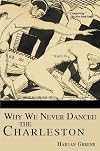
Beautifully written this story, set in Charleston, South Carolina around 1920s provides a vivid picture of life for young gay men of the time. The story principally centres around two young men, Hirsch Hess the handsome and desirable yet aloof son of Jewish immigrants, and Ned Grimke, slender, pale and somewhat effeminate. Hirsch is desired and briefly attained by our narrator, but soon lost to his old childhood and now rejected friend Ned. Looking back from his now old age our narrator show more describes the doomed love affair between Hirsch and Ned, cleverly skirting around the problems of what he could not observe first-hand, while convincingly recreating what it must have been like for a young man to recognise and then realise his sexual orientation at a time of prejudice and repression.
While the characters and their way of life may not win our hearts, Harlan Greene's magical prose is more than enough hold us. show less
While the characters and their way of life may not win our hearts, Harlan Greene's magical prose is more than enough hold us. show less

In this novel, the unnamed narrator recounts the love triangle between himself and two other men in 1920's Charleston - a very repressive time when even a new dance was considered shocking enough to have people arrested. The young narrator meets Ned Grimke, a shy, club-footed boy, when just a child and begins an unusual friendship. As they grow older, the narrator begins to distance himself from him, not liking the unusual attraction that Ned has for him; he soon learns that he himself has show more such strange urgings. He begins to haunt the secret places where such men meet: a waterfront area known as The Battery and the Peacock Alley Bar.
One night, the narrator meets the handsome Hirsch Hess, a brooding Jew who seem sbent on self-destruction over his homosexualtiy. They share a short-lived affair until Hirsch accidentally meets Ned. The two form a strange, very close bond that both the narrator and societal pressures attempt to break with disatrous results.
"Why We Never Danced the Charleston" offers a unique glimpse at homosexuality in the South during the 1920's - a time when sexual expression was just beginning with new dances and other forms of culture. Greene depicts a very repressed society, in which everyone knows that the love between two men is wrong, where such men are taught to loathe themselves and others like them, and yet they survive, live and love despite what society says. His characters and their reaction to the time and societal norms with which they live come across very realistically. And, even though the ending is typically tragic for a gay novel, I still enjoyed reading it. show less
One night, the narrator meets the handsome Hirsch Hess, a brooding Jew who seem sbent on self-destruction over his homosexualtiy. They share a short-lived affair until Hirsch accidentally meets Ned. The two form a strange, very close bond that both the narrator and societal pressures attempt to break with disatrous results.
"Why We Never Danced the Charleston" offers a unique glimpse at homosexuality in the South during the 1920's - a time when sexual expression was just beginning with new dances and other forms of culture. Greene depicts a very repressed society, in which everyone knows that the love between two men is wrong, where such men are taught to loathe themselves and others like them, and yet they survive, live and love despite what society says. His characters and their reaction to the time and societal norms with which they live come across very realistically. And, even though the ending is typically tragic for a gay novel, I still enjoyed reading it. show less

Seriously overwritten: John Boy Walton writing in the style of Andrew Holleran, perhaps, if you can imagine that. If you can get beyond all the Creative Writing, there might be a decent novel in there somewhere, but whenever you're starting to like it he chucks in an unnecessary simile and you feel like giving up all over again...
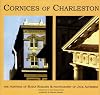
I liked this book. There is a Hopper-like style to her painting and Charleston is such a beautiful city.
Lists
Awards

You May Also Like


Associated Authors
Statistics
- Works
- 16
- Also by
- 1
- Members
- 383
- Popularity
- #63,100
- Rating
- 3.6
- Reviews
- 6
- ISBNs
- 24
- Languages
- 1