

Thomas Gallagher (1918–1992)
Author of Paddy's Lament, Ireland 1846-1847: Prelude to Hatred
About the Author
Thomas Gallagher is assistant professor of communication at La Salle University.
Works by Thomas Gallagher
Tagged
Common Knowledge
- Birthdate
- 1918
- Date of death
- 1992-12-19
- Gender
- male
- Education
- Columbia College
- Occupations
- novelist
- Nationality
- USA
- Birthplace
- Manhattan, New York, USA
- Place of death
- Manhattan, New York, USA
- Associated Place (for map)
- Manhattan, New York, USA
Members
Reviews
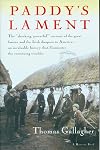
This book about Ireland's Potato Famine started out well, pulling no punches, striking hard at the British reaction to the famine and its horrendous effects on the poor of Ireland. The often shocking details left this reader with mouth agape, astounded once again at man's inhumanity to man. It started to get a bit repetitious (and I mean exact phrasing repeated), but kept moving fairly well. I became engaged with the cause of the Irish and began to despise what the British did.
That was the show more first section. In the second section, the book begins to sag like a tired boxer in the fifth round. The author resorts to using one of those "composite" stories, mixing in fact and fiction, to tell of the trip to America and, in the final section of the book, the sometimes dreadful conditions faced by the Irish once they got to the United States. Unfortunately, Gallagher lets his emotions overcome his sense, the facts, and his writing skills. Any reader who is familiar with the immigrant story, whether through books, history lectures, or family stories, will know that once the Irish got here, they faced no more hardships than thousands of other ethnic groups.
This is really too bad. What started out as a strong tale of the many wrongs done during the famine turned into a whiney, one-sided mess of self-pity. A shame, because there is plenty of material to write about in this awful situation, and I think Gallagher missed the mark badly.
Not recommended unless you read only the first section. show less
That was the show more first section. In the second section, the book begins to sag like a tired boxer in the fifth round. The author resorts to using one of those "composite" stories, mixing in fact and fiction, to tell of the trip to America and, in the final section of the book, the sometimes dreadful conditions faced by the Irish once they got to the United States. Unfortunately, Gallagher lets his emotions overcome his sense, the facts, and his writing skills. Any reader who is familiar with the immigrant story, whether through books, history lectures, or family stories, will know that once the Irish got here, they faced no more hardships than thousands of other ethnic groups.
This is really too bad. What started out as a strong tale of the many wrongs done during the famine turned into a whiney, one-sided mess of self-pity. A shame, because there is plenty of material to write about in this awful situation, and I think Gallagher missed the mark badly.
Not recommended unless you read only the first section. show less

In 1943 and 1944, a couple of amazing raids by Norwegian volunteers destroyed the heavy water from the Norsk Hydro plant at Vemork, Norway. Heavy water differs from ordinary water in that the former is made with hydrogen isotopes, each of which has a neutron in addition to the proton in its nucleus. This isotope is called deuterium and is uncommon in nature. Heavy water acts as a moderator for nuclear fission, thus making possible the production of atomic bombs. It is difficult to show more manufacture, and at that time, there was only one plant in the world capable of making it in significant quantities: Norsk Hydro. When the Germans occupied Norway in 1940, they took over the plant. But the success of the intrepid saboteurs eliminated any chance for the Germans to develop a nuclear bomb before the Americans.
Gallagher provides a play-by-play of the sabotage efforts, from the insertion of the operatives onto the barren wastes of ice and snow in Norway, to the destruction of the remaining barrels of heavy water two years later.
You follow the small team as they learn to stomach reindeer eyeballs to survive; as they climb the snow-and-ice-covered walls of a sheer 600-foot gorge to wire the factory with explosives (and then climb back down); as one of them literally races from six Germans on skis, out-skis all but one, and then stands stock-still as the German empties his Lugar from forty-feet (but into the sun, so he misses). And that’s only a few highlights of this incredible adventure.
The beginning might seem a bit slow as you are introduced to the volunteers, and as they wait for the weather to be favorable. But persevere: you won’t be disappointed! James Bond has nothing on these guys, except maybe a taste for martinis rather than reindeer parts.
(JAF) show less
Gallagher provides a play-by-play of the sabotage efforts, from the insertion of the operatives onto the barren wastes of ice and snow in Norway, to the destruction of the remaining barrels of heavy water two years later.
You follow the small team as they learn to stomach reindeer eyeballs to survive; as they climb the snow-and-ice-covered walls of a sheer 600-foot gorge to wire the factory with explosives (and then climb back down); as one of them literally races from six Germans on skis, out-skis all but one, and then stands stock-still as the German empties his Lugar from forty-feet (but into the sun, so he misses). And that’s only a few highlights of this incredible adventure.
The beginning might seem a bit slow as you are introduced to the volunteers, and as they wait for the weather to be favorable. But persevere: you won’t be disappointed! James Bond has nothing on these guys, except maybe a taste for martinis rather than reindeer parts.
(JAF) show less

As this was written in 1975, the author was able to talk to many of the participants in the raid on the heavy water plant in Norway in WWII and the comments were all interesting but I found the actual writting a bit heavy handed. I've been somewhat fascinated by this episode in WWII history since my Mom and I found the truly dreadful movie "Hereos of Telemark" one lazy winter afternoon and I was very glad to fill in the details but I might look for a more modern history of it somewhere else.
Here is a good book about why the Irish hate the British. And unless you are British yourself, you'll feel like the British were real jerks. In all seriousness, though this book was very informative and it was a solid read.
Lists
Awards


You May Also Like


Statistics
- Works
- 9
- Members
- 557
- Popularity
- #44,821
- Rating
- 3.8
- Reviews
- 8
- ISBNs
- 34
- Languages
- 5
- Favorited
- 1