
Jiří Weil (1900–1959)
Author of Mendelssohn Is on the Roof
About the Author
Image credit: Jiří Weil
Works by Jiří Weil
Associated Works
I Never Saw Another Butterfly (1959) — Foreword, some editions; Afterword, some editions — 926 copies, 15 reviews
Tagged
Common Knowledge
- Canonical name
- Weil, Jiří
- Birthdate
- 1900-08-06
- Date of death
- 1959-12-13
- Gender
- male
- Education
- Charles University, Prague
- Occupations
- novelist
journalist
translator
museum curator
Holocaust survivor
short story writer (show all 7)
editor - Short biography
- Jiří Weil was born to a Jewish family in Praskolesy, Bohemia (present-day Czech Republic). In his childhood, the family moved to Prague, where he went to high school. He began writing poetry and fiction as a teenager. He studied Slavic philology and comparative literature at Charles University in Prague, graduating in 1928 with a doctoral dissertation on Gogol and the 18th century English novel. During his student days, Weil had joined the Young Communists. He took a keen interest in Russian literature and Soviet culture. In the 1920s, he translated extensively from Russian literature into the Czech language, bringing works by Boris Pasternak, Marina Tsvetaeva, Vladimir Mayakovsky and others to Czech readers.
In 1933, he went to Moscow to work as a translator for a Soviet publishing house. Two years later, he was suddenly expelled from the Communist Party and exiled to Central Asia for so-called re-education. The circumstances of these events have never been fully explained, but they marked a turning point in his life.
On his return to Prague, Weil published his novel Moscow to the Border (1937), an account of the Stalinist purges and trials. He tried to leave Czechoslovakia to join relatives in the UK prior to Nazi Germany's invasion, but was unable to do so.
During the Nazi occupation, he was assigned to work at the Jewish Museum in Prague. In November 1942, he was summoned for deportation to the concentration camp at Terezín (Theresienstadt), but faked his own suicide and survived the rest of World War II in hiding. Despite the tremendous hardships, Weil continued to write, producing short stories and a historical novel, Makanna, Father of Wonders (1946). His now-classic book Life with a Star (1949) was one of the first Czech novels to deal with the Holocaust and is probably his best-known work. After the war, he worked as an editor, as his writing was disapproved by the Communists who took power in the country. He also resumed work at the Jewish Museum, where he was instrumental in the creation of an exhibition of children's drawings from Terezín, I Never Saw Another Butterfly, and a monument for Jews murdered by Nazis in the Pinkas Synagogue, for which he wrote the prose poem Lament for 77,297 Victims.
In the mid-1950s, Weil was re-admitted to the Writers' Union and allowed to publish. His novel Mendelssohn Is on the Roof appeared posthumously in 1959. Only a handful of his works have been translated into English. - Nationality
- Czech
- Birthplace
- Praskolesy, Czechoslovakia
- Places of residence
- Praskolesy, Czechoslovakia
Prague, Czechoslovakia
Moscow, Russia, USSR - Place of death
- Prague, Czechoslovakia
- Associated Place (for map)
- Czechoslovakia
Members
Reviews

I have to disagree with Meggy's review. I found Life with a Star totally consuming. It may be the most painful book I've ever read, and I am grateful that it is a short one. In it Weill chronicles the life of Josef Roubicek, a former bank clerk, a Jew in Nazi-occupied Prague. Alone, malnourished, deathly afraid, Josef stumbles through his days seeking food and safety and remembering his life. He spends a great deal of time in the beginning talking to Ruzena, his married lover, and recalling show more their brief times together. When Ruzena asked him to run away with her, he did not have enough courage. Now she is gone, and Josef is left in a garret room with a broken stove in which he cooks the bones and blood, ersatz coffee and sausages that keep him alive.
The narrative is unrelenting. Josef spends his time trying to obey the increasing number of regulations that wring the life from the Jews. He eventually is assigned a job raking leaves and tending a garden planted in a cemetery. He finds something like a friend in a group of Polish dissidents. Against regulations, he takes in a stray cat. And always he fears being transported to the fortress city (Terezin) or worse, 'east' (Auschwitz). A little mad at times, at times wholly rational, Josef lives and observes. Looking at the flowers of vendors in the city he reflects, "Drops of water dripped off their blooms and stems; they were so fresh, so lively and spirited, they seemed to grow on the sidewalks. They were all flowers for cemeteries---. They were all for decorating graves; they would wilt there to celebrate Death, the comforter and deliverer. Or perhaps they were only a way to bribe Death and adorn her with a beautiful shroud, to flatter her with a sacrifice so that she would smile and be kind."
This is the most realistic look at the Holocaust that I have ever read. Josef had to bear the unbearable. Painful as it was, I felt the least I could do was to read all his story. show less
The narrative is unrelenting. Josef spends his time trying to obey the increasing number of regulations that wring the life from the Jews. He eventually is assigned a job raking leaves and tending a garden planted in a cemetery. He finds something like a friend in a group of Polish dissidents. Against regulations, he takes in a stray cat. And always he fears being transported to the fortress city (Terezin) or worse, 'east' (Auschwitz). A little mad at times, at times wholly rational, Josef lives and observes. Looking at the flowers of vendors in the city he reflects, "Drops of water dripped off their blooms and stems; they were so fresh, so lively and spirited, they seemed to grow on the sidewalks. They were all flowers for cemeteries---. They were all for decorating graves; they would wilt there to celebrate Death, the comforter and deliverer. Or perhaps they were only a way to bribe Death and adorn her with a beautiful shroud, to flatter her with a sacrifice so that she would smile and be kind."
This is the most realistic look at the Holocaust that I have ever read. Josef had to bear the unbearable. Painful as it was, I felt the least I could do was to read all his story. show less
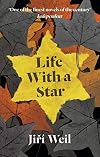
This is an unusual Holocaust novel, written by a Czech Jew who survived by faking his own death in 1942 and living in hiding for the rest of the war. It doesn't mention the words Jews, Nazi or Germans, but adopts an other-worldly anonymous atmosphere that gets the message of oppression across very effectively (a literary device also employed by Arthur Koestler in Darkness at Noon and Arrival and Departure). The central character Josef Roubicek's life becomes more and more limited as show more restrictions on Jews' work, life, and movement become ever stricter, contrasted with the lives of plenty and (relative) luxury being enjoyed by the non-Jewish population. Roubicek survives when around him fellow Jews are being rounded up and sent away to the "fortress town" or transported to the East. This is a depressing and sombre novel, not only because of the intrinsic subject matter, but also because of the writing style, including Roubicek's internal dilemma about whether to bother continuing the struggle to survive or rather to surrender himself to his fate, and the ending is rather ambiguous - though one assumes Roubicek will survive in the same way as did the real author, as this has been hinted at earlier in conversations with the only named non-Jewish character, Josef Materna. show less

Ez nem Hrabal Prágája, akkor már inkább Kafkáé, de leginkább Weilé. A cseh író teljesen unortodox módon közelíti meg a holokausztregény témáját: csendesen elmondott, hivalkodástól mentes könyve nem magáról a soáról, hanem a várakozásról szól, amíg a transzportok elindulnak. Az Élet csillaggal nem az arcunkba tolt borzalom könyve, hanem a banalitásé, hogy az ember csak tesz-vesz, próbál túlélni, beszerezni a kenyérsarkot vagy elvillamosozni a show more hitközségbe (már ha le nem löki a kalauz félúton), ahol szorongva várja, aznap az ő nevét olvassák-e fel. És közben igyekszik fenntartani magában a reményt, hogy nincs még veszve minden. Ez a helyzet adja meg a regény hellyel-közzel kafkai abszurditását, de ebben a regényben az abszurd maga a történelmi valóság, a náci rendeletek képtelen hálója, amit mintha csak azért szövegeznének meg, hogy létükben alázzák meg a zsidókat, a groteszk pedig az, hogy elbeszélőnk, Roubíček ilyen körülmények között is megkísérli életben tartani a hétköznapiságot. Túlélésének záloga nem is annyira fizikai testével kapcsolatos, mint inkább a lélekkel: nem a kalóriák táplálják, inkább macskájával, vagy egykori szerelmével, Ruzenkával folytatott (képzelt) beszélgetések. Ezek kötik még az élethez, de paradox módon egyben ezek akadályozzák meg abban, hogy ellépjen a neki rendelt Végzet elől.
Az Élet csillaggal halk és keserű könyv. Különösen keserű az ítélet, amit az áldozatokról mond, akik Weil szerint képtelenek arra, hogy méltóvá váljanak a mártíromságra. Ami, azt hiszem, valahol természetes, hiszen nem saját tetteik és döntéseik alapján választották ki őket a szenvedésre, hanem mások tettei és mások döntései (kvázi a vak véletlen) jelölték meg őket. Roubíčeknek közülük kell kiemelkednie valamiképp ahhoz, hogy ebben a tőről metszett fejlődésregényben antihősből igazi hőssé nemesedjen. Isten látja lelkem, én nagyon szurkoltam neki. show less
Az Élet csillaggal halk és keserű könyv. Különösen keserű az ítélet, amit az áldozatokról mond, akik Weil szerint képtelenek arra, hogy méltóvá váljanak a mártíromságra. Ami, azt hiszem, valahol természetes, hiszen nem saját tetteik és döntéseik alapján választották ki őket a szenvedésre, hanem mások tettei és mások döntései (kvázi a vak véletlen) jelölték meg őket. Roubíčeknek közülük kell kiemelkednie valamiképp ahhoz, hogy ebben a tőről metszett fejlődésregényben antihősből igazi hőssé nemesedjen. Isten látja lelkem, én nagyon szurkoltam neki. show less
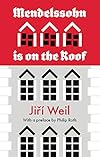
Prague during Nazi occupation. A directive is sent down to remove a statue of Jewish composer Mendelssohn before a concert. None of the three men sent to complete the task know which is the right statue. The one in charge has been attending World View classes and so decides to look for the one with the largest nose. He's horrified when the two laborers start to take down the statue of Wagner. This one event brings us into the conditions, events, and lives of those living in and around Prague show more at this time - both Czechs and Germans; Jews and not; soldiers, government officials, and civilians.
This is a strong companion to Hans Fallada's Alone in Berlin. In Mendelssohn is on the Roof, we see the ripple effects that such a ludicrous decree can have. We see how quickly individuals turn against each other, feel forced (or reduced) to report others. How safety and protection are never guaranteed, no matter what people believe, or have been told, or convince themselves. How people do things they would never do, get dragged into something only to be punished for it later.
There is a heartbreaking scene where Dr Rabinovich, a Talmudic scholar, dragged into the Mendelssohn affair as a 'learned Jew' (with no detail about what he was meant to be learned about), is later in his museum. He is goaded into blowing the shofar (only to be ridiculed as needing more practice). This is normally done by a specific person and only at specific religious times (Rosh Hashana, Yom Kippur). Rabinovich is disappointed in himself, that he has sinned against God and his people. He is convinced that he has incurred God's anger, 'which would then fall upon the innocent,' and that 'because of him people would be tortured, tormented and sent to a terrible death. For by blowing the shofar, he had allied with the murderers...Indeed, he was even guiltier than they, because...he had betrayed his own people.' He is sure he will be punished.
Bitterly, darkly satiric and sardonic, this is a powerful book by an author who himself was in hiding for most of the war. This book is a excellent product of those experiences. show less
This is a strong companion to Hans Fallada's Alone in Berlin. In Mendelssohn is on the Roof, we see the ripple effects that such a ludicrous decree can have. We see how quickly individuals turn against each other, feel forced (or reduced) to report others. How safety and protection are never guaranteed, no matter what people believe, or have been told, or convince themselves. How people do things they would never do, get dragged into something only to be punished for it later.
There is a heartbreaking scene where Dr Rabinovich, a Talmudic scholar, dragged into the Mendelssohn affair as a 'learned Jew' (with no detail about what he was meant to be learned about), is later in his museum. He is goaded into blowing the shofar (only to be ridiculed as needing more practice). This is normally done by a specific person and only at specific religious times (Rosh Hashana, Yom Kippur). Rabinovich is disappointed in himself, that he has sinned against God and his people. He is convinced that he has incurred God's anger, 'which would then fall upon the innocent,' and that 'because of him people would be tortured, tormented and sent to a terrible death. For by blowing the shofar, he had allied with the murderers...Indeed, he was even guiltier than they, because...he had betrayed his own people.' He is sure he will be punished.
Bitterly, darkly satiric and sardonic, this is a powerful book by an author who himself was in hiding for most of the war. This book is a excellent product of those experiences. show less
Lists
Awards

You May Also Like


Associated Authors
Statistics
- Works
- 12
- Also by
- 1
- Members
- 764
- Popularity
- #33,304
- Rating
- 4.3
- Reviews
- 19
- ISBNs
- 57
- Languages
- 9
- Favorited
- 6