

Paul Goldberger
Author of Why Architecture Matters
About the Author
Pulitzer Prize-winning critic Paul Goldberger is the architectural critic and a staff writer at The New Yorker. (Bowker Author Biography)
Works by Paul Goldberger
Above New York: A Collection of Historical and Original Aerial Photographs of New York City (1988) 113 copies
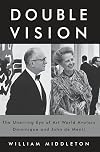
Double Vision: The Unerring Eye of Art World Avatars Dominique and John de Menil (2018) — Foreword — 52 copies, 2 reviews
Mediterranean Color: Italy, France, Spain, Portugal, Morocco, Greece (1990) — Foreword — 29 copies, 1 review
God Is Beautiful and Loves Beauty: The Object in Islamic Art and Culture (2013) — Author — 13 copies
Blue Dream and the Legacy of Modernism in the Hamptons: A House by Diller Scofidio + Renfro (2023) 9 copies, 1 review
Global Architecture 2 copies
Important 20th Century Design The Farnsworth House, 1945-1951, Ludwig Mies Van Der Rohe (2003) 1 copy
Frank Gehry At Gemini 1 copy
Architecture Review 1 copy
Kaempf et Architecture 1 copy
Associated Works
Bricks and Brownstone: The New York Row House 1783-1929 (1972) — Introduction, some editions — 120 copies
Timeless Architecture: A Decade of the Richard H. Driehaus Prize at the University of Notre Dame (2013) — Foreword — 6 copies
Harvard Design Magazine: urban design now — Contributor — 2 copies
Tagged
Common Knowledge
- Birthdate
- 1950-12-04
- Gender
- male
- Education
- Yale University
- Occupations
- architecture critic
journalist - Organizations
- The New York Times
The New Yorker
Vanity Fair - Awards and honors
- Pulitzer Prize (Criticism, 1984)
- Nationality
- USA
- Birthplace
- Passaic, New Jersey, USA
- Places of residence
- New York, New York, USA
- Associated Place (for map)
- USA
Members
Reviews
Double Vision: The Unerring Eye of Art World Avatars Dominique and John de Menil by William Middleton
BIOGRAPHY/ART
William Middleton
Double Vision: The Unerring Eye of Art World Avatars Dominique and John de Menil
Alfred A. Knopf
Hardcover, 978-0-3754-1543-2, (also available as an e-book), 784 pgs., $40.00
March 27, 2018
“I’m after the excitement not the object per se—after the light, not the bulbs. I’d like to provide for people plenty of bulbs to switch on.” —Dominique de Menil
Y’all know that old question asking who you’d invite to your dinner party if you could invite anyone show more you wanted? I’d invite Dominique and John de Menil.
Born in France at the beginning of the twentieth century, they came to Houston, Texas, in the early 1940s with the family oilfield services multinational that would become Schlumberger Limited. John de Menil was a baron; Dominique the heir to Schlumberger, descended from a distinguished line of French intellectuals, important to the governments of kings and emperors. Over the decades, the de Menils built the Menil Collection, the Rothko Chapel, the Byzantine Fresco Chapel, and the Cy Twombly Gallery, and underwrote the Contemporary Arts Museum Houston. Their personal collection exceeded 20,000 works of art, including paintings, drawings, photographs, sculptures, rare books, and decorative objects. They were not only the vanguard of art collectors and advocates, but thought leaders in civil rights, human rights, and ecumenicism, often still a dicey proposition, not to say dangerous, in Texas.
How in heck did these two wash up in Houston, you ask? It’s a fascinating story well told. Dominique and John de Menil come alive again in these pages.
Double Vision: The Unerring Eye of Art World Avatars Dominique and John de Menil is the new biography of the first family of Houston’s arts community by William Middleton. Middleton, a journalist and editor who has worked with Harper’s Bazaar, the New York Times, and Texas Monthly, among other outlets, has written an encyclopedic yet profoundly personal account of not only the extraordinary lives of Dominique and John de Menil, but a history of the flowering of modern art in the United States post–World War II.
Middleton begins in the New World, with the opening in 1987 of the Menil Collection. Part Two takes a deep dive into the Old World, Normandy in the eighteenth century, leisurely making his way back to Houston and the death of Dominique de Menil in 1999. Along the way we get an education—European history, American history, art history, and how to view art with a good eye and proper attitude, tracing their developing aesthetic from Alsace to Paris, then New York to Houston. Obviously a labor of love, Middleton’s book doesn’t shy from more difficult aspects of the de Menils, notably the controversy involving art thieves, cultural appropriation, and those Cypriot Byzantine frescoes. While it’s dense with minute detail and overly long—I suggest sitting with your knees drawn up so as to prop up the book and rest your wrists—it’s impossible to overstate the importance of Middleton’s superb work.
Middleton conducted ten years of research and writing in Paris, New York, and Houston. He had the cooperation of the five de Menil children, as well as extended family, friends, artists, and colleagues. He was granted interviews, provided with candid family photographs, and given use of the family archives. Double Vision is an intimate work that includes not only sixteen pages of photographs, but also 135 illustrations throughout the text, representing an impressive feat of curation itself.
Dominique and John de Menil are household names in Houston, and now, thanks to this supreme effort of research — indeed, immersion —the rest of Texas, and the world, will understand why the de Menils are considered “the Medici of modern art.”
”[Great artists] can be difficult, dissolute, but they are never base and in their quest for perfection they come closer to eternal truths than pious goody-goodies. So we are collectors without remorse.” —John de Menil
Originally published in Lone Star Literary Life. show less
William Middleton
Double Vision: The Unerring Eye of Art World Avatars Dominique and John de Menil
Alfred A. Knopf
Hardcover, 978-0-3754-1543-2, (also available as an e-book), 784 pgs., $40.00
March 27, 2018
“I’m after the excitement not the object per se—after the light, not the bulbs. I’d like to provide for people plenty of bulbs to switch on.” —Dominique de Menil
Y’all know that old question asking who you’d invite to your dinner party if you could invite anyone show more you wanted? I’d invite Dominique and John de Menil.
Born in France at the beginning of the twentieth century, they came to Houston, Texas, in the early 1940s with the family oilfield services multinational that would become Schlumberger Limited. John de Menil was a baron; Dominique the heir to Schlumberger, descended from a distinguished line of French intellectuals, important to the governments of kings and emperors. Over the decades, the de Menils built the Menil Collection, the Rothko Chapel, the Byzantine Fresco Chapel, and the Cy Twombly Gallery, and underwrote the Contemporary Arts Museum Houston. Their personal collection exceeded 20,000 works of art, including paintings, drawings, photographs, sculptures, rare books, and decorative objects. They were not only the vanguard of art collectors and advocates, but thought leaders in civil rights, human rights, and ecumenicism, often still a dicey proposition, not to say dangerous, in Texas.
How in heck did these two wash up in Houston, you ask? It’s a fascinating story well told. Dominique and John de Menil come alive again in these pages.
Double Vision: The Unerring Eye of Art World Avatars Dominique and John de Menil is the new biography of the first family of Houston’s arts community by William Middleton. Middleton, a journalist and editor who has worked with Harper’s Bazaar, the New York Times, and Texas Monthly, among other outlets, has written an encyclopedic yet profoundly personal account of not only the extraordinary lives of Dominique and John de Menil, but a history of the flowering of modern art in the United States post–World War II.
Middleton begins in the New World, with the opening in 1987 of the Menil Collection. Part Two takes a deep dive into the Old World, Normandy in the eighteenth century, leisurely making his way back to Houston and the death of Dominique de Menil in 1999. Along the way we get an education—European history, American history, art history, and how to view art with a good eye and proper attitude, tracing their developing aesthetic from Alsace to Paris, then New York to Houston. Obviously a labor of love, Middleton’s book doesn’t shy from more difficult aspects of the de Menils, notably the controversy involving art thieves, cultural appropriation, and those Cypriot Byzantine frescoes. While it’s dense with minute detail and overly long—I suggest sitting with your knees drawn up so as to prop up the book and rest your wrists—it’s impossible to overstate the importance of Middleton’s superb work.
Middleton conducted ten years of research and writing in Paris, New York, and Houston. He had the cooperation of the five de Menil children, as well as extended family, friends, artists, and colleagues. He was granted interviews, provided with candid family photographs, and given use of the family archives. Double Vision is an intimate work that includes not only sixteen pages of photographs, but also 135 illustrations throughout the text, representing an impressive feat of curation itself.
Dominique and John de Menil are household names in Houston, and now, thanks to this supreme effort of research — indeed, immersion —the rest of Texas, and the world, will understand why the de Menils are considered “the Medici of modern art.”
”[Great artists] can be difficult, dissolute, but they are never base and in their quest for perfection they come closer to eternal truths than pious goody-goodies. So we are collectors without remorse.” —John de Menil
Originally published in Lone Star Literary Life. show less
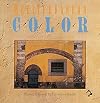
Believing this to be a simple book of photographs highlighting the countries of the Mediterranean area, I quickly found out it was so much more. Yes the photos are beautiful, but they come with historical nuggets and a travelogue, so that I wanted to get up and get back to the celestial blue that is the Med.
Italy is a very old country. In the southern provinces she can fool no one about her age. All the bones and wrinkles show in this dry and rocky land, weary from long, hard struggle show more against invaders and the tantrums of nature.
Ahh, the "tantrums of nature" indeed. Anyone who has taken a boat ride on a seemingly gorgeous Med day only to end it in a furious wind knows of such tantrums. The Evil Eye is still prevalent, as the golden hillsides contrast against the aquamarine sea.
It is difficult to imagine how important a role painted color once played in the architecture of France.
Has anyone else ever noticed that? When you leave Italy to journey to Gaul, it's a bit like leaving a Technicolour movie and arriving in a sepia-toned land. As Jeffrey Becom points out, France was once the land of royal purples and ruby reds, but the Counter-Reformation and the French Revolution put an end to that.
White dominates Spain. The intensely burning sun with its blinding white glare seems to bleach the color from everything.
For me, Spain always represented yellow, but again the author has me review my memories. For all the Moorish greens and oranges of bygone days, the pueblos blancos do dominate. The historical reason given for this is because of Carlos III mandating annual whitewashing with lime in order to defeat the disease epidemics that was rampaging through 18th-century Spain.
The Portuguese are not enamored of novelty nor are they eager to change. Few public clocks can be found, for time means little, even in Lisbon.
Portugal. Where the colours still radiate via chrome yellows, delicate pinks, and the brilliant azulejos. Purple rock, blue-green ocean, yellow sand, scarlet poppies, green vineyards, carob trees. It's like being in a candy store.
Morocco is an exotic, polygamous marriage of Europe, Africa, and Arabia, a unique fusion of the Mediterranean, Atlantic, and Sahara.
Rose clay...saffron sand...blood red pomegranates...apricot turbans. Because of strict Islamic tradition regarding painted portraits of man or animal, colour instead becomes of the highest importance, down to the mixing of the paint.
Iris, goddess of the rainbow, gowned in radiant spectrum, was on hand for the birth of Greece - and so were her colors.
Once again, I thought of Greece as "white" but the author sees so much more. He points out that the Greeks lived in vivid colour, but as their age passed and temples crumbled, white became what was left. Albeit, a stunning white against the blue sky and water.
Fantastic.
Book Season = Year Round (just go) show less
Italy is a very old country. In the southern provinces she can fool no one about her age. All the bones and wrinkles show in this dry and rocky land, weary from long, hard struggle show more against invaders and the tantrums of nature.
Ahh, the "tantrums of nature" indeed. Anyone who has taken a boat ride on a seemingly gorgeous Med day only to end it in a furious wind knows of such tantrums. The Evil Eye is still prevalent, as the golden hillsides contrast against the aquamarine sea.
It is difficult to imagine how important a role painted color once played in the architecture of France.
Has anyone else ever noticed that? When you leave Italy to journey to Gaul, it's a bit like leaving a Technicolour movie and arriving in a sepia-toned land. As Jeffrey Becom points out, France was once the land of royal purples and ruby reds, but the Counter-Reformation and the French Revolution put an end to that.
White dominates Spain. The intensely burning sun with its blinding white glare seems to bleach the color from everything.
For me, Spain always represented yellow, but again the author has me review my memories. For all the Moorish greens and oranges of bygone days, the pueblos blancos do dominate. The historical reason given for this is because of Carlos III mandating annual whitewashing with lime in order to defeat the disease epidemics that was rampaging through 18th-century Spain.
The Portuguese are not enamored of novelty nor are they eager to change. Few public clocks can be found, for time means little, even in Lisbon.
Portugal. Where the colours still radiate via chrome yellows, delicate pinks, and the brilliant azulejos. Purple rock, blue-green ocean, yellow sand, scarlet poppies, green vineyards, carob trees. It's like being in a candy store.
Morocco is an exotic, polygamous marriage of Europe, Africa, and Arabia, a unique fusion of the Mediterranean, Atlantic, and Sahara.
Rose clay...saffron sand...blood red pomegranates...apricot turbans. Because of strict Islamic tradition regarding painted portraits of man or animal, colour instead becomes of the highest importance, down to the mixing of the paint.
Iris, goddess of the rainbow, gowned in radiant spectrum, was on hand for the birth of Greece - and so were her colors.
Once again, I thought of Greece as "white" but the author sees so much more. He points out that the Greeks lived in vivid colour, but as their age passed and temples crumbled, white became what was left. Albeit, a stunning white against the blue sky and water.
Fantastic.
Book Season = Year Round (just go) show less
Double Vision: The Unerring Eye of Art World Avatars Dominique and John de Menil by William Middleton
I am exhausted. Double Vision: The Unerring Eye of Art World Avatars Dominique and John de Menil by William Middleton is exhaustive and exhausting. It is a remarkable story of a very rich couple, Dominique Schlumberger and her husband Baron Jean Menu de Menil and their devotion over a lifetime to art. They committed vast energies and personal money to this endeavor. Too much detail, especially regarding the genealogies of the two families of which I didn't care. Yet there was something that show more compelled me to finish the book. Their ardent love for one another and for art fascinated me. It is a slog but I am glad I finished it. show less

Meticulously researched and engaging discussion of the evolution of the baseball ballpark.
Lists
Awards


You May Also Like


Associated Authors
Statistics
- Works
- 48
- Also by
- 5
- Members
- 1,354
- Popularity
- #18,990
- Rating
- 4.0
- Reviews
- 9
- ISBNs
- 67
- Languages
- 5
