

Leslie Carroll
Author of Becoming Marie Antoinette: A Novel
About the Author
Leslie Carroll is the author of twenty books in three genres, including a series of five nonfiction titles on the loves and lives of European royalty: Royal Affairs, Notorious Royal Marriages, Royal Pains, Royal Romances, and Inglorious Royal Marriages. She and her husband divide their time between show more the high-rises of Manhattan and the high elevation of Denver. show less
Disambiguation Notice:
Published historical fiction under the pen-names Juliet Grey and Amanda Elyot, and non-fiction and contemporary fiction under her own name.
Image credit: Brainstormin'
Series
Works by Leslie Carroll
Notorious Royal Marriages: A Juicy Journey Through Nine Centuries of Dynasty, Destiny, and Desire (2010) 203 copies, 10 reviews
Royal Affairs: A Lusty Romp Through the Extramarital Adventures That Rocked the British Monarchy (2008) 187 copies, 9 reviews
Be A Lady: Being the Adventures of an Enlightened American in Jane Austen's England (2006) 163 copies, 11 reviews
All for Love: The Scandalous Life and Times of Royal Mistress Mary Robinson (2008) 99 copies, 2 reviews
Royal Romances: Titillating Tales of Passion and Power in the Palaces of Europe (2012) 72 copies, 1 review
Associated Works
Tagged
Common Knowledge
- Other names
- Elyot, Amanda
Grey, Juliet - Birthdate
- 19xx-09-24
- Gender
- female
- Education
- Cornell University (BA|Theater)
- Occupations
- actor
journalist - Nationality
- USA
- Birthplace
- New York, New York, USA
- Places of residence
- New York, New York, USA
Denver, Colorado, USA - Disambiguation notice
- Published historical fiction under the pen-names Juliet Grey and Amanda Elyot, and non-fiction and contemporary fiction under her own name.
- Associated Place (for map)
- USA
Members
Reviews
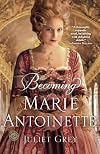
In Juliet Grey’s Becoming Marie Antoinette, it is easy for a reader to forget the tragic fate that awaits Marie and her husband. Under Ms. Grey’s skilled pen, she steps away from being the frivolous creature who worries more about the latest fashions than the people and becomes a person placed into an unfortunate set of circumstances, about which she had neither the education or support to make any changes. Meticulously researched, Marie Antoinette comes to life in this first in a show more trilogy about her life. The reader will never look at the French Revolution in the same way again.
The story starts out with Maria Antonia as the youngest daughter of the Hapsburg dynasty. Born among royalty, she has lead a sheltered and stable life, adored by servants, sisters, and governesses, and with access to more material wealth than most of her subjects will ever see in a lifetime. Her parents married for love, a rarity among royalty, and it is by this standard that Maria Antonia grades all other marriages, even as she knows full well that she will not be as lucky. For she has been raised knowing that her sole asset lies in her ability to unite the Hapsburgs to other royal families through marriage. Her worth is only as high as the marriage contract that can be written on her behalf. To know this at the age of ten is both disheartening and exceptionally pragmatic. Maria has no qualms about her duty and understands the political implications behind such arrangements. While she can still hope and dream like most normal little girls, she realizes that she will be lucky if only one or two of those dreams comes true. For her, happily ever after is as much a fairy tale ending as it is for the rest of her subjects.
The story showcases Maria Antonia’s transformation from gawky pre-teen to charming queen. Once the negotiations to become the future queen of France are underway, the Hapsburgs stop at nothing to prepare her for her future role, including elocution and diction training, a personal hairdresser, a bevy of tutors to get her up to speed on French history, and even 18th century braces. She succumbs to all of it quietly, as it is made more than clear that the fate of her family dynasty rides on this marriage. It is a rather heavy burden to allow someone so young to bear, but it was also the norm for 18th century royalty.
Through the extensive research provided by Ms. Grey, the reader gets a clear understanding of the changes required before Maria Antonia was considered acceptable enough to become Marie Antoinette. The reader also gets a detailed image of life in both royal Vienna and in Versailles during the waning years of Louis the Fifteenth’s life. If anyone considered the French court to be the epitome of royal life, the one is quickly disabused of that opinion within minutes of Marie Antoinette setting foot on the grounds of Versailles. Ms. Grey does not mince words at the more indelicate aspects of life near the royals, which only highlights the hypocrisy of some of the more eye-raising protocol young Marie faces as a new bride.
In Ms. Grey’s eyes, Marie Antoinette is as much a victim to her circumstances as is the poverty-stricken she tries so hard to help in any way possible. While the story ends just as Louis the Sixteenth becomes king, there is still hope that Marie and Louis will be the queen and king they hope to be -compassionate, understanding, and available to their subjects. There are hints, however, that neither is very politically savvy, and the ease with which they are both manipulated after their marriage is disturbing and saddening. In spite of it all though, Marie remains sympathetic in her fight to remain true to her family, while carving out her own place among the French royals. Being thrown into a veritable lions’ den at such a young age would be enough to undo most young women. Marie Antoinette more than survives the gauntlet; she overcomes and rises to the top. It will be interesting to see how much that becomes her undoing in the next two novels.
Acknowledgements: Thank you to Ballantine Publishing and NetGalley for my e-galley! show less
The story starts out with Maria Antonia as the youngest daughter of the Hapsburg dynasty. Born among royalty, she has lead a sheltered and stable life, adored by servants, sisters, and governesses, and with access to more material wealth than most of her subjects will ever see in a lifetime. Her parents married for love, a rarity among royalty, and it is by this standard that Maria Antonia grades all other marriages, even as she knows full well that she will not be as lucky. For she has been raised knowing that her sole asset lies in her ability to unite the Hapsburgs to other royal families through marriage. Her worth is only as high as the marriage contract that can be written on her behalf. To know this at the age of ten is both disheartening and exceptionally pragmatic. Maria has no qualms about her duty and understands the political implications behind such arrangements. While she can still hope and dream like most normal little girls, she realizes that she will be lucky if only one or two of those dreams comes true. For her, happily ever after is as much a fairy tale ending as it is for the rest of her subjects.
The story showcases Maria Antonia’s transformation from gawky pre-teen to charming queen. Once the negotiations to become the future queen of France are underway, the Hapsburgs stop at nothing to prepare her for her future role, including elocution and diction training, a personal hairdresser, a bevy of tutors to get her up to speed on French history, and even 18th century braces. She succumbs to all of it quietly, as it is made more than clear that the fate of her family dynasty rides on this marriage. It is a rather heavy burden to allow someone so young to bear, but it was also the norm for 18th century royalty.
Through the extensive research provided by Ms. Grey, the reader gets a clear understanding of the changes required before Maria Antonia was considered acceptable enough to become Marie Antoinette. The reader also gets a detailed image of life in both royal Vienna and in Versailles during the waning years of Louis the Fifteenth’s life. If anyone considered the French court to be the epitome of royal life, the one is quickly disabused of that opinion within minutes of Marie Antoinette setting foot on the grounds of Versailles. Ms. Grey does not mince words at the more indelicate aspects of life near the royals, which only highlights the hypocrisy of some of the more eye-raising protocol young Marie faces as a new bride.
In Ms. Grey’s eyes, Marie Antoinette is as much a victim to her circumstances as is the poverty-stricken she tries so hard to help in any way possible. While the story ends just as Louis the Sixteenth becomes king, there is still hope that Marie and Louis will be the queen and king they hope to be -compassionate, understanding, and available to their subjects. There are hints, however, that neither is very politically savvy, and the ease with which they are both manipulated after their marriage is disturbing and saddening. In spite of it all though, Marie remains sympathetic in her fight to remain true to her family, while carving out her own place among the French royals. Being thrown into a veritable lions’ den at such a young age would be enough to undo most young women. Marie Antoinette more than survives the gauntlet; she overcomes and rises to the top. It will be interesting to see how much that becomes her undoing in the next two novels.
Acknowledgements: Thank you to Ballantine Publishing and NetGalley for my e-galley! show less
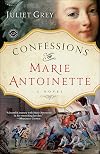
Le sigh. As I read this book I felt much as I did when I read the first book of this riveting trilogy - even though I knew exactly what was going to happen, I knew the twists, the turns, the tidbits that there were to know about Marie Antoinette, this book kept me turning the pages hoping against hope that history had somehow changed.
This third installment picks up as the citizens of France basically take their monarchs prisoner at Versailles and bring them to Paris. While the people of show more France revel in their supposed freedoms, the royals are kept rather like animals in a zoo. They are on display all the time and errant people at odd times just show up to chat or even climb into their rooms. As the political climate deteriorates an escape is planned but the whole affair is like a Keystone Cops movie rather than the flight of the King and Queen of France. Yet the story is true and ultimately very, very fatal. I'm not giving away any spoilers here - unless the reader is completely ignorant of the fates of Louis XVI and the woman the people of France never came to love.
I was not fortunate enough to read the book at the center of the trilogy, Days of Splendor, Days of Sorrow which covered the high points of Marie Antoinette's reign in France. The books are sympathetic to her but they also show her for what she was; a somewhat self centered woman who was born to be a queen. A woman who was told from birth that she was better than everyone else and yet she became a woman capable of great love for a country that hated her and a King who didn't understand her.
I really wish I had been able to read this book at another time of year. At a time of year when I could have just sat down and read it from start to finish in one sitting. But I had the misfortune to have it during harvest season so I read it in heady bursts of immersion into the magical world created by Ms. Grey as she led me to Marie Antoinette's ultimate demise. I really didn't want the book to end and I really wanted her to succeed in getting away this time, but alas, like always they get caught and she loses everything. A very sad end for such a fascinating woman. show less
This third installment picks up as the citizens of France basically take their monarchs prisoner at Versailles and bring them to Paris. While the people of show more France revel in their supposed freedoms, the royals are kept rather like animals in a zoo. They are on display all the time and errant people at odd times just show up to chat or even climb into their rooms. As the political climate deteriorates an escape is planned but the whole affair is like a Keystone Cops movie rather than the flight of the King and Queen of France. Yet the story is true and ultimately very, very fatal. I'm not giving away any spoilers here - unless the reader is completely ignorant of the fates of Louis XVI and the woman the people of France never came to love.
I was not fortunate enough to read the book at the center of the trilogy, Days of Splendor, Days of Sorrow which covered the high points of Marie Antoinette's reign in France. The books are sympathetic to her but they also show her for what she was; a somewhat self centered woman who was born to be a queen. A woman who was told from birth that she was better than everyone else and yet she became a woman capable of great love for a country that hated her and a King who didn't understand her.
I really wish I had been able to read this book at another time of year. At a time of year when I could have just sat down and read it from start to finish in one sitting. But I had the misfortune to have it during harvest season so I read it in heady bursts of immersion into the magical world created by Ms. Grey as she led me to Marie Antoinette's ultimate demise. I really didn't want the book to end and I really wanted her to succeed in getting away this time, but alas, like always they get caught and she loses everything. A very sad end for such a fascinating woman. show less
Royal Affairs: A Lusty Romp Through the Extramarital Adventures That Rocked the British Monarchy by Leslie Carroll
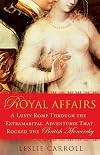
This is basically a trashy tabloid with a historical bent, and as someone with a historical bent who loves trashy tabloids, I was in heaven reading this book. The king who took his wife's ex-husband's 16 year-old daughter as a ward, engaged her to his son, and then promptly started having a hot and steamy affair! The queen who fell in love with her (heterosexual) lady-in-waiting and maneuvered her into a decades-long sexual affair! Oooh, scandals galore. The book was everything I had hoped show more for, and more. show less

Another solidly impressive journey into the life of Marie Antoinette, Grey again proves, with her second novel in a planned trilogy, that she is a skilled writer, able to evoke time, place, and characters with equal vivacity. Beginning two weeks after the first novel, Becoming Marie Antoinette, ended, Grey immediately relaunches herself and the reader into an opulent, turbulent world with her title character more prominent than ever in French society. In this detailed, rich novel, full of show more eye-popping descriptions of everything from le Petite Trianon to the poufs that adorn Marie's head, both the narrative and the letters from the Queen to her family at home in Austria all serve to form a comprehensive picture of life in Louis XIV's France. Formerly the Dauphine, transitioning now into the role of the Queen of France, Marie finds herself with prestige, but little actual power. Iconic, but politically impotent, bereft of the love and attention she desperately craves, Grey provides ample reasons (that actually work!) for the reasons behind the monarch's spendthrift ways. Much like the evolution she underwent in the first book, this well-rendered version of Marie Antoinette is far from stagnant, but makes choices, for good or ill, that will drastically affect the people and country she governs.
The Marie so carefully cultivated by the author is much more than the villianess that most of history remembers her as. Spoiled, yes. A glutton for fine things? Yes. But evil, intent on harming the common folk and abusing them? No. The vivid woman shown here in Days of Splendor, Days of Sorrow is a more mature, more intelligent version of the girl she used to be and Grey takes care to paint her protagonist as realistically as possible. For all that Queen Marie is remembered and vilified as a one-sided caricature of vice, selfishness, and greed, Grey shows a multitude of other facets of her personality. Kind, lonely, funny, maternal, the author is deft in her portrayal in all the facets of this fascinating woman from the good to the bad. Her Marie Antoinette is always not wholly sympathetic ("For what is money, with happiness at stake?"), but she is often understandable in her opinions and attitudes. With her well-meaning but often oblivious husband Louis balancing an already-taxed treasury with the wants, demands, and rights of the people he rules by divine right, Marie and her coterie of noble ladies find themselves skewered by cartoonists, and resented for the life of grand palaces and sumptuous gowns they use once and discard, despite the Queen's good intentions.
Louis plays a larger role in the second novel than he did in the first; the King is much more directly involved with the plotline of this novel than the previous. More peripheral in the introduction of the series, here in part two, now, married and reigning as King, this Louis indulges his wife's flights of fancy, and spending as a concession to make up for the lack of intimacy and input he offers her in their private life. With the Queens of France traditionally have prestige but no real governing power, Louis is very Gallic and rigid in his role, a devoted adherent to the traditions his wife so dislikes. Louis is a good foil for his spendthrift femme; often shown trying to reign in the out-of-control treasury, his royal brother's profligate attitudes about women and coin, to little or no avail. He is not developed as Marie, but he is shown in realistic views - and Grey even tries to rectify his reasons for a lack of a royal heir (for seven years after marriage!) with a possible, plausible medical condition. His (unknown?) rival for Marie's affections in the Swedish Count of Axel von Fersen adds even more intensity and tension to a novel thick with conflict. Though there is a love-triangle of sorts in Days of Splendor, Days of Sorrow, Juliet Grey is able to pull it off with aplomb, without making it halt the plot's momentum or the characters involved tiresome. Each man appeals to a different side of the complicated Queen, and though she may be more her father's daughter than she thought to be, Marie's attractions to both came off as authentic - as did her actions.
For the most part, I thought that first-person POV was an excellent choice to showcase the plot and varied characters of this story. It allows for a closer view of Marie and how she works internally, and reading Marie's well-intentioned inner monologue helps to firmly create the three-dimensional version of the character. It is easy for feel for the entitled Queen, even as she haplessly carries herself and her friends toward a grisly end. With factions all around her vying for favor (Polignac vs. Lamballe, etc) even among her dearest friends, Marie Antoinette is a commodity, a property, to be used and controlled for position, power, and money. Her narration helps humanize her and separate this version from the historical, as even her own family-in-law undermines her with the people. The only places the narrative stumbled for me were the thankfully rare occasions that abruptly jumped to third-person narration - like Emperor Joseph's meeting with du Barry, or Jeanne de Lamotte's cunning deception of the Grand Almoner, Rohan. A nice flow, and even pacing across long periods of time, coincide with the well-chosen point-of-view, and all add up to a thoroughly enjoyable, eminently readable historical fiction novel.
Juliet Grey ably paints a vivid, frenzied look at Marie's troubled, occasionally vapid existence of self-interest and whim. Between the constraint of etiquette steeped in outlandish traditions and little privacy that she found so oppressive, and Marie's subsequent alienation of certain powerful nobles, and with the French-monarchy-supported American Revolution giving the French people new ideas, wants and seeding deep doubts about the right of divine rule, the foreshadowing is subtly woven into the novel and reminds readers of the royal family's ultimate fate while still leaving them wanting more. A fully realized scenario of the French country and economy as it stood in Louis XIV's reign, the atmosphere of Days of Splendor, Days of Sorrow grows ever bleaker and more ominous with her chapter. It's a hard to put down book, but one that is easy to involve yourself with the goings-on even as that fateful day in October looms ever closer.
Juliet Grey delivers a solid, engrossing, completely entertaining sequel. One that is filled with fleshed-out versions of the historical personages known so well, even into the modern age. Not mere stereotypes or villains, but real, plausible renderings of people who have left a mark on history. What Becoming Marie Antoinette started, Days of Splendor, Days of Sorrow ably continues - a tradition of well-written, thoroughly detailed, engrossing historical fiction novels centered on one of the most interesting times and people in history. I personally cannot wait to see how this talented author will chose to recreate the last years of Marie Antoinette's life, and the fall of the Bourbon dynasty to the French Revolution with the trilogy's conclusion, The Last October Sky. show less
The Marie so carefully cultivated by the author is much more than the villianess that most of history remembers her as. Spoiled, yes. A glutton for fine things? Yes. But evil, intent on harming the common folk and abusing them? No. The vivid woman shown here in Days of Splendor, Days of Sorrow is a more mature, more intelligent version of the girl she used to be and Grey takes care to paint her protagonist as realistically as possible. For all that Queen Marie is remembered and vilified as a one-sided caricature of vice, selfishness, and greed, Grey shows a multitude of other facets of her personality. Kind, lonely, funny, maternal, the author is deft in her portrayal in all the facets of this fascinating woman from the good to the bad. Her Marie Antoinette is always not wholly sympathetic ("For what is money, with happiness at stake?"), but she is often understandable in her opinions and attitudes. With her well-meaning but often oblivious husband Louis balancing an already-taxed treasury with the wants, demands, and rights of the people he rules by divine right, Marie and her coterie of noble ladies find themselves skewered by cartoonists, and resented for the life of grand palaces and sumptuous gowns they use once and discard, despite the Queen's good intentions.
Louis plays a larger role in the second novel than he did in the first; the King is much more directly involved with the plotline of this novel than the previous. More peripheral in the introduction of the series, here in part two, now, married and reigning as King, this Louis indulges his wife's flights of fancy, and spending as a concession to make up for the lack of intimacy and input he offers her in their private life. With the Queens of France traditionally have prestige but no real governing power, Louis is very Gallic and rigid in his role, a devoted adherent to the traditions his wife so dislikes. Louis is a good foil for his spendthrift femme; often shown trying to reign in the out-of-control treasury, his royal brother's profligate attitudes about women and coin, to little or no avail. He is not developed as Marie, but he is shown in realistic views - and Grey even tries to rectify his reasons for a lack of a royal heir (for seven years after marriage!) with a possible, plausible medical condition. His (unknown?) rival for Marie's affections in the Swedish Count of Axel von Fersen adds even more intensity and tension to a novel thick with conflict. Though there is a love-triangle of sorts in Days of Splendor, Days of Sorrow, Juliet Grey is able to pull it off with aplomb, without making it halt the plot's momentum or the characters involved tiresome. Each man appeals to a different side of the complicated Queen, and though she may be more her father's daughter than she thought to be, Marie's attractions to both came off as authentic - as did her actions.
For the most part, I thought that first-person POV was an excellent choice to showcase the plot and varied characters of this story. It allows for a closer view of Marie and how she works internally, and reading Marie's well-intentioned inner monologue helps to firmly create the three-dimensional version of the character. It is easy for feel for the entitled Queen, even as she haplessly carries herself and her friends toward a grisly end. With factions all around her vying for favor (Polignac vs. Lamballe, etc) even among her dearest friends, Marie Antoinette is a commodity, a property, to be used and controlled for position, power, and money. Her narration helps humanize her and separate this version from the historical, as even her own family-in-law undermines her with the people. The only places the narrative stumbled for me were the thankfully rare occasions that abruptly jumped to third-person narration - like Emperor Joseph's meeting with du Barry, or Jeanne de Lamotte's cunning deception of the Grand Almoner, Rohan. A nice flow, and even pacing across long periods of time, coincide with the well-chosen point-of-view, and all add up to a thoroughly enjoyable, eminently readable historical fiction novel.
Juliet Grey ably paints a vivid, frenzied look at Marie's troubled, occasionally vapid existence of self-interest and whim. Between the constraint of etiquette steeped in outlandish traditions and little privacy that she found so oppressive, and Marie's subsequent alienation of certain powerful nobles, and with the French-monarchy-supported American Revolution giving the French people new ideas, wants and seeding deep doubts about the right of divine rule, the foreshadowing is subtly woven into the novel and reminds readers of the royal family's ultimate fate while still leaving them wanting more. A fully realized scenario of the French country and economy as it stood in Louis XIV's reign, the atmosphere of Days of Splendor, Days of Sorrow grows ever bleaker and more ominous with her chapter. It's a hard to put down book, but one that is easy to involve yourself with the goings-on even as that fateful day in October looms ever closer.
Juliet Grey delivers a solid, engrossing, completely entertaining sequel. One that is filled with fleshed-out versions of the historical personages known so well, even into the modern age. Not mere stereotypes or villains, but real, plausible renderings of people who have left a mark on history. What Becoming Marie Antoinette started, Days of Splendor, Days of Sorrow ably continues - a tradition of well-written, thoroughly detailed, engrossing historical fiction novels centered on one of the most interesting times and people in history. I personally cannot wait to see how this talented author will chose to recreate the last years of Marie Antoinette's life, and the fall of the Bourbon dynasty to the French Revolution with the trilogy's conclusion, The Last October Sky. show less
Lists
Awards

You May Also Like


Associated Authors
Statistics
- Works
- 30
- Also by
- 2
- Members
- 2,372
- Popularity
- #10,825
- Rating
- 3.5
- Reviews
- 159
- ISBNs
- 97
- Languages
- 6
