
Stanisław Ignacy Witkiewicz (1885–1939)
Author of Insatiability
About the Author
Works by Stanisław Ignacy Witkiewicz
The Madman and the Nun and The Crazy Locomotive: Three Plays (including The Water Hen) (2000) 49 copies, 1 review
The Mother and Other Unsavory Plays: Including The Shoemakers and They (Mother & Other Unsavory Plays) (2000) 34 copies, 1 review
Narcotics: Nicotine, Alcohol, Cocaine, Peyote, Morphine, Ether Appendices (Image to Word) (2018) 25 copies
El Pop o La visió hyrkanesa del món ; Sobre la forma pura / Stanislaw Ignacy Witkiewicz. El Pop : projecte de muntatge / Tadeusz Kantor (1992) 6 copies
Mr Price, or Tropical Madness and Metaphysics of a Two- Headed Calf (Routledge Harwood Polish and Eastern European Theatre Archive, 12) (2001) 4 copies
Teatr i inne pisma o teatrze (Dziela zebrane / Stanislaw Ignacy Witkiewicz) (Polish Edition) (1995) 4 copies
Listy do żony. [T. 1], (1923-1927) 4 copies
Théâtre complet, tome I : La sonate de Belzébuth - La Mère - Le Petit manoir - Le Fou et la Nonne (2005) 4 copies
The madman and the nun 4 copies
Szewcy (Wydanie z opracowaniem) 3 copies
Dziela wybrane-5 2 copies
Mątwa 2 copies
Dziela wybrane-4 2 copies
Dziela wybrane-1 2 copies
Pojęcia i twierdzenia implikowane przez pojęcie istnienia i inne pisma filozoficzne (1902-1932) - Dzieła zebrane. [T. 13] (2002) 2 copies
Dziela wybrane-2 2 copies
The Shoemakers 1 copy
W małym dworku szewcy 1 copy
Juliusz Kossak 1 copy
Na przełączy 1 copy
Zagadnienie psychofizyczne 1 copy
The Pragmatists 1 copy
La nuova liberazione 1 copy
Stücke 1 copy
Rubieże przyjemności : seksualna niesubordynacja na obrzeżach amerykańskiej kinematografii (2014) 1 copy
L' Inassouvissement 1 copy
Tagged
Common Knowledge
- Canonical name
- Witkiewicz, Stanisław Ignacy
- Legal name
- Witkiewicz, Stanisław Ignacy
- Other names
- Witkacy
- Birthdate
- 1885-02-24
- Date of death
- 1939-09-18
- Gender
- male
- Occupations
- playwright
novelist
painter - Organizations
- Imperial Russian Army
- Relationships
- Witkiewicz, Stanislaw (father)
Modrzejewska, Helena (godmother)
Malinowski, Bronislaw (friend)
Szymanowski, Karol (friend) - Cause of death
- suicide
- Nationality
- Poland
- Birthplace
- Warschau, Mazovië, Polen
- Places of residence
- Warsaw, Poland
Jeziory, Poland
Zakopane, Poland
St. Petersburg, Russia - Place of death
- Jeziory, Polesië, Polen (nu: Velyki Ozera, Oekraïne)
- Associated Place (for map)
- Poland
Members
Reviews

Mély szimpátiát érzek a századelő (szigorúan véve: az előző századelő) metafizikus esszéregényei iránt. Olyan mélyet, hogy magam is meglepődöm rajta Lenyűgöz a naivitással elegy bátorság, amikor a korszak egyes írói képesnek érzik magukat arra, hogy az egész világot megírják, annak minden ideológiai vargabetűjével, filozófiai kacskaringójával – az Életet akarják megragadni a maga teljességében, a legmodernebb irodalom eszközeire támaszkodva. show more Witkiewicz ebbe a halmazba sorol be, Musil és Hermann Broch mellé, Proust nyomán, satöbbi. Amit W. lát, az cseppet sem szívderítő: áthatja minden sorát a Spengler-i gondolat, hogy a nyugati civilizáció (és most értsük ide Lengyelhont is) haláltáncot jár, a demokrácia életképtelen, az individualitás pedig megeszi a társadalmat. No most szerintem a civilizációt nem annyira az individuum szokta megenni, hanem a totalitárius törekvések, de mindegy, nem akarok parttalan világnézeti vitába bonyolódni, ha W. e köré akarja csoportosítani gondolatait, én állok elébe.
No most gondolkodtam azon, miképp mondjam el, mi nem tetszett ebben a regényben, és arra jutottam, összefoglalom az első fejezetet, abból talán kiderül. Szóval. Atanazy, a jóképű lengyel értelmiségi megy az utcán. Atanazyról tudni kell, hogy igazán és elképesztően szerelmes menyasszonyába, Zosiába, aki egy lenszőke lengyel lány, egy olyan igazi lengyel lány, aki nem különösebben okos, de legalább lengyel, és legalább lány. Némiképp bonyolítja a helyzetet, hogy Atanazy most éppen Helához, a „gazdag, ordenáré zsidónőhöz”* tart, hogy magáévá tegye, mert Atanazy filozófus lélek, aki mintegy filozófiailag eldöntötte, hogy a Zosia iránt érzett szerelmét csak azzal teljesítheti ki, ha megdug egy csábos és túlművelt szemitát. Vagy valami ilyesmi. Miután végigmonologizálja nekünk az odautat, megérkezik, és kihajítja a hölgy budoárjából az ott tartózkodó Prepudrech herceget (hülye lengyel nevek... hívjuk inkább Kubának, könnyebb lesz úgy az élet), aki ki is hívja párbajra... de ez a következő fejezet témája lesz, ne ugorjunk előre. Miután ilyetén módon megteremti az édes kettes lehetőségét, a fiatalember meggondolja magát, és mégis inkább Proustról kezd fecserészni a nőnek, aki unja ezt (a helyében én is unnám), szóval a vége mégis az, hogy dugnak. De hogy Hela dugta meg Atanazyt, vagy Atanazy Helát, az nem igazán világos.
Mert. Közben. Állandóan. Dumálnak.
Filozofálnak. Monologizálnak. Dialogizálnak. Trialogizálnak. Satöbbi.
Érteni vélem, mit akar W. Hogy miért tömi tele a regényteret egzaltált primadonnákkal, akik bámulatos érzelmi salto mortalékkal kápráztatják el lépten-nyomon a nagyérdeműt, és ezeket folyton hosszasan elemzik, kommentálják is, egyfajta Bergsonnal felhabart konyhafilozófiát eszkábálva még abból a kérdésből is, hogy milyen alsóneműt vegyenek fel aznap. Értem, hogy miért néz ki úgy az összes szereplő, mint önmaga démonira hangolt karikatúrája (elég csak Sajetan Tempére, a karizmatikus kommunistára, vagy Restly tisztelendőre, a hasonlóan karizmatikus szerzetesre gondolni). W. alighanem úgy véli, hogy a széteső világ egzaltáltságát a szereplők egzaltáltságán keresztül kell bemutatni – de valahogy az a benyomásom, nem annyira a világ esett szét itt, hanem a szerző. Néha olyan a szöveg, mint egy irodalmi epilepsziás roham.
Különös élmény volt figyelni olvasás közben azt, ahogy a markáns szimpátiamennyiségem hogyan olvad el olvasás közben. Nem mondom, hogy nem maradt belőle semmi – mert így a kötet végével is érzek valamennyi tiszteletet W. céljaival, és a megvalósítás merészségével kapcsolatban. Tetszett például, ahogy a szerző indulatosan elveti a „hagyományos” regényírás eszközeit, veszettül keresi az új formákat, az új megközelítéseket. Csak hát miért nem némák legalább a szereplők? Legalább egy-kettő?
* Tépelődtem rajta, nevezhetem-e Witkiewiczet antiszemitának. Az biztos, hogy izraelita szereplőinek ábrázolásakor nem spórol a kategorikus megállapításokkal: úgy mutatja be őket, mint egyfajta démoni deviánsokat. (Mintha észre se venné, hogy lengyelei is éppoly deviánsak, mint izraelitái, csak devianciájukban van valami katolikus jelleg.) Feltételezem, a kor kontextusában ez bizonyára lágyabban hatott, de nekem időnként kellemetlen lett a szájízem tőle. show less
No most gondolkodtam azon, miképp mondjam el, mi nem tetszett ebben a regényben, és arra jutottam, összefoglalom az első fejezetet, abból talán kiderül. Szóval. Atanazy, a jóképű lengyel értelmiségi megy az utcán. Atanazyról tudni kell, hogy igazán és elképesztően szerelmes menyasszonyába, Zosiába, aki egy lenszőke lengyel lány, egy olyan igazi lengyel lány, aki nem különösebben okos, de legalább lengyel, és legalább lány. Némiképp bonyolítja a helyzetet, hogy Atanazy most éppen Helához, a „gazdag, ordenáré zsidónőhöz”* tart, hogy magáévá tegye, mert Atanazy filozófus lélek, aki mintegy filozófiailag eldöntötte, hogy a Zosia iránt érzett szerelmét csak azzal teljesítheti ki, ha megdug egy csábos és túlművelt szemitát. Vagy valami ilyesmi. Miután végigmonologizálja nekünk az odautat, megérkezik, és kihajítja a hölgy budoárjából az ott tartózkodó Prepudrech herceget (hülye lengyel nevek... hívjuk inkább Kubának, könnyebb lesz úgy az élet), aki ki is hívja párbajra... de ez a következő fejezet témája lesz, ne ugorjunk előre. Miután ilyetén módon megteremti az édes kettes lehetőségét, a fiatalember meggondolja magát, és mégis inkább Proustról kezd fecserészni a nőnek, aki unja ezt (a helyében én is unnám), szóval a vége mégis az, hogy dugnak. De hogy Hela dugta meg Atanazyt, vagy Atanazy Helát, az nem igazán világos.
Mert. Közben. Állandóan. Dumálnak.
Filozofálnak. Monologizálnak. Dialogizálnak. Trialogizálnak. Satöbbi.
Érteni vélem, mit akar W. Hogy miért tömi tele a regényteret egzaltált primadonnákkal, akik bámulatos érzelmi salto mortalékkal kápráztatják el lépten-nyomon a nagyérdeműt, és ezeket folyton hosszasan elemzik, kommentálják is, egyfajta Bergsonnal felhabart konyhafilozófiát eszkábálva még abból a kérdésből is, hogy milyen alsóneműt vegyenek fel aznap. Értem, hogy miért néz ki úgy az összes szereplő, mint önmaga démonira hangolt karikatúrája (elég csak Sajetan Tempére, a karizmatikus kommunistára, vagy Restly tisztelendőre, a hasonlóan karizmatikus szerzetesre gondolni). W. alighanem úgy véli, hogy a széteső világ egzaltáltságát a szereplők egzaltáltságán keresztül kell bemutatni – de valahogy az a benyomásom, nem annyira a világ esett szét itt, hanem a szerző. Néha olyan a szöveg, mint egy irodalmi epilepsziás roham.
Különös élmény volt figyelni olvasás közben azt, ahogy a markáns szimpátiamennyiségem hogyan olvad el olvasás közben. Nem mondom, hogy nem maradt belőle semmi – mert így a kötet végével is érzek valamennyi tiszteletet W. céljaival, és a megvalósítás merészségével kapcsolatban. Tetszett például, ahogy a szerző indulatosan elveti a „hagyományos” regényírás eszközeit, veszettül keresi az új formákat, az új megközelítéseket. Csak hát miért nem némák legalább a szereplők? Legalább egy-kettő?
* Tépelődtem rajta, nevezhetem-e Witkiewiczet antiszemitának. Az biztos, hogy izraelita szereplőinek ábrázolásakor nem spórol a kategorikus megállapításokkal: úgy mutatja be őket, mint egyfajta démoni deviánsokat. (Mintha észre se venné, hogy lengyelei is éppoly deviánsak, mint izraelitái, csak devianciájukban van valami katolikus jelleg.) Feltételezem, a kor kontextusában ez bizonyára lágyabban hatott, de nekem időnként kellemetlen lett a szájízem tőle. show less

Insatiability, by Stanislaw Ignacy Witkiewicz is a difficult book to explain. It fits within the strange and perverse literary universe, between Lautréamont's Songs of Maldoror and Alfred Jarry's Days & Nights. Complicated, perverse and at times unwieldy, I was mesmerized and overwhelmed, simultaneously. I vacillated between being unable to put the book down, to being incapable of reading another sentence; but I finished it.
Oddly, I encountered Witkiewicz, Witacy, when I was 16, but did show more not know it at the time. I used to skip classes while in high school and I would spend my days at the college library. I was wander through the stacks and read whatever seemed leaped out at me. One day it was a book of surrealist plays, once which was titled, The Water Hen. I read it, I did not understand it very well, but I always remembered it. The playwright's name did not stay with me however, (due to its difficult Polish name) and I went through life with this play and no author. Then I came across Insatiability and its author and realized the connection. Nothing, not ever that play, with its absurdist plot and its suicidal, nihilistic overtones, could prepare me for the madness of this novel.
Written in a language that is fantastic and punful, even in translation, with grotesque and unreal characters; it has a basic story plot: a coming of age story for the main character, Genezip Kapen, and his initiation into the sexual world of women. His initial sexual, romantic relationship (and involvement with a group of artistic sadists) eventually corrupts him and he loses his mind. Genezip, or Zip, runs off to join the military and then has a few more mind-loosening romances, which he ends up committing and participating in some unforeseeable acts. Zip occupies an unsettling world, where Europe is under threat of Communist China's takeover, and Poland is embroiled in war with China.
Overall, Insatiability is a difficult novel to write about, because it spans so many ideas that it would take another book to explain it all. It doesn't deal with the development of characters, rather, the characters- like Zip, are an unfolding of a reaction. What happens when a young, freedom seeker comes into contact with decadence, artistic ideas, unfettered sexuality, and war? It is as though Witkiewicz decided to conduct an experiment in a future world where values and intimacy and been replaced by lust and neurosis, and the novel became the document. Witkiewicz wrote Insatiability during the two world wars; the erosion of idealism and the political anxiety for the future are presented. Witkiewicz throws his combating constructs of art, politics, and individuality into the word mix which make up this novel. A painter, playwright, philosopher, he used his novels as a hulking receptacle where these raucous conceits run amok. show less
Oddly, I encountered Witkiewicz, Witacy, when I was 16, but did show more not know it at the time. I used to skip classes while in high school and I would spend my days at the college library. I was wander through the stacks and read whatever seemed leaped out at me. One day it was a book of surrealist plays, once which was titled, The Water Hen. I read it, I did not understand it very well, but I always remembered it. The playwright's name did not stay with me however, (due to its difficult Polish name) and I went through life with this play and no author. Then I came across Insatiability and its author and realized the connection. Nothing, not ever that play, with its absurdist plot and its suicidal, nihilistic overtones, could prepare me for the madness of this novel.
Written in a language that is fantastic and punful, even in translation, with grotesque and unreal characters; it has a basic story plot: a coming of age story for the main character, Genezip Kapen, and his initiation into the sexual world of women. His initial sexual, romantic relationship (and involvement with a group of artistic sadists) eventually corrupts him and he loses his mind. Genezip, or Zip, runs off to join the military and then has a few more mind-loosening romances, which he ends up committing and participating in some unforeseeable acts. Zip occupies an unsettling world, where Europe is under threat of Communist China's takeover, and Poland is embroiled in war with China.
Overall, Insatiability is a difficult novel to write about, because it spans so many ideas that it would take another book to explain it all. It doesn't deal with the development of characters, rather, the characters- like Zip, are an unfolding of a reaction. What happens when a young, freedom seeker comes into contact with decadence, artistic ideas, unfettered sexuality, and war? It is as though Witkiewicz decided to conduct an experiment in a future world where values and intimacy and been replaced by lust and neurosis, and the novel became the document. Witkiewicz wrote Insatiability during the two world wars; the erosion of idealism and the political anxiety for the future are presented. Witkiewicz throws his combating constructs of art, politics, and individuality into the word mix which make up this novel. A painter, playwright, philosopher, he used his novels as a hulking receptacle where these raucous conceits run amok. show less
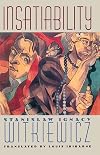
What is "Insatiability"? So many ways to answer that question. For starters, it could be described as a masterful psychological, historical, political, and cultural critique. Witkiewicz demonstrates a familiarity with all these domains as he develops his story. The potential reader would be well served by a sophisticated intellectual familiarity. Fortunately for me, such a background isn't required to enjoy the book's excellence.
Another amazing characteristic of the work is its modernity. show more Despite being published in 1927, the book's themes, characters and insights resonate with the 21st century reader. One facet of its modernity is its unremitting intensity. One reviewer mentioned that at times she couldn't stop reading the book while at others, she couldn't read another page. There are no calm interludes.
Another predominant feature of the work is cynicism. This cynicism is reflected in the eloquent while at the same time, often amusing, prose. In my mind at least, one finds a literary gem on almost every page.
What the book is? Passionate. Unstable. Sexual. Unsettling.
What the book is not? Optimistic. Peaceful. Delicate. Shy. Prudish.
"Insatiability" is, as you can no doubt sense already, one of my new favorite books. I believe any serious student of modern (or perhaps more accurately post-modern) literature must read this book. I understand that many readers may not enjoy the work. Yet, the author's genius and the book's prophetic quality, remain.
Addendum:
Some reviewers frame this book as a critical premonition of the socialist regimes of Eastern Europe in the 1930's. Although it could be read in that fashion, I think that interpretation does not do justice to the complexity and universality of it's analysis and critique. The book is far from that simplistic. show less
Another amazing characteristic of the work is its modernity. show more Despite being published in 1927, the book's themes, characters and insights resonate with the 21st century reader. One facet of its modernity is its unremitting intensity. One reviewer mentioned that at times she couldn't stop reading the book while at others, she couldn't read another page. There are no calm interludes.
Another predominant feature of the work is cynicism. This cynicism is reflected in the eloquent while at the same time, often amusing, prose. In my mind at least, one finds a literary gem on almost every page.
What the book is? Passionate. Unstable. Sexual. Unsettling.
What the book is not? Optimistic. Peaceful. Delicate. Shy. Prudish.
"Insatiability" is, as you can no doubt sense already, one of my new favorite books. I believe any serious student of modern (or perhaps more accurately post-modern) literature must read this book. I understand that many readers may not enjoy the work. Yet, the author's genius and the book's prophetic quality, remain.
Addendum:
Some reviewers frame this book as a critical premonition of the socialist regimes of Eastern Europe in the 1930's. Although it could be read in that fashion, I think that interpretation does not do justice to the complexity and universality of it's analysis and critique. The book is far from that simplistic. show less

A challenging, vengeful, manic, weird, gloriously random, obscure panegyric. A dystopian, war-like, anti-war novel. The Polish Gravity's Rainbow, rendered less comprehensible via translation. There is still a lot to gain, absorb and relish about this book, even if every other sentence goes in one ear and out the other. The punning goes on and on an on, and examine the evidence of hundreds of notes before deciding whether your efforts to understand this book in its entirety are worthwhile. show more Self-references abound, along with comments on war, personal hygiene, lots of phallocentric jokes, goofy asides, well-formed rational arguments alongside pure, indulgent sexual fantasy.
Like Wyndham Lewis' The Apes of God, this is a book adored by other writers (among them Gombrowicz) but difficult for readers of our age to appreciate. A profusion of characters carry on conversations containing so many scattered references of the early Twentieth Century European variety, that you will undoubtedly feel mind-boggled at some point, unless you are an expert in that slice of political history.
The anti-imperialism undercurrent is a little distracting, but so is everything else. This is a big book of distractions. A high-brow, low-brow grimacing anomaly.
I much prefer Alfred Doblin's Berlin Alexanderplatz and the aforementioned work of Wyndham Lewis. But Genezip feels akin to Pynchon's protagonists in that we rarely get the chance to form a picture of his adventures because so many contradictions and accusations and thoughts and digressions interpolate the flow of narrative, but his charm and obvious intelligence inspire confidence, and keep us turning pages (hopefully). Brilliantly witty in parts, abstruse and variable in its literary delivery of straight-faced fecal humor, Insatiability is a way-ahead-of-its-time tome.
It will superimpose a unique frame of mind upon your own. Some call it an experimental masterpiece. I call it a guaranteed amusing, re-readable puzzle, that is both tiresome and impenetrable, while never ceasing to enjoy it out of the crevices of my squinting-with-consternation eyes. show less
Like Wyndham Lewis' The Apes of God, this is a book adored by other writers (among them Gombrowicz) but difficult for readers of our age to appreciate. A profusion of characters carry on conversations containing so many scattered references of the early Twentieth Century European variety, that you will undoubtedly feel mind-boggled at some point, unless you are an expert in that slice of political history.
The anti-imperialism undercurrent is a little distracting, but so is everything else. This is a big book of distractions. A high-brow, low-brow grimacing anomaly.
I much prefer Alfred Doblin's Berlin Alexanderplatz and the aforementioned work of Wyndham Lewis. But Genezip feels akin to Pynchon's protagonists in that we rarely get the chance to form a picture of his adventures because so many contradictions and accusations and thoughts and digressions interpolate the flow of narrative, but his charm and obvious intelligence inspire confidence, and keep us turning pages (hopefully). Brilliantly witty in parts, abstruse and variable in its literary delivery of straight-faced fecal humor, Insatiability is a way-ahead-of-its-time tome.
It will superimpose a unique frame of mind upon your own. Some call it an experimental masterpiece. I call it a guaranteed amusing, re-readable puzzle, that is both tiresome and impenetrable, while never ceasing to enjoy it out of the crevices of my squinting-with-consternation eyes. show less
Lists
Awards


You May Also Like


Associated Authors
Statistics
- Works
- 101
- Members
- 828
- Popularity
- #30,824
- Rating
- 3.9
- Reviews
- 7
- ISBNs
- 151
- Languages
- 10
- Favorited
- 10

