

Mary Wollstonecraft (1759–1797)
Author of A Vindication of the Rights of Woman
About the Author
Mary Wollstonecraft was born in London on April 27, 1759. She opened a school in Newington Green with her sister Eliza and a friend Fanny Blood in 1784. Her experiences lead her to attack traditional teaching methods and suggested new topics of study in Thoughts on the Education of Girls. In 1792, show more she published A Vindication of the Rights of Woman, in which she attacked the educational restrictions that kept women ignorant and dependant on men as well as describing marriage as legal prostitution. In Maria or the Wrongs of Woman, published unfinished in 1798, she asserted that women had strong sexual desires and that it was degrading and immoral to pretend otherwise. In 1793, Wollstonecraft became involved with American writer Gilbert Imlay and had a daughter named Fanny. After this relationship ended, she married William Godwin in March 1797 and had a daughter named Mary in August. Wollstonecraft died from complications following childbirth on September 10, 1797. Her daughter Mary later married Percy Bysshe Shelley and wrote Frankenstein. (Bowker Author Biography) show less
Disambiguation Notice:
Do not confuse Mary Wollstonecraft with her daughter, Mary Wollstonecraft Shelley.
Works by Mary Wollstonecraft
A Short Residence in Sweden, Norway, and Denmark and Memoirs of the Author of 'The Rights of Woman' (1796) 173 copies, 4 reviews
A Vindication of the Rights of Men; A Vindication of the Rights of Woman; An Historical and Moral View of the French Revolution (1993) 150 copies
Wollstonecraft: A Vindication of the Rights of Man and a Vindication of the Rights of Woman and Hints (1995) 104 copies, 2 reviews
Vindication of the Rights of Woman and The Wrongs of Woman, or Maria (Longman Cultural Editions) (2006) 69 copies, 2 reviews
Original Stories From Real Life; with Conversations, Calculated To Regulate the Affections and Form the Mind to Truth and Goodness (1788) 22 copies, 1 review
The Wrongs of Woman; or Maria and Memoirs of the Author of a Vindication of the Rights of Woman (Eighteenth Century Lite (2003) 22 copies
A Vindication of the Rights of Woman: Abridged, with Related Texts (Hackett Classics) (2013) 11 copies
دفاع عن حقوق المرأة 3 copies
The Rights of Woman (abridged) 2 copies
Mother of Frankenstein: Maria: or, The Wrongs of Woman and Memoirs of the Author of A Vindication of the Rights of Woman (Wordfire Classics) (2021) 2 copies
Travels in Scandinavia 1 copy
Posthumous Works of the Author of A Vindication of the Rights of Woman, Vol. I (Esprios Classics) (2021) 1 copy
The Great Change 1 copy
The History & Surveys - 19th Century 2-In-1 Special: A Vindication of the Rights of Woman / Thus Spake Zarathustra (2003) 1 copy
A Wollstonecraft Anthology 1 copy
Associated Works
The Graphic Canon, Vol. 1: From the Epic of Gilgamesh to Shakespeare to Dangerous Liaisons (2012) — Contributor — 304 copies, 7 reviews
The Norton Anthology of English Literature, 4th Edition, Volume 2 (1979) — Contributor — 270 copies, 1 review
Tagged
Common Knowledge
- Other names
- Wollstonecraft Godwin, Mary
Godwin, Mary - Birthdate
- 1759-04-27
- Date of death
- 1797-09-10
- Gender
- female
- Occupations
- writer
translator
philosopher
teacher
feminist
travel writer (show all 8)
novelist
journalist - Relationships
- Godwin, William (husband)
Shelley, Mary (daughter)
Imlay, Gilbert (lover) - Short biography
- Mary Wollstonecraft was the pioneering English philosopher, writer and feminist best known for A Vindication of the Rights of Woman (1792).
- Cause of death
- childbirth complications (childbed fever)
- Nationality
- UK
- Birthplace
- Spitalfields, London, Middlesex, England, UK
- Places of residence
- London, England, UK
Paris, France
Bath, Somerset, England, UK
Mitchelstown, County Cork, Ireland - Place of death
- London, England, UK
- Burial location
- St Pancras Old Church, Camden, London, England, UK
- Map Location
- England, UK
- Disambiguation notice
- Do not confuse Mary Wollstonecraft with her daughter, Mary Wollstonecraft Shelley.
Members
Reviews
A Vindication of the Rights of Woman (Dover Thrift Editions: Literary Collections) by Mary Wollstonecraft

One of those books I was mildly embarrassed not to have read, so here I am finally getting around to it. Reading A Vindication of the Rights of Woman at a remove of more than two centuries from when it was first published, it was striking to me how much Mary Wollstonecraft's ideas seemed both very relevant (nepo babies! abolish the British monarchy! educate kids equally and let women have careers!) and very dated (classism, racism, and xenophobia, oh my! the Enlightenment Cult of Reason show more everywhere!) all at once.
For all that she has blinkers on when it comes to issues of class and race, Wollstonecraft is surprisingly acute at making the connection between broader issues of hierarchy and oppression and discrimination against women. Her flaying of Rousseau was also super satisfying ("'Educate women like men,' says Rousseau, 'and the more they resemble our sex the less power will they have over us.' This is the very point I aim at. I do not wish them to have power over men; but over themselves."), and I appreciated throughout Wollstonecraft's willingness to call bullshit, even if I didn't always agree with the points she was making.
Wollstonecraft probably has made all of her main points by halfway through A Vindication, and the internal structure of the book could have used some refining to make it less repetitive, but it still retains enough of its power that you can see why it was such a landmark manifesto. show less
For all that she has blinkers on when it comes to issues of class and race, Wollstonecraft is surprisingly acute at making the connection between broader issues of hierarchy and oppression and discrimination against women. Her flaying of Rousseau was also super satisfying ("'Educate women like men,' says Rousseau, 'and the more they resemble our sex the less power will they have over us.' This is the very point I aim at. I do not wish them to have power over men; but over themselves."), and I appreciated throughout Wollstonecraft's willingness to call bullshit, even if I didn't always agree with the points she was making.
Wollstonecraft probably has made all of her main points by halfway through A Vindication, and the internal structure of the book could have used some refining to make it less repetitive, but it still retains enough of its power that you can see why it was such a landmark manifesto. show less
A Vindication of the Rights of Woman: with Strictures on Political and Moral Subjects (Modern Library Classics) by Mary Wollstonecraft

A Vindication of the Rights of Woman was originally published in 1792. Nearly 180 years later when Source Book Press republished it, women were still clamoring for those rights. Title IX of the Education Amendments wasn't even a thing until 1972. Think about that for just one second. In 1792 Wollstonecraft was demanding justice for her half of the human race as loudly as she could. Hers was a plea for all womenkind and not a singular selfish act of only thinking of herself. She argued that show more reason, virtue, and knowledge were the keys to a successful life regardless of your sex. However, the notion that physical strength promotes power indicates a man's authority over a weaker woman exists even today. To put it crudely, inequality among the sexes is still a thing. To be sentimental is to be silly.
Wollstonecraft was not afraid to challenge her readers, asking us what does it mean to be respectable? To have virtue? To be a woman of quality? Are these traits euphemisms for weakness? She addresses the assumption that women are designed to feel before applying reason. Maybe that is why men are trained to never argue with a woman in public (she might become irrational) or allow a woman to exert physical strength (unseemly). Most of Wollstonecraft's arguments are disguised as philosophical and moral conversations with Rousseau. show less
Wollstonecraft was not afraid to challenge her readers, asking us what does it mean to be respectable? To have virtue? To be a woman of quality? Are these traits euphemisms for weakness? She addresses the assumption that women are designed to feel before applying reason. Maybe that is why men are trained to never argue with a woman in public (she might become irrational) or allow a woman to exert physical strength (unseemly). Most of Wollstonecraft's arguments are disguised as philosophical and moral conversations with Rousseau. show less
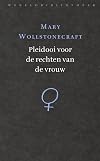
Terwijl de Franse Revolutie nog volop in beweging was, schreef de oermoeder van het feminisme, Mary Wollstonecraft, in 1792 haar Pleidooi voor de rechten van de vrouw. Daarin trok zij ten strijde tegen de achterstelling die vrouwen al sinds mensenheugenis moesten ondergaan en tegen de vooroordelen die vooraanstaande denkers uit die tijd over vrouwen koesterden. Vrouwen moesten wat haar betreft in alle opzichten dezelfde kansen krijgen als mannen. Ze moesten beroepen kunnen uitoefenen en show more bijvoorbeeld medicus of vroedvrouw kunnen worden. En vrouwen hoorden vertegenwoordigd te zijn in de politiek, zodat ze zich de wet niet langer hoefden te laten voorschrijven door mannelijke politici. Wollstonecraft schreef haar Pleidooi met grote felheid en levendigheid. show less
Original Stories From Real Life; with Conversations, Calculated To Regulate the Affections and Form the Mind to Truth and Goodness by Mary Wollstonecraft

When their mother dies, fourteen-year-old Mary and twelve-year-old Caroline are placed in the home of Mrs. Mason, a near relation who finds them spoiled and prone to bad habits, due to having been raised mostly by servants. This new guardian attempts to reform their manners and morality through example, through story, and through conversation. The lessons imparted range from showing humane kindness to animals - the girls are given a copy of Mrs. Trimmer's Fabulous Histories - to learning to show more control one's anger and one's appetites. The importance of truthfulness and honor, of compassion for the unfortunate and afflicted, and of respectful conduct, even toward servants, are all covered. The dangers of procrastination and of idleness, the importance of proper dress and deportment, and most of all, the centrality of prayer and devotion - all these are also discussed, with examples from Mrs. Mason's wealth of stories and personal acquaintances. When finally the girls are ready to leave Mrs. Mason, they have markedly improved...
Originally published in 1788, Original Stories From Real Life; with Conversations, Calculated To Regulate the Affections and Form the Mind to Truth and Goodness was reprinted in 1791 with artwork done by William Blake. It is this edition that I read, when Wollstonecraft's book was assigned in the class I took on early children's literature, during the course of my masters. It is a lovely edition, with beautiful artwork from Blake, and it is also a fascinating book, both because it builds upon existing trends in the world of 18th-century British children's literature, and because its author is so well-known for her adult work. I was tickled that the girls are given Trimmer's Fabulous Histories, in the section on the humane treatment of animals, as this demonstrates how influential that earlier work, published only two years before in 1786, already was. The format here, in which girls are educated through dialogue and story, is one common to many books of the period, from Sarah Fielding's 1749 The Governess; or, The Little Female Academy through Mrs. Harriet Ventum's 1801 The Amiable Tutoress, or, The History of Mary and Jane Hornsby: A Tale for Young Persons, and beyond.
Wollstonecraft herself is best known as the author of such works as the 1792 A Vindication of the Rights of Women, as well as for being the mother of Mary Shelley, author of Frankenstein, but she was also deeply involved in the world of education and children's literature. She briefly ran a school with her sister Eliza, published Thoughts on the Education of Daughters in 1787, and worked for a year as the governess to the two young daughters of Lady Kingsborough, in Ireland. Although the post was of short duration - Wollstonecraft did not get on with her employer - it is believed that this experience provided much of the material for Original Stories, the author's only work specifically intended for children. Eventually Wollstonecraft would go on to marry William Godwin, the author, philosopher and book publisher who, after Wollstonecraft's death, set up the publishing house called the 'Juvenile Library,' which would have a significant impact on the history of Anglophone children's literature. It's interesting to note that the year Wollstonecraft spent in Ireland had a great impact on Margaret King Moore, one of the daughters of Lady Kingsborough, who would go on to become Lady Mount Cashell, and eventually, after leaving her husband for another man, "Mrs. Mason," a name she chose in honor of Wollstonecraft's book. She disguised herself as a man, in order to study medicine at the German university of Jena, wrote some of the earliest children's fiction attributed to an Irish author - her Stories of Old Daniel; or, Tales of Wonder and Delight, was published by Godwin in 1808 - and, later in life, played host to Percy and Mary Shelley and Claire Clairmont, when they visited her in Italy in 1820. Although an Anglo-Irish aristocrat, she was republican in her sympathies, and credited Wollstonecraft's teaching and example as having "freed her mind from all superstitions".
So it is that this book, interesting in its own right, is also fascinating as a work that binds together the stories of many fascinating real-life figures. I very much think, as did my instructor in the class I took, that the intertwining stories of these literary luminaries would make a fabulously dramatic miniseries! Recommended to anyone interested in Wollstonecraft's work, or in 18th-century children's literature. show less
Originally published in 1788, Original Stories From Real Life; with Conversations, Calculated To Regulate the Affections and Form the Mind to Truth and Goodness was reprinted in 1791 with artwork done by William Blake. It is this edition that I read, when Wollstonecraft's book was assigned in the class I took on early children's literature, during the course of my masters. It is a lovely edition, with beautiful artwork from Blake, and it is also a fascinating book, both because it builds upon existing trends in the world of 18th-century British children's literature, and because its author is so well-known for her adult work. I was tickled that the girls are given Trimmer's Fabulous Histories, in the section on the humane treatment of animals, as this demonstrates how influential that earlier work, published only two years before in 1786, already was. The format here, in which girls are educated through dialogue and story, is one common to many books of the period, from Sarah Fielding's 1749 The Governess; or, The Little Female Academy through Mrs. Harriet Ventum's 1801 The Amiable Tutoress, or, The History of Mary and Jane Hornsby: A Tale for Young Persons, and beyond.
Wollstonecraft herself is best known as the author of such works as the 1792 A Vindication of the Rights of Women, as well as for being the mother of Mary Shelley, author of Frankenstein, but she was also deeply involved in the world of education and children's literature. She briefly ran a school with her sister Eliza, published Thoughts on the Education of Daughters in 1787, and worked for a year as the governess to the two young daughters of Lady Kingsborough, in Ireland. Although the post was of short duration - Wollstonecraft did not get on with her employer - it is believed that this experience provided much of the material for Original Stories, the author's only work specifically intended for children. Eventually Wollstonecraft would go on to marry William Godwin, the author, philosopher and book publisher who, after Wollstonecraft's death, set up the publishing house called the 'Juvenile Library,' which would have a significant impact on the history of Anglophone children's literature. It's interesting to note that the year Wollstonecraft spent in Ireland had a great impact on Margaret King Moore, one of the daughters of Lady Kingsborough, who would go on to become Lady Mount Cashell, and eventually, after leaving her husband for another man, "Mrs. Mason," a name she chose in honor of Wollstonecraft's book. She disguised herself as a man, in order to study medicine at the German university of Jena, wrote some of the earliest children's fiction attributed to an Irish author - her Stories of Old Daniel; or, Tales of Wonder and Delight, was published by Godwin in 1808 - and, later in life, played host to Percy and Mary Shelley and Claire Clairmont, when they visited her in Italy in 1820. Although an Anglo-Irish aristocrat, she was republican in her sympathies, and credited Wollstonecraft's teaching and example as having "freed her mind from all superstitions".
So it is that this book, interesting in its own right, is also fascinating as a work that binds together the stories of many fascinating real-life figures. I very much think, as did my instructor in the class I took, that the intertwining stories of these literary luminaries would make a fabulously dramatic miniseries! Recommended to anyone interested in Wollstonecraft's work, or in 18th-century children's literature. show less
Lists
1790s (2)
Female Author (1)
Unread books (1)
Read These Too (1)
Awards


You May Also Like


Associated Authors
Statistics
- Works
- 51
- Also by
- 22
- Members
- 7,900
- Popularity
- #3,070
- Rating
- 3.8
- Reviews
- 70
- ISBNs
- 416
- Languages
- 15
- Favorited
- 17

